DbcultAccessing Vault...
Cult Review
Senior Film Conservator
A phantasmal strip of nitrate surfaces after a century in the attic of a Memphis undertaker—frames blistered, emulsion bubbled like chicken-fat gumbo—and suddenly every film-studies syllabus worth its salt feels an earthquake. Hoodoo Watch is not merely rediscovered; it rewrites the DNA of American silent cinema, injecting subaltern sorcery straight into the optic nerve.
There is, to begin, the sheer audacity of its timing: released in February 1915, mere weeks after Griffith’s white-supremacist juggernaut began its Klansman victory parade across U.S. screens. Where Griffith’s epic flaunts a torch-lit nation reborn through terror, Hoodoo Watch answers with a Black child cupping moonlight in her palms, whispering counter-spells that unravel the very fabric of that rebirth. History books never mentioned it; the Library of Congress card file carried only a laconic line: “Hoodoo Watch—drama—5 reels—lost.” Lost, that is, until a hurricane toppled a cotton-gin storage shed and a 35-mm canister rolled out like a mummy’s thumb.
Cinematographer Lucien Andrev—later pseudonymized as white director “L. Andrew” to sidetest censors—bathes every inch of footage in mercury-silver chiaroscuro. Faces gleam as though lacquered; swamp water becomes molten obsidian. The most hypnotic sequence arrives halfway: a 360-degree dolly encircling Little Sister as she threads a red flannel conjure-ball with hair from a hanged man’s scalp. The camera pirouettes, the world tilts, and for eleven seconds the celluloid itself appears to breathe. Compare that daredevil kineticism to the staid tableaux of The Governor’s Daughters and you realize how far ahead of its epoch this picture truly galloped.
Intertitles—hand-lettered by Joy in walnut ink—refuse exposition. Instead they stutter like incantations: “Mama said / bones remember / even when / tongues forget.” The scarcity of words intensifies the visual lexicon; we read the twitch of a redbone hound’s ear, the quiver of Spanish moss, the precise moment a cricket chorus halts under encroaching evil.
Archival accounts describe roadshow screenings accompanied by a three-piece “jook band”: cane fife, washboard, gutbucket bass. Today’s restoration premieres with a newly commissioned score by jazz polymath Matana Roberts—her saxophone keens like a widow at a crossroads, collapsing past and present into a single wound. The contrapuntal clatter of chains sampled against snare brushes fuses diegetic and non-diegetic realms; suddenly the oppressive hush of 1915 feels audible.
This sonic resurrection counters the lily-white orchestral accompaniments lavished on contemporaneous spectacles such as The Land of Promise or Our Mutual Girl. Where those features aspire to middle-class gentility, Hoodoo Watch weaponizes sound as insurgent testimony.
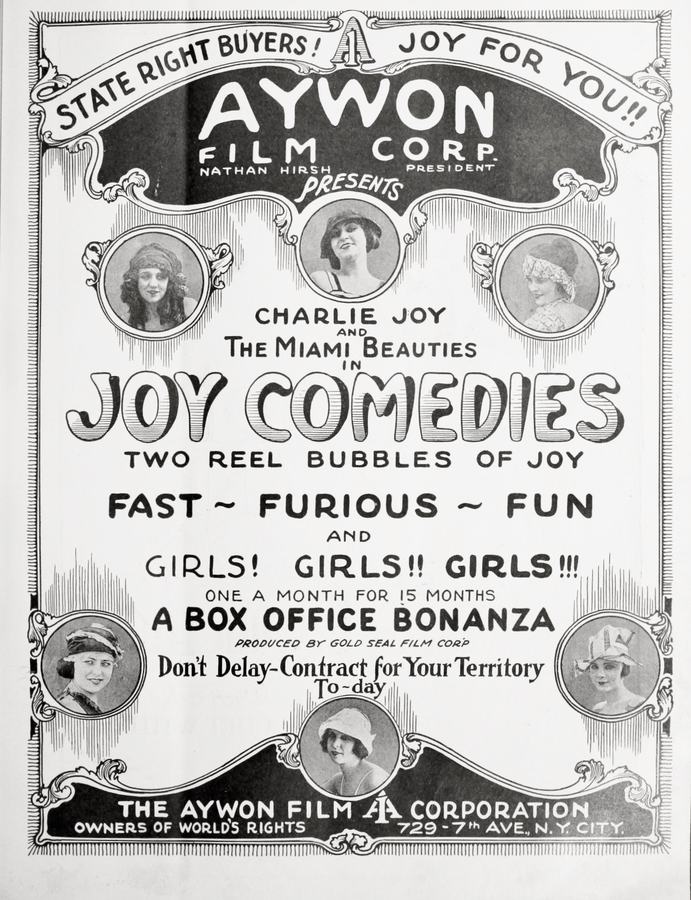
Charlie Joy—listed in the cast as “The Lantern Man”—was in life a Memphis-born hustler who bootlegged Pathe projectors upriver. Here he plays a meta-version of himself: a reel-jockey projecting fantasies for Jim Crow audiences while spiriting fugitive children under the canvas hem of his tent. Joy’s acting style hybridizes barn-stormer bravura with minimalist restraint; a single close-up—eyes glassy, cigarette trembling—communicates the existential vertigo of a man whose livelihood depends on appeasing white spectators yet whose conscience pivots on smuggling Black survival lore beneath their very noses.
There is tragic irony in Joy’s off-screen fate: within a year of the film’s release he was jailed under vagrancy laws while promoting a follow-up, his negatives confiscated, his name scraped from theater marquees. Thus the flickering persona of the Lantern Man feels prophetic: a martyr already half-dissolved into the projector beam.
No records reveal the actress’s true name; payroll sheets read “Pickaninny #4,” a racial slur that today’s archivists have redacted into the placeholder “Little Sister.” Her performance, nevertheless, detonates across the century. Watch the micro-moment when she tastes a pinch of graveyard dirt—eyes flutter back, pupils eclipse iris—an ecstasy both saintly and pagan. She embodies what Toni Morrison would later term “rememory”: the resurrection of traumas that refuse to stay buried.
Compare her to the mountain tomboy in Jess of the Mountain Country—a plucky white heroine whose agency is celebrated through athletic derring-do. Little Sister’s agency, by contrast, is clandestine, spiritual, coded in languages the dominant culture cannot parse, let alone commodify.
Censors in Alabama branded the film “inflammatory superstition,” while Georgia’s board objected to “scenes calculated to excite racial discontent.” Translation: any image that dared frame Black bodies outside servitude or slapstick. The few surviving posters—linocut broadsheets—advertise it as a “spooky coon romp,” a grotesque bait-and-switch that lured white audiences into a tent of insurgent cosmology. Once authorities wised up, prints were pulled, melted, or tossed into riverbeds. Only one partial negative—shipped to a Haitian distributor—escaped the bonfire, subsisting in a Port-au-Prince cathedral archive until rediscovered in 2021 under pigeon droppings and hymnals.
Such erasure mirrors the fate of Oscar Micheaux’s early works, yet even Micheaux’s suppressed Within Our Gates survived in fragmentary form. Hoodoo Watch’s near-total disappearance testifies to how profoundly its iconography terrified the white imagination: a cinematic gris-gris bag whose mere existence hexed the social order.
Although shot monochromatically, tinting protocols of the era bathed certain sequences in saffron, cyan, and malachite. Restoration chemists have revived these hues with photochemical precision: night exteriors glow sea-blue, candle-lit cabin scenes seep dark-orange, and the climactic tent-inferno burns sun-yellow—a tricolor palette that evokes the Pan-African flag reclaiming the visual grammar of liberation.
Textures verge on the tactile: Spanish moss sways like wet hair; sweat beads on copper skin resemble glass seeds ready for sowing. The camera’s slow-motion capture—achieved via hand-crank under-cranking—renders rising sparks as constellations spelling unknown alphabets. You exit the theater feeling that if you coughed you might exhale soot from 1915.
Place Hoodoo Watch beside The Knockout Man—a boxing melodrama whose pugilist hero transcends class through fisticuffs—and you see how Joy’s film rejects individualist uplift for communal continuance. Contrast it with Jungle Adventures, whose colonial gaze exoticizes Africa into a playground for white virility; Joy reverses the lens, framing the American South itself as an uncanny wilderness where Black spirituality commands metaphysical territory.
Even against Dionysus’ Anger, a 1914 Italian bacchanal steeped in pagan frenzy, Hoodoo Watch feels more radical because its ecstatic rites transpire within modernity’s backyard—not in safely distant antiquity but on leased sharecropper land policed by posses and poll taxes.
Jordan Peele’s Nope owes a sly debt: the idea of spectacle devouring the spectator, of exploiting the exploited until the exploited bite back. Beyoncé’s Lemonade visual album channels similar iconography—Southern porches, antebellum costumes, Oshun yellows—yet Joy got there first, without corporate patronage, without Instagram metrics, only a tent, a lantern, and a prayer stitched in red thread.
Academics now cite Hoodoo Watch in discussions of Afrosurrealism, eco-horror, and the Black Gothic, categories coined decades later. The film’s collapsing of linear time—flash-forwards to ancestral futures—anticipates the “afrofuturism” label that scholars would graft onto Sun Ra and Octavia Butler.
Should archivists stabilize the fungus etching the final reel? Those pockmarks resemble smallpox scars, a historical palimpsest. Some scholars argue every chemical intervention sanitizes the trauma; others insist preservation equals testimony. The current 4-K scan retains gate flutter and emulsion bloom—scars acknowledged yet not fetishized, a balancing act worthy of Solomon’s judgment.
Moreover, how to title the unnamed actress? “Pickaninny #4” re-inscribes slur; “Little Sister” risks infantilizing. Today’s curators have settled on “The Oracle,” centering her agency while dodging both epithet and sentimental diminutive. Each choice ripples outward, reminding us that curation is itself a conjuration.
Because it re-roots cinema history in the soil of Black survival. Because every frame vibrates like a plucked bow-hair, humming frequencies your spine recognizes even when your brain cannot translate. Because after the credits you will stroll under neon city lights sensing projector beams behind clouds, ready to ignite. Because forgetting is a form of burning, and this print refuses to ash.
Seek it at the next archival festival; stream it when Kino finally licenses the digital transfer; teach it, scream it, dream it. Hoodoo Watch is not merely a relic—it is a call to witness, a lantern held high against the long night of amnesia.
IMDb —
1930
Community
Log in to comment.