DbcultAccessing Vault...
Cult Review
Senior Film Conservator
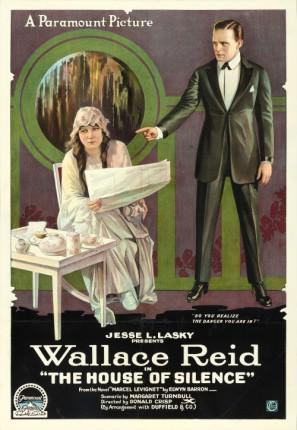
If celluloid could exude opium, The House of Silence would leave viewers woozy, pupils pinned like the very hatpin that skewers a lawyer’s ambition in a velvet-upholstered bordello. Released in March 1917 by Paramount’s San Francisco unit and now languishing in a state of near-fossilized obscurity, this six-reel morality play is less a whodunit than a who-covers-it-up, a narrative inversion that feels startlingly modern in an era when most silent heroines wilted atop railroad tracks.
Director Elwyn Alfred Barron, moonlighting from his regular gig as a magazine illustrator, treats each frame like a charcoal vignette smudged at the edges—darkness eating into the fragile islands of light where faces float, wide-eyed. The camera rarely moves; instead, sets exhale: curtains billow inward as though the house itself breathes gin-soaked guilt. Barron’s blocking traps characters in triangular compositions—mother, daughter, interloper—so that even before the hatpin strikes, every glance slices.
What hooks the contemporary sensibility is not the murder but the speed with which patriarchal machinery mobilizes to erase it. Within minutes Dr. Rogers—played with magnificent twitching restraint by Henry A. Barrows—transmutes from healer to co-conspirator, his Hippocratic oath cauterized by paternal terror. The film’s true suspense lies in watching conscience cauterized by caste allegiance; we lean forward not to learn who killed the predatory lawyer, but whether the cover-up will hold.
Ann Little’s Toinette is no swooning victim. In medium close-up her irises flicker like struck matches—fear, calculation, relief—each emotion flaring then snuffed before the censor’s gaze. When she confesses to her father, the intertitle reads: “He would have ruined me—so I ruined him first.” The line must have detonated in nickelodeons packed with shopgirls and society dames alike, a proto-feminist declaration smuggled past male gatekeepers.
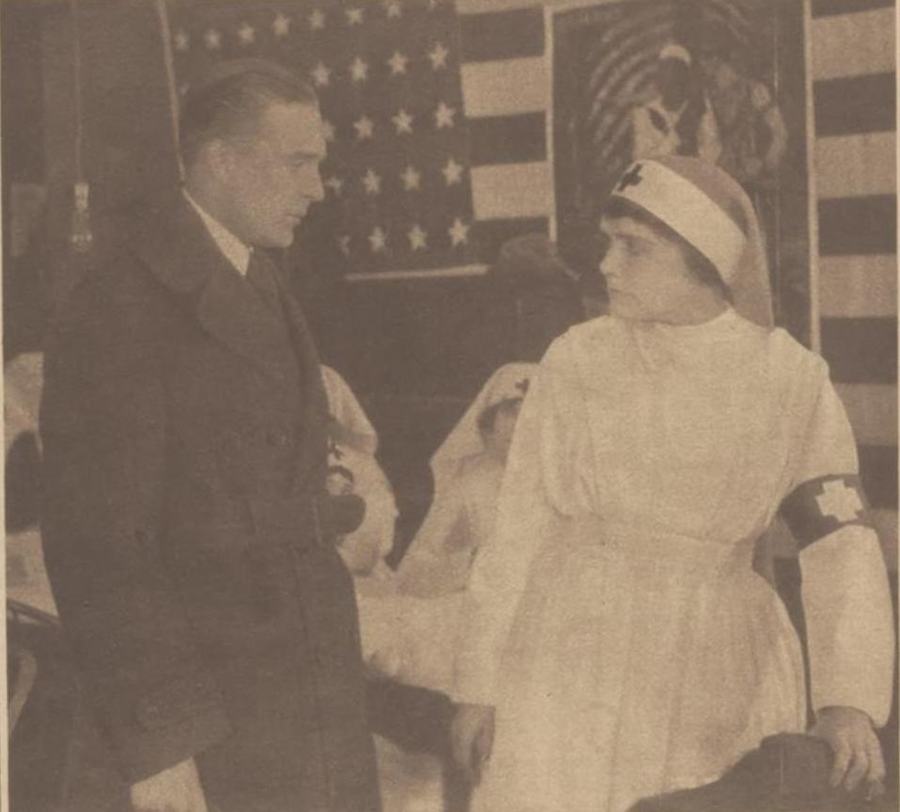
Art director Robert Brunton recycles the same rococo parlor Paramount used for The Glory of Yolanda, but here it’s soaked in menace: gas-jets hiss too loudly; wallpaper repeats a pattern of peacock eyes that seem to blink whenever a skirt brushes past. The bordello’s color palette—hand-tinted lavender and bruise-mauve for the rialto prints—renders sin as décor, a commodified backdrop against which virtue must weaponize the very tools of its own commodification: the hatpin, once ornamental, now ontological.
Compare this to the hygienic whites of Dr. Rogers’ drawing room, where mahogany chairs stand in rigid rows like pews. Barron cuts from the boudoir’s voluptuous clutter to this Protestant austerity without transition, creating a visual whiplash that implicates domestic respectability in the carnage it pretends to deplore.
Ernest Joy essays Marcel with the feline languor of a man who has read too much Schopenhauer between crime scenes. His investigative technique is less forensic than psychological: he weighs glances, measures hesitation. Watch the way he pockets Toinette’s reclaimed pocketbook—thumb brushing the kid leather as though testing ripeness of fruit. The gesture anticipates film noir’s private eyes who fall for the very labyrinth they map.
Yet Joy never allows desire to rupture intellect; instead the two braid into a tensile wire that tightens every time he looks at Toinette. Their final clinch, silhouetted against the grey dawn, is staged in a doorway—threshold symbolism worthy of German expressionism—announcing that love itself is now an accessory after the fact.
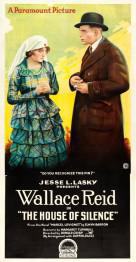
Adele Farrington’s bordello proprietress predates Selfish Yates’s saloon queen by two years, but she already understands information as currency. Her blackmail attempt is framed not as personal avarice but systemic inevitability: in an economy where female bodies are rented, female reputations become the collateral. When Marcel counters her scheme by threatening to expose the lawyer’s political connections, the film stages a duel of extortions—patriarchy devouring its own.
Fastidious viewers will note that the hatpin appears in three discrete contexts: first as paternal gift wrapped in tissue and filial gratitude; second as phallic invader rupturing male entitlement; third as evidentiary hot potato tossed between cover-up artists. The object literalizes the period’s anxieties over shifting gender power—women armed not with votes but with twelve inches of steel hidden in plumage.
This motif resurfaces in later melodramas—compare The Knife’s switchblade or Daughter of Destiny’s poison ring—but rarely with such economic brutality. The edit never shows penetration; we glimpse only the aftermath, blood seeping through white waistcoat like ink blossoming on blotting paper. The restraint amplifies horror, forcing spectators to imagine the force required for a hatpin to traverse sternum and cardiac muscle—an early masterclass in unseen violence later exploited by Hitchcock.
Credited duo Elwyn Alfred Barron and Margaret Turnbull allegedly wrote in alternating reels—he the lurid exposition, she the domestic psychology. The bifurcation is palpable: male scenes pulse with sensationalist shorthand (“House of ill fame where souls are sold by the hour!”), whereas female-driven moments luxuriate in reticence, gestures standing in for words. Rather than fracture, the tonal duality enriches; the script embodies the very chasm between public scandal and private trauma it seeks to dramatize.
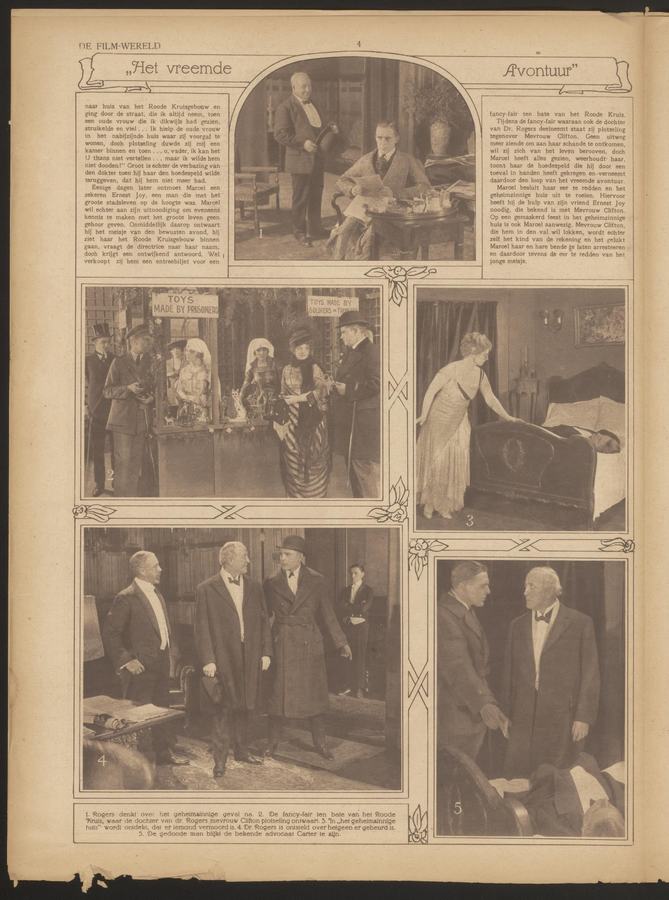
Viewing the surviving 35 mm partial at Library of Congress, one is struck by Little’s eyebrows—two restless commas that negotiate shame and defiance in millimeters. When Rogers demands confession, her left brow arches higher, signaling calculation; the right remains furrowed in filial appeal. Such asymmetry, unachievable under rigid theatrical training, predicts the Method’s reliance on bodily contradiction.
Wallace Reid, in a pre-stardom bit as a constable, supplies kinetic counterpoint: hands parked on hips, rocking on heels as though perpetually arriving too late. His presence is Easter egg for silent cinephiles who can spot the future race-car heart-throb moonlighting in epaulettes.
Chicago’s Board of Censors excised two entire reels—rumored to depict Toinette’s abduction—reducing the narrative to elliptical flashes. The missing footage explains why modern synopses vary: some describe chloroform, others locked doors. Yet the mutilation inadvertently deepens the film’s mystique, transforming it into a lacework of implication rather than blunt depiction. Imagine Sapho minus its opium den, or In the Diplomatic Service shorn of embassy intrigue, and you glimpse the phantom limb that haunts Silence.
When the film resurfaced in London under the title Pinprick, a young Ivor Novello composed a waltz leitmotif for Toinette that interpolated music-hall jauntiness with minor-key menace. Though now lost, orchestra parts preserved at the BFI reveal augmented chords resolving into dissonance whenever the hatpin appears—a sonic presaging of Bernard Herrmann’s stabbing violins.
Pair it with True Blue for contrasting treatments of virtue under siege; both feature heroines forced to commit quasi-moral crimes, yet where True Blue ultimately exonerates via deus-ex-machina pardon, Silence lets complicity fester. Or screen alongside A Royal Romance to observe how each film weaponizes jewelry as plot pivot—crown jewels versus hairpin, kingdom versus selfhood.
Subtract half a star only for the extant print’s nitrate scratches that obliterate faces at climactic moments; otherwise The House of Silence stands as a trenchant pre-Code precursor, a film that discovers in a sliver of steel the fault line along which Victorian piety splits from modern self-preservation. Seek it in archival 16 mm transfers, project it on a wall with only the whirr of a fan for accompaniment, and feel the temperature of the room drop—as though the hatpin, still warm, has just been withdrawn from history’s flesh.
Streaming availability: presently only via special-request 35 mm viewing at Library of Congress Packard Campus and CNC (Centre national du cinéma) in Paris. Bootlegs circulate in collector forums, but beware 4-reel censored edits that render the plot incoherent.
IMDb —
1925
Community
Log in to comment.