DbcultAccessing Vault...
7/10
Senior Film Conservator
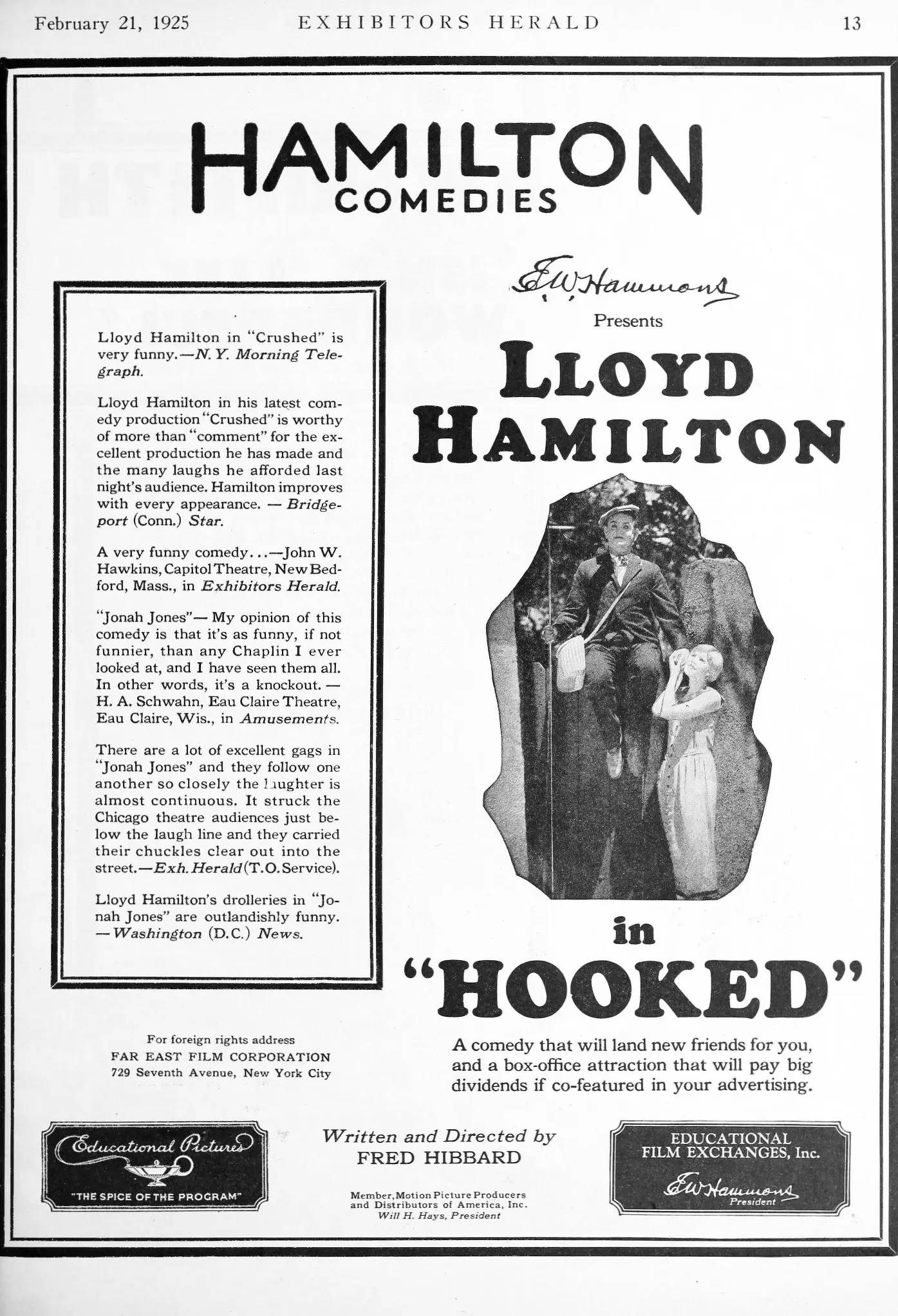
A definitive 7/10 rating for a film that redefined the boundaries of cult cinema. Hooked remains a cornerstone of transgressive art.
Is Hooked worth watching today? Short answer: yes, but primarily for a very specific audience willing to engage with early silent-era slapstick and its inherent limitations. This film is a fascinating historical document, a window into the comedic sensibilities of the 1920s, and a testament to the physical prowess of its star, Lloyd Hamilton.
It is absolutely for silent film aficionados, film historians, and those with a keen interest in the evolution of physical comedy. It is not for viewers seeking modern comedic pacing, sophisticated narrative, or polished production values. If you're looking for a quick laugh without context, you'll likely find it a hard sell, feeling more like an academic exercise than pure entertainment.
This film works because of Lloyd Hamilton’s extraordinary physical performance, which often transcends the simplicity of the gags themselves, offering moments of genuine, if broad, comedic ingenuity. His commitment to the bit is palpable, carrying the film even when the material sags.
This film fails because its comedic rhythm and narrative structure are firmly rooted in an era where rapid-fire gags and loose plotting were the norm, making it feel disjointed and slow by contemporary standards. The humor is often predictable, lacking the deeper character insights or escalating stakes found in later, more refined silent comedies.
You should watch it if you appreciate the foundational elements of slapstick, are curious about the careers of lesser-known silent stars, or simply enjoy dissecting the building blocks of cinematic comedy. It’s a foundational piece, not a peak achievement, but its historical value is undeniable.
Hooked presents a straightforward, almost archetypal silent comedy premise: a lovelorn protagonist, Lloyd, against a world determined to thwart his every move. The central conflict revolves around his desperate attempts to win the affection of his sweetheart, a goal made doubly difficult by his utter lack of success in a simple task – catching fish – and the presence of a burly, more successful rival, likely portrayed by Dick Sutherland, who embodies the physical and social obstacles Lloyd faces.
The narrative quickly shifts focus to a ship voyage, transforming the initial fishing endeavor into a broader struggle for romantic supremacy. Lloyd’s sweetheart, accompanied by her father and the rival, is set to depart, leaving Lloyd in a frantic race against time and tide. This setup provides ample opportunity for the kind of physical comedy that defined the era, with Lloyd’s attempts to board the ship becoming a series of increasingly elaborate and clumsy failures. It’s a classic 'boy-meets-girl-but-can't-get-on-the-boat' scenario, executed with a relentless, if simple, comedic drive.
What's fascinating about this kind of plotting is its pure functionality. The story isn't about deep character arcs or complex themes; it's a scaffold for gags. Every plot point exists to set up another comedic mishap, another physical challenge for Lloyd to comically bungle. The film doesn't waste time on exposition, throwing the audience straight into Lloyd's predicament and relying on visual storytelling to convey his plight. This directness, while efficient, can feel barebones to modern viewers accustomed to richer narratives.
The beauty of early silent shorts like Hooked lies in their unadulterated dedication to the laugh. They are pure comedic mechanisms, designed to elicit immediate, visceral reactions from an audience.
There's a surprising, almost brutal honesty in the film's depiction of Lloyd's unending failures. He's not a suave hero; he's an everyman, constantly outmatched by circumstances, his rival, and even his own two left feet. This makes his eventual, fleeting triumphs (if any exist beyond the provided plot summary) all the more satisfying, or his continued struggles all the more relatable, despite the exaggerated nature of the comedy. It’s a testament to the power of silent film to evoke empathy through purely physical means.
The undeniable heart of Hooked is Lloyd Hamilton. While perhaps not as universally recognized as the triumvirate of Chaplin, Keaton, and Lloyd, Hamilton carved out a significant niche for himself in the silent era, known for his distinctive brand of physical comedy. Here, his performance is a masterclass in controlled chaos and bewildered innocence. His character, Lloyd, is less a cunning schemer and more a perpetually surprised victim of circumstance, whose earnestness is his greatest comedic asset.
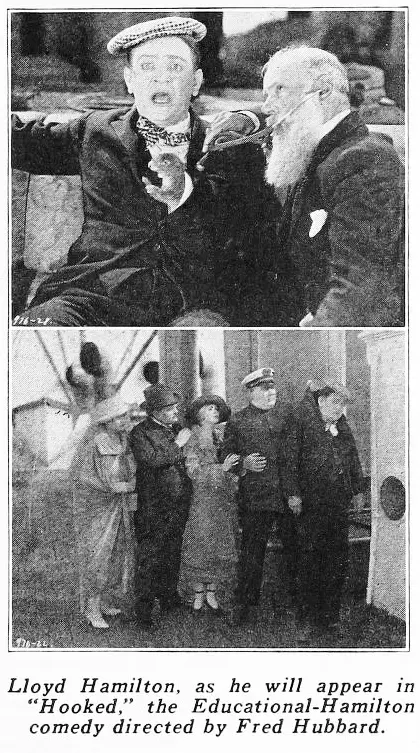
Hamilton's brilliance lies in his ability to convey immense frustration and determination through facial expressions and body language alone. Observe his early attempts to fish: the way his brow furrows, the exaggerated shrugs, the futile flailing of the fishing rod. These aren't just movements; they are a narrative in themselves, communicating a man at war with nature, all without a single intertitle explaining his inner turmoil. His physical comedy is precise, yet always carries an air of spontaneous desperation.
When faced with his rival, likely Dick Sutherland, Hamilton’s reactions are priceless. He doesn't merely acknowledge the rival; he recoils, he glares, he puffs himself up in a comically inadequate display of machismo. The contrast between Hamilton’s slightly built, almost gangly frame and Sutherland’s imposing presence creates an immediate visual gag, a David and Goliath scenario where David is armed only with a fishing rod and a perpetually hopeful frown. This dynamic is a cornerstone of silent comedy, and Hamilton executes it with aplomb.
Dorothy Seastrom, as the sweetheart, plays the crucial role of the unattainable object of desire. Her performance, typical of the era, is often subtle, relying on demure glances and a gentle smile to convey her character’s appeal. She is the prize, the motivation for Lloyd’s increasingly absurd antics, and her presence anchors the comedic chaos in a relatable romantic pursuit. While not given the same physical demands as Hamilton, her reactions to his antics are key to selling the humor, often shifting from polite amusement to mild concern.
I'd argue that Hamilton, while not achieving the legendary status of a Keaton or Chaplin, possessed a unique, almost everyman vulnerability that made his struggles particularly endearing. He wasn't a stoic genius or a tramp with a heart of gold; he was just a guy trying his best, and failing spectacularly. This relatability, even in exaggerated form, is what makes his performance in Hooked still resonate, even if only faintly, with audiences today.
Fred Hibbard, the director and writer of Hooked, demonstrates a clear understanding of the mechanics of silent slapstick. His direction is functional and effective, prioritizing the clarity of the gag over stylistic flourishes. The camera is generally static, allowing Hamilton's full body movements to be captured within the frame, ensuring that no part of the physical comedy is missed. This approach is evident in scenes where Lloyd attempts to board the ship; the wide shots capture his full desperate scramble, making his failures all the more pronounced.
Hibbard's choice of framing often emphasizes the scale of Lloyd's predicament. For instance, in the ship boarding sequence, the vessel looms large, a seemingly insurmountable obstacle against Lloyd's small, struggling figure. This visual contrast amplifies the comedic tension and highlights the futility of his efforts. The environment itself becomes another character, actively working against our protagonist, a common trope in early comedy, seen also in films like The Fugitive Futurist.
The pacing, while feeling slow by modern standards, reflects the comedic rhythm of its time. Gags are often allowed to play out for an extended period, giving the audience time to absorb the physical humor before moving on. There are moments of quick cutting, particularly during chase sequences or rapid-fire mishaps, but these are often interspersed with longer takes that allow Hamilton's performance to breathe. This deliberate rhythm is a hallmark of early silent shorts, differing significantly from the more frenetic pace of later comedies.
Cinematography, while not groundbreaking, is perfectly adequate for the task. The lighting is straightforward, relying heavily on natural light for outdoor scenes, which gives the film a raw, almost documentary-like feel in its setting. The compositions are generally simple and clear, ensuring that the audience's attention is always on the action and, more importantly, on Hamilton's expressive performance. There's no attempt at artistic grandeur here, just pure, unadulterated visual comedy served straight up.
It's surprising how much emotional weight can be conveyed through exaggerated facial expressions and frantic gestures, particularly in a scene where Lloyd mistakenly believes he has secured his sweetheart's attention, only to be utterly deflated by reality. This isn't just slapstick; it's a raw, silent form of emotional communication.
Hibbard's direction, while perhaps not as innovative as a Keaton, is incredibly effective for the type of film he's making. He understands Hamilton's strengths and crafts scenarios that allow them to shine. The film is a clear example of a director playing to his star's comedic talents, creating a vehicle for physical gags rather than a complex narrative exploration. It works. But it’s flawed.
The pacing of Hooked is a critical element for contemporary viewers to understand. It operates on a different rhythm than what we are accustomed to, a rhythm born from the limitations and conventions of early cinema. The film often feels episodic, a series of loosely connected gags rather than a tightly wound plot. This isn't a flaw in its original context but can make it a challenging watch for those unfamiliar with the era.
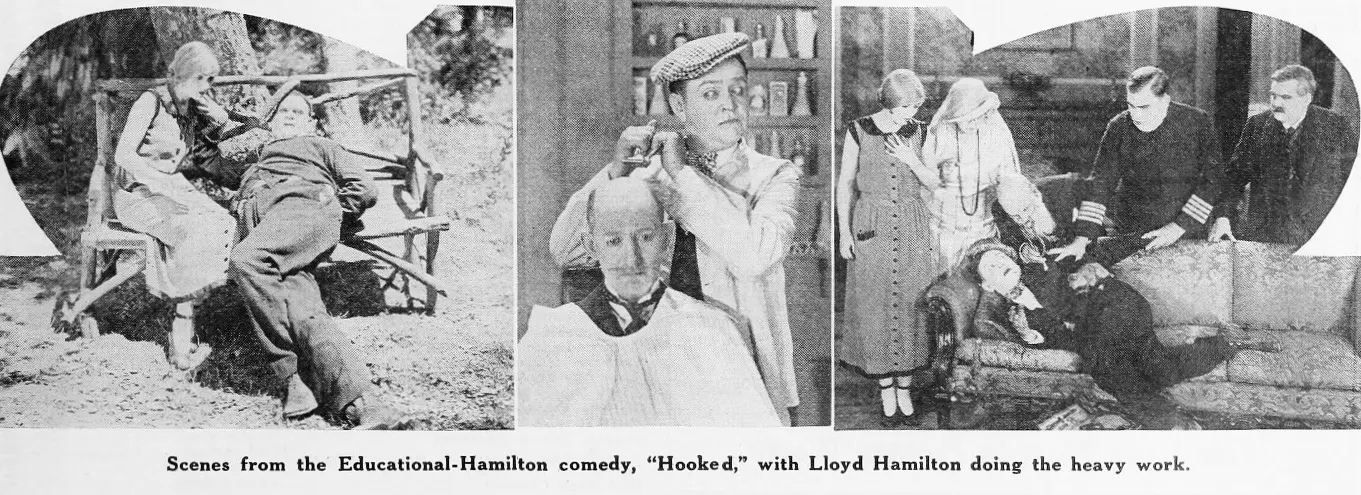
There are moments where the film allows a gag to linger, giving the audience time to fully appreciate the physical comedy and the character's reaction. This can feel slow to modern sensibilities, which are often geared towards rapid-fire jokes and quick narrative progression. However, in its time, this deliberate pacing allowed for a more immersive experience, letting the audience savor each comedic beat. It's a foundational approach that predates the more intricate comedic structures of films like The Pleasure Buyers or even early Chaplin.
The tone is one of lighthearted desperation. Lloyd's struggles are genuine, but never truly tragic. The film maintains an air of innocent romance and exaggerated rivalry, ensuring that even his most humiliating failures are met with a chuckle rather than pity. This consistent tone is crucial for slapstick, as it prevents the audience from becoming too invested in the character's suffering and allows them to simply enjoy the absurdity of the situation. It’s a world where gravity is an enemy and dignity is an optional extra.
One unconventional observation is how these early films, despite their simplicity, often reflect a very human struggle against forces beyond one's control. Lloyd's inability to catch fish or board a ship can be seen as a comedic metaphor for the common person's struggle against bureaucracy, social hierarchy, or just plain bad luck. It's a universal theme, distilled into a series of pratfalls and frustrated glances, making it more than just mindless entertainment. It's social commentary, albeit delivered with a custard pie.
The film's reliance on visual gags means that much of its humor is universal, transcending language barriers. A fall, a chase, a mistaken identity – these are comedic staples that have existed for centuries. However, some of the humor is undeniably dated, relying on tropes or situations that no longer resonate with contemporary audiences. It's a time capsule, and some of the contents have inevitably lost their sparkle. This contrast between timeless physical comedy and dated situational humor is a constant tension within the film.
Hooked is more than just a film; it's a historical artifact, offering a window into the nascent stages of cinematic comedy. It sits comfortably within the tradition of early 20th-century slapstick, a genre dominated by physical humor, broad characterizations, and simple, often repetitive plots. Comparing it to its contemporaries, one can see both its typicality and its unique qualities.
While it lacks the intricate narrative construction of a Buster Keaton short or the poignant social commentary often found in Charlie Chaplin's work, Hooked showcases a particular brand of amiable, almost gentle slapstick. Lloyd Hamilton's character isn't a mischievous rogue or a stoic underdog; he's more of a well-meaning bungler, which sets him apart from the more iconic figures of the era. This makes Hooked a valuable piece for understanding the broader spectrum of comedic styles prevalent during the silent era, extending beyond the most famous names.
The film’s focus on a romantic rivalry and a chase sequence aboard a ship is a common trope in early cinema, mirroring elements found in countless shorts of the period. The idea of a protagonist overcoming obstacles to win the girl was a reliable formula, providing endless opportunities for visual gags. It’s a theme that recurs in many early films, including those focused on social maneuvering like Let's Be Fashionable, albeit with a more comedic bent here.
Furthermore, Hooked serves as a reminder of the sheer physical endurance and comedic timing required of silent film actors. Without dialogue, every emotion, every intention, and every punchline had to be conveyed through movement and expression. Hamilton's ability to sustain this level of performance throughout the film, particularly during the elaborate ship-boarding attempts, is genuinely impressive and speaks to the demanding nature of the craft.
Ultimately, its place in cinematic history is as a solid, if not revolutionary, example of early silent comedy. It shows the building blocks, the foundational elements that would later be refined and expanded upon by the giants of the genre. It's a testament to the era's ingenuity in creating entertainment with limited technology, relying instead on human performance and clever visual gags.
Hooked is a charming, if somewhat dusty, relic from the silent era. It offers a valuable glimpse into the world of early slapstick and showcases the considerable talents of Lloyd Hamilton, a comedian who deserves more recognition than he often receives. His earnest struggles and physical dexterity are the film’s primary draw, carrying it through its moments of narrative simplicity and dated humor.
While it won't offer the polished genius of a Chaplin or the intricate stunt work of a Keaton, it provides a genuine, unpretentious comedic experience. It’s a film that demands a certain patience and an appreciation for cinematic history, but for those willing to meet it on its own terms, there are laughs to be found. It’s not a film that will change your life, but it’s an honest piece of entertainment from a bygone era.
Ultimately, Hooked is a testament to the enduring appeal of the underdog and the universal language of physical comedy. It reminds us that sometimes, the simplest stories, told with enough conviction and a healthy dose of pratfalls, are all you need. Give it a watch if you’re curious about the foundations of cinematic humor, but don't expect a revelation. It's a solid, if unspectacular, catch.
IMDb 6.3
1934
Community
Log in to comment.