DbcultAccessing Vault...
Cult Review
Senior Film Conservator
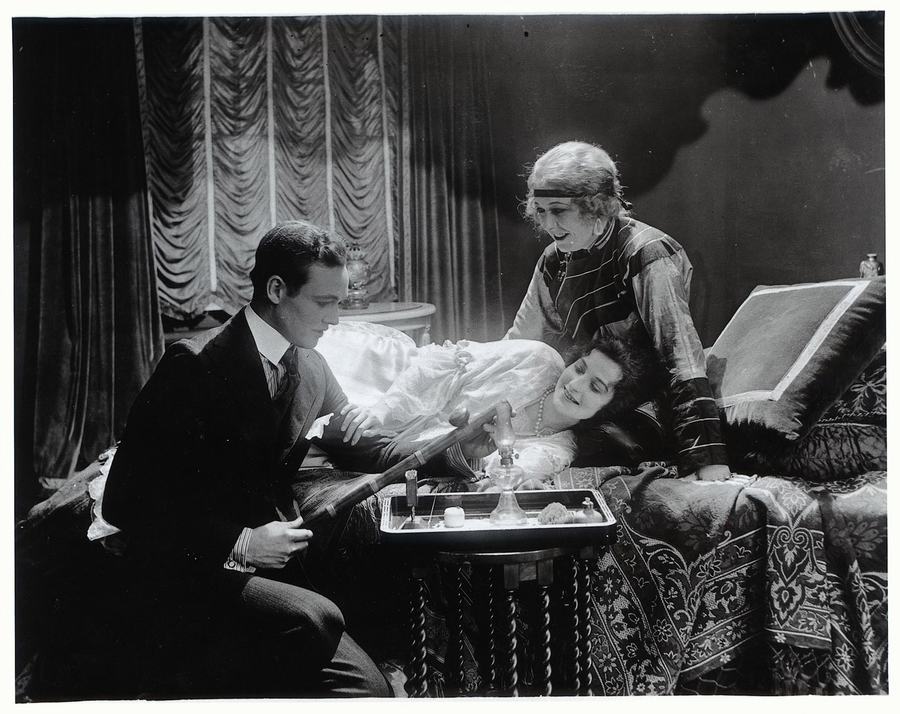
A proscenium arch of smoke and nickel light opens on William H. Thompson’s John Steele, a man who has converted the clang of hammers into Carnegie-style dividends, yet cannot transmute the heart of his sole progeny. The camera, stoic as a bank vault, watches him pin fraternity pins on the lapel of Frank—Charles Ray in a role that rips the enamel off the all-American boy
stereotype—while Margaret Thompson’s matriarch hovers like a black-clad ledger entry, forever tallying the cost of social ascent.
From the first reel, Sullivan’s intertitles arrive with the snap of a broker’s chalk on slate: Wealth buys everything but the soul’s collateral.
That epigram curdles into prophecy once Frank discovers that a platinum pocketful can purchase midnight passes to subterranean cabarets where brassy cornet notes drip like morphine. Note the visual rhyme—every time Frank inhales white powder, Sullivan cuts to a blast furnace exhaling red sparks: the family fortune quite literally burns inside the heir’s lungs.
Art director Robert Brunton drapes the Steele manse in vaulted velvet and onyx mantels, but the décor is engineered for vertigo. Doorframes tilt slightly inward, mirrors are convex, chandeliers hang just low enough to brush a drunkard’s temple—an architectural reminder that capital accumulation warps space itself. When Frank stumbles home at dawn, the foyer’s marble checkerboard becomes a chessboard on which he is both pawn and king, dethroned by his own debauched moves.
Comparative lens:
Charles Ray, better known for hayseed ingénues, here contorts his cheekbones into a death-mask of ennui. Watch the sequence where Frank snorts his first dose: Ray’s pupils bloom black, yet the grin that follows is eerily infantile—an addict reborn into a carnal Eden. It’s a silent-era breaking bad
five decades early, accomplished without spoken word, only micro-gestures and iris-in close-ups that feel like thumbs pressing on the viewer’s own carotid.
Ethel Ullman
as Lilian Vandernest—the debutante whose pearls get pawned for heroin—supplies the film’s most lacerating image. When Frank pockets the proceeds, she does not weep; instead she applies lipstick in a cracked compact mirror, the cosmetic smear resembling a blood-fattened mosquito. In that gesture, Sullivan anticipates the commodification of female flesh later explored in Cora and Anfisa.
Sullivan structures the narrative like a balance sheet in three columns: Assets, Liabilities, Wastage. Each act closes on a ledger page slammed shut—an intertitle stamped Account Overdrawn.
By act four, Frank’s liabilities metastasize into criminal indictment; a botched jewelry heist (shot in chiaroscuro reminiscent of von Stroheim’s gutter ballets) leaves a night watchman dead. The editing rhythm fractures: we get 23 cuts in 40 seconds, a montage hurricane that prefigures Soviet agitprop, though the ideological vector points inward—toward moral bankruptcy rather than class revolt.
The film’s final tableau refuses catharsis. After Frank’s body is lifted from the rail-yard cinders, John Steele stands beside the coroner's stretcher, clutching a blood-spattered stock certificate that once represented his son’s future inheritance. He tucks it into the corpse’s coat pocket as though hoping to bribe death with compounded interest. Sullivan holds the shot until the father’s silhouette merges with billowing steam—an epitaph written in soot and finance.
Contextual footnote:
Audiences of 1916, fresh from Progressive-Era trust-busting headlines, would have read this moment as political semaphore: the titan who once bent governments must now bend to the immutable ledger of mortality. Modern spectators cannot help but recall Tess of the D’Urbervilles, where agrarian capitalism likewise chews up the young, though Hardy’s Wessex offers green pastures; Sullivan’s Pittsburgh offers only slag and ticker tape.
Viewers tracing opulence-as-ominous should pair this with Doctor Nicholson and the Blue Diamond, whose gemstone lust maps colonial rapacity. Conversely, The College Orphan flips the equation: poverty breeds scrappy virtue, whereas The Dividend insists that surplus capital is itself a corrosive solvent.
Sullivan’s screenplay
—delivered at the apogee of Thomas Ince’s factory system—also anticipates the fatalistic juggernaut of Kreutzer Sonata, though Tolstoyan sexual jealousy is here replaced by pharmacological nihilism.
A 2018 4K restoration by the Library of Congress—scanned from a Dutch nitrate print—reveals granular textures previously submerged: the glint of laudanum inside a teardrop-shaped bottle, the frayed hem of a once-expensive spencer jacket, the chalk-dust that powders Frank’s patent shoes as he flees the robbery. The tinting schema alternates between amber for interior wealth and viridian for nocturnal vice, culminating in a crimson flash for the climactic train accident, a chromatic crescendo that rivals any CGI explosion for visceral punch.
Soundtrack note:
Though originally accompanied by house orchestras playing compiled cues, the restoration commissioned a new score by Angélica Negrón—Puerto Rican electro-acoustic composer—who samples clacking typewriters and stock-ticker bells, wedding period ambience to glitchy modernity. The anachronism works; it reminds us that derivatives markets still monetize human futures, only faster now.
The Dividend is less a moralistic melodrama than a chemical equation showing how inherited capital plus hedonistic entropy equals combustion. Its formal rigor—ledger-style structure, iris-in economics, chiaroscuro psychology—lifts it above contemporaneous cautionary tales into the realm of filmic dissertation. In the taxonomy of silent cinema, it nestles between the social Darwinism of The Unwritten Law and the expressionist doom of Das Geheimnis der Lüfte, yet its uniquely American idiom—locomotives, ticker tape, opium dens masquerading as jazz clubs—renders it a standalone artifact.
Final appraisal:
a film that knows price and value are incommensurable, and proves it by letting the audience hear the clatter of coins even during the silent interludes. Ninety-odd years before Wall Street’s greed is good, Sullivan’s intertitle sneers:
Greed is simply.
That laconic verdict still reverberates in every crypto-bubble, every trust-fund relapse, every hedge-fund cathedral built on leveraged air. See it, and feel your own portfolio—moral, emotional, financial—audited frame by frame.
IMDb 6.2
1926
Community
Log in to comment.