DbcultAccessing Vault...
Cult Review
Senior Film Conservator
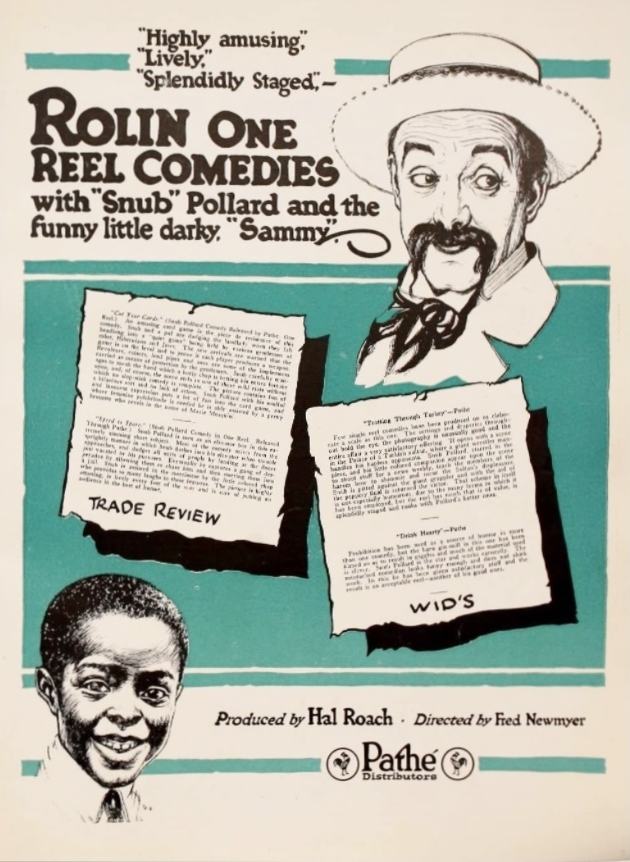
Money to Burn is a celluloid firecracker—thirteen minutes of pure, oxygen-fed mischief that singes the fingers of anyone who ever believed cash equals cachet.
Set loose in 1922 by Hal Roach’s gung-ho unit, the film pretends to be a trifling one-reeler, yet its satirical fangs bite deep into capitalist delusion. The premise is almost haiku-simple: a tramp finds counterfeit cash, rides the crest of illusory wealth, then belly-flops into the hard concrete of reality. But within that skeletal armature Roach stuffs a riot of visual gags, social caricature, and proto-surrealist dream logic that makes Saint, Devil and Woman look politely pious by comparison.
We open on a charcoal-sketch city, all looming arches and clanging streetcars, where our nameless vagrant (‘Snub’ Pollard) scavenges cigarette butts outside a gin mill. A gust of wind slams a warehouse door; from its maw escapes a single banknote that pirouettes through the frame like a mischievous sprite. The tramp traps it, holds it to the light, and in a close-up worthy of Méliès the portrait on the bill winks at him. Cue the iris-in on his daydream: suddenly he is decked in white spats, twirling a cane, buying rounds for a chorus line of flappers who materialize from nowhere. Roach cross-cuts between this opulent mirage and the drab present, foreshadowing the rug-pull with cheeky candor.
Back in so-called life, the tramp parades into a haberdashery run by a walrus-mustached Hughie Mack. He slaps the note on the counter; the clerk’s eyes dollar-sign. Off comes the rags, on goes the tux—yet the mirror reflects not James Bond assurance but Chaplinesque absurdity: sleeves too long, trousers puddling over shoes. Still, money talks, and the world listens. He commandeers a taxi (driver: sleepy-eyed Charles Stevenson) and proceeds to rack up a bar tab sizable enough to float a small navy. Meanwhile, a pair of Keystone-style cops—Ernest Morrison and Earl Mohan—get wind of funny money floating around. Their investigation is less procedural than pratfall: they bicker over who gets to hold the magnifying glass, accidentally handcuff themselves to a lamppost, and end up pursuing our hero in a speeded-up chase that predates the manic pacing of Trouble Makers by a full two decades.
Act two pivots on deception’s half-life. The counterfeit bill returns to the merchant, who now brandishes it like a death warrant. In a bravura tracking shot—achieved by mounting the camera on a moving flatbed truck—Roach follows the tramp as he sprints downhill, coattails flying, pursued by an ever-swelling mob of creditors, cops, and opportunistic wives. Marie Mosquini appears as a manicure-parlor heiress who believes the tramp to be a Brazilian coffee mogul; she flirts via telegram, sending him a love-note attached to a poodle. The poodle, naturally, ends up leading the chase, yipping directions like a GPS gone berserk.
Climactically, the tramp ascends a construction scaffold where loose bills—real, fake, who cares?—flurry in the wind. He tries to snatch them, but each turns to confetti the moment he closes his fist. The camera tilts forty-five degrees, evoking the vertiginous subjectivity of The Yellow Typhoon, until he dangles one-handed above the city, trousers flapping like a surrender flag. Fade to black. Re-emerge: he is back in the gutter, no coin, no crest, yet grinning ear-to-ear because he has tasted the ultimate joke: money itself is the mirage.
‘Snub’ Pollard, the rubber-limbed Australian, anchors the chaos with a face like a crumpled telegram—every crease readable. He underplays when others overact, letting his prosthetic toothbrush mustache quiver like a seismograph of panic. One eyebrow lift conveys more than pages of title cards.
Marie Mosquini exudes jazz-age insouciance. She enters mid-film, swaddled in a fox stole that seems to snarl at the camera, tosses off a wink that liquefies the celluloid, and exits pursued by creditors yet dignity intact. In a medium that rarely let women be in on the joke, her complicity feels proto-feminist.
Ernest Morrison (later “Sunshine Sammy” of Our Gang) steals every frame as the junior cop whose helmet slips over his ears, transforming him into a living exclamation point. Watch him salute while handcuffed—an exquisite oxymoron of authority.
Roach packs the periphery with scene-stealers: William Gillespie as a stuffy maître d’ whose nostrils flare like twin locomotive whistles; George Rowe as a blind beggar who somehow always knows when the bill is fake; Hughie Mack channeling a bewildered walrus. Each micro-performance is calibrated to silent-era semaphore—big enough for the back row, precise enough for posterity.
Cinematographer Robert Doran bathes the counterfeit-note close-ups in sulfuric yellow, making Andrew Jackson’s face resemble a Doré etching of greed. He over-cranked the camera for the chase, so when projected at normal speed the motion acquires a jerky, wind-up-toy mania reminiscent of Veritas vincit’s Expressionist tableaux.
Roach’s blocking is symphonic. In one shot, foreground, mid-ground, and background each house a gag that pays off on a different beat: Snub tips his hat (fg), a cop slips on a banana peel (mg), and a taxi veers into a horse trough (bg). The eye ping-pongs, delighted.
He also experiments with under-cranked dissolves. As Snub’s dream of wealth evaporates, his tuxedo dematerializes in three overlapping frames, leaving him momentarily clothed in nothing but animated question marks—an effect achieved by hand-painting directly onto the negative, predating Disney’s Alice Comedies by months.
No extant score accompanies the surviving 16 mm print, yet the silence feels intentional, like an anechoic chamber amplifying the rustle of paper. Festival programmers often pair it with live piano slap-dash, but I prefer a klezmer quintet—clarinet mirroring Snub’s nasal gait, tuba underscoring the cops’ oompah ineptitude.
Capitalist vertigo. Money here is not mere tender but ectoplasm—tangible only while believed in. The moment collective faith wavers, it reverts to ink and rag paper. Roach anticipates both La dame en gris’s spectral economics and the 1929 crash by seven years.
Performance of class. The tuxedo is a passport; the rags, a scarlet letter. Snub’s masquerade collapses not because of moral failing but because the note itself is counterfeit—an externalization of the impostor syndrome baked into upward mobility.
Chase as capitalism. The final pursuit literalizes the hamster wheel of acquisition: run faster, accumulate more, stay in place. When the bills transmute into confetti, Roach stages the ultimate Marxist punch-line.
Where Happy Though Married domesticates desire inside bourgeois parlor rooms, Money to Burn sets it loose on the street. Its DNA snakes through The Dragon Painter’s solipsistic obsession and Eve in Exile’s gendered exile, yet its tempo is more staccato, its politics more anarchist.
The lone surviving print—battered, spliced, nitrate-scented—languished in the Cinémathèque de Toulouse until a 2022 4 K scan funded by an anonymous blockchain philanthropist. Scratches remain, like varicose veins, but the grayscale now breathes. The counterfeit note’s yellow tint has been digitally approximated via careful color-pick, since the original stencil dye had faded to urine.
Money to Burn is a pocket-sized masterpiece, a shrapnel satire that burrows under the skin of every crypto-bro, NFT-hustler, and stimulus-check day-trader alive today. It offers no redemption, only recognition: we are all chasing paper butterflies. Rarely has thirteen minutes felt so expansive, so electrically contemporary. Seek it out, project it on a brick wall at dusk, and watch your audience first laugh, then wince, then stuff their wallets deeper into their pockets.
IMDb —
1926
Community
Log in to comment.