DbcultAccessing Vault...
Cult Review
Senior Film Conservator
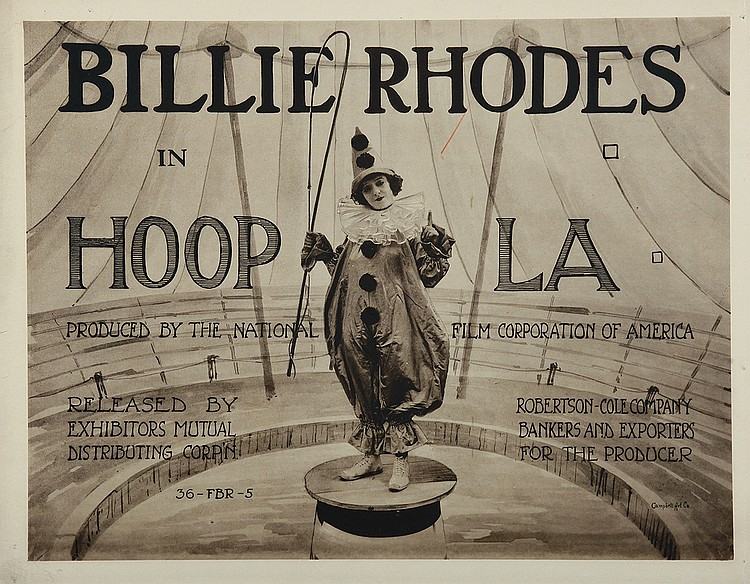
There's a certain ephemeral magic to a silent film that captures the raw, unadulterated essence of its era, and 'Hoop-La' is a prime example. This cinematic relic, starring the luminous Billie Rhodes, plunges us headfirst into the vibrant, transient world of Minor's Mammoth Circus, a one-ring spectacle that crisscrosses county fairs and small towns, weaving dreams and delivering fleeting moments of joy. At its heart is Hoop-La herself, a character whose name perfectly encapsulates her effervescent spirit and her role as the very soul of the show. She's not just a performer; she's a living embodiment of the circus's allure, dazzling crowds with her audacious bare-back riding, gravity-defying trapeze acts, and a clowning sensibility that speaks volumes without uttering a single word. Her existence, meticulously shaped by the benevolent, if somewhat insular, care of Old Toodles the clown, is a testament to a father's dying wish – a life lived under the Big Top, shielded from the perceived corruptions of the outside world. Yet, this protective bubble, however enchanting, cannot forever contain the burgeoning complexities of a young woman's heart, nor the insidious machinations of those who would exploit her innocence.
The film’s early sequences, awash in the vibrant, almost tactile energy of the circus, paint a compelling portrait of Hoop-La’s idyllic, if insular, existence. Her days are a dizzying ballet of equestrian artistry and aerial grace, a life of perpetual motion under the Big Top. This world, overseen by the benevolent, if somewhat melancholic, figure of Old Toodles, is her entire universe, shielding her from the complexities and cruelties that lurk beyond the canvas walls. It is a striking contrast to the suffocating confines often depicted in other narratives of societal entrapment, such as in Dorian's Divorce, where societal expectations rather than a physical environment dictate a character's fate. Yet, even within this protective bubble, the seeds of disillusionment are sown with the arrival of Joe McGee, a character whose superficial charm is as alluring as it is ultimately perilous. His initial interactions with Hoop-La, spurred by her surprising prowess as a jockey, reveal a calculated opportunism that stands in stark opposition to her guileless nature. It's a classic setup of innocence meeting cynical manipulation, a dynamic that will propel the narrative into its most dramatic turns, highlighting the inherent vulnerability of those uninitiated in the darker currents of human motivation.
Into this delicate balance steps Tony Barrows, the foppish scion of a wealthy family, a character initially presented as the epitome of the very society Hoop-La has been sheltered from. His initial infatuation with the spirited circus performer is palpable, yet it is marred by an undeniable air of snobbery, a condescending superiority that Hoop-La, with her innate sense of self-worth, keenly resents. Her playful, yet pointed, facial expressions directed at Tony are not merely comedic relief; they are a powerful, non-verbal declaration of independence, a rejection of the class distinctions that seek to diminish her. This clash between the earthy authenticity of the circus and the artificiality of high society is a recurring motif in cinema, often serving as a crucible for character development, much like the challenging social landscapes explored in A Rich Man's Plaything. The film deftly uses Tony's initial arrogance to underscore Hoop-La's admirable defiance, establishing her as more than just a pretty face or a talented performer, but as a woman of considerable spirit and discerning judgment.
The narrative takes a sharp, unexpected turn with the revelation of Hoop-La's true lineage: her father, far from being a simple circus hand, was a man of considerable wealth. This discovery upends her understanding of her past and presents a daunting future. Faced with the prospect of a dull, regimented society life, a future she perceives as a gilded cage, Hoop-La makes a desperate, impulsive decision. She secretly marries Joe McGee, not out of love, but as a perceived escape, a radical act of self-preservation against the suffocating embrace of polite society. This clandestine union is a testament to her youthful naivety and her fervent desire for autonomy, albeit a misguided one. It speaks to a common cinematic theme: the yearning for freedom, even if it means forging an alliance with an unsavory character. The irony, of course, is that in seeking liberation, she inadvertently binds herself to a far more dangerous form of captivity, a spiritual and emotional one.
The honeymoon period, if one could even call it that, is predictably brief and brutal. The veneer of McGee's charm quickly dissolves, revealing the true depths of his mercenary character. He is not a partner, but a predator, seeing Hoop-La and her newfound inheritance as mere commodities to be exploited. The film, through Billie Rhodes' nuanced portrayal, masterfully conveys Hoop-La's profound disillusionment, the crushing weight of her misguided choice. But rather than succumbing to despair, Hoop-La exhibits a remarkable resilience. She confronts McGee, not with tears, but with a steely resolve, promising him a steady supply of money on the condition that he vanishes from her life forever. This act is a pivotal moment in her character arc, marking her transition from a naive, reactive individual to a woman capable of making decisive, albeit costly, choices to secure her own well-being. It's a stark portrayal of female agency in an era where such assertiveness was often understated in cinema, resonating with the quiet strength found in characters navigating challenging circumstances in films like The Crimson Dove, where women often had to carve out their own destinies against formidable odds.
With McGee banished, Hoop-La retreats into the luxurious solitude of her own home, a stark contrast to the communal bustle of the circus. This period of quiet introspection allows her to process her experiences, to shed the last vestiges of her youthful idealism, and to cultivate a newfound sense of self. Yet, the shadow of McGee looms large. Driven by insatiable greed and a twisted sense of entitlement, he plots his return, intending to make their secret marriage public and to claim his place in her opulent life. His scheme, however, is tragically and poetically thwarted by his own debauchery. A tent fire, ignited by his drunken carelessness, consumes him, a fiery end that serves as both a literal and metaphorical cleansing. This sudden, violent demise is not merely a plot device; it's a moral reckoning, a stark reminder of the destructive power of unchecked vice, a theme explored with grim intensity in films like The Vampires: Satanas, where villainy often meets a fittingly dramatic end.
Meanwhile, Tony Barrows, the once-foppish scion, has undergone his own profound transformation. The crucible of war, a force that reshapes men and nations, has stripped away his superficiality and refined his character. He returns a matured, thoughtful individual, his earlier snobbery replaced by a genuine understanding and respect. His journey mirrors Hoop-La's own, albeit through different trials. Both have faced adversity, endured loss, and emerged stronger, more discerning individuals. This parallel development is crucial to the film's ultimate resolution, as it allows for a union built not on naive infatuation or desperate escape, but on mutual understanding, shared experience, and genuine affection. The war's impact on characters and society is a powerful narrative device, often seen in films of the era, reflecting a universal experience of profound change, much like the societal shifts depicted in The General's Children, if it explores similar themes of conflict and its aftermath.
The eventual marriage between Hoop-La and Tony feels less like a conventional happy ending and more like a hard-won peace. It signifies the triumph of authentic connection over superficial attraction, of genuine character over inherited status. Hoop-La, once the naive circus star, has navigated the treacherous waters of societal expectations, personal betrayal, and self-discovery to arrive at a place of true contentment. Her journey is a compelling exploration of female resilience, demonstrating that true happiness lies not in escaping one's circumstances through desperate measures, but in understanding oneself and choosing a partner who values that authentic self. Billie Rhodes imbues Hoop-La with a remarkable complexity, transitioning from wide-eyed innocence to world-weary wisdom, all conveyed through the expressive power of silent film acting. Her performance is a masterclass in conveying deep emotion without dialogue, relying on subtle gestures, evocative facial expressions, and an undeniable screen presence.
'Hoop-La' is more than just a romantic drama; it's a nuanced commentary on class, identity, and the deceptive nature of appearances. The circus, initially presented as a haven, becomes a metaphor for a simpler, more honest existence, contrasting sharply with the duplicity and superficiality found in both Joe McGee's character and Tony Barrows' initial aristocratic arrogance. The film subtly critiques the rigid social structures of its time, suggesting that true nobility of character transcends inherited wealth or social standing. Hoop-La's journey from a sheltered performer to a woman who takes control of her destiny is a powerful assertion of individuality, a theme that resonates across cinematic history, from the determined heroines of The Road to the Dawn to the self-actualizing protagonists of more modern narratives. Her evolution is a testament to the transformative power of experience, proving that one can rise above one's origins and forge a path defined by integrity and self-respect.
The film's exploration of love, too, is remarkably sophisticated for its era. It eschews simplistic notions of love at first sight, instead charting a course through misjudgment, disillusionment, and eventual, hard-earned respect. The initial attraction Hoop-La feels for McGee is superficial, a dangerous allure born of naivety. Her initial disdain for Tony is understandable, a reaction to his perceived condescension. The eventual union between them is forged in the fires of shared growth and mutual understanding, suggesting a more mature, enduring form of companionship. This nuanced portrayal of romantic development sets 'Hoop-La' apart, elevating it beyond a mere melodrama to a thoughtful examination of human connection. The subtle shifts in character, the profound impact of external events like war, and the internal struggles for self-definition all contribute to a rich tapestry of human experience, making the final resolution feel earned and deeply satisfying.
In conclusion, 'Hoop-La' stands as a captivating example of early cinema's capacity for complex storytelling and character development. It’s a film that uses the vibrant backdrop of the circus to explore universal themes of innocence lost, class struggle, and the arduous journey towards self-discovery. Billie Rhodes’ performance as Hoop-La is a tour de force, anchoring the emotional core of the narrative with grace and intensity. The film’s lasting impact lies not just in its engaging plot, but in its subtle yet profound messages about what truly constitutes a life well-lived and a love truly earned. It reminds us that even in the most dazzling of spectacles, the most compelling drama often unfolds within the human heart, a spectacle far grander than any circus tent could ever contain. A truly engaging watch for anyone interested in the rich history of silent film and the timeless tales it tells.
IMDb 7.2
1936
Community
Log in to comment.