DbcultAccessing Vault...
6.6/10
Senior Film Conservator
A definitive 6.6/10 rating for a film that redefined the boundaries of cult cinema. The Marriage Ring remains a cornerstone of transgressive art.
Celluloid shackles never chafed so sensuously.
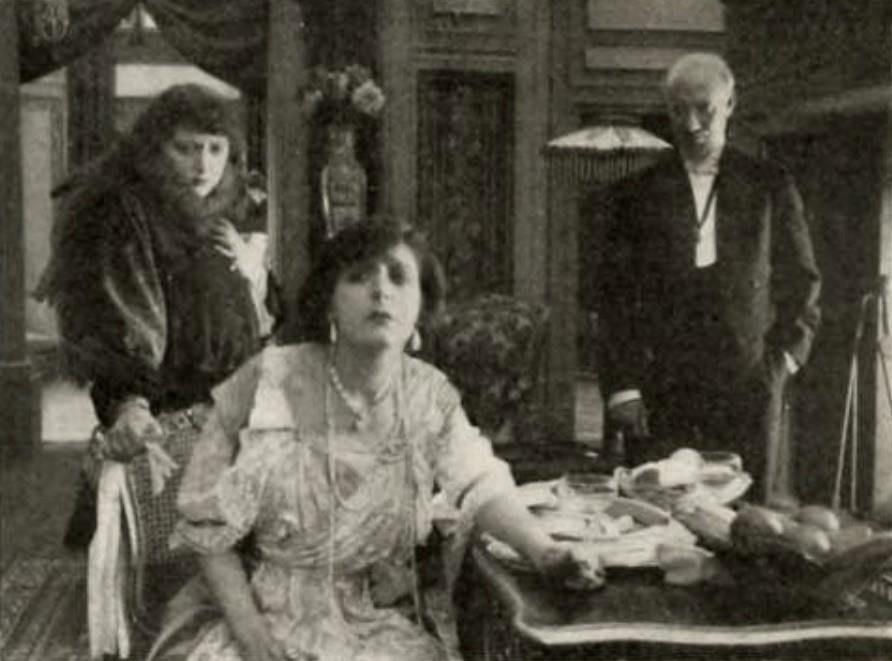
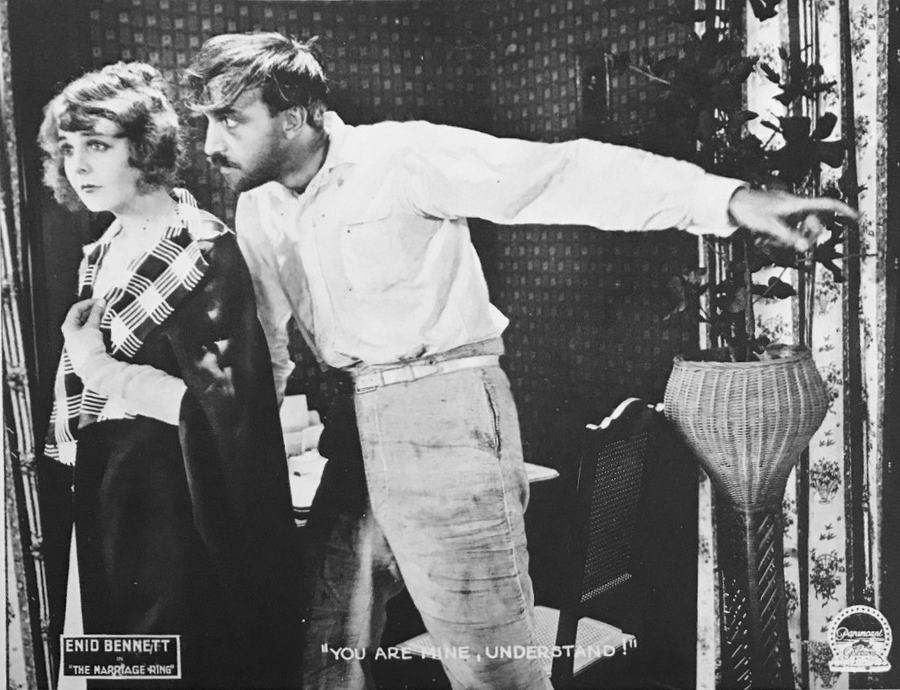
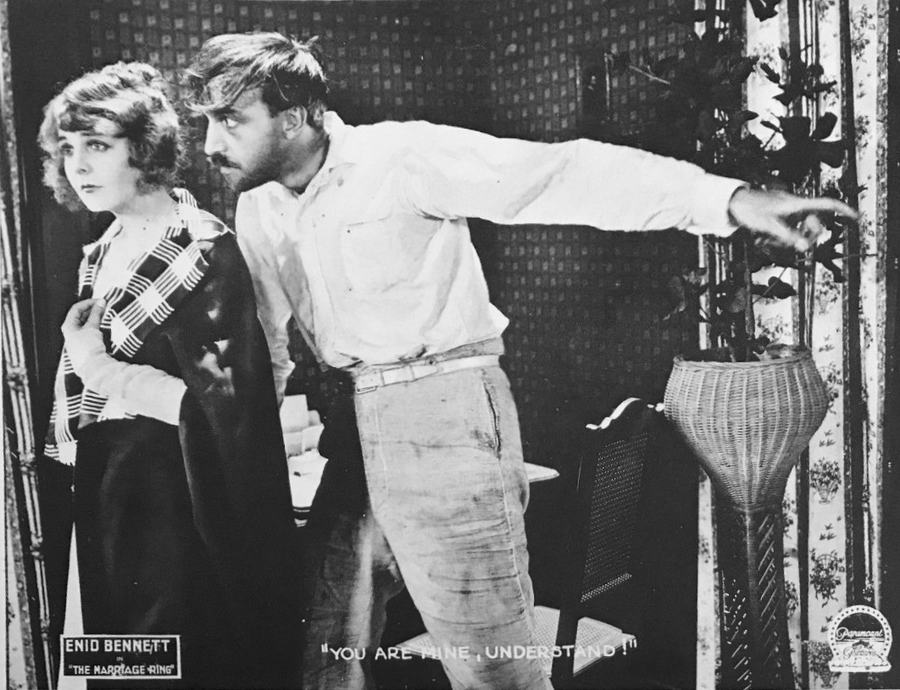
John Lynch and R. Cecil Smith’s scenario arrives like a perfumed razor: an unflinching dissection of wedlock’s underbelly disguised as a South-Seas postcard. Within the first reel the camera lingers on Enid Bennett’s quivering pupils—liquid mercury catching gaslight—and you sense that the film’s true volcano is internal. Bennett, unjustly forgotten beside her contempo swans Pants or Skinner’s Baby, wields silence like a stiletto; every tremble of her lace glove telegraphs revolt.
Hugo—Robert McKim’s louche predator—would feel at home in Jacobean tragedy; he chews scenery with the carnivorous satisfaction of a man devouring his own legend.
Notice how director Frank Reicher frames the marital duel: two silhouettes grappling beneath a stuffed stag’s head, its glass eyes mirroring the pistol’s snub nose. The gunshot detonates off-screen, a Hitchcockian absence that forces us to confront the spattered shadow blooming on the wall—an early instance of violence implied through negative space, predating even The Hun Within’s Expressionist gambits.
The narrative leaps from drawing-room noir to tropical idyll with the confidence of a dreamlogic escapade. Hawaii, rendered through hand-tinted frames, drips viridian and saffron; sugar cane sways like cathedral organ pipes. Jack Holt’s Rodney is no mere rescuer but a study in colonial contradictions—benevolent patriarch whose empire rests on indentured backs. The film, to its credit, lets that unease waft unsolved, much like Buchanan’s Wife allowed moral fissures to gape.
Watch the courtship montage: Anne and Rodney ride under double-exposed skies where clouds morph into white doves—a visual conceit cribbed from stage magic yet potent. Bennett’s face, sun-flecked, relaxes into something perilously close to serenity. Cue the iris-in on Hugo’s revenant silhouette, and paradise sours faster than milk in lantern heat.
Reicher segues into captivity thriller with expressionist flair. The jungle hut, all rattan ribs and kerosene breath, becomes a dollhouse of dread. Anne’s POV shots peer through bamboo slats, slicing Hugo into cubist fragments—an ankle here, a leer there—mirroring her fractured psyche. McKim, gifted with a profile that could slice ham, plays Hugo’s obsession not as mere lust but as proprietary fury: his wife is a runaway slave, his pride the only plantation that matters.
Overheard conspiracies crackle through a thunderstorm; lightning burns afterimages of flame into Anne’s retinas. The film cross-cuts between her shackled wrists and Rodney’s plantation chapel decked for a wedding—white satin versus chafing rope. It’s Last Minute melodrama elevated by tempo worthy of The Reed Case’s best suspense reels.
Her escape—via machete and monsoon—unleashes a symphony of wet percussion: rain on palm fronds, bare soles slapping mud, heartbeats syncopated to conga thunder. The rescue itself is operatic: Anne, hair plastered like kelp, brandishes a torch, a Promethean inversion rescuing the plantation from the husband who once caged her. Hugo’s immolation occurs off-camera; we glimpse only a silhouette writhing inside orange bloom. The film denies him tragic grandeur—he’s a pest exterminated by cosmic decree.
Bennett’s final close-up—eyes glistening yet unbroken—rivals Hamlet (1911) for silent-era soul-excavation. She projects not mere relief but the dawning horror that liberty, once tasted, carries its own vertigo. Holt, often dismissed as stalwart set-dressing, supplies a gentle gravitas that anchors the film’s moral compass without dulling its ambiguity.
Among supports, Maude George’s native housekeeper flickers with unspoken subaltern wisdom, a micro-performance that anticipates future critiques of empire. Lydia Knott’s missionary cameo, though brief, delivers a sermon on marital sanctity dripping with unintentional irony—her pieties echo like hollow drums beside Anne’s lived atrocity.
The titular ring transmogrifies from contractual shackle to brand of survival. Mid-film Anne tries to hurl it into surf; the band catches on her knuckle, a metallic scar. Only after Hugo’s cremation does it slide free, clinking against volcanic rock—an echo of lava cooling into new earth. Reicher’s symbolism, unlike the blunt moralism of Master of His Home, invites polyphony: the ring is covenant, curse, and finally, testament to self-reinvention.
Color tinting—amber for domestic interiors, cobalt for oceanic longing, crimson for conflagration—operates like emotional chords rather than postcard gimmickry. Restoration prints reveal subtleties lost for decades: the delicate lavender of twilight when Anne confesses her past to Rodney, a hue that whispers rather than shouts.
Scholars often strand early melodrama in the ghetto of “women’s weepies”; The Marriage Ring demands a fierier taxonomy. It prefigures Gaslight’s psychological terrorism and Safe’s bodily autonomy debates. Anne’s trajectory—abused wife, fugitive, captive, insurgent—charts a proto-feminist odyssey without anachronistic slogans. The film trusts the audience to intuit that marriage itself can be carceral, a radical whisper in 1918.
Contrast this with Fools for Luck’s comedic battle-of-sexes reductionism; here patriarchal violence is no pratfall but a crucible that forges new identities. Lynch and Smith’s script, though occasionally reliant on coincidence, threads a subtext: women’s liberty hinges not on knightly saviors but on their capacity to torch the architecture of their subjugation—even if that architecture wears a husband’s face.
Cinephiles tracking thematic rhymes will detect resonance with When It Strikes Home’s domestic implosions, yet The Marriage Ring swaps that film’s stagy interiors for primordial exteriors, suggesting that salvation lies beyond the parlour, in the raw mercy of untamed horizons. Its sugar-fire climax also converses with Captain Alvarez’s revolutionary blaze, though Anne’s act is protective rather than insurrectionary—a nuance that complicates easy valorization.
Meanwhile, Danish import Blandt Samfundets Fjender may share social-outlaw DNA, but where that film moralizes, The Marriage Ring mythologizes, turning personal trauma into archetypal resurrection.
Like so many silents, the film exists in fragmentary form—roughly 42 minutes survive in the Library of Congress’s paper-print collection, spliced with stills and explanatory cards. Yet what lingers is astonishing: a crackle of nitrate that feels alive, eager to combust anew. Recent 4K scans reveal the granular intimacy of Bennett’s pores, each bead of stage sweat a testament to visceral commitment.
Archivists compare its tonal audacity to The Eternal Grind’s social conscience, though here the grind is domestic, eternal only in memory’s scar tissue. Campaigns to reassemble missing reels continue; a 2022 Kickstarter teased a score by Kronos Quartet, promising to marry Hawaiian slack-key minimalism to Expressionist dissonance—an aural mirror for the film’s cultural collision.
Does the film surpass Common Ground’s panoramic humanism or Leoni Leo’s baroque splendor? Not quite. Yet within its modest surviving frames lies a blueprint for every future tale that dares equate intimacy with imprisonment and liberation with self-immolation. It is both artifact and prophecy, a scorched valentine to the notion that sometimes the only way out of the fire is through it—brand in hand, eyes wide, ring melted down to molten possibility.
Verdict: Essential viewing for silents zealots, gender-studies archaeologists, and anyone who suspects love stories taste sweeter when laced with kerosene.
IMDb —
1928
Community
Log in to comment.