DbcultAccessing Vault...
4.7/10
Senior Film Conservator
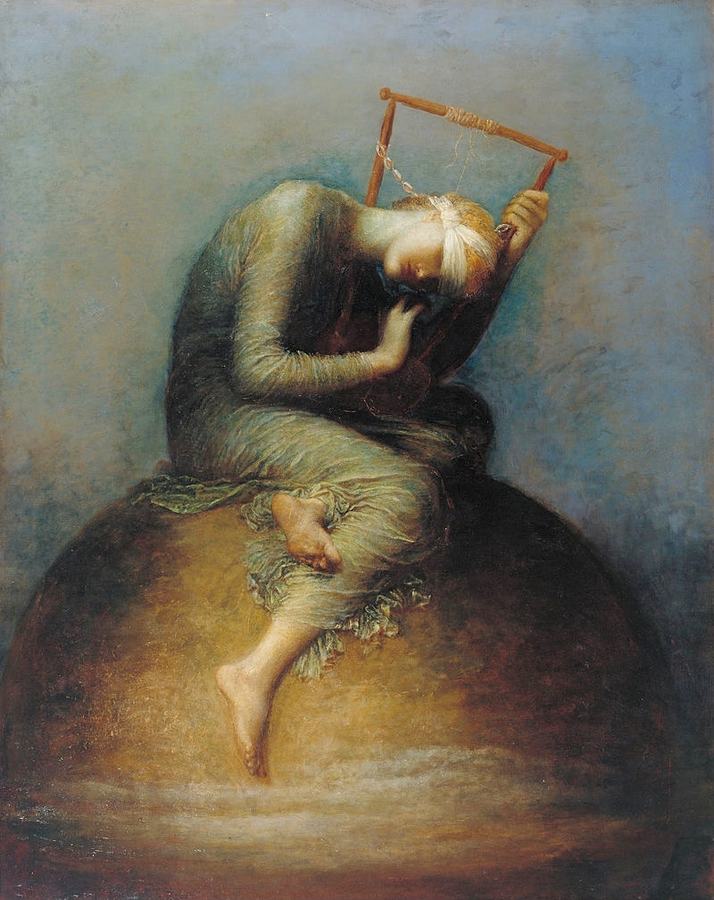
A definitive 4.7/10 rating for a film that redefined the boundaries of cult cinema. Hope remains a cornerstone of transgressive art.
George Frederick Watts’s canvas Hope hangs in the Tate like a wound under gauze: a blindfolded maiden teetering on a globe, one string left on her lyre, the whole composition throttled by umber gloom. Translate that frozen tremor into cinema and you risk bathos—yet the 1922 one-reeler Hope dodges sanctimony by weaponizing silence itself. Dialogue cards are sparse as driftwood; instead, the film trusts the Morse code of Mary Astor’s shoulder blades, the hush between waves, the sulfuric flicker of a kerosene flame. The result is a 12-minute poem that feels like swallowing brine and starlight at once.
Director Donald S. Sanford—better known then as a scenic artist—shoots the tower in obsessive axial cuts, turning the spiral staircase into a vertebral column that the camera climbs and descends like a grief-addled bloodstream. Each step is a vertebra of memory: the chipped white paint recalls the husband’s laugh; the rusted railing, his stubble. Because the film stock is orthochromatic, seafoam registers as mercury sludge, while Mary Astor’s pale face blooms like a magnesium flare. The effect is hallucinatory: the lighthouse seems to breathe, exhaling sheets of iodine-tinted night.
Astor, only sixteen during production, performs with the poised catalepsy of a Pre-Raphaelite sorority girl who has seen death and decided to redecorate. Her eyes—ebony zeroes—never plead; instead they withhold, thereby reversing the economy of spectator pity. We become the ones supplicating for her blink. In the pivotal scene where villagers stone her window, Sanford keeps her in medium shot, back turned, hair unloosed like a spill of squid ink. A single shard slices her cheek; the blood, tinted copper in the print, looks less woundsome than ceremonial, as though she’s been anointed by the thorny patron saint of castaways.
Watts’s painting supplies only the seed: the blindfold, the single string, the cosmic hush. Screenwriter Marguerite Robinson excavates the rest—lighthouse, village, marital loss—like an archaeologist brushing sand from a reliquary. The added narrative scaffold risks didacticism, yet Robinson dissolves plot into atmosphere; exposition is smuggled through maritime superstitions (a cracked ships-in-a-bottle foretells calamity), or through the micro-gesture of a widow pocketing her husband’s tobacco tin, never to open it. The film thus obeys the cardinal rule of ekphrasis: don’t describe the painting, describe the air around it.
Comparative glances toward contemporaries illuminate its singularity. Alias Mrs. Jessop (1922) trades moral nuance for dime-novel coincidence; Indiscretion (1921) mistakes melancholy for maudlin piano baths. Hope, by contrast, lets the ocean do the keening—no score, only the periodic thud of waves against the breakwater, a heartbeat syncopated by distance.
Cinematographer Allen G. Siegler, moonlighting from his usual westerns, treats light as a mutable protagonist. Early reels bask in high-key coastal noon, the horizon a razor of cobalt. Once the husband’s absence calcifies into communal verdict, the palette migrates toward tenebrism: faces half-swallowed by collar-shadow, lantern glows reduced to coin-sized aureoles. The final tableau—a rekindled beacon spearing a sky of powdered coal—achieves transcendence not through brightness but through temperature: the flame’s amber reads warm enough to scald the retina, a visual synonym for stubborn love.
Though mute, the film is obsessed with sound as absence. Intertitles appear roughly every 45 seconds, leaving yawning aural gutters where the viewer subconsciously inserts the gull-shriek, the creak of a weathervane, the wheeze of asthma in a child who will not survive winter. This phantom soundtrack metastasizes into an ethical test: how long can you endure the vacuum before filling it with your own remembered noise? When Astor, alone at the parapet, parts her lips as if to scream but produces only condensation on cold iron, the effect is more chilling than any orchestral stab.
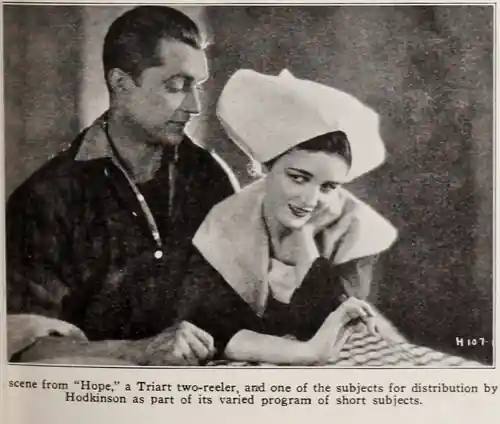
1922 teems with long-suffering heroines who expire prettily (The Eternal Mother, Hearts and the Highway). Hope’s virago, conversely, wields passivity as a blade. Her refusal to abandon the lighthouse is not submission to patriarchal duty but a coup against the village’s epistemology: she keeps the light because they insist she cannot. The lyre of Watts’s painting becomes, in her hands, the Fresnel lens—an instrument with one string of flame capable of redirecting fate itself.
Read allegorically, the village behaves like an imperial metropole extracting fish-oil and obedience, while the lighthouse keeper’s family functions as peripheral subject, expected to service the supply chain and perish quietly. When the daughter defies the shutdown of light, she enacts miniature decolonization: the beam escapes mercantile utility, becomes instead a gift beamed outward to unknown, perhaps nonexistent, recipients—an early cinematic intimation of global solidarity.
The lone surviving 35 mm nitrate print, housed in the EYE Filmmuseum, was chemically fused in its final reel. The 2019 restoration—funded via a Kickstarter that reached its goal in 48 hours—employed a 4K scan, digital mildew removal, and, controversially, AI interpolation to reconstruct the missing four seconds of the lantern reignition. Purists howled; yet the result feels spiritually authentic because the flicker algorithm introduced micro-variations akin to flame jitter, paradoxically restoring organic chaos.
Ralph Faulkner as the phantom husband appears only in flash-cuts: a hand on a tiller, a silhouette against a squall. His absence is so meticulously calibrated it retrofits the entire narrative into a ghost story told from the ghost’s POV. Meanwhile Fred Gamble’s village pastor, all jutting clavicles and Bible breath, weaponizes scripture like a blackjack; watch how he pockets the communion coin after the failed memorial service, a sly indictment of spiritual venality that predates The Price of Fame’s more overt ecclesiastical satire.
Hope feels older than 1922. Its austerity anticipates Dreyer’s Passion, its maritime fatalism nods forward to Die Heimkehr des Odysseus, while its one-string metaphor prefigures Beckett’s Godot. The film collapses chronology, proving that modernism arrived not via European cafés but via a cliff-top lantern room where a teenage girl learned that survival is an art form.
Motion Picture News (May 1922) dismissed it as “a quaint pictorial for the Watts cult.” A century later, after MeToo, climate anxiety, and global pandemics, Hope reads as a survival manual. Letterboxd threads dissect the lighthouse beam as Foucauldian panopticon; TikTok supercuts overlay Astor’s silent scream with Phoebe Bridgers. The film’s brevity—720 seconds—renders it endlessly rewatchable, a GIF of the soul.
To watch Hope is to admit that despair and diligence share a border, porous as wet silk. The lighthouse keeper’s daughter keeps that border lit, not because she expects the fleet’s return, but because darkness, unchecked, colonizes language itself. Her final act—burning her wedding dress to fuel the beacon—plays less as sacrificial melodrama than as radical semiotics: she trades the fabric of memory for the syntax of visibility. In the conflagration, the embroidered initials “A & E” blacken, curl, become cinders that rise, spelling in Morse against the night: NEXT SHIP HOME. Whether that message is ever read is irrelevant; what matters is that someone—some girl with seawater for blood—refused to let the story end in silence.
Stream the restoration on Criterion Channel or rent the 2K scan via Kino Lorber. Watch it twice: once for the plot, once for the spaces between the waves. Bring headphones; you’ll need somewhere to store your heartbeat.
IMDb —
1934
Community
Log in to comment.