DbcultAccessing Vault...
Cult Review
Senior Film Conservator
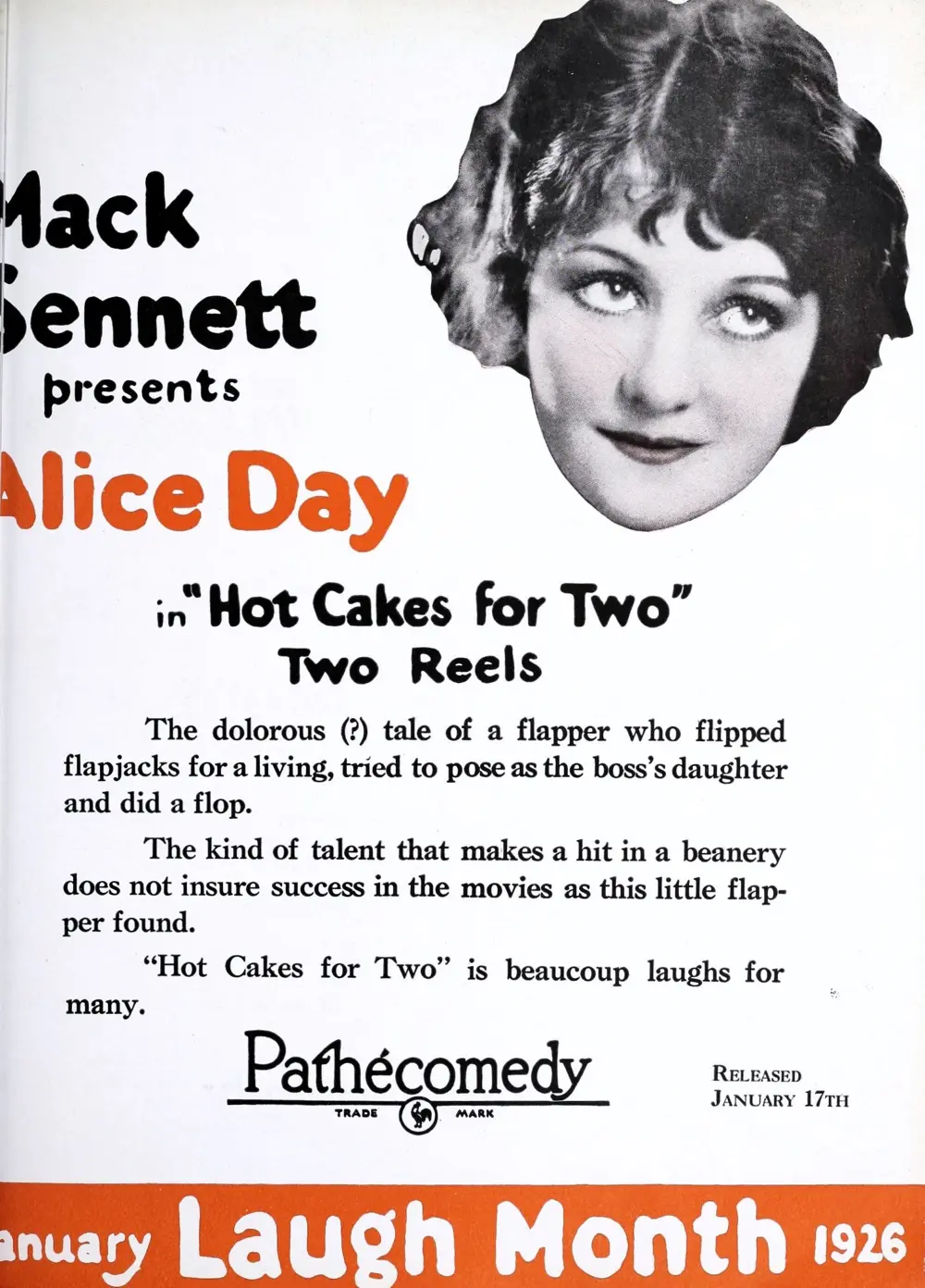
Is Hot Cakes for Two worth your time in the modern era? Short answer: Yes, but primarily as a fascinating historical artifact that skewers the 'get rich quick' culture of early Hollywood.
This film is for the dedicated silent cinema enthusiast and those interested in the history of industry satire; it is absolutely not for viewers who require fast-paced dialogue or contemporary narrative complexity.
1) This film works because it grounds its slapstick in a very real, very cynical anxiety about the exploitation of young women in the 1920s film industry.
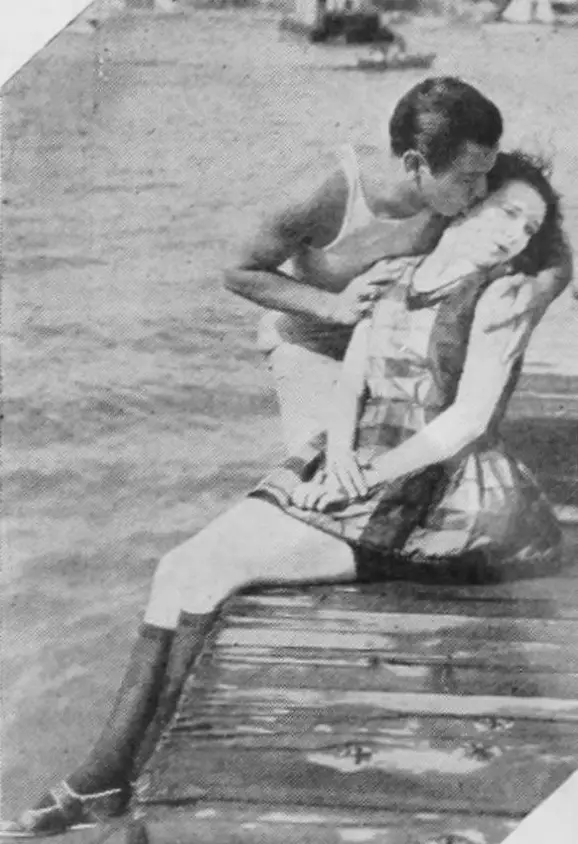
2) This film fails because the romantic subplot with the wealthy actor feels generic compared to the sharp, biting humor of the 'acting school' sequences.
3) You should watch it if you want to see a rare example of a silent film that isn't afraid to mock the very industry that produced it.
The opening act of Hot Cakes for Two is its most potent. We see Alice, played with a wide-eyed vulnerability by Alice Day, entering a world that views her only as a source of revenue. The 'movie school' she attends is a perfect precursor to the influencer workshops and predatory acting classes of the modern day. The instructors don't care about her craft; they care about her bankroll. This cynical edge gives the film a weight that many of its contemporaries, such as The Legacy of Happiness, often lacked.
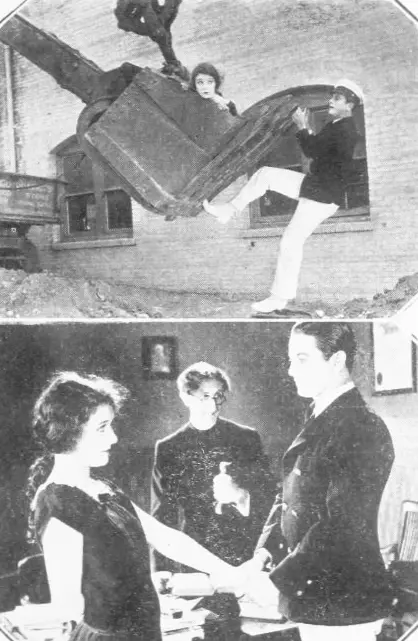
There is a specific scene where Alice is ordered to 'register' various emotions for the camera. When asked to cry, her facial contortions are so unnatural that they elicit laughter from the instructors. It is a brutal moment. It’s not just slapstick; it’s a commentary on the artifice of the medium. The film suggests that 'acting' as taught by these institutions is a hollow performance, a series of masks that have nothing to do with genuine human experience. This sequence alone makes the film more intellectually stimulating than many standard comedies of the era, like The Cat's Nine Lives.
The pacing here is frantic, as was the style of the time, but the editing by the uncredited cutters keeps the focus squarely on Alice’s disillusionment. We see the diploma handed over—a piece of paper that signifies nothing but the loss of her savings. It’s a punchy, effective start that sets a high bar for the rest of the film.
Once Alice is 'graduated' and broke, the film shifts into a different gear. The transition to the restaurant window, where she flips pancakes for a crowd of hungry onlookers, is a brilliant visual metaphor. She wanted to be on the screen; instead, she is behind a pane of glass, being watched by a public that only cares about her utility as a food preparer. It’s a demotion that the film plays for laughs, but the underlying sadness is palpable. This is a common trope in films like Prodigal Daughters, but here it feels more grounded in the physical reality of labor.
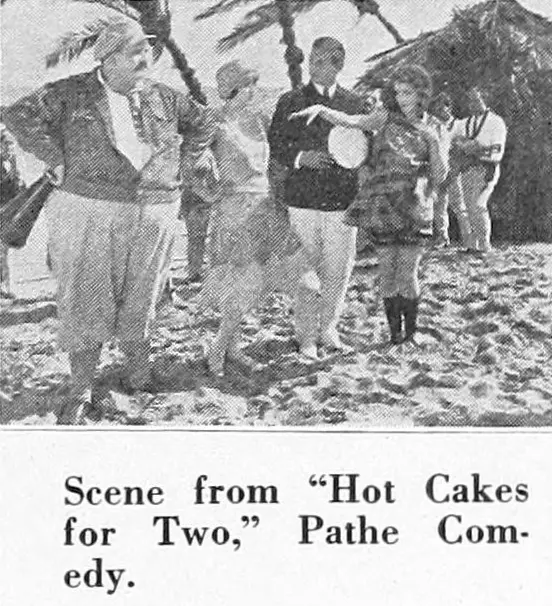
The introduction of the wealthy actor, played by Roger Moore (the silent era star, not the Bond actor), introduces the romantic element. Their meeting is framed through the window—another layer of separation. Alice’s decision to lie about her father being the proprietor of the restaurant chain is where the film enters more traditional farce territory. It’s a bit of a letdown after the sharp industry critique of the first act. The stakes suddenly feel smaller. We move from a girl fighting a predatory system to a girl trying to keep a boyfriend. It’s a pivot that feels safe, perhaps too safe.
However, the physical comedy of the pancake house is top-tier. Alice Day’s timing with the griddle is impeccable. There’s a rhythm to the flipping that mirrors the rhythmic editing of the era. If you’ve seen the high-society drama of Her Great Match, the grit and grease of this restaurant setting will feel like a breath of fresh air. It’s dirty, it’s loud (in a silent way), and it feels lived-in.
The arrival of Alice’s boyfriend from the country adds the final layer of chaos. He, too, has movie aspirations, which suggests that the 'starlet fever' wasn't just a female affliction. His presence serves to highlight the divide between Alice’s past and her aspirational future. He is the ghost of the cornfields, a reminder of the life she fled. The way he bumbles through the sophisticated city environment is a standard trope, seen in films like Pep of the Lazy J, but here it serves to heighten Alice’s social anxiety.
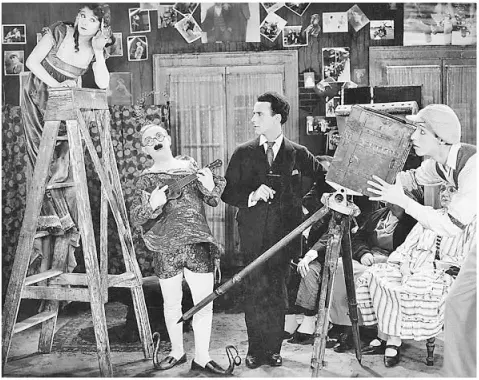
The complications that follow—misunderstandings, near-misses, and physical altercations—are handled with the typical efficiency of a 1920s production. The direction is functional rather than revolutionary, but it understands the geometry of comedy. Characters enter and exit frames with a precision that ensures the audience never loses track of the geography of the scene. It lacks the experimental flair of something like Life, but it gets the job done.
The climax, involving the rich actor visiting her at the restaurant, is a masterclass in escalating tension. Alice has to juggle her job, her lies, her boss, and her country suitor all at once. It’s exhausting to watch, but in a good way. The film doesn't rely on coincidences as much as it relies on the consequences of Alice's own choices. That is a rare strength in silent comedy.
Hot Cakes for Two is absolutely worth watching for anyone who enjoys seeing the 'behind the scenes' of the silent film era. While the second half devolves into a standard romantic comedy, the first half's depiction of a predatory acting school is surprisingly modern and cynical. It offers a unique perspective on the Hollywood dream that feels more honest than many of its contemporaries. It’s a short, punchy experience that rewards the viewer with great physical comedy and a surprisingly sharp social bite.
The direction of Hot Cakes for Two is remarkably steady. It avoids the static, stagier feel of earlier silent films like The Argyle Case. Instead, the camera feels dynamic, even if it stays mostly on a tripod. The use of depth in the restaurant scenes—showing the crowd outside the window while Alice works inside—creates a sense of a larger world existing beyond the frame. This 'layered' cinematography was becoming more common in the mid-20s, and this film utilizes it well to emphasize Alice's isolation.
The tone is a strange mix of the cynical and the sweet. At times, it feels like a precursor to the screwball comedies of the 1930s, where class barriers are broken down by wit and coincidence. However, there’s a bitterness to the opening that never quite leaves the film. Even when Alice finds love, we remember that she was fleeced. We remember the fake diploma. This prevents the film from feeling like a hollow fairy tale. It’s a story about survival in a city that wants to eat you alive. In that sense, it shares DNA with darker dramas like The Easiest Way, though it masks its darkness with flapjacks and giggles.
"The film is a reminder that the Hollywood dream was always built on a foundation of broken bankrolls and bad acting lessons."
The performance of Louise Carver as a supporting character also deserves a mention. She brings a veteran's timing to the screen, providing a grounded contrast to Alice Day's more frantic energy. The chemistry between the cast is palpable, making the farcical elements feel more like a dance than a mess. It’s a controlled chaos that only the best silent comedies could achieve.
Hot Cakes for Two is a minor gem. It’s not a world-shaking masterpiece like the works of Keaton or Chaplin, but it has a specific, localized charm. It captures a moment in time when the film industry was beginning to look in the mirror and didn't always like what it saw. The pancakes are a gimmick, the romance is a trope, but the exploitation is real. It works. But it’s flawed. If you can overlook the conventionality of its second half, you’ll find a film that is surprisingly relevant to our own era of manufactured fame and digital grifters. It’s a stack worth sampling.
IMDb 2.5
1909
Community
Log in to comment.