DbcultAccessing Vault...
Cult Review
Senior Film Conservator
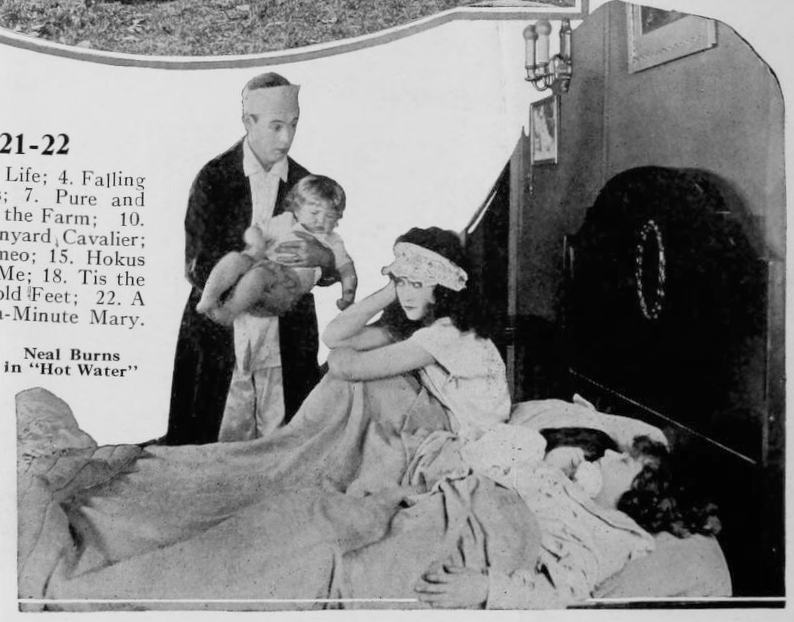
Ah, the silent era. A time when cinematic storytelling relied not on dialogue, but on the potent alchemy of exaggerated gesture, expressive physiognomy, and meticulously choreographed visual gags. Within this vibrant landscape, a film like Hot Water emerges not merely as a relic of a bygone age, but as a surprisingly incisive, albeit uproariously funny, commentary on the anxieties and aspirations of early 20th-century domesticity. Directed with a keen eye for physical comedy and the escalating absurdity of a well-intentioned prank gone awry, this featurette, penned by Frank Roland Conklin, offers a delightful glimpse into a world where marital bliss meets unexpected pandemonium.
At its core, Hot Water is a narrative spun from the threads of eager anticipation and a spectacular misunderstanding. We are introduced to a pair of newlyweds, brimming with the kind of optimistic naiveté that only the freshly betrothed can possess. Their hearts are set on a sizable family, an ambitious five children, no less. But before embarking on this grand adventure, they wisely (or so they think) seek a trial run, an apprenticeship in the art of child-rearing. This desire for practical experience sets the stage for a cascade of events that would test the mettle of even the most seasoned parents, let alone those still navigating the initial blush of matrimony.
The catalyst for the ensuing chaos arrives in the form of a widower friend, preparing for a European sojourn. He seizes the opportunity to entrust his child to the eager couple, dispatching the little one via what the plot whimsically terms 'parcel post'—a concept that, even in its era, must have hinted at the unusual nature of this arrangement. This single child, a manageable addition one might assume, is the expected arrival. However, the film then pivots to introduce the true architects of the impending bedlam: the young husband's bosses. These corporate figures, perhaps bored with the mundane rhythms of office life or simply possessed of a mischievous streak, conceive an elaborate joke. Each borrows two of their own children, then colludes with a bribed station agent to mislabel the four, ensuring that when the newlyweds arrive, they are greeted not by one child, but by a veritable squadron of five.
The genius of Hot Water lies in its immediate escalation of the premise. The prankster fathers, not content with merely foisting extra children upon the unsuspecting couple, go a step further, granting their offspring carte blanche for a full day of unadulterated naughtiness. This directorial decision instantly transforms the film from a simple comedy of errors into a masterclass in domestic pandemonium. From the moment these five rambunctious youngsters are herded into the automobile, the film becomes a whirlwind of comedic set-pieces. The tranquility of the newlyweds' home, presumably a sanctuary of new love and quiet aspirations, is utterly annihilated. Furniture becomes trampolines, food becomes projectiles, and the very fabric of their orderly existence unravels with each childish shriek and mischievous grin.
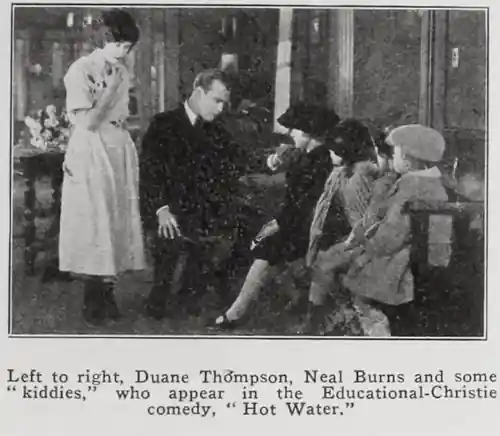
Neal Burns, portraying the bewildered husband, is a study in escalating exasperation. His physical comedy, a hallmark of the silent era, perfectly conveys the rapid descent from hopeful enthusiasm to wide-eyed horror. Duane Thompson, as the equally overwhelmed wife, complements his performance with expressions that swing from maternal tenderness to sheer panic. Their reactions are not merely comical; they are deeply human, tapping into the universal anxieties surrounding parenthood and the loss of personal space. Harry Dunkinson and Colin Kenny, as the instigators of this grand scheme, play their roles with a delightful blend of smug satisfaction and eventual apprehension, hinting at the comeuppance that inevitably awaits them.
The film's exploration of domestic chaos resonates even today. The idea of children as agents of disruption, while exaggerated for comedic effect, touches upon the very real challenges and transformations that accompany family life. It’s a theme that contrasts sharply with the more dramatic, often morally complex narratives found in films like The Foolish Virgin or Thou Art the Man, which delved into societal pressures and personal failings with a somber intensity. Hot Water, by contrast, takes the anxieties of domestic life and reframes them through the lens of pure farce, offering catharsis through laughter rather than contemplation.
Conklin's writing is particularly adept at crafting a scenario that, while absurd, maintains a thread of believability within its comedic framework. The motivations for the prank, though questionable, are clear, and the consequences unfold with a logical, albeit accelerated, progression. The 'joke' isn't just a single incident; it's an entire day of escalating mayhem, allowing the audience to fully immerse themselves in the newlyweds' plight. This extended period of disruption also serves to highlight the film's commentary on the idealized vision of family life versus its messy reality. The couple, so eager for children, quickly discovers that the romance of parenthood often clashes with the relentless demands of actual offspring.
Visually, Hot Water employs classic silent film techniques to great effect. The use of intertitles is economical, allowing the visual storytelling to take precedence. The pacing is brisk, mirroring the frenetic energy of the children. Close-ups on the faces of Burns and Thompson effectively convey their emotional turmoil, while wider shots capture the full scope of the domestic devastation. The film's strength lies in its ability to communicate complex emotions and an intricate plot without a single spoken word, relying instead on the universal language of physical comedy and expressive acting. This commitment to visual narrative craftsmanship is a testament to the era's filmmakers, who had to be ingenious in their methods.
The resolution of the plot, when it finally arrives, is as satisfying as the preceding chaos is entertaining. The widower's call to reclaim his child brings the first moment of relief, a crack in the wall of pandemonium. But the true climax arrives with the wives of the prankster bosses. Their discovery that their children have been used as pawns in a domestic comedy of errors leads to a humorous reckoning, forcing the husbands to engage in 'considerable explaining.' This final twist provides a moral counterpoint to the earlier mischief, suggesting that even the most elaborate jokes can have unintended repercussions, particularly when wives are involved. It’s a classic comedic trope, but executed here with a delightful snap.
Comparing Hot Water to other films of its period reveals its unique charm. While films like Mrs. Temple's Telegram might have woven intricate plots around mistaken identities and communication breakdowns, Hot Water simplifies the premise to domestic scale, focusing on the sheer physical comedy of children run amok. The deception in Hot Water is less about intrigue and more about setting up opportunities for visual gags and escalating frustration. Even a film like The Joyous Liar, which might hint at similar themes of fabricated realities, likely approached them with a different tone and purpose. Hot Water unapologetically embraces the lighter side of life's complications, finding humor in the most exasperating of situations.
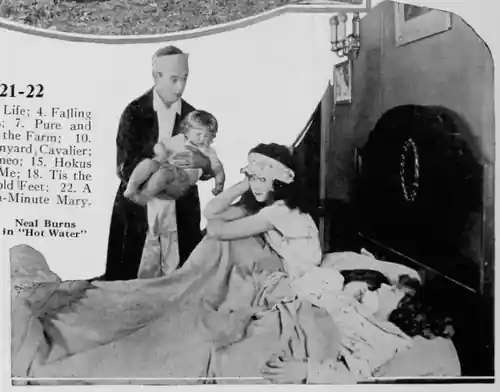
The cast, though primarily tasked with physical comedy, imbues their roles with distinct personalities. Neal Burns's everyman appeal makes him a relatable figure, his growing exasperation a mirror to any audience member who has ever felt overwhelmed. Duane Thompson’s performance as the wife is equally compelling, her transformation from doting spouse to harried caregiver being both comical and empathetic. The children, though unnamed in the plot summary, are crucial to the film's success, their unbridled energy and mischievous antics being the very engine of the comedy. Their performances, undoubtedly guided by astute direction, feel authentic in their chaos, avoiding the saccharine sentimentality that could have easily derailed the film.
The film also subtly touches upon societal expectations of marriage and family in the early 20th century. The newlyweds' immediate desire for five children speaks to a cultural ideal, a vision of domestic fulfillment that was aspirational. Hot Water, through its comedic lens, gently challenges this ideal, suggesting that while children are a joy, they are also a force of nature that requires preparation and a robust sense of humor. It’s a humorous take on the 'be careful what you wish for' adage, wrapped in the delightful package of silent-era slapstick.
In terms of its lasting impact, Hot Water stands as a charming example of how early cinema could tackle universal themes with wit and ingenuity. It predates many later domestic comedies but sets a precedent for the kind of humor derived from the clash between adult expectations and childish reality. The film's simplicity is its strength; it doesn't rely on complex special effects or intricate dialogue, but rather on the timeless appeal of human folly and the delightful chaos of an unexpected situation. It reminds us that laughter often springs from the most relatable of frustrations, and that sometimes, the best way to understand life's challenges is to see them played out with a healthy dose of comedic exaggeration.
The enduring appeal of Hot Water lies in its ability to transport the viewer to a simpler time, yet confront them with themes that remain evergreen. The struggle of new parents, the pitfalls of practical jokes, and the sheer unpredictability of children are all rendered with an infectious energy that transcends its silent origins. It's a film that, despite its age, feels remarkably fresh and relevant, a testament to the foundational principles of comedic storytelling that continue to entertain audiences across generations. It’s a delightful, if slightly anarchic, journey into the heart of a domestic prank gone magnificently, hilariously wrong. Frank Roland Conklin’s vision, brought to life by a talented cast, ensures that this film, though silent, speaks volumes about the human condition, particularly when faced with a houseful of energetic youngsters and a well-intentioned, yet utterly disastrous, joke.
The film’s vibrant palette of emotional expression, conveyed through the actors’ physical prowess and facial theatrics, is a masterclass in non-verbal communication. Every wide-eyed stare, every frantic gesture, every slump of the shoulders tells a story more compelling than any dialogue could. The film doesn’t just show us chaos; it allows us to feel the mounting pressure alongside the protagonists. This immersive quality is what elevates Hot Water beyond mere slapstick, imbuing it with a genuine heart that resonates. It’s a delightful reminder of the power of visual narrative, proving that sometimes, the most profound laughter comes from the most visually articulate of tales. It’s a testament to the enduring power of silent cinema to capture the human experience in all its messy, magnificent glory, particularly when a household is suddenly overrun by five boisterous children and a truly ill-conceived prank. The sheer ingenuity of the era’s filmmakers, working within the constraints of their medium, is brilliantly showcased here, offering a timeless piece of comedic art that continues to charm and amuse.

IMDb —
1928
Community
Log in to comment.