DbcultAccessing Vault...
Cult Review
Senior Film Conservator
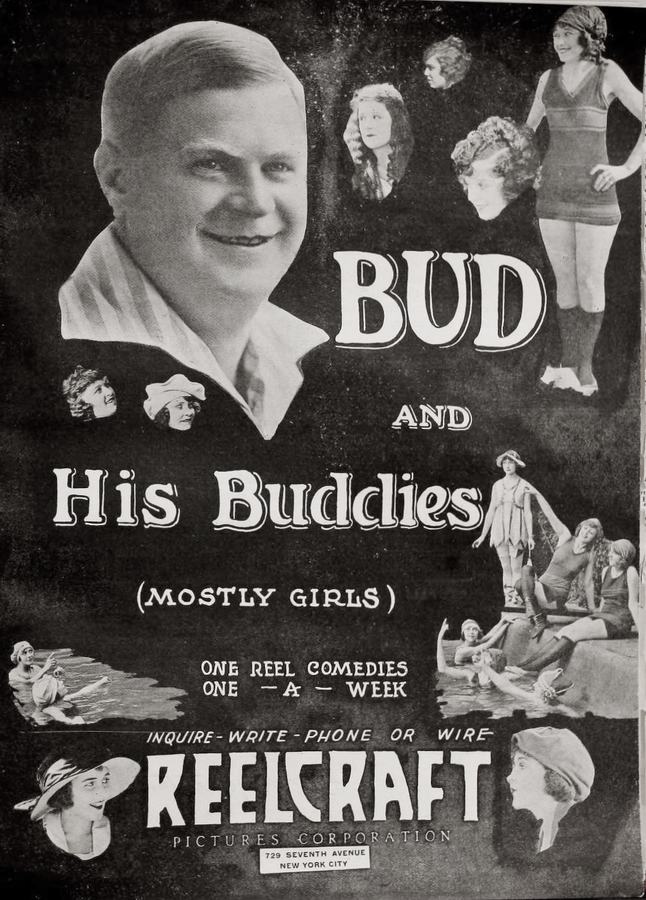
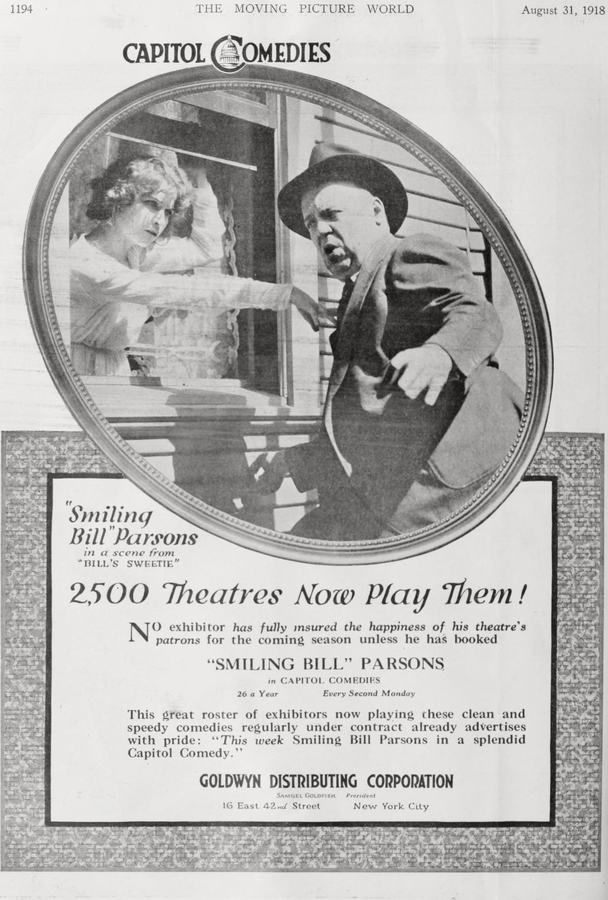
To witness Puppy Love (1921) in the modern era is to engage in a form of cinematic archaeology, brushing away the dust of a century to reveal a gleaming, hyperactive relic of the silent comedy boom. While the title suggests a saccharine exploration of youthful infatuation, the reality is a much more robust and frenetic display of physical comedy. Bud Duncan, a performer whose legacy is often unfairly overshadowed by the giants like Chaplin or Keaton, delivers a performance that is both technically precise and emotionally resonant in its absurdity.
Unlike the more somber narrative arcs found in The Promise, which leans heavily into the weight of destiny and obligation, Puppy Love thrives on the immediacy of the present moment. It is a film of 'now,' where every second is an opportunity for a new gag or a subtle shift in facial expression. Duncan’s physicality is his greatest asset; he possesses a unique gravitational center that allows him to tumble, slide, and react with a fluidity that feels almost liquid. This isn't just comedy; it's a proto-ballet of the mundane.
The year 1921 was a pivotal juncture in film history. The industry was moving away from the primitive shorts of the previous decade and toward sophisticated feature-length storytelling. Yet, Puppy Love retains that raw, vaudevillian energy that characterized the early days of the medium. When we compare it to contemporary works like The Charm School, we see a fascinating dichotomy between the refined social satire of the latter and the visceral, ground-level humor of Duncan’s vehicle. While one seeks to educate the manners of the youth, the other celebrates the inherent chaos of being young and in love.
The film’s aesthetic is remarkably clear for its age, showcasing a lighting style that emphasizes the contrast between the protagonist's expressive eyes and the often-cluttered environments he inhabits. There is a specific visual grammar at play here—a language of wide shots that allow the physical comedy to breathe and tight close-ups that punctuate the emotional beats of Duncan’s plight. It lacks the dark, brooding atmosphere of European imports like Irrende Seelen, opting instead for a bright, distinctly American optimism that masks the underlying anxiety of the era.
What makes Puppy Love stand out is the structural integrity of its comedy. Many silent shorts of the time felt like a series of disconnected sketches, but here, the momentum is cumulative. Every failed attempt to impress the object of his affection builds toward a crescendo of public embarrassment. It shares a thematic kinship with Youthful Folly, yet where that film treats the errors of the young with a sense of melodramatic consequence, Puppy Love treats them as a rite of passage, a necessary humiliation on the road to adulthood.
Consider the sequence involving the rival suitor—a trope as old as time, yet revitalized here through Duncan’s diminutive stature. The height difference is utilized not just for cheap laughs, but as a visual metaphor for the protagonist’s social standing. He is the underdog in every sense of the word. This dynamic is handled with much more levity than the heavy-handed moralizing found in Love's Law, allowing the audience to sympathize with Duncan without feeling the weight of a sermon.
In the broader landscape of 1920s cinema, Puppy Love occupies a space between the rural charm of Sis Hopkins and the urban sophistication of Phil-for-Short. It doesn't rely on the 'hick' stereotypes of the former, nor does it possess the proto-feminist edge of the latter. Instead, it focuses on a universal, almost primal experience: the awkwardness of the first crush. This universality is perhaps why the film remains watchable today, long after the specific social mores of 1921 have faded into obscurity.
The film also avoids the dark mystery elements found in Behind the Mask or the Gothic suspense of The House of a Thousand Candles. It is a sun-drenched comedy, even in its interior scenes. The set design is functional yet evocative of a middle-class American existence that was rapidly changing in the wake of the Great War. There is a sense of stability in the settings that contrasts sharply with the instability of the protagonist’s movements.
One cannot discuss Puppy Love without acknowledging the sheer bravery of the stunt work. In an era before CGI or sophisticated safety rigs, the falls and collisions we see on screen are terrifyingly real. While not reaching the death-defying heights of The Great Circus Catastrophe, the film features a series of falls and physical interactions that require a level of athletic precision that would put modern action stars to shame. It shares an appreciation for physical discipline with The Art of Diving, transforming human movement into a spectacle of its own right.
The editing, too, deserves a mention. The pacing is relentless, a hallmark of the Bud Duncan style. The cuts are timed to the rhythm of the gags, ensuring that the audience never has a moment to breathe before the next disaster strikes. This rhythmic editing is a precursor to the sophisticated comedy timing that would later be perfected in the talkie era. It lacks the contemplative pauses of Good Women, choosing instead to maintain a high-frequency energy that mirrors the pulse of the Jazz Age.
Bud Duncan’s performance in Puppy Love is a testament to the power of the character actor. He doesn't have the traditional leading-man looks of the protagonist in The Honorable Algy, but he possesses a charisma that is far more relatable. He represents the common man, the individual who tries his best and fails spectacularly, only to pick himself up and try again. This resilience is the beating heart of the film.
When we look at the film through the lens of Chains of the Past, we see how Puppy Love manages to break free from the heavy burdens of history and tradition. It is a film about the freshness of experience, the 'first time' for everything. Even the romantic rivalries feel less like the high-stakes conflicts of Some Bride and more like the playful, albeit painful, jousting of adolescents.
In the final analysis, Puppy Love is more than just a footnote in the career of Bud Duncan. It is a vibrant, living document of a time when cinema was discovering its own power to move and amuse through pure motion. The film’s reliance on visual storytelling—unencumbered by the need for extensive intertitles—demonstrates a sophisticated understanding of the medium’s unique strengths. It is a masterclass in economy, telling a complete and satisfying story through the language of the body.
"The grain of the film stock itself feels like a thumbprint from history, a tactile reminder of the humans who stood behind and in front of the camera a century ago. Duncan isn't just a comedian; he's a ghost of a more exuberant age, haunting us with his tireless energy."
For those willing to look past the absence of sound and the occasional flickering of the frame, Puppy Love offers a wealth of entertainment and insight. It is a reminder that while technology changes, the fundamental human experience of falling in love—and looking like a complete fool while doing so—is entirely timeless. It stands as a beacon of pure, unadulterated joy in a cinematic world that often takes itself far too seriously.
As we close the book on this 1921 gem, one can't help but wonder how many other masterpieces like this are waiting to be rediscovered. If Puppy Love is any indication, the archives of the silent era are still teeming with life, laughter, and the incomparable genius of performers like Bud Duncan. It is a film that deserves to be seen, studied, and above all, laughed at, for many more centuries to come.
IMDb 4.2
1935
Community
Log in to comment.