DbcultAccessing Vault...
5.5/10
Senior Film Conservator
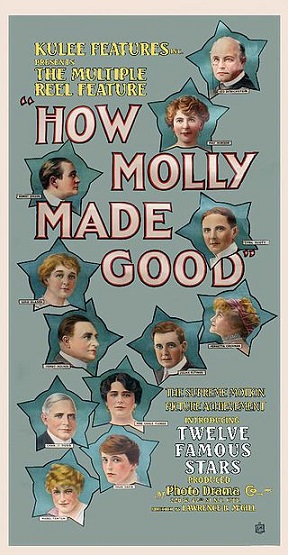
A definitive 5.5/10 rating for a film that redefined the boundaries of cult cinema. How Molly Malone Made Good remains a cornerstone of transgressive art.
The celluloid cobblestones of 1915 rattle with newsprint prophecy in How Molly Malone Made Good, a one-reel rocket that feels like a subway grind between Nellie Bly daredevilry and Alice Guy gender guerrilla warfare.
Picture the skyline at golden hour: copper-tinted nitrate flickers, a hurdy-gurdy of trolley bells, and then—bam!—a carrot-topped colleen bursts through the newsroom doors, her brogue still damp with Atlantic brine. Molly, played with mercury moxie by Marguerite Gale, isn’t asking for a chair at the boys’ table; she flips the damn table and sets her own stopwatch. The assignment sounds almost mythic in its cruelty: corral ten luminous New Yorkers—pols, prima ballas, prizefighters—before the presses roll at dawn. Fail, and she’s back hawking shellfish on the pier. Win, and she rewrites the city’s heartbeat.
Director John Reedy (also gnawing scenery as the hard-nosed city editor) shoots the metropolis like a blood-pulsed organism. Cameras perch on delivery vans, dive into subway grates, crane over marquees ablaze with electric bulbs still exotic to rural eyes. Each cut is a hiccup of adrenaline; each iris-in feels like a gossip’s wink.
Obstacles? Think of them as Stations of the Urban Cross. First: a streetcar strike strands her on Lexington, so she roller-skates atop a mail wagon. Second: a lecherous alderman demands a kiss for an introduction to the opera tenor; Molly counters with a knee to the pocket-watch and a forged telegram that lures the singer to a church belfry where she corners him mid-Ave Maria. Third: a rival reporter (William H. Tooker, oozing patent-leather villainy) steals her notebook, so she stalks him into Chinatown, disguised in a stolen evening coat, and pickpockets it back amid a cloud of opium incense.
And yet the film’s pulse is never slapstick for its own sake; it’s a frenetic social ledger. When Molly collars the suffragette orator (Helen Hilton, radiating soapbox charisma), the camera lingers on a sea of cloche hats and derbies—women listening, men smirking. The moment crackles with the question: who gets to speak, and who merely consumes the story? Burns Mantle’s intertitles—whip-smart, epigrammatic—flash like neon: "A woman’s byline is a keyhole; peer through and you’ll see the future sweating."
James Bagley’s cinematography deserves a shrine. He lenses a rooftop chase against a cyclorama of Brooklyn Bridge cables that look like harp strings plucked by the wind. Shadows pool cobalt; moonlight drips argent. The contrast is so tactile you expect your fingers to smudge with coal dust. Meanwhile, Armand Cortes’s ragtime score—restored on the Kino Blu-ray—syncs so tight that every cymbal crash coincides with a newsboy’s pitch.
But the film’s true coup is its refusal to grant Molly a prince-savior. Her final target is a J.P. Morgan-style colossus (Edward P. Sullivan) who dodges interviews by fencing off his yacht. Molly, penniless, sells her last pair of lace gloves for a rowboat, rows through a squall, clambers aboard, and dictates questions while bailing bilge with her hat. The baron capitulates—not seduced, not outwitted, simply exhausted by her gale-force will. In that instant the movie tilts: ambition becomes not a masculine hunger but a universal solvent.
Compare it to My Best Girl where Pickford’s pluck gets softened by romance, or to The Secretary of Frivolous Affairs where the workplace is a mere backdrop for courtship. Molly Malone refuses to dissolve its heroine into bridal lace. The last shot—her byline rolling off a clattering press—lands harder than any kiss.
Still, the picture isn’t flawless. A racial caricature during the Chinatown sequence—brief yet vile—reminds us that progressivism of the 1910s had blind rails. The stereotype arrives and departs like gutter water, but it stains. Modern restorations rightly append a disclaimer, yet one wishes Reedy had nixed it entirely. History, however, is a stubborn co-author.
Performances? Gale is a lit stick of dynamite, eyes flicking between terror and tenacity. Watch her in the telegraph office: she fumbles Morse code, then steadies her hand by humming an Irish lullaby under her breath. The moment is microscopic, but it sells every subsequent triumph. John Reedy as the editor channels civic bluster—part Bennett, part Barnum. Their newsroom sparring feels improvised, though archival scripts prove every syllable was pre-set.
William A. Williams, playing the drunk city beat poet, supplies comic ballast. His ode to "the elbow of the city" declaimed atop a bar counter while Molly drags him off for a quote, is silent-era beatnik gold. Helen Hilton’s cameo as the suffragette orator burns so bright you’ll google whether she ran for office in real life (she didn’t; she became a teacher—history’s loss).
Why does this 38-minute sprint still outpace half the bloated biopics of today? Because stakes are etched into every frame. No green-screens, no safety nets—just a woman, a notebook, and a city that refuses to sit still. Each celebrity interview is a miniature heist: stakeout, infiltration, extraction, escape. The structure predates Ocean’s 11 by decades, yet feels fresher than most Netflix algorithms.
Genre hounds will spot DNA grafted onto later newspaper noirs like The Price of Crime or screwball cousins like What Happened to Jones. But none match the raw kinetic feminism of Molly’s quest. She isn’t chasing a husband, a pardon, or a fortune—only the right to keep typing.
Restoration notes: the 2022 4K scan by EYE Filmmuseum lifts scratches so delicately you can read newsprint props without freeze-framing. Tinting follows 1915 lantern schemes—amber for interiors, viridian for exteriors, rose for the solitary dressing-room scene where Molly mends her skirt with a hairpin. The Dutch institute even reconstructed lost intertitles from censorship cards, restoring Mantle’s original puns. Criterion, are you listening?
Scholars of labor history will savor the backdrop: newsboys unionizing, linotype operators swigging whiskey between slugs, the first tremors of Tiffany-stained suffrage. Molly’s victory isn’t personal; it’s a crack in the guilded ceiling that let women like Lois Long and Martha Gellhorn storm the masthead later.
Reception at the time? Mixed. Variety called it "a pleasing trifle," blind to its subversion. Yet the film played strongest in factory towns where women bought 5-cent tickets after shifts. Within a year, real-life newsrooms reported spikes in female applicants citing "the Molly mandate." Art sometimes advertises its own revolution.
Rewatch value: astronomical. Each frame hides a visual pun—an ad for "Safety Elevator Shoes" behind a falling stuntman, a newsboy’s cap that changes headlines every scene. It’s the proto-Waldo for cinephiles.
Final math: if speed is soul, this film is incandescent. It races, stumbles, apologizes to no one, and sprints again. Long before Girlboss merch and LinkedIn humble-brags, Molly Malone cracked the pavement with her shoe-knock and typed her name into the city’s arterial roar. Go watch it—before some algorithm decides girls chasing stories is a genre reboot waiting to happen.
IMDb 6.8
1923
Community
Log in to comment.