DbcultAccessing Vault...
Cult Review
Senior Film Conservator
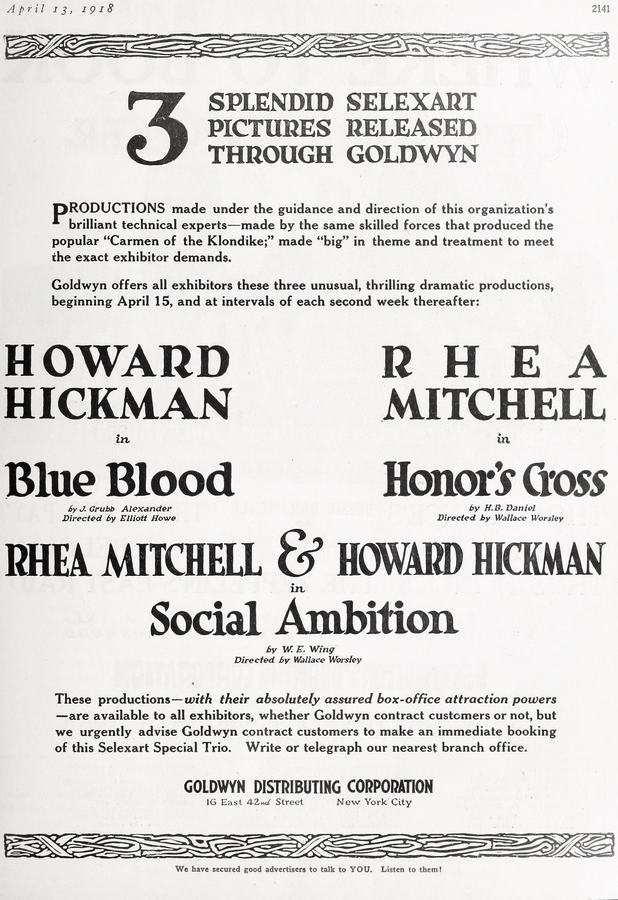
In the cinematic tapestry of 1917, few films captured the suffocating miasma of urban poverty with the raw, unvarnished intensity of Honor's Cross. Directed with a keen eye for the spatial politics of the city, the film serves as a harrowing indictment of the mechanisms that keep the working class in a state of perpetual precarity. Unlike the more whimsical explorations of poverty seen in Rags, this H.B. Daniel-penned narrative refuses to provide the audience with the comfort of easy sentimentalism. Instead, it plunges Jane Cabot, portrayed with a haunting vulnerability by Rhea Mitchell, into a world where her very existence is a site of contestation between her own agency and the predatory desires of the powerful.
The film opens not with a grand gesture, but with the mundane tragedy of domestic stagnation. Jim Cabot, the father, is a masterclass in the trope of the 'loafer'—a man whose refusal to engage with the capitalist machine places the entire burden of survival on the women of the household. This dynamic sets the stage for a story that is as much about gendered labor as it is about political corruption. When Jane is forced to replace her mother at McGann's saloon, the setting itself becomes a character—a dark, smoke-filled purgatory where the boundaries between the legal and the illicit are blurred by the presence of Thomas Dolan.
The central conflict of Honor's Cross hinges on a single, explosive moment of defiance. Thomas Dolan, played with a chilling, bureaucratic malice by Herschel Mayall, represents the archetypal political boss of the era—a man who views the city and its inhabitants as resources to be extracted. When he attempts to assert his dominance over Jane, her response is not a submissive plea but a violent rejection. By throwing wine in his face, Jane commits a transgressive act that transcends simple self-defense; she effectively declares war on the patriarchal structure of the city. This scene is filmed with a stark contrast that highlights the visceral nature of the insult, setting a tone of impending doom that permeates the rest of the film.
This act of rebellion, however, triggers a campaign of systemic harassment that feels remarkably modern in its execution. Dolan doesn't just strike back with physical violence; he uses his influence to ensure Jane is unemployable. This economic violence is perhaps more terrifying than the physical struggle that concludes the film, as it depicts the slow, methodical erasure of a person's dignity. In this regard, the film shares a thematic DNA with The Woman Beneath, exploring how societal structures are weaponized against women who dare to assert their autonomy.
Contrast is the primary aesthetic tool of Honor's Cross. The introduction of Lee Stevens, the young assistant from the mountains of the West, provides a sharp juxtaposition to the moral decay of New York. Edward Coxen brings a rugged, almost naive idealism to the role, embodying the 'Frontier Myth'—the idea that the American West is a source of untainted morality. His attraction to Jane is rooted in his recognition of her spirit, yet he is easily swayed by the cynical machinations of the city. His departure back to the mountains when he believes Jane to be unfaithful is a pivotal moment of disillusionment, suggesting that even the purest heart can be poisoned by urban suspicion.
This trope of the Westerner in the East was a common fixture in silent cinema, often used to critique the perceived rot of civilization. We see similar thematic explorations in The Return of Draw Egan, where the boundaries of law and morality are tested by the harsh realities of the frontier. In Honor's Cross, the mountains represent a lost Eden, a place Jane can only dream of but never reach as long as she is shackled by her familial and economic obligations.
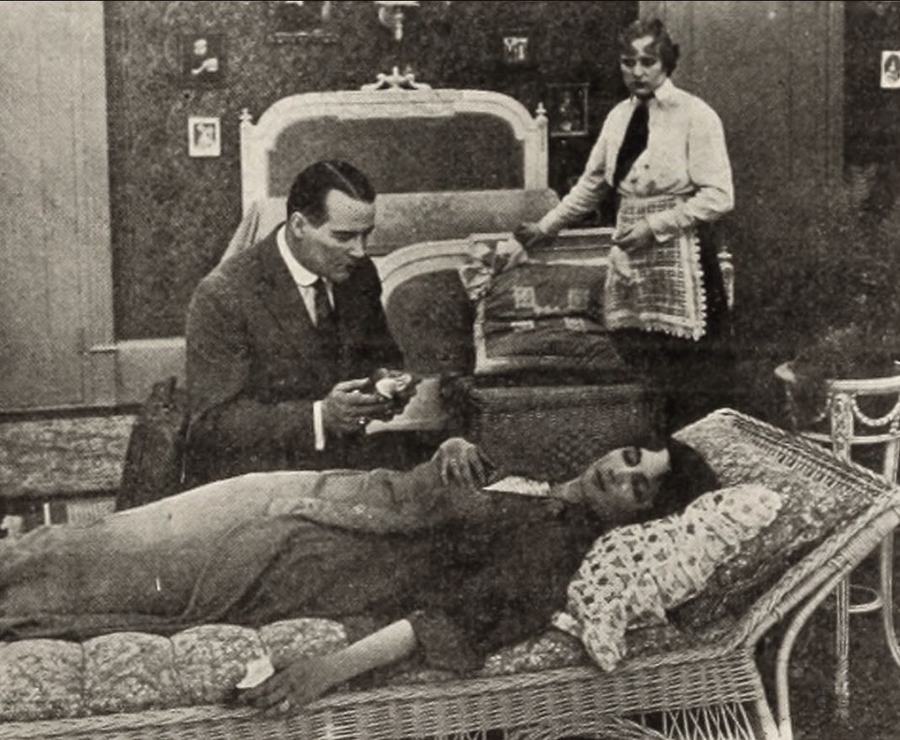
The final act of the film is a relentless barrage of tragedies that tests the limits of the viewer's empathy. The incarceration of Jim Cabot for killing a policeman and the subsequent suicide of Marion Cabot are handled with a surprising lack of sentimentality. The mother’s death, in particular, is a haunting sequence that underscores the total collapse of the family unit. Jane is left in a state of catatonic grief, a 'dazed girl' who is easily preyed upon by Dolan. This sequence of events mirrors the tragic inevitability found in Hamlet or Romeo and Juliet, where the sins of the fathers (and the corruption of the state) are visited upon the children.
"The film doesn't just depict poverty; it depicts the psychic erosion that occurs when hope is systematically dismantled by those in power."
The climax, a fierce struggle between Lee Stevens and Thomas Dolan, is a visceral release of the tension built throughout the narrative. It is a battle between two different versions of American masculinity: the corrupt, entrenched power of the urban politician and the righteous, individualistic strength of the Westerner. The arrival of the police—not as oppressors this time, but as the long-delayed arm of justice—provides a resolution that feels both earned and slightly miraculous, given the preceding darkness.
Visually, Honor's Cross excels in its use of low-key lighting and claustrophobic interior sets. The saloon scenes are particularly noteworthy, utilizing deep shadows to create a sense of moral ambiguity. The director manages to navigate the complexities of a multi-character narrative without losing sight of the central emotional core. While it may not have the grand scale of Uncle Tom's Cabin or the historical sweep of Barbara Frietchie, its intimacy is its greatest strength. It is a film that demands to be seen as a precursor to the gritty film noir of the 1940s, sharing that genre's obsession with the corruptive influence of the city and the struggle of the individual against an uncaring system.
The performances are uniformly strong. Rhea Mitchell’s Jane is a masterclass in silent film acting, conveying a wide range of emotions—from hopeful defiance to crushing despair—without ever descending into the over-the-top histrionics that characterized much of the era's output. Joseph J. Dowling’s portrayal of the father is equally nuanced, avoiding the easy caricature of a 'drunk' and instead presenting a man whose spirit has been utterly broken by his environment. Even the smaller roles, such as the mother played by Adele Farrington, carry a weight that contributes to the film's overall sense of verisimilitude.
Looking back at Honor's Cross from a contemporary perspective, its social commentary remains surprisingly biting. It tackles themes of sexual harassment, political corruption, and the cyclical nature of poverty with a directness that was rare for its time. It stands as a significant work in the filmography of H.B. Daniel and a highlight of the 1917 season. For those interested in the evolution of social realism in cinema, it is an essential text, standing alongside works like Down with Weapons in its willingness to confront uncomfortable societal truths.
Ultimately, the film is a story of endurance. Jane Cabot survives not because the world is kind, but because she possesses an internal fortitude that even the most powerful men in the city cannot fully extinguish. The 'Honor' in the title refers not to some abstract Victorian ideal, but to the personal integrity that Jane maintains despite every attempt to strip it from her. It is a grim, beautiful, and deeply moving piece of cinema that deserves a place in the pantheon of great silent dramas. Whether compared to the collegiate lightheartedness of The College Widow or the gothic stylings of Vampyrdanserinden, Honor's Cross maintains its unique identity as a stark, uncompromising look at the human condition in the face of systemic adversity.
Final Score: 8.5/10 - A visceral and vital piece of early 20th-century social commentary.
IMDb 6.8
1928
Community
Log in to comment.