DbcultAccessing Vault...
6.3/10
Senior Film Conservator
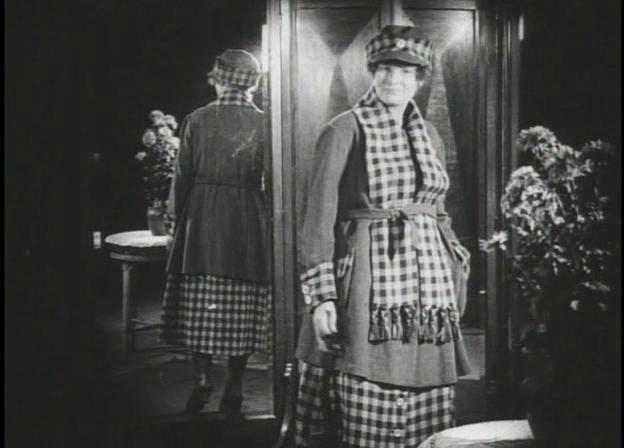
A definitive 6.3/10 rating for a film that redefined the boundaries of cult cinema. How Not to Dress remains a cornerstone of transgressive art.
The year is 1920; the place, Stockholm’s mammoth Paul U. Bergström emporium, a mirrored labyrinth where electric bulbs hum like captive starlight. Cinema, still toddling on its silent legs, turns its gaze toward the altar of haute couture and finds—beneath the tulle, the whalebone, the price tags—an aching void where human identity is sized, hemmed, and ultimately discarded.
How Not to Dress arrives as a svelte catalogue of perils, fifteen minutes of celluloid that feels both commercial vignette and pagan rite. Directors unknown, writers un-credited, yet the flicker survives as a tarot card predicting not merely Garbo’s apotheosis but also the coming century of commodity fetish. Every rack becomes a confessional; every mirror, a verdict.
Mr. Stockholm—played by Ragnar Widestedt with the brittle jauntiness of a man who has filed his soul under “receipts”—enters the store clinging to the arm of his spouse, a woman whose face flickers between ennui and the terror of being out-fashioned. Their mission: assemble a travelling wardrobe. Yet travel implies forward motion, and the camera soon traps them in a loop of trying-on rooms, a Möbius strip of indecision.
Cue department after department: millinery where feathered hats perch like predatory birds; gentlemen’s tailoring where tape measures snap with sadistic glee; ladies’ lounge where silk slips slither off mannequins that exhale the cold breath of the uncanny. In each alcove, Greta Garbo—then Greta Gustafson, stock clerk and occasional model—appears as both sales angel and silent chorus. She lifts a coat, drapes a scarf, and with each gesture seems to whisper, you will never be this garment, only its ghost.
The couple’s dialogue is delivered via Swedish intertitles, but the real language is textile: tweed promising countryside respectability; velvet murmuring bohemian nights; a military-style cape shouting ambitions the wearer will never march toward. With every rejected piece, a life-path crumbles like stale breadcrumbs. By finale, the Stockholm duo exits not with boxes but with the dawning horror that identity is off-the-rack, one-size-misfits-all.
Cinephiles scour archives for the earliest glimpse of eventual icons: Chaplin’s half-pint cockiness in The Sneak, Lon Chaney’s angularity in Sloth. Here, Garbo stands pre-mythic, cheekbones not yet carved by Hollywood lighting. Yet even under Scandinavian fluorescents, her eyes perform that famous act of looking-through—as though the customer, the camera, the cosmos itself were merely mist she must politely endure.
Notice the micro-movement: a half-second pause before she offers a glove, a blink held longer than necessary. Already the Garbo glyph is forming, that blend of invitation and annihilation. When she twirls a dress, the fabric spirals like galaxies soon to collapse into the black hole of her absence. The department store is her first cloistered monastery; consumerism, her novice’s habit.
Surviving prints bear the bruises of nitrate decay—white flecks that resemble moths chewing through cashmere. Yet these scars enhance the picture’s thesis: fashion, like film stock, is mortal. Director of photography Eric Åkerlund (rumored, never confirmed) chisels deep-focus shots where background shoppers blur into a hive of hungry silhouettes, a forecast of Dr. Wise on Influenza’s crowds, only here the contagion is desire.
Lighting oscillates between champagne sparkle in daytime sequences and umber chiaroscuro in the coat corridors—an early experiment in what would later be labeled Scandi-noir, albeit sponsored by haberdashers. Camera angles tilt slightly, 5° off horizon, enough to make mannequins loom like judges. The effect is half dream, half mail-order catalogue.
No original score survives; contemporary festival screenings often pair it with cabaret-adjacent piano or, more daringly, electronic drones. I favor a third route: let the projector’s mechanical heartbeat serve as rhythm, punctuated by the rustle of audience coats—an echo of on-screen consumer angst. Silence exposes the film’s true score: the creak of leather, the whisper of satin, the muted sigh of a wallet snapping shut.
Released months after the post-WWI recession bit Sweden, How Not to Dress functions as capitalist exorcism. Note the intertitle pricing: 85 kronor for a coat equals a factory worker’s monthly wage. The film invites audiences to voyeuristically consume luxury while simultaneously shaming them for the impulse—an ambivalence later mirrored in The Green Cloak’s jewel-thief moralism and Milady o’ the Beanstalk’s carnival of class climbing.
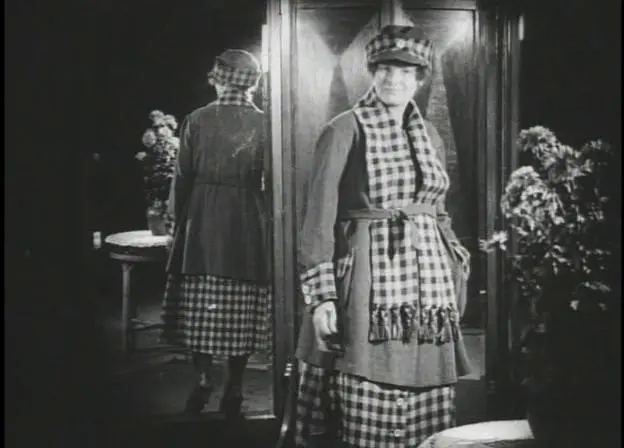
Garbo’s character, nameless, wage-bound, is the proletarian ghost haunting couture’s chapel. She sells the very items she could never afford, a living rebuke to meritocratic fairy tales. When she clasps a pearl necklace against a customer’s throat, the moment trembles with what-if: hers by touch, never by ownership. Marxian theorists term this commodity-necrophilia; Garbo’s eyes term it Tuesday.
Unlike The Land of the Lost, where objects vanish into mystical haze, here objects proliferate, metastasize. Unlike Nattens barn’s nocturnal innocence, daylight offers no salvation—only fluorescent scrutiny. And beside Young Romance’s earnest courtship, courtship in PUB is between shopper and commodity; humans mere awkward third wheels.
Olga Andersson essays matronly authority with the precision of a seamstress threading needles via scowl. Her lifted eyebrow when Mrs. Stockholm hesitates over a bust improver could curdle cream. Erick Fröander’s tailor exudes the feline satisfaction of a man who knows every gentleman’s secret measurements—a Scandinavian predecessor to The Remittance Man’s sartorial predators.
Widestedt’s Mr. Stockholm oscillates between condescension toward his wife and puppy-pleading toward clerks—a push-pull rendering the modern viewer wants to label toxic masculinity on markdown. And at the vortex stands Garbo, already practicing the art of becoming-a-statue-before-your-eyes, the Sphinx of Stockholm retail.
The film’s gender politics straitjacket both sexes. Mrs. Stockholm’s body is battlefield: waist pinched, bust hoisted, hem judged to the centimetre. Yet Mr. Stockholm is equally corseted by top-hat conventions, his wallet squeezed along with his throat by cravats. Masculinity here is purchased, not inherited; the moment he strips to shirtsleeves in the fitting room, authority dribbles away like loose stitches.
Garbo, meanwhile, embodies the female employee’s double bind: her labour is aesthetic, her smile mandatory, her dignity optional. When she spins a dress for admiration, the camera ogles her waist; yet the intertitles remind us she earns “commission only.” The film anticip decades of retail-sector exploitation debates, though wrapped in tulle.
A century later, we scroll digital racks, swipe to own, return with the same existential hollower than a drum. How Not to Dress prefigures influencer hauls where garments are tried, flaunted, discarded faster than edits. Garbo’s silent judgement foreshadows our late-night shame-scroll past landfill mountains of polyester. The film is meme-ready: freeze-frame her side-eye, overlay “When you realise you own nothing and even the nothing owns you.”
For decades the film languished in Sveriges Television’s vault, mislabelled as “Commercial Reel B-14.” Then archivist Jonas Wiström discovered the edge-code date 1920-03-17 beside Garbo’s unmistakable profile. The nitrate was transferred to safety stock, tint restored to that bruised-rose dusk which suggests shopping as sunset of the soul. The 2023 2K scan reveals textures previously smothered in grey: the herringbone of a jacket, the ecru of Garbo’s collar, the arterial red of a ribbon cinched like a wound.
How Not to Dress is minor only in length; in implication, it sprawls across the century like a perfume cloud—brief, heady, impossible to bottle twice. It satirises capitalism with the tenderness of a lover who knows every flaw and caresses anyway. It gifts us proto-Garbo, already negotiating the Faustian pact between visibility and soul-theft.
Go watch it—preferably in a threadbare coat you once bought promising yourself a new life. Let the chandeliers of PUB illuminate the price tags still dangling from your heart. And when Garbo lifts her gaze, meet it. Fail the test. Buy nothing. Keep the receipt.
Runtime: 15 min. | Director: Unknown | Language: Swedish intertitles | Available: Svenska Filminstitutet streaming, region-locked but VPN-friendly.

IMDb 4.2
1915
Community
Log in to comment.