DbcultAccessing Vault...
Cult Review
Senior Film Conservator
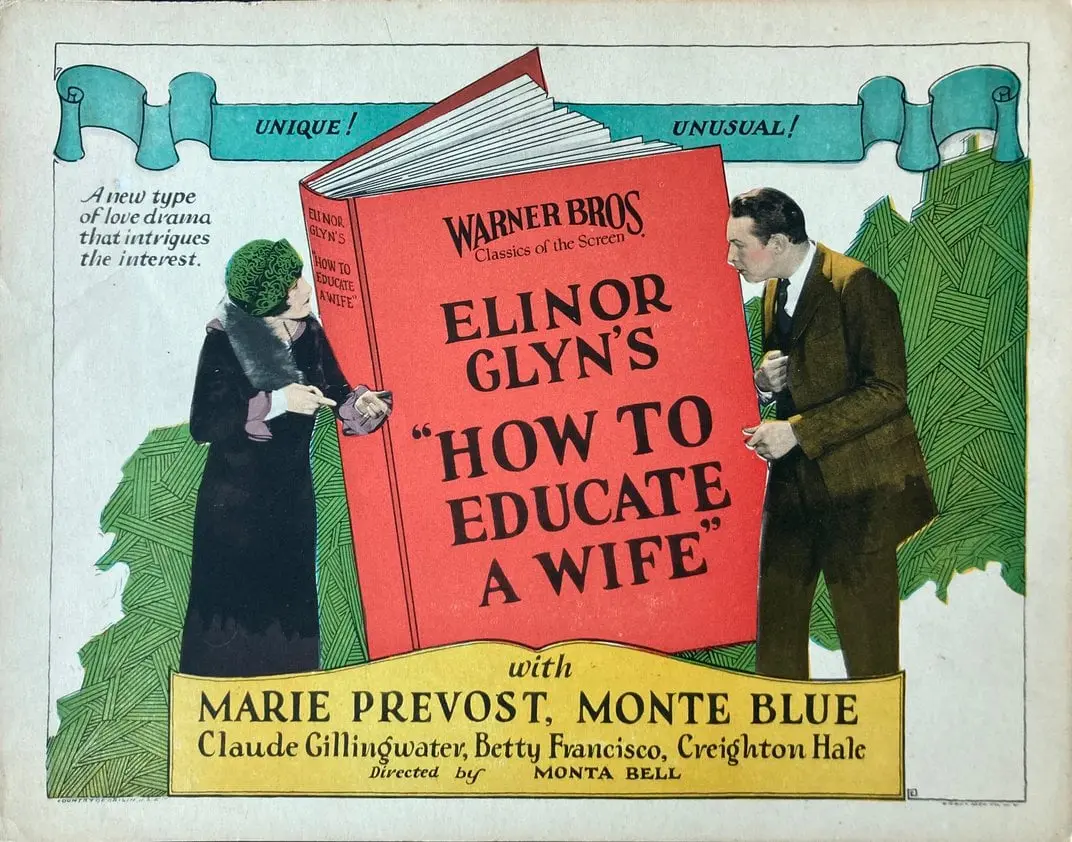
The year 1924 stood as a precipice in cinematic history, a moment where the silent medium had reached a pinnacle of expressive maturity just before the seismic shift toward synchronized sound. Amidst this transition, How to Educate a Wife emerged not merely as a domestic comedy, but as a biting critique of the transactional nature of modern relationships. Directed by William Seiter and penned by the inimitable Elinor Glyn, the film serves as a fascinating artifact of the Jazz Age, blending the effervescence of the flapper era with a darker, more cynical interrogation of masculine insecurity and the burgeoning agency of the American woman.
Elinor Glyn, the woman who famously defined "It," brings her characteristic preoccupation with social hierarchies and sexual magnetism to this script. Unlike the more overtly farcical A Pair of Sixes, which treats the intersection of business and personal life with a lighthearted, almost slapstick touch, How to Educate a Wife leans into the psychological friction of the marriage bed. The story centers on a businessman, played with a simmering, neurotic intensity by Monte Blue, who finds his professional aspirations thwarted by a lack of social leverage. The solution, proposed by a cynical friend, is to weaponize his wife’s beauty and charisma to entice prospective clients.
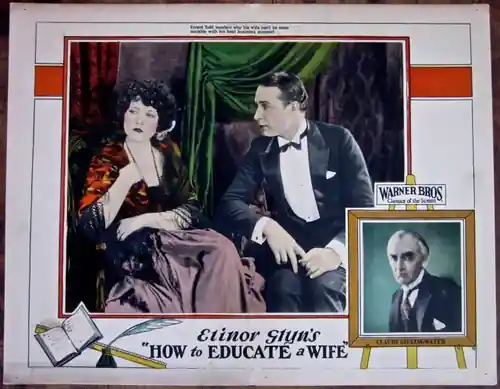
This premise sets the stage for a narrative that is as much about the "education" of the husband as it is about the wife. The title itself is a sardonic misnomer; while the era’s patriarchal structures suggested women needed molding, the film’s subtext screams that it is the men who are failing to adapt to the shifting social landscapes. Marie Prevost, an actress whose career transitioned from Mack Sennett bathing beauty to sophisticated comedienne, delivers a performance of remarkable nuance. She captures the initial hesitation of a woman being asked to perform a role that borders on the courtesan, followed by the growing confidence of a woman who realizes she is far more capable in the boardroom than her husband ever was.
The film’s central conflict arises when the plan works too well. As Prevost’s character begins to charm the wealthy investors, the husband’s pride is eclipsed by a toxic, possessive jealousy. This thematic thread echoes the domestic tensions found in The Fortune Teller, where the fragility of a woman's reputation is constantly at the mercy of societal whims and male paranoia. In How to Educate a Wife, the tragedy is that the husband himself invited this intrusion into their private life, only to recoil when he realizes he cannot control the outcomes.
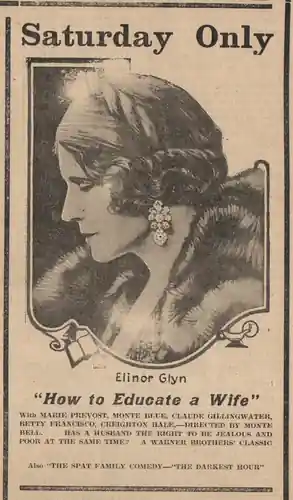
There is a palpable sense of unease in the scenes where the wife is paraded before potential business partners. The cinematography utilizes soft lighting to emphasize Prevost’s allure, yet the framing often feels claustrophobic, trapping her between the predatory gazes of the clients and the watchful, suspicious eyes of her husband. This visual storytelling elevates the film beyond a simple morality play. It becomes a study of the male gaze—not just as an audience member, but as a character within the film who uses that gaze to both fetishize and police his partner.
When placed alongside other contemporary works, the sophistication of How to Educate a Wife becomes even more apparent. While a film like Don't Call Me Little Girl explores the rebellion of youth against restrictive social norms, Seiter’s film examines the more complex entrapment of the marital contract. There is no simple escape for Prevost’s character; she is bound by affection and legal duty, making her navigation of the business world a high-wire act of survival. This sense of being trapped by circumstance is a recurring motif in silent drama, perhaps most poignantly illustrated in the serialized tensions of Beatrice Fairfax Episode 9: Outside the Law, where the heroine must fight against a world that has already judged her.
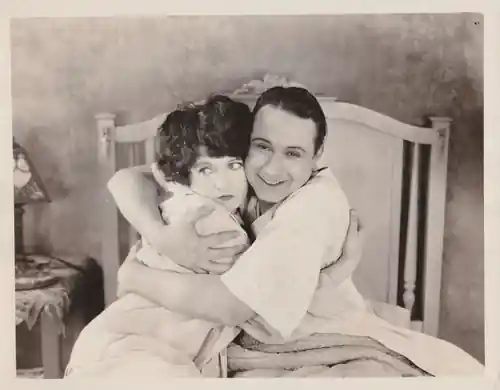
Furthermore, the film’s pacing is a masterclass in escalating tension. The screenplay by Douglas Z. Doty and Grant Carpenter avoids the sprawling, often disjointed narratives seen in epics like Michael Strogoff. Instead, it maintains a tight, almost theatrical focus on the domestic interiors, making the eventual accusations of infidelity feel like a natural, albeit tragic, explosion of the pressures built up within those four walls. The supporting cast, including the formidable Vera Lewis and the reliable Claude Gillingwater, provide a chorus of societal judgment that heightens the stakes for the central couple.
One cannot discuss this film without acknowledging the technical prowess of the 1920s studio system. The set design reflects the opulence of the era, contrasting the cold, sterile environment of the corporate office with the increasingly fractured warmth of the home. The intertitles are particularly noteworthy; they possess a literary quality that suggests Elinor Glyn’s direct influence, using sharp, aphoristic dialogue to puncture the characters’ pretenses. Unlike the more visual-heavy storytelling of Fantomas - On the Stroke of Nine, which relies on suspense and action, How to Educate a Wife relies on the eloquence of the human face and the weight of the written word.
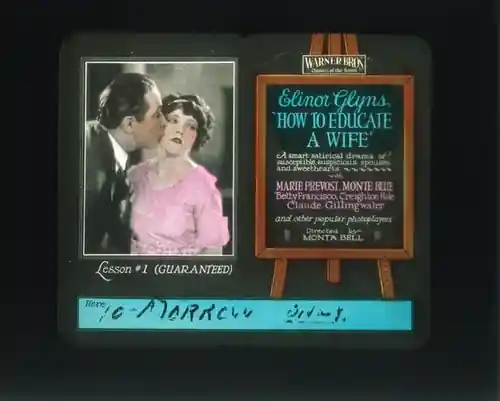
Marie Prevost’s ability to convey a world of thought with a single glance is the film’s greatest asset. In the scenes where she is accused of "stepping out," her performance shifts from the playful charm of the business hostess to the wounded dignity of a betrayed partner. It is a transformation that mirrors the journey of the audience, moving from an amusement at the husband’s clever plan to a profound empathy for the woman caught in its gears. This emotional resonance is what keeps the film relevant a century later; the specific social mores may have changed, but the dynamics of power, trust, and the fear of inadequacy remain universal.
In the broader context of 1920s cinema, How to Educate a Wife stands as a bridge between the Victorian morality of the past and the modern complexities of the future. While films like June Madness played with the idea of female independence as a source of comedy, this film takes the implications of that independence seriously. It acknowledges that for a woman to succeed in a man’s world, she must often sacrifice her own peace of mind, only to be punished for the very success she was asked to achieve.
The film also serves as a reminder of the incredible diversity of silent film subjects. While we often think of the era in terms of slapstick or grand melodrama, there was a thriving genre of "social problem" films that tackled contemporary issues with surprising frankness. From the historical documentation of Armenia, the Cradle of Humanity under the Shadow of Mount Ararat to the localized adventures of Bull Arizona - The Legacy of the Prairie, the cinema of the early 20s was an expansive, global conversation. How to Educate a Wife contributed to this conversation by turning its lens inward, examining the micro-politics of the American household.
Ultimately, How to Educate a Wife is a film that rewards multiple viewings. On the surface, it is a well-crafted comedy of manners, but beneath that exterior lies a profound and often uncomfortable exploration of the price of ambition. Monte Blue’s performance, often overshadowed by Prevost’s brilliance, is essential in grounding the film’s conflict. His portrayal of a man who is both the architect of his own misery and a victim of his own societal conditioning is deeply human and surprisingly relatable.
As the film reaches its climax, the resolution is not a simple return to the status quo. There is a sense that the scales have fallen from the characters' eyes, and the "education" that has taken place is one of painful self-awareness. It is this refusal to offer easy answers that elevates the work to the level of art. It doesn't just entertain; it provokes. It asks us to consider the ways in which we still, in our own modern way, try to "educate" those we love to fit our own selfish needs. In the pantheon of Marie Prevost’s work, and in the history of the 1920s social drama, this remains a vital, vibrant, and essential piece of cinema.
A searing indictment of the mercantile marriage, wrapped in the shimmering silk of a Jazz Age comedy. Essential viewing for any serious student of the silent era.
IMDb —
1920
Community
Log in to comment.