DbcultAccessing Vault...
Cult Review
Senior Film Conservator
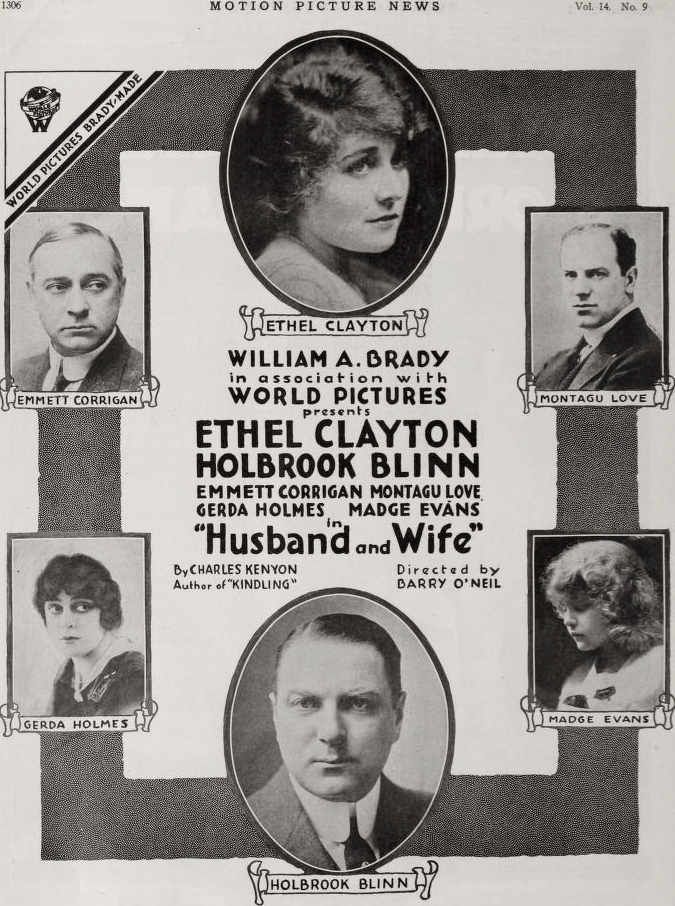
In the annals of early cinematic drama, few narratives capture the precarious balance between marital bliss and financial ruin with the stark intensity of Husband and Wife. This 1917 silent film unfurls a compelling, albeit often tragic, tableau of domestic life under the relentless pressure of burgeoning materialism and the insidious allure of speculative finance. It's a story that resonates even today, speaking to the timeless vulnerabilities of human nature when confronted with the twin temptations of extravagance and desperation. The film doesn't merely present a plot; it dissects the very fabric of a relationship frayed by external pressures and internal moral compromises, offering a poignant reflection on the societal expectations and personal failings that can shatter a home.
At the heart of this domestic maelstrom is Dick Baker, portrayed with nuanced desperation by Emmett Corrigan. As a cashier for the National Bank, Dick initially embodies the image of a respectable, albeit financially strained, man. His predicament, however, is not born of inherent vice but rather a desperate attempt to keep pace with his wife Doris's unyielding demands for a lavish lifestyle. This financial strain pushes him to the brink, leading him to commit the cardinal sin of "borrowing" securities from his employer – a euphemism for outright theft – to gamble on the volatile stock market. Dick's journey is a classic tragedy of a man cornered, making increasingly reckless decisions in a futile bid to escape an inescapable trap. His moral compass spins wildly, distorted by the need to maintain an illusion of prosperity. The film masterfully illustrates how a series of small, seemingly justifiable compromises can pave a direct path to utter ruin, highlighting the psychological toll of living a lie. This portrayal of a man driven to unethical means by external pressures finds a thematic echo in other films of the era, such as The Lion and the Mouse, which similarly explores the corrupting influence of financial power and the moral compromises individuals are forced to make within a cutthroat economic system. Dick's character is not simply a villain; he is a sympathetic figure caught in a web of his own making, a victim of both his wife's caprice and his own inability to confront their spiraling financial reality.
Ethel Clayton's portrayal of Doris Baker is equally complex and, in many ways, the fulcrum of the narrative's central conflict. Doris is not overtly malicious, yet her unbridled extravagance serves as the primary catalyst for Dick's professional and personal collapse. She represents a segment of society caught in the relentless pursuit of social status, oblivious or indifferent to the financial strain her desires impose. Her refusal to entertain Mrs. Schmidt, a decision fueled by social snobbery rather than genuine principle, inadvertently triggers a critical turning point, leading Schmidt to withdraw his support from Dick's speculative ventures. Doris's character arc is marked by a peculiar blend of self-absorption and a latent, almost subconscious, love for Dick. Her plan to feign an elopement with Pat Alliston—a calculated maneuver to provoke Dick into a divorce—is undercut by her confession to Mrs. Prescott: a flicker of hope that Dick might still reach out, a testament to her buried affection. This internal conflict paints Doris not as a one-dimensional antagonist but as a woman navigating the constricting societal expectations placed upon her, even as she contributes to her husband's downfall. Her eventual realization and reconciliation with Dick are crucial, offering a glimmer of hope that the corrosive effects of materialism can be overcome by genuine human connection. The film subtly critiques the societal pressures that encourage such extravagance, a theme that might find resonance with the complex female protagonists struggling against societal norms in melodramas like Lady Audley's Secret, where women's actions, however misguided, are often born from a desire for agency or security within a restrictive world.
The supporting cast plays pivotal roles in escalating the drama. Holbrook Blinn's Schmidt is the embodiment of opportunistic ambition. A bank director and social climber, he initially aligns with Dick for personal gain, expecting social reciprocation from Doris. His pique at Doris's snub is not merely personal but a calculated blow, demonstrating the petty yet powerful motivations that can drive financial and social maneuvering. Schmidt's subsequent suspicion, leading him to unleash detectives upon Dick, transforms him into an unwitting agent of the narrative's climax, his misguided assumptions about Dick's intent to flee inadvertently pushing Dick to his suicide attempt. His eventual crestfallen departure, having been proven wrong about the bank's soundness, provides a satisfying, if understated, comeuppance. In stark contrast stands Pat Alliston, played by Montagu Love. Alliston is the wealthy, genuinely enamored suitor, described as playing "on the level." He represents an alternative, more honorable path for Doris, yet his presence, however well-intentioned, fuels Dick's despair and exacerbates the marital rift. Alliston's quiet realization of his own part in the domestic tragedy, followed by his generous offer to help Dick, elevates him beyond a mere romantic rival. He becomes a figure of quiet redemption, offering a pragmatic solution to a deeply emotional crisis, highlighting the idea that true compassion can transcend personal desires. This blend of ambition, integrity, and unintended consequences woven into the secondary characters enriches the film's moral tapestry, making the world of Husband and Wife feel authentically complex.
The film meticulously explores the devastating consequences of financial recklessness, particularly when intertwined with domestic discord. Dick's initial foray into the stock market with "borrowed" securities is a desperate gamble, a Faustian bargain made under the duress of his wife's insatiable appetite for luxury. This narrative thread serves as a stark warning against the perils of living beyond one's means and the moral compromises such a lifestyle can necessitate. The subsequent market crash, wiping out Dick's margin, is not merely a plot device but a dramatic representation of the unpredictable and unforgiving nature of speculative finance. Beyond the financial, the film delves deep into the erosion of trust and communication within a marriage. Doris's extravagance, Dick's secrecy, Porter's accusations, and the ensuing quarrels paint a vivid picture of a relationship unraveling. The inability to openly discuss their financial woes festered, transforming into resentment and ultimately pushing them towards the brink of divorce. This portrayal of marital strife, where unspoken resentments and external pressures combine to create an explosive environment, offers a timeless commentary on the fragility of human relationships. The dramatic tension built around Dick's suicide attempt, born from a profound sense of abandonment and failure, serves as the emotional climax, underscoring the severe psychological toll of his predicament. The film doesn't shy away from depicting the raw despair that accompanies such a downfall, making the eventual reconciliation all the more impactful. The theme of moral integrity versus desperation, and the path to redemption, also echoes in films like Pieces of Silver: A Story of Hearts and Souls, which often explored the intricate ethical dilemmas faced by individuals in the face of overwhelming adversity.
A significant portion of Husband and Wife's dramatic thrust derives from the intricate web of deception and misapprehension that ensnares its characters. Doris's elaborate scheme to feign an elopement, intended to shock Dick into a divorce while secretly hoping for his intervention, is a poignant example of convoluted emotional maneuvering. This act, born of a mixture of anger, pride, and residual affection, sets in motion a chain of events that spirals dangerously out of control. Simultaneously, Schmidt's deepening suspicion of Dick, fueled by the market crash and Doris's planned trip, leads him to hire detectives. This decision, while seemingly rational from his perspective, is based on a fundamental misreading of Dick's intentions. Schmidt believes Dick is planning to abscond with Doris and the stolen funds, a classic case of projection and confirmation bias. The ensuing chaos at the railway station, where the detective's assistant mistakenly apprehends Alliston instead of Dick, is a masterclass in farcical tragedy. Doris's indignant denunciation of Dick, believing he has stooped to having her trailed, is a powerful moment of misunderstanding. Her subsequent collapse upon learning the truth—that Schmidt, not Dick, orchestrated the surveillance, and for entirely different reasons—marks the narrative's emotional turning point. It's a moment of shattering clarity, where the weight of all the preceding deceptions and suspicions finally breaks through. The film expertly demonstrates how mistrust, once sown, can proliferate wildly, leading to absurd and dangerous conclusions. This intricate dance of veiled intentions and mistaken identities, where characters' actions are constantly misinterpreted, creates a palpable sense of dramatic irony, propelling the story towards its eventual, hard-won resolution. Such intricate plotting around deception and its fallout might even draw comparisons to the complex psychological games seen in European dramas like La Broyeuse de Coeur, which often delved into the destructive power of hidden motives and emotional manipulation.
As a product of the silent era, Husband and Wife relies heavily on visual storytelling, exaggerated gestures, and compelling intertitles to convey its intricate plot and deep emotional currents. The performances of the principal actors are particularly noteworthy, with Corrigan's descent into despair and Clayton's mercurial blend of pride and vulnerability shining through the visual medium. The film's pacing, characteristic of its time, builds tension incrementally, allowing the audience to fully absorb the gravity of each character's predicament. The dramatic beats, from the stock market crash to Dick's suicide attempt and Doris's fainting spell, are rendered with a stark theatricality that was essential for capturing audience attention without spoken dialogue. The innocent intervention of Bessie, preventing her father's suicide, is a powerful example of how silent films could use simple, yet profound, imagery to convey hope and avert tragedy. The climactic reconciliation, marked by Dick carrying the unconscious Doris, is a classic tableau of forgiveness and renewed commitment, deeply moving in its simplicity. Beyond its historical context, the narrative of Husband and Wife retains a surprising contemporary resonance. The themes of financial instability, the pressures of consumerism, marital communication breakdowns, and the search for redemption are timeless. It serves as a potent reminder that while the specific trappings of an era may change, the fundamental human struggles with desire, morality, and connection remain constant. The film's ability to navigate these complex issues without the aid of spoken words is a testament to the artistry of early cinema and its enduring power to tell deeply human stories. It invites viewers to reflect on the choices made under duress and the ultimate triumph of empathy and understanding over pride and despair. This enduring quality, much like other enduring dramas of the period such as Gloria's Romance, ensures its place as a significant artifact of early cinematic storytelling, offering both a historical snapshot and a timeless moral tale.
The resolution of Husband and Wife is not one of facile happiness, but rather a fragile, earned peace. Schmidt's humiliation at the hands of bank examiner Knight underscores the triumph of truth over baseless suspicion, albeit a minor victory in the grand scheme. More significantly, Alliston's quiet introspection and subsequent act of generosity – writing a check and a note, delivered by Bessie, to give Dick a second chance – provides the tangible means for Dick's potential redemption. It's a pragmatic resolution to a deeply emotional crisis, suggesting that forgiveness and practical support are often intertwined in the path to recovery. The film concludes not with a definitive "happily ever after," but with the promise of a fresh start, contingent upon the lessons learned and the reconciliation forged through intense suffering. It's a nuanced ending that acknowledges the scars left by such a harrowing ordeal, yet offers a hopeful outlook for the future of the reunited couple. The film suggests that true love and commitment involve facing adversity together, confronting uncomfortable truths, and extending grace when it is most needed. This understated yet powerful conclusion elevates Husband and Wife beyond a simple melodrama, imbuing it with a profound sense of human resilience and the enduring power of familial bonds. It reminds us that even after the deepest rifts, there remains the possibility for healing and a renewed sense of purpose, a testament to the intricate and often turbulent journey of marriage.

IMDb 6.8
1934
Community
Log in to comment.