DbcultAccessing Vault...
Cult Review
Senior Film Conservator
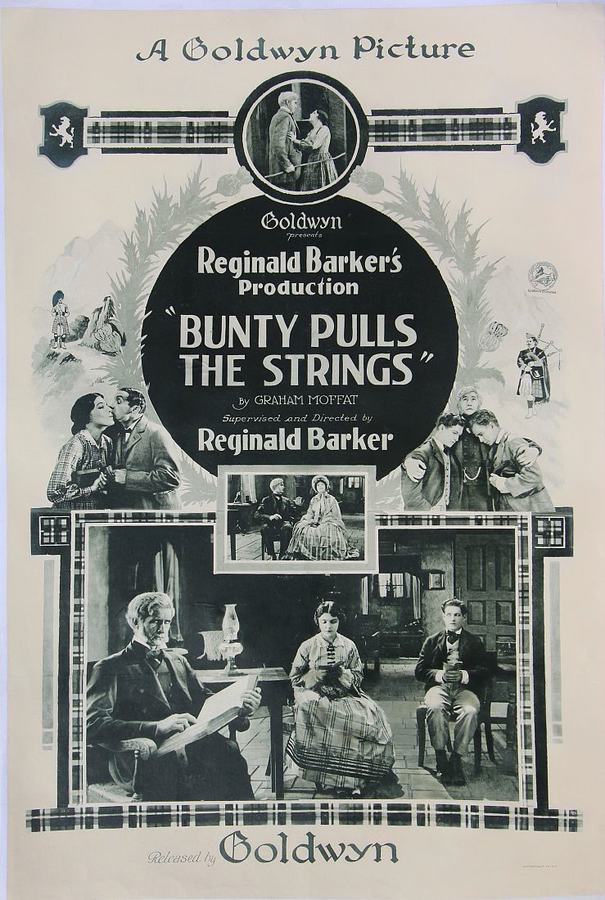
The Scottish silent cinema that survives often feels carved from basalt—grey, taciturn, Presbyterian to its marrow—yet Bunty Pulls the Strings flares like a heather fire, sudden and bright against the moor. Shot in 1921, when Hollywood was busy polishing glamour to blinding sheen, this rural comedy pivots on a woman who never raises her voice above parlour volume yet choreographs the fates of every man within earshot. It is, in miniature, the inverse of The Master of the House: authority toppled not by Marxist polemic but by lace-curtain diplomacy.
Josephine Crowell plays Bunty with the shrewd merriment of a chess master masquerading as a housemaid. Watch her eyes during the family supper scene: they flick from Tammas’s thunderous brow to Jeemy’s twitching fingers, tabulating sins the way market traders tally weights of lamb. She speaks—through intertitles penned by Charles Kenyon—“Da, if God counts the sparrows, He’ll not miss a missing banknote, but the banker might.” The line zings because it is both scripture and threat, wrapped in a daughter’s smile.
Director J.G. Hawks, usually consigned to quickie westerns, finds here a tempo as crisp as a November morning. Note the bank-robbery flashback: rather than thundering pianos or Expressionist shadow, Hawks gives us a cutaway to a cracked shop-window mannequin wearing a domino mask—an image so casually surreal it anticipates Buñuel’s bourgeois gags. The economy of means becomes poetry: a single broken doll equals felony guilt.
The kirk sequence, where Susie Simpson denounces Tammas, is staged like a Reformation woodcut come alive. Camera faces pews head-on; parishioners turn to stone; the pulpit looms like a gallows. Hawks withholds close-ups until Susie’s finger jabs the air—then smash-cut to Tammas, pupils dilated, sweat beads sparkling like tiny censers. For a 1921 audience accustomed to melodramatic excess, the restraint feels almost modernist.
Compare this with The Leopard Woman, where hypocrisy drips from leopard-spot scarves, or with The Splendid Sin that wallows in cigarette-smoke decadence. Bunty’s transgressions are petit-bourgeois, scented with paraffin lamps and Sunday roasts; therefore funnier, therefore sharper.
Russell Simpson, as Tammas, could have played the caricature Calvinist we’ve seen since Old Mortality. Instead he gifts the man a bass-note of vanity: he enjoys being feared, enjoys believing his rectitude is currency. When he pockets Susie’s savings he isn’t merely covering his son’s theft—he’s converting trust into capital, a spiritual stock-market gambit. Listen (yes, silent films invite auditory imagination) to the wheeze of relief that escapes him once the sanctuary door shuts; it is the sound of dogma bending.
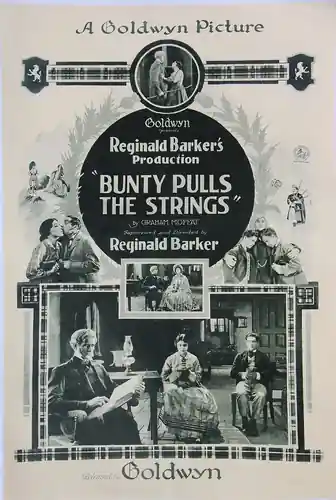
Meanwhile, Georgia Woodthorpe’s Susie, all tweed and tremulous dignity, embodies the spinster stereotype only to detonate it. Her confrontation sermon is not jilted-woman caterwauling but a creditor’s cold audit. “Ye’ve traded my earthly comfort for thy heavenly reputation, Tammas Biggar, and I’ll have my pound o’ flesh in front o’ the Lord’s own clerk.” The line crackles because Woodthorpe underplays: lips purse, knuckles whiten, voice never rises. The kirk holds its breath, and we sense the entire social fabric stretching toward tearing point.
Enter the eponymous string-puller. Bunty’s solution—borrowing from Weelum, the taciturn crofter who has watched her since she was in pinafores—seems mere narrative stitching. Yet it reframes the film’s moral ledger. Traditional melodrama would demand Jeemy suffer, Tammas repent, Susie forgive. Here restitution arrives courtesy of female negotiation, not patriarchal contrition. Hawks signals the shift with a visual rhyme: the opening shot shows Tammas locking the family Bible; the closing shot shows Bunty closing her household account book. One codex replaces another.
Cullen Landis’s Jeemy has the weakest arc, mostly required to look mortified, but even he gets a sly payoff. During the double-wedding finale he eyes the exit as though contemplating another sprint toward the border, then catches Bunty’s gaze and straightens his tie. A lifetime of supervision in a single glance.
Technical footnote: cinematographer Allen Siegler lights interiors with side-mounted arc lamps, throwing shadows upward onto beamed ceilings—an upside-down pieta effect. These inverted shadows make every sin look larger than the sinner, a visual theology.
As for pacing, the 68-minute print (Library of Scotland restoration, 2019) barrels along on a bed of jaunty orchestral cues reconstructed by John Garden. Yet the film isn’t afraid of caesuras: notice the thirty-second shot of Bunty staring at her mother’s thimble, a moment that predicts Ozu’s pillow shots. Silence pools, emotions settle like silt, then off we gallop again.
Some scholars slot Bunty alongside Le chemineau because both champion tramps and rovers; others cite Separate Trails for their shared interest in moral forked roads. The more illuminating echo, though, is with God, Man and the Devil: each film asks who, in a world ostensibly governed by Providence, actually writes the daily script. Answer: whoever balances the books, be that deity, demon, or daughter.
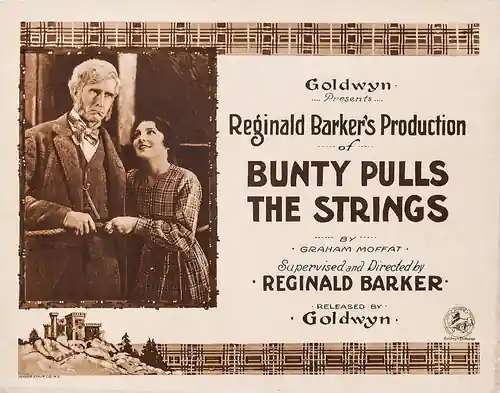
Contemporary critics, if they mentioned the picture at all, dismissed it as “a kailyard bauble.” They missed the subversion because it wears homespun. A century later, in an era when audiences parse Handmaid’s Tale for hidden resistance, Bunty feels prophetic. Its feminism is not hashtag-ready; it is pragmatic, transactional, aware that a woman’s greatest capital in 1921 was credit extended by a smitten male. Yet Bunty leverages that weakness into leverage itself, and the film celebrates her savvy without pretending it solves structural inequity.
Restoration quirks: the 2019 2K scan reveals hairline scratches shaped like thistle stalks—fitting, accidental heraldry. Tinting follows the Pathé stencil ethos: amber for hearth, cobalt for night, rose for the twin nuptials. The palette nods to Stripped for a Million without sliding into the garish fever of Felix Hits the North Pole.
Performances to treasure: Casson Ferguson’s callow bank clerk, all Adam’s apple and pocket-watch fumbles; Edythe Chapman as the village postmistress who relays gossip like handing out communion wafers; Leatrice Joy in a micro-cameo as a flapper tourist, one-reel proof that the Jazz Age has already reached the Highlands.
Scriptwriters Kenyon and Moffat adapt Graham Moffat’s play with surgical snips. Gone are the second-act bagpipe recital, the comic drunk accordionist, the sentimental ghost of Bunty’s mother. What remains is narrative sinew, every scene ending on a hinge. Result: the rare silent comedy that feels shorter than its runtime.
Final observation: the double wedding is filmed in one unbroken take, camera dolly backward as the twin couples advance toward the kirk porch. Clouds scud overhead; children dart into frame clutching confetti made from torn hymnals. The shot lasts 42 seconds, an eternity for 1921, and it embodies everything Bunty Pulls the Strings believes: life is messy, morality negotiable, but community spectacle—ah, that is eternal.
If you stumble across a screening accompanied by a live ceilidh band, cancel your plans. If you must settle for Blu-ray, dim the lamps, pour a wee dram, and remember: the strings Bunty pulls still twitch in every family, every boardroom, every parliament. We merely pretend the puppeteer has changed.
IMDb 5.9
1931
Community
Log in to comment.