DbcultAccessing Vault...
5/10
Senior Film Conservator
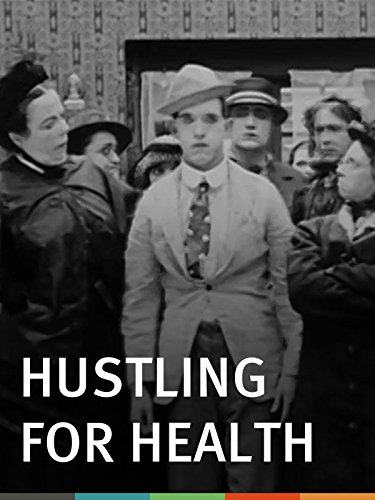
A definitive 5/10 rating for a film that redefined the boundaries of cult cinema. Hustling for Health remains a cornerstone of transgressive art.
Ah, the silent era! A time when physical comedy reigned supreme, when the flicker of film brought forth laughter through exaggerated gestures, ingenious gags, and the sheer charisma of its stars. Among these luminaries, Stan Laurel carved out a unique niche, a persona of endearing befuddlement that would later define one half of cinema's most iconic duos. Before his legendary partnership with Oliver Hardy, Laurel honed his craft in a series of solo shorts, each a delightful peek into the formative genius of a comedic master. One such gem, often overlooked in the grand tapestry of his career, is Hustling for Health (slug: hustling-for-health), a film that perfectly encapsulates the chaotic charm and innocent absurdity that would become his hallmark.
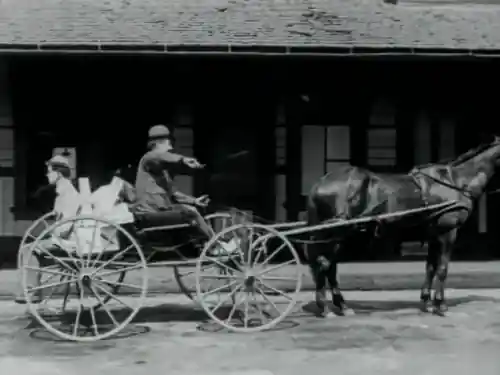
The premise of Hustling for Health is deceptively simple, a common cinematic trope that serves as a springboard for escalating mayhem. Our protagonist, portrayed by the incomparable Stan Laurel, finds himself in the unenviable position of having missed his train. This seemingly mundane mishap, a minor inconvenience for most, becomes a catalyst for an epic journey into the heart of domestic pandemonium. It's a testament to Laurel's early artistry that he could extract such rich comedic ore from such a modest setup. His initial reaction to the missed connection is a masterclass in silent acting — a subtle shift from mild annoyance to bewildered resignation, telegraphing his character's inherent passivity in the face of life's relentless onslaught.
What follows is a classic 'Good Samaritan' scenario, albeit one that quickly veers into the realm of the absurd. A well-meaning, if ultimately ill-advised, stranger extends an invitation to Laurel to recuperate at his home, promising respite and relaxation. Little does our hero know that this offer of hospitality is less a sanctuary and more a plunge into a comedic inferno. The film deftly subverts the expectation of a tranquil retreat, transforming it into an arduous, almost Sisyphean, ordeal. This inversion of expectation is a core tenet of effective comedy, and Hustling for Health executes it with an admirable, if frantic, precision.
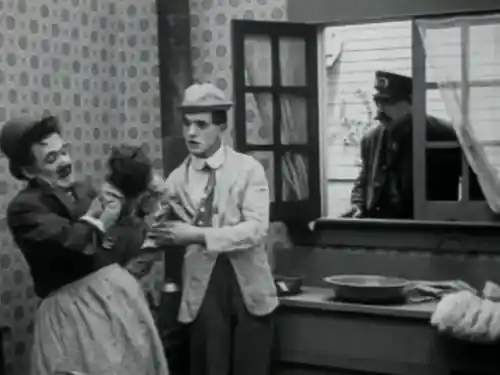
The true genius of Hustling for Health lies in its ability to pile on layers of escalating absurdity. Laurel's 'vacation' quickly becomes a crucible of chaos, a veritable gauntlet of social and domestic pressures. We are introduced to the demanding hosts, whose initial benevolence rapidly morphs into a relentless imposition of chores and expectations. These aren't malicious characters, per se, but rather figures whose self-absorption and obliviousness create a perfect storm for Laurel's hapless persona. Their requests, delivered with an air of unshakeable conviction, force Laurel into increasingly ridiculous situations, each one a testament to his character's innate inability to simply say 'no' or extricate himself from sticky situations.

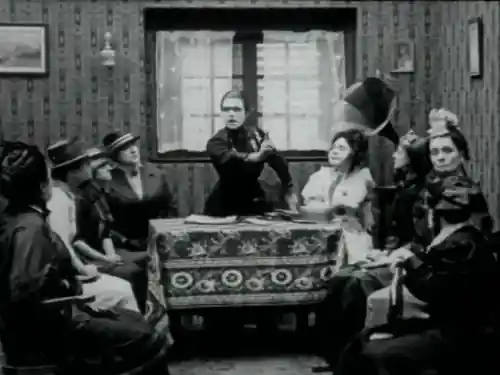
Adding another, delightfully anachronistic, layer to the bedlam are the angry suffragettes. Their presence in the narrative, while perhaps a reflection of contemporary social movements of the time, provides a fantastic external force of disruption. These fervent activists, portrayed with a fierce, almost militant, zeal, burst into Laurel's temporary haven, turning an already tumultuous household into a battleground of ideals and flying fists (or placards). The clash between Laurel's gentle, almost timid, nature and the boisterous energy of the suffragettes is a source of immense comedic potential. It highlights the vulnerability of the individual caught in the crosscurrents of larger societal shifts, a theme that, surprisingly, resonates even today.
The film’s portrayal of these suffragettes, while undoubtedly played for laughs, also offers a fascinating glimpse into the social fabric of the era. Their determination, even in a comedic context, speaks to a broader movement that was challenging established norms. In a way, Laurel's character becomes an unwitting bystander, or even a casualty, of this societal upheaval. This chaotic backdrop, a stark contrast to the promised 'rest and relaxation,' creates a vibrant, unpredictable canvas upon which Laurel's unique brand of physical comedy can truly shine. Unlike the more dramatic social commentary seen in films like Souls Enchained or the focused character studies of A Woman of Pleasure, Hustling for Health utilizes its social context as a spring for slapstick, rather than a platform for earnest discourse.
At the heart of Hustling for Health is Stan Laurel himself. His performance here is a masterclass in the 'slow burn' of comedic reaction. He doesn't just fall; he crumples. He doesn't just get confused; his entire being exudes a profound, almost existential, bewilderment. His eyes, wide and innocent, convey a constant state of mild shock, as if the world is perpetually conspiring against his simple desire for peace. This subtle yet powerful expressiveness is what elevates his slapstick beyond mere physical gags; it imbues his character with a genuine, relatable pathos.
Laurel's comedic timing, even in these early solo efforts, is impeccable. He understands the rhythm of a gag, allowing a moment to breathe before delivering the punchline, or rather, receiving it. Whether it's a misplaced object, an accidental spill, or an unwitting entanglement in a domestic dispute, Laurel's reactions are always perfectly calibrated. He's not actively seeking trouble, but rather, trouble seems to seek him out, finding him an easy, pliable target. This passive resistance, this gentle acceptance of his fate, is a key component of his enduring appeal. He's the everyman, magnified and made hilariously unfortunate.
The supporting cast, including Bud Jamison, Dorothy Coburn, Mrs. Fleming, Pearl Elmore, Mildred Reardon, Margaret Joslin, Dorothea Wolbert, Belle Mitchell, Frank Terry, Noah Young, Sadie Gordon, Jerome LaPlanche, Catherine Proudfit, Marie Mosquini, Hazel Powell, Rosa Gore, and James Parrott, all contribute to the film's vibrant energy. Each actor, in their often-brief appearances, embodies a specific comedic archetype – the stern housemaster, the flustered maid, the aggressive activist – creating a rich tapestry of characters for Laurel to bounce off. Their reactions, often exaggerated and theatrical, serve to amplify Laurel's understated bewilderment, creating a dynamic interplay that is fundamental to the film's humor. Dorothy Coburn, in particular, often provides a strong, energetic foil to Laurel's more passive character, a dynamic that would become essential in his later work.
Perhaps the most charming, and unexpected, element of Hustling for Health is the blossoming of romance amidst the pervasive lunacy. Even as Laurel is buffeted by demanding hosts and militant suffragettes, he manages to hazard into love. This romantic subplot, often a delicate counterpoint to the broader physical comedy, adds a touch of sweetness to the otherwise chaotic proceedings. It reminds us that even in the most absurd circumstances, human connection and affection can find a way to bloom.
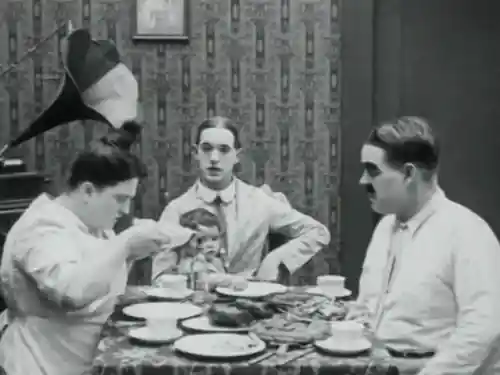
This budding romance isn't portrayed with grand gestures or dramatic pronouncements, but rather with the innocent glances and hesitant interactions typical of Laurel's character. It's a gentle, almost accidental, falling in love, perfectly in keeping with his passive nature. This element provides a welcome emotional anchor, preventing the film from devolving into mere non-stop slapstick. It offers a glimpse into the softer side of Laurel's persona, a character who, despite all the indignities he suffers, remains inherently good-hearted and capable of tenderness. This romantic thread brings a similar warmth that one might find in films like The Probation Wife, where personal relationships form the core, albeit here it’s a lighter, more comedic take.
As a silent film, Hustling for Health relies entirely on visual storytelling and the expressive power of its performers. The direction, while perhaps not as overtly experimental as some European contemporaries like Zakovannaya filmoi or Miraklet: Tavlor ur det katolska samfundslivet, is highly effective in conveying the narrative and maximizing comedic impact. The camera acts as an impartial observer, allowing the chaotic action to unfold within the frame, often with wide shots that emphasize the scale of the physical comedy. Close-ups are used judiciously to capture Laurel's priceless reactions, drawing the audience into his internal world of bewildered suffering.
The editing is brisk, maintaining a lively pace that propels the narrative forward without sacrificing clarity. Each gag is given enough time to register, but the film never lingers, constantly introducing new elements of chaos. This rapid-fire succession of misfortunes is a hallmark of silent comedy, keeping the audience engaged and ensuring a steady stream of laughter. The use of intertitles is minimal, a sign of confidence in the visual storytelling, allowing the actions and expressions of the actors to speak for themselves. This is a stark contrast to some more verbose dramas of the era, where exposition was often delivered through lengthy text.
The film's sets, though likely modest, are effectively utilized to create spaces ripe for comedic destruction. Doorways become sites of accidental collisions, furniture transforms into obstacles, and the general domestic environment is continuously reconfigured by the escalating chaos. The costuming, too, plays a role, with Laurel's slightly rumpled attire perfectly reflecting his character's perpetually disheveled state. The suffragettes' attire, often more formal or uniform, visually sets them apart and emphasizes their organized, albeit disruptive, presence.
While Hustling for Health may not be as widely celebrated as Laurel's later works with Hardy, it remains an invaluable piece of his comedic evolution. It showcases his nascent genius, his ability to craft a distinctive character, and his mastery of physical comedy. The film is a delightful reminder of the sheer artistry required to elicit laughter without the aid of spoken dialogue, relying instead on the universal language of human expression and slapstick.
The themes, though presented through a comedic lens, touch upon relatable experiences: the desire for peace, the unexpected challenges of hospitality, and the search for connection amidst chaos. It's a film that, despite its age, still manages to provoke genuine smiles and hearty chuckles. It invites us to appreciate the intricate dance of cause and effect in comedy, where one missed train can lead to an entire world of unforeseen, hilarious consequences. The sheer resilience of Laurel’s character, even when faced with domestic turmoil akin to the dramatic stakes in The Trap, but played for laughs, is endearing.
For fans of silent cinema, and particularly for those interested in the foundational work of one of comedy's titans, Hustling for Health is an absolute must-watch. It's a testament to the enduring power of visual comedy, a vibrant, energetic short that proves that sometimes, the best vacations are the ones that go spectacularly, hilariously wrong. It stands as a charming precursor to the more elaborate comedic narratives that would come to define the golden age of Hollywood, yet it holds its own as a finely crafted piece of entertainment. Much like the adventurous spirit in The Perils of Pauline, though with far less dramatic danger and much more accidental calamity, Stan Laurel navigates his own series of 'perils' with a unique, unforgettable charm. It’s a film that, even today, makes you appreciate the craft of a comedian who could turn a simple missed train into a memorable, laugh-out-loud adventure.
IMDb 6.5
1921
Community
Log in to comment.