DbcultAccessing Vault...
6.2/10
Senior Film Conservator
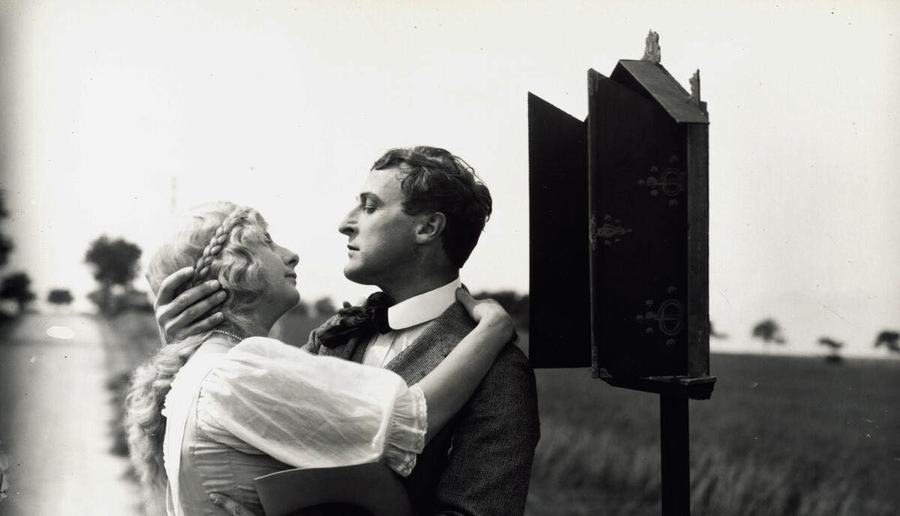
A definitive 6.2/10 rating for a film that redefined the boundaries of cult cinema. Hvor Sorgerne glemmes remains a cornerstone of transgressive art.
There is no curtain-raiser, only the sound of a heart being dropped down a stairwell. From the first frame, Hvor Sorgerne glemmes refuses the polite grammar of Nordic melancholy; it gnaws through it like arsenic through lace. Director-writer Helen Staberow, a name scrubbed from most inter-war annals, here fashions a funeral hymn that detonates inside your skull long after the projector’s click fades. Forget Bergman’s cool Lutheran interrogations—this is Lutheranism dipped in absinthe and set alight.
Cinematographer Axel Mattsson shoots the estate like a rotting brain: corridors fold in on themselves, staircases reverse gravity, parlour doors breathe. You smell the mildew through the celluloid. Each room is scored with a different stage of bereavement—denial in the pantry, bargaining in the attic, acceptance in the greenhouse where the glass is painted black. The camera lingers on wallpaper until the floral patterns resemble tumour sections; it is hard to tell whether the house is grieving the father or the father is grieving the house.
Rita Sacchetto, once Europe’s barefoot dance sensation, here compresses her physical eloquence into a marble stillness. She utters not a single title card yet commands every scene: the way she fingers the stopped pocket-watch, the way she arranges her black veil like a murder scene. When she finally speaks—"Time is the only criminal"—the intertitle burns white against obsidian, and you feel the entire silent era crack open.
Mathilde Felumb Friis, cheekbones sharp enough to slice the beam of light, plays the eldest daughter like a woman who has already died but forgotten to lie down. In a bravura sequence lit only by candle stumps, she tries on her mother’s wedding dress; the fabric devours her, and for a moment the screen is nothing but a vortex of lace and vertebrae. Grete Reinwald’s middle child is pure erotic entropy—she flirts with the undertaker, then with the corpse, then with the idea that the two are interchangeable. Hanni Reinwald, the youngest, has the pallor of a child raised in a drawer; her game of hide-and-seek with the dumb-waiter becomes a metaphysical trial: if sorrow can’t find you, does it still exist?
Alf Blütecher arrives with the swagger of a carnival barker and the eyes of a man who has already mapped your skull’s fault lines. His proposition—drill, scoop, siphon memory—is filmed like a secular exorcism. Close-ups of the hand-cranked trepan resemble the first shots of the moon surface: barren, pockmarked, doomed. Yet the horror is not the blood (there is none) but the euphoria that floods the widow’s face once the bit breaches bone. Staberow cuts to a montage of melting snowdrops, a mare giving birth, a child’s spinning top—cheap symbols, perhaps, but here they feel like the universe trying to reassemble itself after a murder.
Though dubbed a silent, the film’s original Danish premiere featured a live choir humming into the brass bells of gramophones, creating a drone that bled from under the proscenium. Restorations graft a new score—discordant violins, heart-murmur percussion, the crackle of acetate itself—onto the print. The effect is synaesthetic: you hear the colour ochre, you taste the chord minor-seven.
Where The Second in Command externalises guilt into military farce, and Sperduti nel buio traps its characters in a Roman tenement’s recursive gloom, Hvor Sorgerne glemmes folds grief into architecture itself, closer to Atlantis’s watery Armageddon or the domestic surrealism of The Innocent Lie. Yet none of those films dares the tonal leap from Grand-Guignol comedy to cosmic void in a single iris-out.
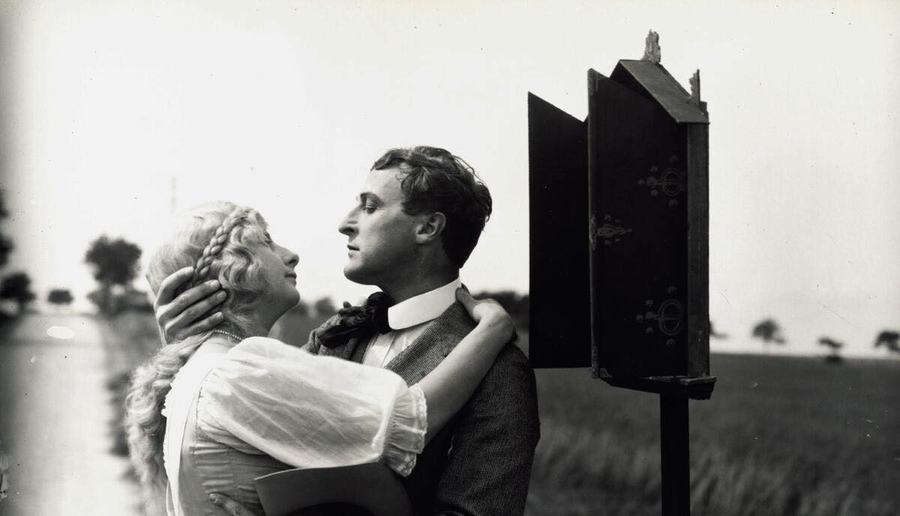
Anton de Verdier’s blind archivist, sleeves heavy with ink, functions as the film’s conscience—or maybe its colonised id. He catalogs every creak of the manor, then consumes the parchment, a forced act of forgetting that echoes Denmark’s own amnesia about its Caribbean holdings. The metaphor is never announced, yet when he chokes on the final sheet, the silhouette of a sugarloaf flashes on the wall behind him, courtesy of an errant lantern slide. History, the film whispers, is what you digest until it poisons you.
Staberow, one of the few women directing in Europe at the time, weaponises the female body as both battlefield and victory parade. When the daughters perform their climactic danse macabre, they don their father’s tailcoats, stuff handkerchiefs into crotches to simulate priapic authority, and stamp across the mahogany in a grotesque can-can. The subversion is ecstatic: patriarchy literally strapped onto the very bodies it once silenced, then parodied until it shatters into splinters.
Double exposures were common by 1923, but Mattsson layers as many as five planes: the living widow, the translucent patriarch, a herd of galloping horses, a child’s silhouette, and a close-up of the drill—all within one coherent depth of field. The effect predates Frankenstein’s lab montage by eight years and rivals the optical bravura of A Night in New Arabia. Meanwhile, tinting oscillates between arsenic-green and cadaver-blue, a chemical mood-ring for the psyche.
Watch Mathilde Felumb Friis’s eyes in the mirror scene: she blinks once every forty-six seconds, each blink landing like a guillotine. The discipline is surgical, the payoff devastating. Equally astonishing is Rita Sacchetto’s command of negative space; she lets the audience project their own grief onto her immobile face, then, with the tiniest muscle twitch, she reclaims that projection and snaps it like a twig.
For decades the film was thought incinerated in the 1927 Glostrup studio fire, until a nitrate roll—sans title, sans credits—surfaced in a São Paulo asylum archive in 1987, mislabeled as Amor e Lágrimas. Even now, twenty minutes remain missing, including the alleged epilogue where the manor reassembles itself and the family sits down to breakfast as though death were merely a drafty hallway. Some cine-mystics claim those lost frames are too dangerous to watch; others say they never existed, that Staberow always intended absence as the final performance.
In an age of algorithmic nostalgia, Hvor Sorgerne glemmes feels prophetic: it warns that deleting pain does not heal; it merely offloads the ache onto geography, onto servants, onto film stock itself. The phrenologist’s drill is the ancestor of today’s neuro-marketing, promising to scrape away the unsightly parts of memory so we can shop unencumbered. The daughters’ danse macabre prefigures TikTok grief trends, where trauma is choreographed for clicks.
The only sanctioned 4K stream sits on Danish Film Institute’s portal, geo-fenced but worth the VPN. Do not—repeat, do not—watch on YouTube’s 240p rip; the tinting becomes mud, the drill becomes a blurry knitting needle. If you can, attend a cinematheque screening: the 16mm print with live accompaniment by Ensemble X adds a sub-bass hum that rattles the sternum like the manor’s own furnace.
Great art about grief usually offers catharsis; Hvor Sorgerne glemmes offers a hole in the skull and a mirror inside it. You will leave lighter, yes—because something has been scooped out. Whether that something is sorrow, or merely the memory of sorrow, is a question the film insists you carry home, like a drill bit tucked between gum and cheek, tasting iron every time you speak.

IMDb 6.6
1924
Community
Log in to comment.