DbcultAccessing Vault...
5.3/10
Senior Film Conservator
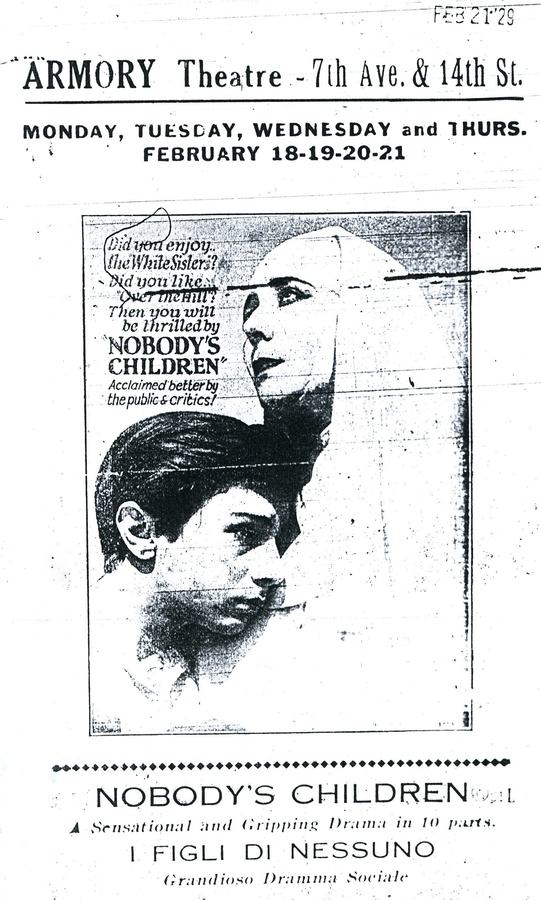
A definitive 5.3/10 rating for a film that redefined the boundaries of cult cinema. I figli di nessuno remains a cornerstone of transgressive art.
Matarazzo’s camera glides through crumbling porticoes as if caressing an open wound; every close-up feels like a confession extracted under flickering candlelight.
Forget the postcard Italy of sun-drenched orchards—here the Peninsula is a rain-lashed purgatory where marble staircases sweat and even the church bells clang with recrimination. The film’s three-part structure, originally serialized for rapt 1921 audiences, anticipates the binge-drop model by a century: each reel ends on a gasp-inducing tableau, the screen iris-closing like an eyelid reluctant to blink.
The picture’s DNA oozes the same lachrymose chromosomes found in Betty’s Green-Eyed Monster or The Redemption of Dave Darcey, yet its pessimism is more systemic—aristocracy itself is the virus, not a mere backdrop.
Alberto Nepoti’s Count Giorgio carries the slump-shouldered elegance of a man who has read his own tragic epitaph in a dream; watch how he fingers his signet ring as though it were a handcuff. Opposite him, Adriana Vergani’s Luisa exudes a lambent dignity—her tears never fall, they simply drown the iris. The chemistry is so restrained it borders on the sacramental, a choice that makes their single, frantic embrace in the bell tower feel like sacrilege.
Leonie Laporte’s Dowager Countess is no mustache-twirling tyrant; she’s a relic of Ancien Régime pragmatism, face powdered until the pores disappear, voice never rising above a lethal murmur. In her worldview, love is a peasant revolt that must be quashed before it reaches the gates. She dispatches priests like chess pieces and bribes midwives with the casual flick of a fan, yet the performance is tinged with such self-loathing you almost forgive her.
The convent sequences—shot in the limestone cloisters of San Martino—borrow chiaroscuro from Murnau and the trembling petals of light from early Danish cinema. Nuns glide in spectral formation, their habits rustling like ravens’ wings; when Luisa takes the veil, the camera tilts heavenward as if to ask whether God himself has been bribed.
Renato, the discarded heir, is played by a gap-toothed street urchin plucked from a Ligurian fishing village—his non-acting is devastatingly pure. Matarazzo intercuts his barefoot escapades with Giorgio’s opulent ennui using Eisensteinian montage: a crust of bread slammed onto pewter morphs into a chandelier crystal; a mongrel’s bark echoes through a ballroom waltz. The message? Both classes subsist on scraps, only the tableware differs.
Curiously, the film refuses the cathartic recognition scene we expect from The Little Brother or You Never Can Tell; instead, knowledge arrives obliquely, like a rumor that has already poisoned the well.

The original accompaniment, now lost, has been reconstructed by the Cineteca di Bologna using period diaries: a relentless adagio for strings punctuated by celesta whenever the child appears. The effect is nauseatingly poignant—imagine Debussy trapped in a Neapolitan funeral. Because the film is silent, intertitles carry the weight of poetry; Rindi’s prose, all dusky Biblical cadence, turns every card into a dirge: “And the stone angels watched as the mighty house forgot its own name.”
Unlike post-war melodramas that luxuriate in pious suffering, this early work is ethically agnostic. The church offers no sanctuary; the aristocracy no redemption; love itself is a contagion. Even the final convent bells feel less like benediction than a life sentence. Yet the film is not nihilistic—it aches for something it refuses to name, a secular grace that flickers only when Renato offers half his bread to a stray dog.
Compare this to Should a Husband Forgive? where marriage is the healing salve; here, wedlock is merely another dungeon with lace trim.
Water recurs as both womb and tomb: the bastard child is ferried across a fog-choked river straight from a Böcklin canvas; Luisa’s hair is constantly damp, as though she has just emerged from baptism or drowning. Mirrors, cracked and foxed, reflect splintered identities—Giorgio confronts his own reflection only once, smashing it with the same hand that once caressed Luisa’s cheek. The gesture is so abrupt the splice itself seems to bleed.
Because the film predates Method by decades, the acting is a form of statuary: actors pose, then tremble. Yet within that stylization pulses raw plasma—watch Vergani’s pupils dilate when she hears a lullaby she used to sing; the iris practically sucks the light from the frame. Nepoti, by contrast, wilts like cut flowers, his shoulders surrendering gravity inch by inch until the final shot frames him as a silhouette against a mausoleum door.
Matarazzo would revisit the tale with Amedeo Nazzari and Yvonne Sanson, swapping expressionist gloom for plush studio gloss. That version is a fever dream of pearls, rain-soaked train tracks, and Sanson’s operatic tears. It’s magnificent, but it’s opera; the 1921 original is plainchant—haunting precisely because it refuses to swell.
The 4K restoration by Cineteca Nazionale premiered at Il Cinema Ritrovato, accompanied by a live ensemble performing a new score heavy on theremin and muted brass. For home viewing, the region-free Blu-ray from Il Sorpasso includes a 40-page booklet tracing the film’s censorship file (the Church objected to the convent’s portrayal, demanding ten cuts that were fortunately ignored). Streaming is scarce—occasionally it surfaces on Criterion Channel under “Silent Italian Treasures,” but pirated rips on archive.org lack the amber tinting that replicates the original nitrate glow.
Pasolini cited the picture as a key influence on Accattone’s fatalism; more recently, Pedro Costa lifted its chiaroscuro for Vitalina Varela. Yet the film remains largely unassimilated by anglophone cinephilia, perhaps because its misery is so unalloyed, so allergic to catharsis. It refuses the comfortable pillow of redemption that even The Heart of a Painted Woman ultimately provides.
To watch I figli di nessuno is to eavesdrop on a century-old wound that never learned how to close. It will not hold your hand, it will not dry your eyes; it will simply leave you standing at the convent gate as the bells toll, unsure whether to pray or scream. And that, in the calculus of cinema, is a kind of perverse mercy—an ache that chooses to endure rather than to heal.

IMDb —
1919
Community
Log in to comment.