DbcultAccessing Vault...
Cult Review
Senior Film Conservator
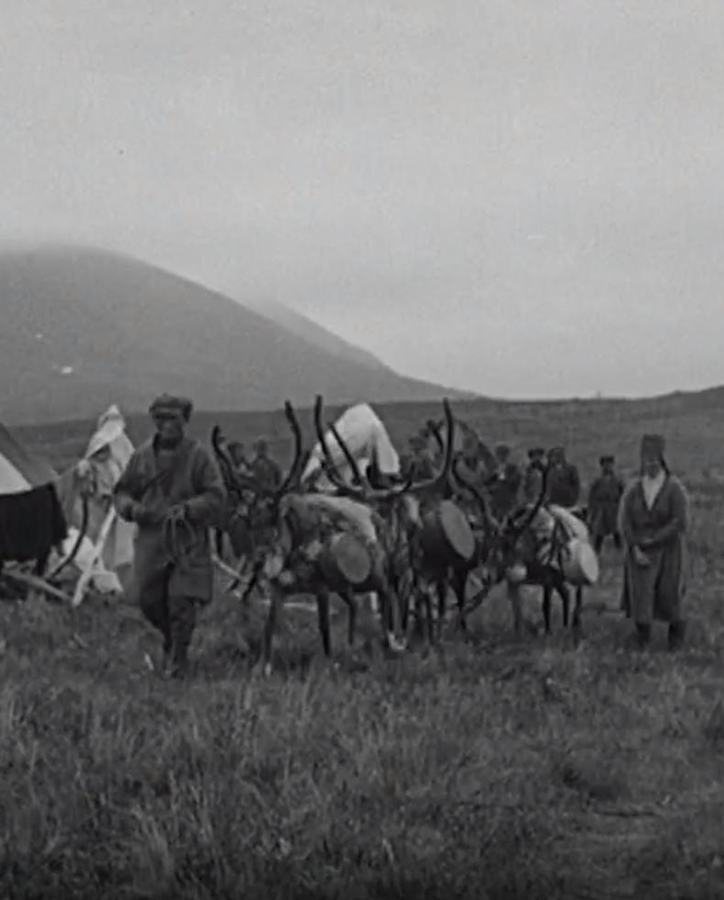
In the annals of early cinema, where the medium was still grappling with its identity – oscillating between theatrical spectacle and nascent documentary – there emerged a work of profound, understated power: I fjällfolkets land: Dagar i Lappland. This isn't just a film; it's a meticulously preserved ethnographic artifact, an invaluable window into a way of life that, even a century ago, was undergoing profound shifts. Directed and penned by Olof Norrman, with the compelling presence of Erik Bergström, this cinematic endeavor transcends mere entertainment, offering instead a deeply immersive cultural experience. It is a testament to the enduring spirit of the Sámi people and their intricate relationship with the formidable, yet bountiful, Arctic landscape.
At the heart of this luminous portrayal is the young Sámi girl, Inka Länta. Her journey through the film is not one of dramatic conflict or manufactured plot points, but rather a gentle, unwavering chronicle of daily existence. Norrman's camera, with a remarkable prescience for its time, acts less as an intrusive observer and more as a silent companion, capturing the authenticity of Inka's world without artifice. We are invited into the intimate sphere of the goahti, the traditional Sámi tent, a structure that is far more than mere shelter; it is the beating heart of family and community, a sanctuary against the harsh elements. Here, we observe the meticulous rituals of domesticity: the preparation of meals over an open fire, the mending of garments, the quiet camaraderie that defines shared space in a challenging environment. These scenes are imbued with a quiet dignity, emphasizing the resourcefulness and resilience inherent in Sámi culture.
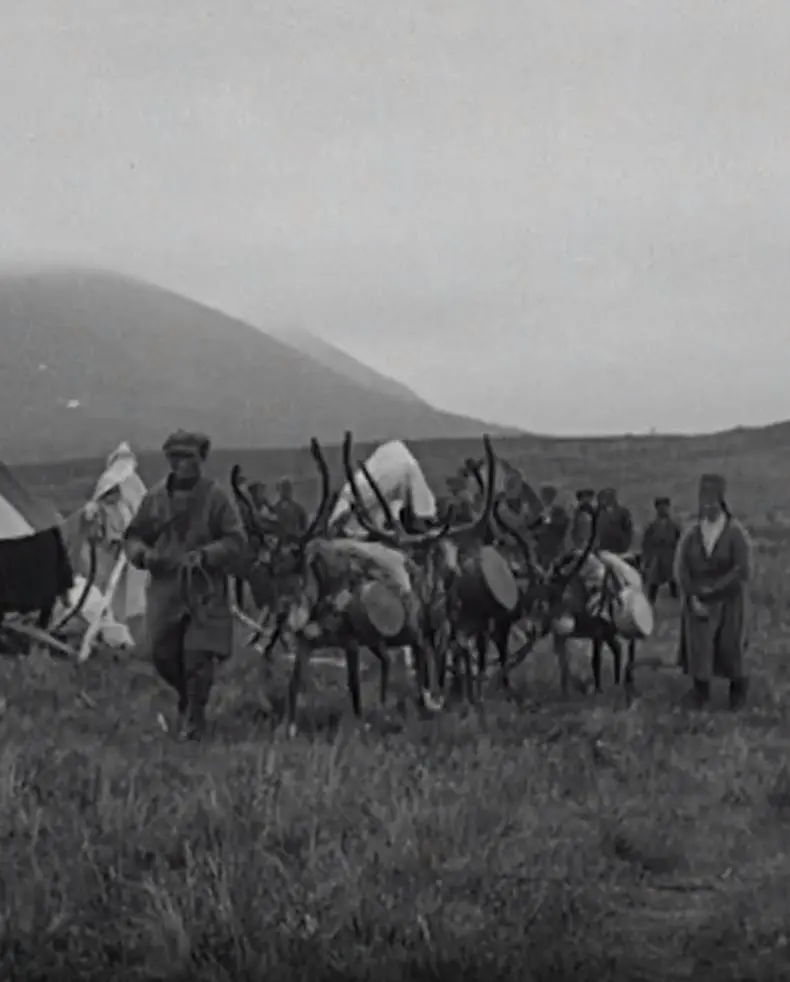
The film particularly excels in its depiction of the symbiotic relationship between the Sámi and their reindeer. Inka's involvement in tending the herds is central, showcasing a connection that transcends mere husbandry to become an integral part of identity and survival. We witness the vastness of the landscape, the delicate balance of the ecosystem, and the profound knowledge passed down through generations required to navigate and thrive within it. The reindeer are not just livestock; they are providers of food, clothing, tools, and a spiritual cornerstone. Their seasonal migrations dictate the very rhythm of Sámi life, and Norrman captures this monumental movement with a sense of awe, highlighting the sheer scale of the undertaking and the intimate bond between human and animal. This is where the film truly distinguishes itself, offering an unparalleled visual record of a practice that remains vital yet constantly challenged by the encroachment of modernity.
Beyond the reindeer, the film delves into other crucial aspects of Sámi self-sufficiency. Scenes of goat milking, for instance, are not merely functional but illustrative of a broader agricultural ingenuity adapted to the demanding environment. Similarly, the art of baking, often performed within the goahti, speaks to the ingenious methods of food preparation and preservation. Perhaps most captivating are the sequences dedicated to weaving. Here, the raw materials of the land are transformed through skill and patience into essential items, each thread carrying the weight of tradition and utility. These are not just chores; they are acts of creation, imbued with cultural significance and passed down through generations, ensuring the continuity of a distinct artistic and practical heritage.
A particularly insightful segment focuses on education within the nomad school. This offers a fascinating glimpse into how a traditional society adapted to the demands of formal learning without entirely abandoning its itinerant lifestyle. The nomad school, by its very nature, represents a delicate balance between preserving indigenous knowledge and integrating with broader societal structures. It underscores the Sámi commitment to both their unique cultural identity and the practical necessities of a changing world. Through Inka's experiences, we understand that education in this context is not merely about textbooks; it’s about learning to thrive in a specific environment, understanding the rhythms of nature, and carrying forward the collective wisdom of a people.
Olof Norrman's role as the writer (and likely director, given the era's filmmaking practices) is pivotal. His approach is characterized by a deep respect for his subjects, a commitment to authentic representation, and an almost anthropological gaze. Unlike many contemporary films that sought to sensationalize or exoticize 'other' cultures, Norrman's work is marked by a quiet observationalism. He allows the actions and environment to speak for themselves, minimizing overt narration or dramatic intervention. This choice imbues I fjällfolkets land with an enduring power, making it feel remarkably modern in its documentary sensibilities even today. His vision ensures that the film serves as a genuine record, rather than a mere interpretation.
Erik Bergström's contribution, while perhaps not in the traditional sense of 'acting,' is nonetheless crucial. In films of this nature and era, individuals like Bergström often served as guides, cultural liaisons, or even a narrative presence. His involvement lends an additional layer of authenticity and perhaps facilitated the trust necessary for such intimate filming. The very listing of a cast member, even one, for what is essentially an ethnographic documentary, highlights the collaborative nature of early filmmaking and the importance of individuals who bridge cultural divides to bring such stories to the screen. His presence, however subtle, underscores the human element at the core of Norrman's project.
In an era where the nascent art of cinema was largely captivated by dramatic narratives, often exploring grand human passions or societal conflicts, as seen in works like The Idol of the Stage or even the more allegorical A Man There Was, I fjällfolkets land charts a remarkably distinct course. Instead of fabricating stories, it meticulously documents an existing reality, offering a rare anthropological lens. While other films of the period might have focused on the individual's struggle against fate, like The Power of Decision, Norrman's film emphasizes the collective survival and cultural resilience of an entire community. This deliberate choice positions it not as a work of fiction, but as a crucial historical and cultural document, a precursor to the modern ethnographic film.
Its unique observational style contrasts sharply with the often melodramatic or adventure-driven narratives prevalent at the time, such as the escapades in Bushranger's Ransom, or A Ride for Life. Norrman's restraint allows the dignity and complexity of Sámi life to emerge organically, without the imposition of external narrative structures. It stands apart from films that sought to entertain through conventional plot devices, instead inviting viewers to engage with a different kind of truth. This makes it a fascinating point of comparison for understanding the diverse trajectories cinema began to carve out for itself in its formative years.
The cinematography, though rudimentary by today's standards, possesses a raw beauty. The sweeping vistas of Lappland, the intricate details of craftwork, and the intimate moments within the goahti are captured with a directness that is both poignant and powerful. The film's black and white palette only enhances its timeless quality, lending an almost painterly aesthetic to the landscapes and faces. One can almost feel the crisp Arctic air, hear the rustle of the reindeer, and sense the quiet determination etched on the faces of the Sámi people.
The enduring relevance of I fjällfolkets land: Dagar i Lappland cannot be overstated. It serves as an invaluable historical document, preserving a snapshot of Sámi life at a specific juncture in time. For cultural researchers, historians, and indeed anyone interested in indigenous peoples, it offers a visual ethnography of rare depth and sensitivity. In an age increasingly concerned with cultural preservation and indigenous rights, this film stands as an early, respectful attempt to document and share a unique heritage with a wider audience. It reminds us of the profound diversity of human experience and the intricate ways in which cultures adapt and endure against the backdrop of an ever-changing world.
Watching it today, one is struck not only by the historical context but also by the universal themes it subtly explores: the human connection to nature, the importance of community, the transmission of knowledge, and the quiet strength found in adhering to one's roots. It's a film that asks us to slow down, to observe, and to appreciate the richness of a life lived in harmony with the natural world. Far from being a mere curiosity from a bygone era, I fjällfolkets land remains a vibrant, essential piece of cinematic history, inviting contemplation and fostering a deeper understanding of the Sámi people and their indelible mark on the tapestry of human civilization. It is a quiet masterpiece, a meditative journey into the soul of Sápmi, leaving an impression that lingers long after the final frame.
IMDb —
1917
Community
Log in to comment.