DbcultAccessing Vault...
1.9/10
Senior Film Conservator
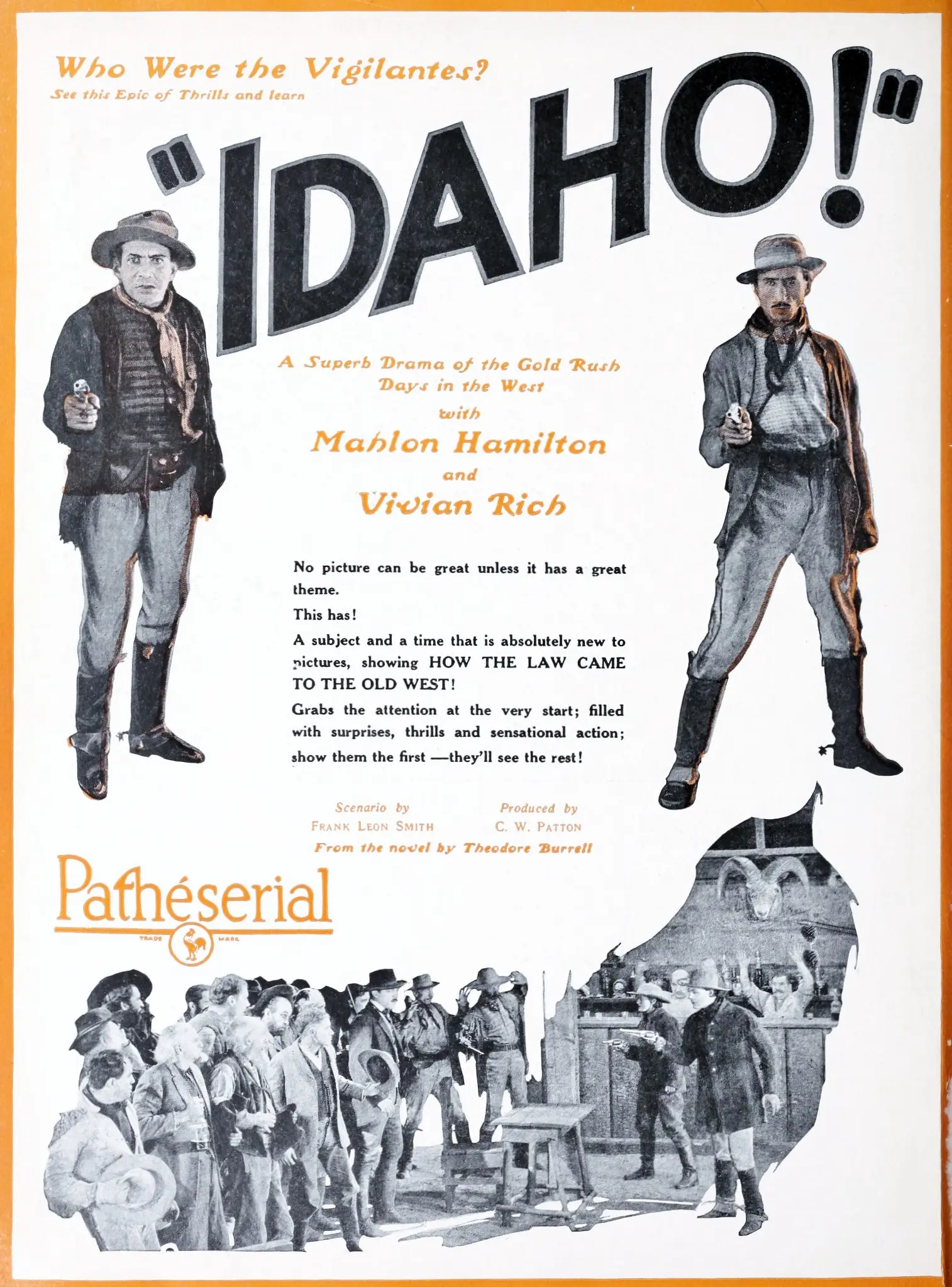
A definitive 1.9/10 rating for a film that redefined the boundaries of cult cinema. Idaho remains a cornerstone of transgressive art.
In the pantheon of silent cinema, the Western genre often feels like a crowded room where only the loudest voices—the Fords and the Griffiths—are heard. Yet, when we peel back the layers of film history, we find gems like Idaho (1925), a production that defies the simplistic 'white hat vs. black hat' tropes of its era to deliver something significantly more atmospheric and textured. Directed with a keen eye for the spatial relationship between man and nature, the film serves as a fascinating bridge between the early primitive shorts and the sophisticated visual storytelling that would define the late 1920s.
One of the most striking elements of Idaho is its rejection of the studio-bound aesthetic. In an era where many 'Westerns' were shot on dusty backlots in Southern California, this film feels breatheable. The cinematography captures the vastness of the territory with a clarity that must have been breathtaking for audiences in 1925. There is a specific shot early in the second act—a wide pan across a valley—where the grain of the film stock seems to vibrate with the heat of the sun. This isn't just a backdrop; it is a character that dictates the movement of every actor on screen.
The use of light and shadow, particularly in the interior cabin scenes, suggests an influence of German Expressionism that was beginning to seep into American genre filmmaking. While it doesn't go full 'Caligari,' the way Theodore Burrell and Frank Leon Smith utilize deep blacks and harsh highlights creates a sense of claustrophobia that contrasts beautifully with the wide-open exteriors. It heightens the stakes, making the safety of the indoors feel just as precarious as the dangers of the trail.
Mahlon Hamilton delivers a performance that I would argue is decades ahead of its time. In the 1920s, the prevailing acting style was often 'grand'—a series of poses and exaggerated facial expressions intended to convey emotion to the back of the theater. Hamilton, however, leans into a minimalist approach. His eyes do the heavy lifting. Whether he is contemplating a betrayal or eyeing the horizon, there is a quietude to his presence that anchors the film. He doesn't need to flail his arms to show distress; the tightening of his jaw is enough.
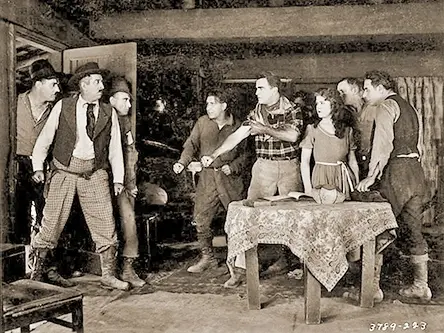
The supporting cast is equally robust, featuring a 'who's who' of reliable character actors from the period:
The writing by Theodore Burrell and Frank Leon Smith deserves significant praise. In the silent era, the 'writer' was often the person who could craft the best title cards. But in Idaho, the narrative structure is surprisingly tight. The pacing doesn't suffer from the mid-film sag that plagues many silent features. Instead, it builds momentum through a series of escalating confrontations that feel earned rather than forced. The dialogue on the cards is sparse, allowing the visual storytelling to take the lead—a hallmark of high-quality silent cinema.
"Idaho is not merely a film about a place; it is a film about the psychological weight of isolation and the price one pays for carving a life out of the void."
If there is a criticism to be leveled at Idaho, it is that modern audiences, pampered by the hyper-kinetic editing of contemporary action films, might find the first act a bit deliberate. However, I would argue that this 'slow burn' is intentional and necessary. The film takes the time to establish the stakes. When the violence eventually erupts, it has a visceral impact because we understand what is being lost. The tension is built not through quick cuts, but through the accumulation of small, meaningful details.
The direction maintains a steady hand, never veering into the melodramatic. There is a sequence involving a confrontation at a mountain pass that is a masterclass in suspense. The camera stays wide, forcing the viewer to scan the horizon for movement, mirroring the protagonist's own anxiety. It is immersive filmmaking at its finest, proving that you don't need a 200-million-dollar budget to create genuine tension.
My first major take on this film is that Idaho is the most 'honest' Western of its decade. While films like The Covered Wagon focused on the epic scale of the westward expansion, Idaho focuses on the grit under the fingernails. It acknowledges that the frontier was a place of profound loneliness and moral compromise. The film’s stance on justice is refreshingly gray; the 'hero' often has to do things that are unsavory to survive, and the film doesn't look away from those choices.
Secondly, I believe that the technical achievements of this film have been unfairly overlooked by history. The lighting design, particularly the way it uses natural light to create depth in the outdoor scenes, is superior to many of the more famous films of the mid-20s. It is a tragedy of film preservation that more people haven't seen the restored versions of these sequences, as they represent a peak in silent-era cinematography.
To understand Idaho, one must look at what else was happening in 1925. We were seeing the rise of the 'Super Western,' but Idaho chose a different path. It feels more akin to the works of King Vidor or even early John Ford in its reverence for the landscape. When compared to other films of the time like The Phantom Carriage (which explored supernatural themes) or The Adventures of Robinson Crusoe (which focused on isolated survival), Idaho occupies a unique middle ground. It is a survival story, but one that takes place within the context of an emerging, albeit violent, civilization.
The film also stands out for its treatment of its female characters. While Vivian Rich and Lillian Gale aren't the primary drivers of the action, they are given a level of agency and interiority that was rare for the genre. They aren't just prizes to be won; they are participants in the struggle for survival. This adds a layer of emotional complexity that makes the final act resonate much more deeply than the standard 'rescue' narrative.
Idaho is a film that demands your attention. It is not 'easy' viewing in the way a modern popcorn flick is, but for those willing to engage with its rhythm, the rewards are immense. It is a hauntingly beautiful piece of work that captures a specific moment in American history—both in terms of the subject matter it depicts and the cinematic techniques it employs. It is a reminder that even in the silent era, filmmakers were pushing the boundaries of what the medium could achieve, using light, shadow, and human expression to tell stories that are as relevant today as they were a century ago.
Whether you are a die-hard student of film history or a casual viewer looking for a window into the past, Idaho offers a compelling, visually stunning experience. It is a film that deserves to be pulled from the shadows and given its rightful place as a cornerstone of the silent Western. It is rugged, it is poetic, and above all, it is profoundly human.
IMDb —
1928
Community
Log in to comment.