DbcultAccessing Vault...
8.4/10
Senior Film Conservator
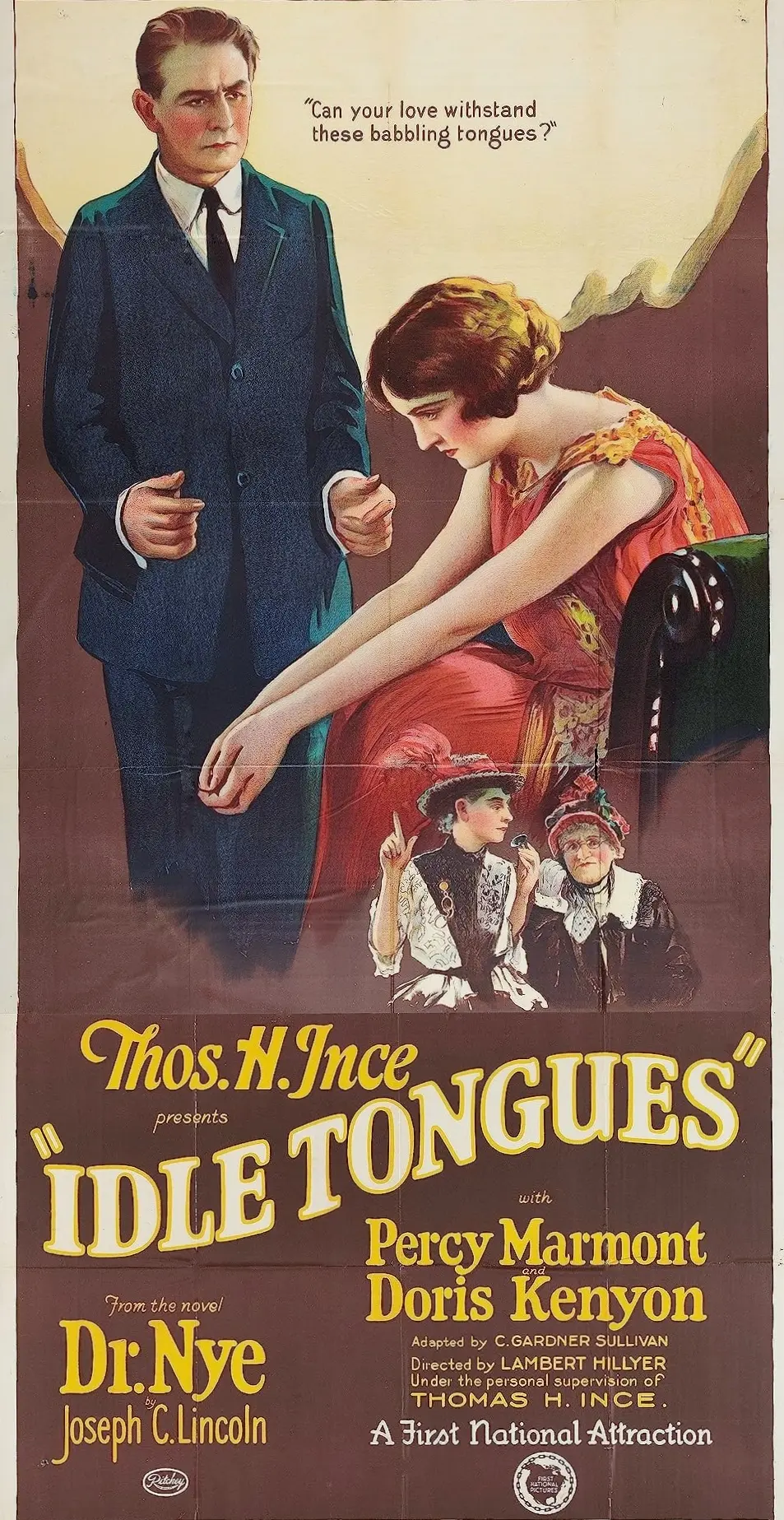
A definitive 8.4/10 rating for a film that redefined the boundaries of cult cinema. Idle Tongues remains a cornerstone of transgressive art.
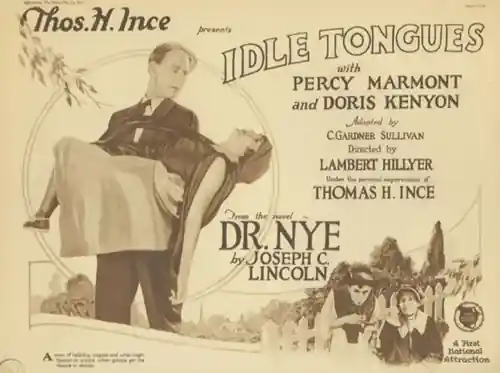
The 1924 silent feature Idle Tongues stands as a chillingly relevant exploration of the 'court of public opinion' long before the digital age weaponized the whisper. Directed by Lambert Hillyer, the film navigates the treacherous waters of social ostracization with a precision that mirrors the scientific rigor of its protagonist, Dr. Ephraim Nye. While many films of the mid-twenties leaned into the escapist grandeur seen in epics like The Birth of a Nation, Hillyer opts for a domestic intensity that feels almost suffocating in its intimacy.
Claude Gillingwater delivers a performance of profound restraint as Dr. Nye. Returning to Ostable after five years in a penitentiary, his presence is a catalyst for the town's dormant cruelties. The title itself, Idle Tongues, serves as the primary antagonist. It isn't just one person who destroys Nye; it is the collective, low-frequency hum of Althea Bemis’s gossip. Vivia Ogden’s portrayal of Bemis is a masterclass in the banality of evil—she represents the segment of society that finds sustenance in the misery of others. In this regard, the film shares a thematic DNA with The Evil Thereof, where the moral rot of the characters is as palpable as any physical ailment.
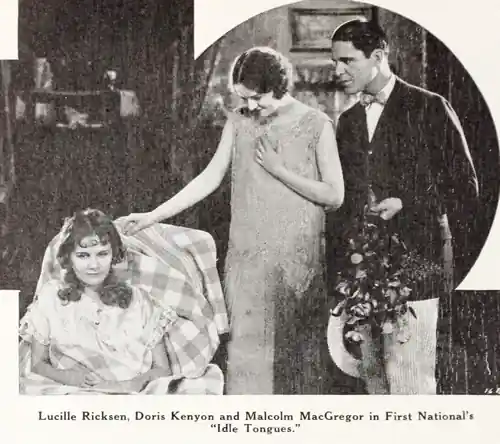
The cinematography captures the stark contrast between the internal world of the characters and the external judgment of the town. Hillyer uses shadows not just for aesthetic mood, but to delineate the moral boundaries of Ostable. When Nye walks down the street, the framing is tight, almost claustrophobic, suggesting that the town itself is a prison far more restrictive than the one he just left. This visual language of entrapment is reminiscent of the psychological weight found in The Wolf Man (1923), where the struggle with one's perceived nature becomes a central conflict.
The pivot from a story of social redemption to a medical thriller is where Idle Tongues distinguishes itself. The typhoid epidemic is handled with a grim realism that must have resonated deeply with a 1924 audience still reeling from the global health crises of the previous decade. Dr. Nye’s insistence that the water supply is contaminated by a specific pond—a pond Judge Copeland intends to profit from—creates a friction that is both intellectual and visceral. David Torrence’s Judge Copeland is the quintessential silent film villain, but one grounded in the recognizable greed of local politics rather than mustache-twirling theatrics.
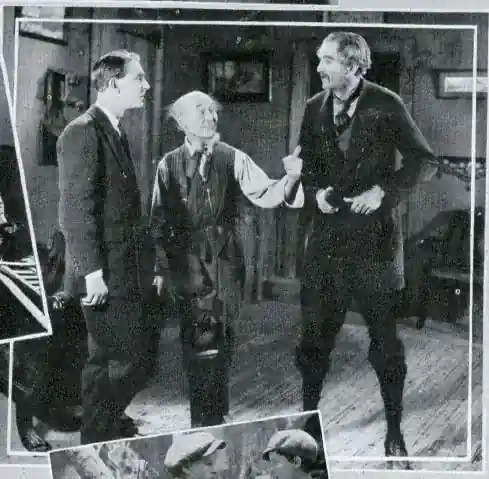
This conflict highlights the burgeoning tension of the era between traditional authority and the rising influence of scientific expertise. Much like the societal shifts explored in The Volcano, the film posits that truth is often buried under layers of institutional convenience. The biologists who eventually confirm Nye’s hypothesis serve as a 'deus ex machina' of empirical fact, a rare moment in silent cinema where the lab coat carries more weight than the judge's gavel.
The emotional core of the film lies in the revelation of Nye’s sacrifice. The discovery that he went to prison to protect the reputation of his deceased wife, Fanny, elevates the character from a victim of circumstance to a secular saint. This trope of the silent sufferer is a staple of the period, yet Gillingwater avoids the saccharine pitfalls often found in films like The Girl of My Dreams. His silence is not a sign of weakness, but a fortress of personal integrity. It is a stark contrast to the 'idle tongues' that give the film its name; while the town speaks without knowing, Nye knows without speaking.
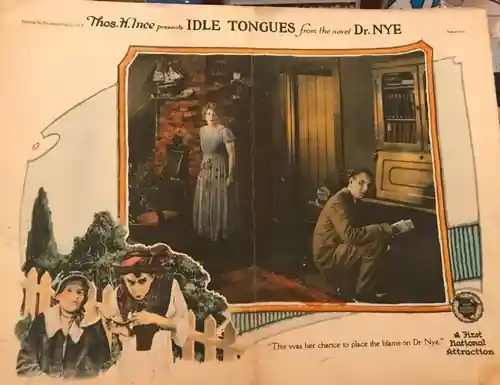
Katherine Minot, played with a refreshing agency by Doris Kenyon, is the only character who operates outside the binary of gossip and greed. Her support of Nye provides the film’s moral compass. The romance between them is handled with a maturity that eschews the frantic energy of The Misleading Lady. It is a partnership built on mutual respect and shared isolation, a quiet rebellion against the cacophony of Ostable.
Lambert Hillyer, known primarily for his work in Westerns like The Border Legion, brings a surprising amount of nuance to this domestic drama. The pacing is deliberate, allowing the tension to simmer before the explosive final confrontation. The scene where Nye presents the proof of his innocence to Copeland is a masterclass in silent storytelling—facial expressions and lighting do the work that a thousand intertitles could not. The use of close-ups during this sequence isolates the characters from the world, emphasizing that this is a private reckoning for a public crime.
The film’s secondary plot involving Faith Copeland and Tom Stone offers a glimpse into the generational divide. Their love, hindered by the animosity between their fathers, mirrors the classic Romeo and Juliet dynamic but is resolved through the lens of moral justice rather than tragedy. This resolution feels earned because it is tied directly to the fall of the Judge’s house of cards. Unlike the melodramatic twists in Her Reckoning, the conclusion of Idle Tongues feels like a natural chemical reaction—the inevitable result of truth meeting corruption.
Looking back at Idle Tongues a century later, its critique of social contagion remains startlingly sharp. The 'typhoid' of the mind is often more dangerous than the one in the water. The film suggests that society is always looking for a scapegoat, and that the easiest person to blame is the one who refuses to defend themselves with the same dirty tactics as their accusers. This exploration of the 'wrongfully accused' motif links it to the heavy themes of Life Story of John Lee, or The Man They Could Not Hang, though Hillyer’s film trades the supernatural for the sociological.
The final act, where Katherine uses Althea Bemis—the very source of the town’s poison—to spread the news of her engagement to Nye, is a stroke of narrative genius. It weaponizes gossip for the sake of truth, bringing the story full circle. It is a satisfying, if cynical, acknowledgment that the 'idle tongues' will never stop wagging; the best one can do is give them something virtuous to talk about. This clever manipulation of social dynamics is far more sophisticated than the broad comedy found in The Man from Mexico or the lighthearted fluff of A Studio Rube.
In the broader landscape of 1924 cinema, Idle Tongues might have been overshadowed by the high-fashion allure of Lombardi, Ltd. or the gritty realism of Chains of Evidence, but its staying power lies in its deep understanding of human frailty. It does not offer easy answers. While Nye is vindicated, the five years of his life lost to prison cannot be returned. The film ends on a note of cautious optimism, but the shadows of Ostable remain long.
The production values, from the set design of the New England village to the costume work by the uncredited department, all contribute to a sense of lived-in reality. This isn't a Hollywood backlot version of a town; it feels like a place where the air is salty and the secrets are heavy. For those interested in the evolution of the social drama, Idle Tongues is an essential watch. It stands as a testament to the power of silent film to convey complex moral arguments through the simple, profound medium of the human face. It is a reminder that while tongues may be idle, the damage they do is anything but.
Whether compared to the stylistic experiments of Revelj or the chaotic energy of Black and Tan Mix Up, Idle Tongues maintains a steady, dignified pulse. It is a film that demands your attention, not through spectacle, but through the sheer weight of its conviction. In the silence of Dr. Nye, we find a volume of truth that still resonates a century later.
IMDb —
1918
Community
Log in to comment.