DbcultAccessing Vault...
Cult Review
Senior Film Conservator
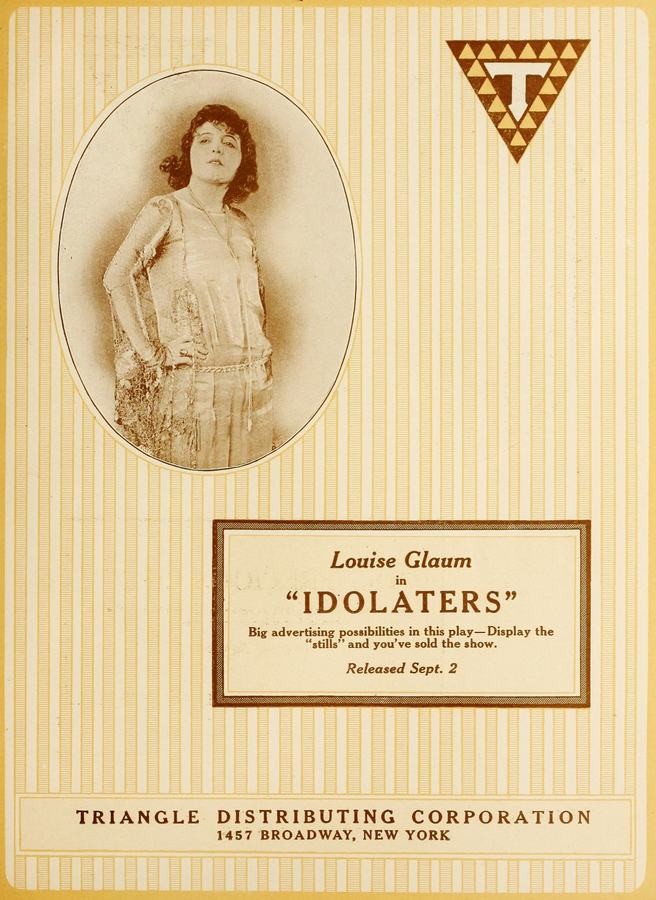
Stepping into the flickering world of 1917 cinema, one encounters 'Idolators,' a film that, even a century later, reverberates with potent themes of ego, ambition, and the often-destructive interplay between art and personal desire. It's a melodrama, certainly, but one crafted with a keen, almost surgical precision, laying bare the vulnerabilities and venalities of its characters. This isn't merely a quaint relic; it's a stark, compelling narrative that dissects the human condition with surprising sophistication for its era. The film, directed by Walter Edwards, with a screenplay by John Lynch and Monte M. Katterjohn, serves as a fascinating lens through which to view the cultural anxieties and moral compass of early 20th-century America, particularly regarding the burgeoning world of theatre and the magnetic pull of celebrity.
At its core, 'Idolators' is a cautionary tale, a dramatic exploration of what happens when self-perception diverges wildly from reality. Our central figure, Curtis de Forest Ralston, portrayed with a grandiloquent flair by Lee Hill, is a playwright convinced of his own brilliance. His latest opus, 'Vanity'—a title laden with delicious irony—is, in his estimation, a masterpiece. Yet, as the narrative unfolds, it becomes painfully clear that Curtis is less a visionary and more a man consumed by an inflated sense of self-worth. He embodies the very 'vanity' his play purports to critique, a subtle layer of meta-commentary that elevates the film beyond a simple morality play. His artistic integrity, already tenuous, is further compromised by his infatuation with the luminous, yet calculating, actress Viola Strathmore.
Viola, brought to life with an enthralling intensity by the incomparable Louise Glaum, is a force of nature. Glaum, known for her vampish roles and captivating screen presence, imbues Viola with a magnetic allure and an unyielding ambition. She sees Curtis not as an artistic equal, but as a stepping stone, a means to an end. Her manipulations are subtle at first, then increasingly overt, as she persuades Curtis to tailor 'Vanity' to her specifications, demanding more lines, more spotlight. This dynamic immediately sets up a fascinating power struggle: the artist who believes he controls his creation, and the performer who seeks to commandeer it for her own glory. It's a timeless conflict, one that still plays out in creative industries today, showcasing the eternal tension between authorial intent and interpretive performance.
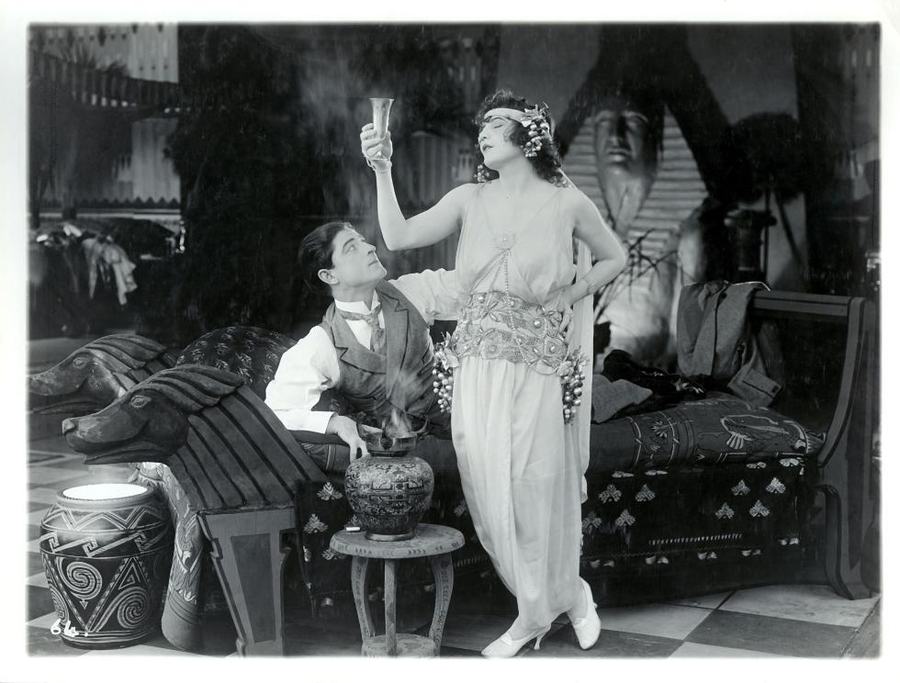
The true emotional anchor of 'Idolators' is Anita, Curtis's wife, played with understated grace by Tom Guise. Anita represents the quiet, often unacknowledged genius, the one whose talent is sacrificed at the altar of domesticity and spousal support. She is a former actress, possessing a deep understanding of the stage and, crucially, a far superior dramatic sensibility than her husband. Her quiet suffering, her willingness to step aside for Curtis's perceived career, is heartbreakingly portrayed. When Curtis's revisions, spurred by Viola's demands, threaten to derail 'Vanity' entirely, it is Anita who, in a clandestine collaboration with her old manager, Bruce Winthrope (George Webb), secretly salvages the play. This act of selfless devotion, of artistic resuscitation from the shadows, is perhaps the film's most poignant statement on true love and artistic integrity. Her actions echo the tragic self-effacement seen in films like Betrayed, where female characters often sublimate their own desires and talents for the sake of a partner.
The irony is palpable: the play named 'Vanity' becomes a success not through its ostensible author's genius, but through the unseen, uncredited efforts of his devoted wife. This triumph, however, only serves to inflate Curtis's already distended ego. Blinded by success and Viola's continued allure, he abandons Anita, choosing the superficial glamour of his starlet over the profound loyalty and talent of his wife. This desertion marks a critical turning point, not just for the characters, but for the film's thematic trajectory. It transforms from a study of artistic hubris into a full-blown tragedy of moral decay and consequential downfall.
The illicit affair between Curtis and Viola, initially a clandestine thrill, quickly unravels. The play's financial backer, discovering their scandalous relationship, withdraws his funds, plunging 'Vanity' into darkness. This swift collapse is a brutal reminder of the era's societal norms and the punitive consequences for moral transgressions, especially for public figures. The glamorous world of the theatre, so enticing at the outset, reveals its unforgiving underbelly. Viola's carefully constructed world of fame and adulation crumbles, and in her desperation, she blames Curtis for her downfall. Here, Louise Glaum truly shines, portraying Viola's descent from ambitious star to embittered pariah with a raw, visceral intensity that is both chilling and compelling. Her performance, much like her work in The Idol of the Stage, captures the volatile nature of fame and the ruthless demands of the spotlight.
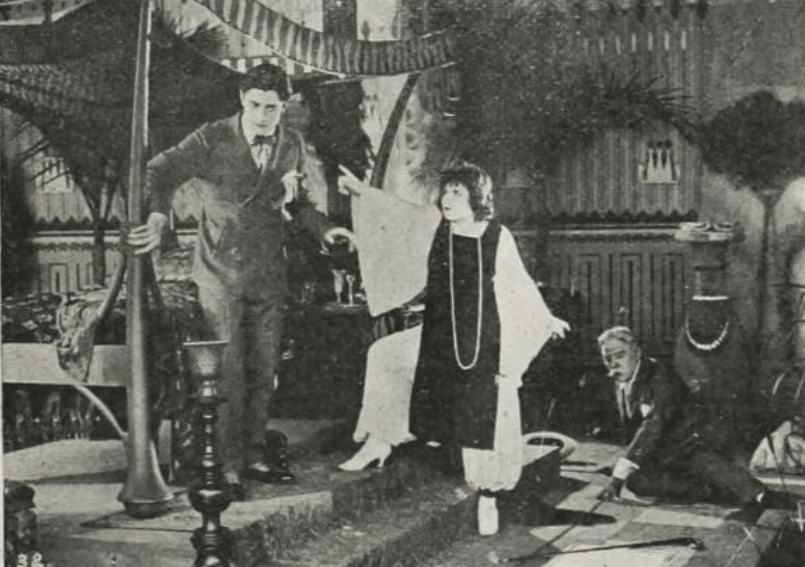
The tragedy escalates when Curtis, still hopelessly enamored, attempts to rekindle their affair. Viola, seeing him only as the architect of her ruin, brutally murders him. This shocking act propels the film into a darker, more desperate realm, transforming it from a melodrama of manners into a crime thriller. Viola's subsequent flight from justice, seeking refuge in a squalid tenement, is a stark contrast to the opulent stage settings and lavish lifestyles depicted earlier. It's a visual metaphor for her complete fall from grace, a powerful image of a once-shining star reduced to desperate hiding. The tension during this segment is palpable, a testament to director Walter Edwards's ability to maintain suspense even within the conventions of silent cinema.
The film's devastating climax introduces another layer of profound, albeit twisted, loyalty through the character of Borul, Viola's faithful Egyptian servant (Hugo B. Koch). Borul's devotion transcends reason, a silent, unwavering presence throughout Viola's rise and fall. When the police finally track Viola down to her tenement hideout, Borul makes a horrific choice: rather than allow his mistress to be apprehended and face the ignominy of the law, he slays her himself. This act, born of a desperate love and a warped sense of honor, is both shocking and deeply tragic. It elevates the narrative beyond a simple tale of crime and punishment, imbuing it with a sense of fatalistic grandeur. Borul's final act is a powerful, if disturbing, testament to the extremes of human attachment, reminiscent of the fierce, unyielding devotion found in narratives like The Crimson Wing, where loyalty often leads to profound sacrifice.
The ending leaves a lingering impression, a stark commentary on the destructive cycle of ambition, betrayal, and unrequited love. It eschews a neat, morally satisfying conclusion for something far more complex and unsettling, a hallmark of compelling silent-era melodramas that dared to delve into the darker facets of human nature. The final frames, devoid of dialogue, speak volumes through the actors' expressions and the tragic stillness of the aftermath.
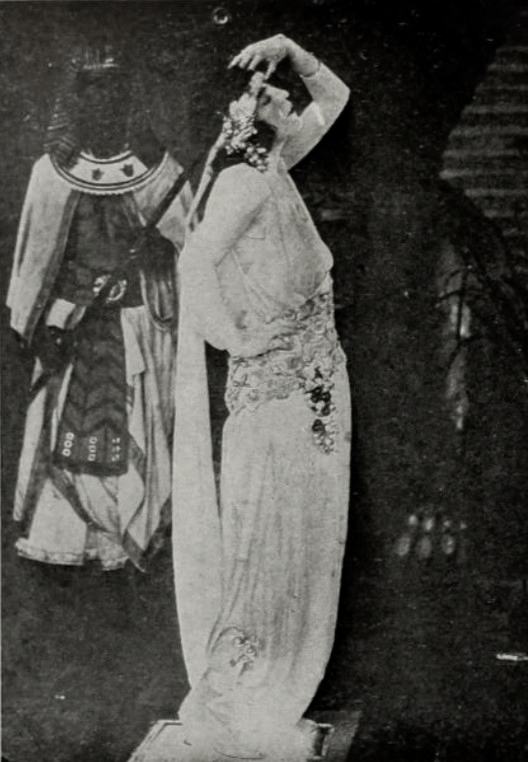
Louise Glaum, as Viola Strathmore, delivers a performance that anchors the entire film. Her ability to convey a spectrum of emotions—from seductive charm to desperate rage—without uttering a single word is truly remarkable. She commands the screen, her expressive eyes and deliberate gestures painting a vivid portrait of a woman driven by an insatiable hunger for fame. Her portrayal of a character's journey from confident ambition to frantic despair is a masterclass in silent film acting. Lee Hill, as Curtis, manages to make his character’s arrogance believable, even pitiable at times, showcasing the fragility beneath the bluster. His descent into delusion and ultimate demise feels earned, a consequence of his own profound self-deception.
Tom Guise, as Anita, provides the film's moral compass and emotional depth. Her quiet strength and self-sacrificing love are beautifully rendered, making her character's plight all the more resonant. She represents the tragic figure of unseen heroism, a common trope in melodramas of the era, yet here, it feels fresh and deeply affecting. The supporting cast, including George Webb as the pragmatic Bruce Winthrope and Hugo B. Koch as the enigmatic Borul, contribute significantly to the film's rich tapestry, each adding a layer of authenticity and dramatic weight. Koch's silent portrayal of Borul’s unwavering, almost terrifying, devotion is particularly memorable, culminating in his climactic, shocking act.
From a technical perspective, 'Idolators' showcases the evolving artistry of silent cinema. The cinematography, while constrained by the technology of the time, effectively uses lighting to create mood and emphasize character. The intertitles are well-integrated, providing necessary exposition without disrupting the flow of the visual narrative. The pacing is deliberate, allowing the emotional beats to register fully, building tension effectively towards its dramatic conclusion. Director Walter Edwards demonstrates a clear understanding of how to use visual storytelling to maximum effect, relying on strong performances and a compelling plot to engage the audience.
The film's themes—the corrupting nature of ambition, the fragility of ego, the sacrifices made for love, and the devastating consequences of betrayal—remain remarkably pertinent. While the societal context has changed, the underlying human desires and flaws explored in 'Idolators' are timeless. It serves as a stark reminder that the pursuit of fame and self-glorification, when untethered from genuine talent or moral grounding, can lead to catastrophic personal ruin. In an age where self-promotion and curated personas dominate, the film’s critique of 'vanity' feels oddly prescient. It reminds us that true artistic merit often resides not in the loudest voice, but in the quiet, dedicated work that may never receive its due credit.
For enthusiasts of early cinema, 'Idolators' is more than just a historical curiosity; it's a vibrant, emotionally charged drama that offers a compelling look at the power of performance, both on and off the stage. It stands as a testament to the enduring power of silent film to tell complex stories with profound emotional impact. Its exploration of moral ambiguity and tragic choices solidifies its place as a significant, if often overlooked, work from an era brimming with cinematic innovation. Much like the intricate character studies found in films such as The Spendthrift or Her Double Life, 'Idolators' delves deep into the psychological landscape of its protagonists, revealing the intricate dance between their public personas and their private torments. It’s a film that lingers in the mind, prompting reflection on the costs of ambition and the true nature of genius.
IMDb 6.4
1922
Community
Log in to comment.