DbcultAccessing Vault...
Cult Review
Senior Film Conservator
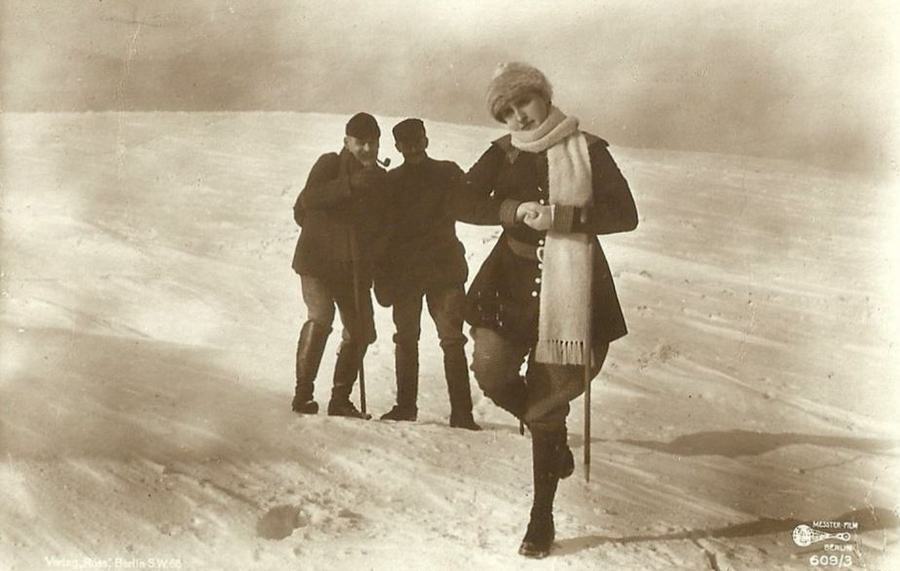
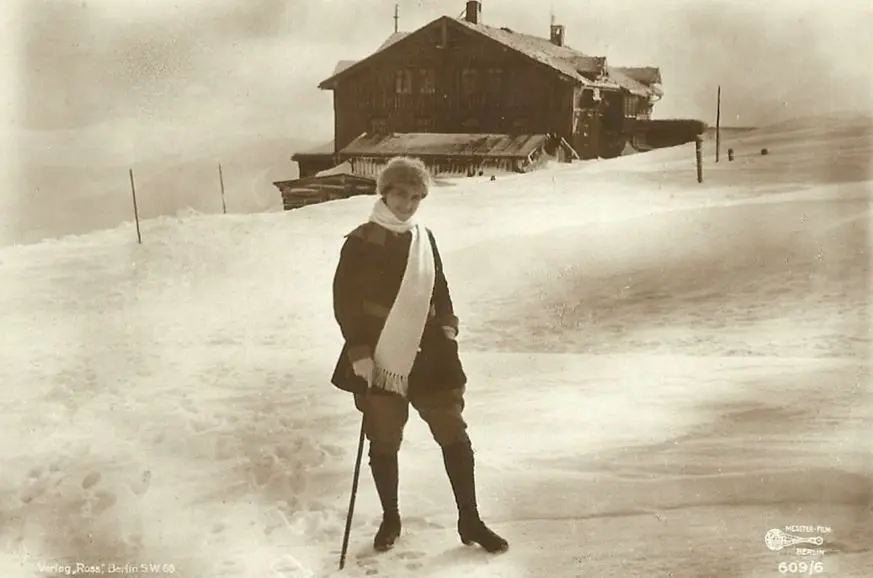
The flickering luminescence of early cinema often conceals narratives of surprising depth and audacious spirit, and Robert Wiene's Ihr Sport (Her Sport) stands as a compelling testament to this truth. Released during a tumultuous period in German history, this silent film, featuring the radiant Henny Porten, transcends its era, offering a nuanced exploration of female agency and the pursuit of individual passion against a backdrop of rigid societal expectations. To view Ihr Sport today is to embark on a journey through the nascent stages of cinematic art, where visual storytelling, nuanced performances, and thematic resonance carried the entire weight of narrative communication. It's a film that, despite the passage of a century, still resonates with a vibrant energy, largely due to its central performance and the surprisingly progressive themes it dares to tackle.

Wiene, a name forever etched into the annals of film history for his later, iconic work on The Cabinet of Dr. Caligari, here demonstrates an earlier, perhaps less expressionistic, but no less insightful directorial hand. His approach to Ihr Sport is one of elegant simplicity, allowing the dramatic tension to build through character interaction and carefully composed mise-en-scène rather than overt stylistic flourishes. The film's narrative, centered on Helga (Henny Porten), a young woman suffocated by the societal dictates of her time, is a delicate dance between duty and desire. Helga's 'sport' is not a leisurely pastime but a profound act of rebellion: aviation. This choice of passion is particularly striking, placing her at the vanguard of a burgeoning technological marvel, a domain almost exclusively male. Porten, with her expressive eyes and graceful physicality, embodies Helga's inner turmoil and unwavering resolve, making her character's journey profoundly empathetic. Her performance is a masterclass in silent acting, conveying volumes with a mere tilt of the head or a subtle shift in posture. She radiates a fierce independence that feels remarkably modern, challenging the audience to reconsider preconceived notions of femininity and ambition.
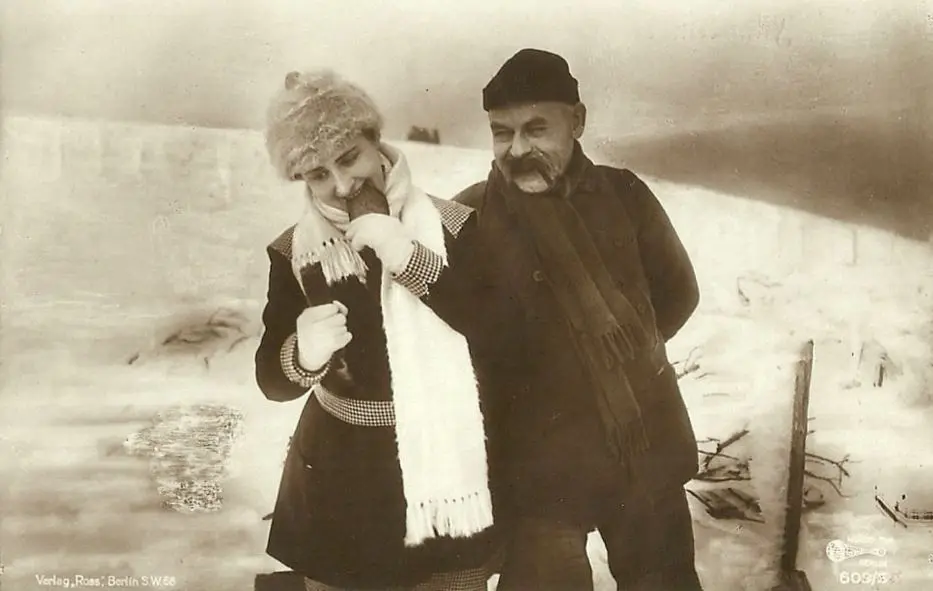
The opposing forces in Helga’s life are personified by her stern father, Herr Schmidt (Georg H. Schnell), and her intended suitor, Baron von Kessel (Rudolf Biebrach). Schnell's portrayal of Herr Schmidt is one of patriarchal authority, initially unyielding, his every gesture conveying a deep-seated belief in traditional order. His transformation, however subtle, by the film's conclusion, is a testament to the power of Helga's convictions. Biebrach, as the Baron, embodies the epitome of conventional eligibility – respectable, wealthy, but utterly devoid of the adventurous spirit that defines Helga. His performance is understated, allowing the audience to understand his suitability on paper while simultaneously grasping why he could never truly capture Helga's heart. These characters are not mere caricatures; they represent the societal structures and expectations that Helga must navigate, making her eventual triumph all the more resonant. Their presence grounds the narrative in a palpable reality, giving weight to Helga's struggles.
Enter Kurt Müller (Hermann Thimig), the dashing aeronautical engineer who sees in Helga not an anomaly but an equal. Thimig brings a youthful vigor and charismatic charm to the role, serving as both a romantic interest and a crucial ally in Helga's pursuit of freedom. His scenes with Porten crackle with an undeniable chemistry, their shared passion for flight forging a bond that transcends mere attraction. The dynamic between Helga, Kurt, and the Baron creates a classic romantic triangle, yet it’s elevated by the unique context of Helga’s 'sport.' It’s not just a choice between two men, but a choice between two vastly different futures: one of stifling conformity, the other of exhilarating self-actualization. Wally Koch, as Liesel, Helga's friend, provides a vital emotional anchor. Her initial reservations and subsequent support for Helga highlight the societal pressures placed on all women of the era, making Liesel's eventual understanding and assistance a powerful statement of solidarity. The ensemble cast works in concert, each performance contributing to the rich tapestry of Helga's emotional and social landscape.
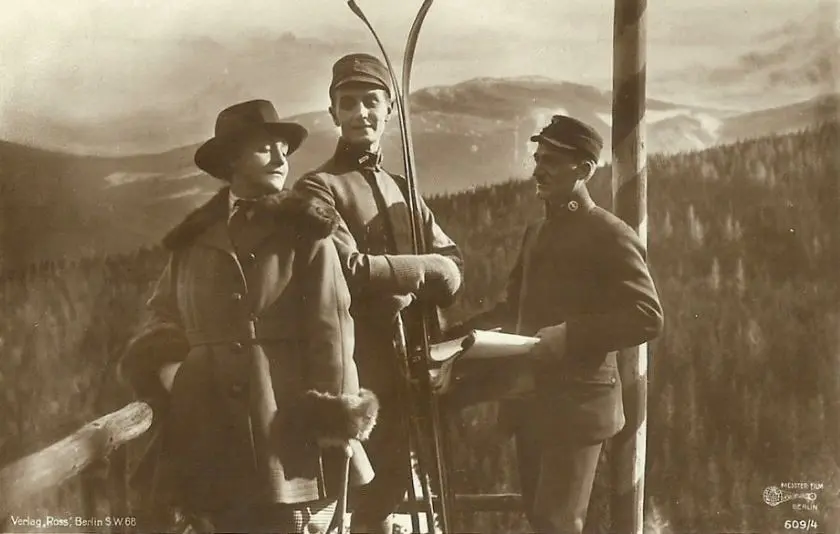
Wiene's direction, even in this earlier work, showcases a keen understanding of visual storytelling. The absence of spoken dialogue necessitates a heightened reliance on gesture, facial expression, and the careful arrangement of elements within the frame. The scenes featuring aviation are particularly noteworthy, conveying the thrill and danger of early flight with remarkable efficacy for the period. While not as overtly stylized as The Cabinet of Dr. Caligari, there are moments of subtle expressionistic framing that hint at Wiene's burgeoning artistic vision. The camera often lingers on Helga's face, allowing the audience to decipher her complex emotional state, or captures the vastness of the sky, symbolizing the freedom she craves. The use of intertitles is judicious, providing necessary exposition without interrupting the flow of the visual narrative. The pacing builds steadily, culminating in the dramatic air show sequence, where the tension is palpable, and the stakes feel genuinely high. This sequence is a masterclass in silent film suspense, demonstrating Wiene's ability to orchestrate a thrilling climax.
Thematically, Ihr Sport is remarkably progressive for its time. It’s not merely a romantic drama; it’s a commentary on gender roles, societal expectations, and the burgeoning concept of female independence. Helga’s pursuit of aviation is a powerful metaphor for breaking free from conventional shackles. In an era where women were largely confined to domestic spheres, her desire to soar above the earth represents a profound yearning for liberation, a rejection of the predetermined path. The film subtly critiques the patriarchal structures that attempt to dictate a woman's destiny, showcasing the internal and external conflicts that arise when an individual dares to dream beyond societal boundaries. One might draw a thematic parallel to films like The Big Sister, which also explores a woman's struggle for self-determination, albeit in a different social context. However, Ihr Sport distinguishes itself by placing this struggle within the specific, exhilarating framework of a cutting-edge technological pursuit, amplifying the sense of daring and progress.
The film’s climax at the air show is not merely a spectacle but a profound statement. Helga’s decision to take to the skies, defying her father and societal norms, is an act of profound self-assertion. Her flawless execution of the stunt, in the face of adversity, is her declaration of independence, her proof that a woman’s capabilities are boundless. The subsequent reactions – her father’s shift from fury to pride, the Baron’s graceful withdrawal – underscore the transformative power of her actions. It’s a moment of collective awakening, not just for the characters within the film, but for the audience, who are invited to reconsider their own assumptions about gender and ambition. This particular narrative arc, where a protagonist’s unconventional skill ultimately wins over antagonists, is a satisfying trope, but here it feels earned and genuinely inspiring. The emotional payoff is immense, solidifying Helga's journey as one of true heroism.
The artistic merit of Ihr Sport lies not only in its compelling narrative and strong performances but also in its contribution to the evolving language of cinema. It showcases how silent film, through its unique aesthetic and performative demands, could convey complex emotions and societal critiques without uttering a single word. Wiene's early work here demonstrates a budding mastery of the medium, laying groundwork for the more experimental and influential films that would follow. The film’s legacy is perhaps understated, overshadowed by Wiene’s later, more avant-garde achievements, but it nonetheless represents a significant piece of early German cinema. It offers a window into the cultural anxieties and aspirations of post-WWI Germany, particularly concerning the changing role of women in society.
Comparing Ihr Sport to other silent films of the era, one can appreciate its unique blend of romantic drama and social commentary. While films like The Man and the Moment might have explored romantic entanglements, Ihr Sport adds a layer of profound social significance through Helga’s unconventional 'sport.' It’s a film that subtly pushes boundaries, asking its audience to envision a world where women are not merely objects of desire or domestic figures, but active participants in shaping their own destinies. The emphasis on a tangible, physical skill like aviation grounds Helga's ambition in a way that feels particularly potent and aspirational.
In conclusion, Ihr Sport is far more than a historical curiosity. It is a vibrant, engaging film that speaks to universal themes of freedom, ambition, and the courage to defy convention. Henny Porten’s luminous performance as Helga is a beacon of early feminist spirit, while Robert Wiene’s direction ensures that the narrative unfolds with grace and compelling drama. For aficionados of silent cinema, or anyone interested in the foundational narratives of female empowerment in film, Ihr Sport offers a rich and rewarding viewing experience. It reminds us that even in the earliest days of cinema, filmmakers were grappling with complex social questions, crafting stories that continue to inspire and provoke thought, proving that a woman’s 'sport' can indeed be her destiny. The enduring charm and significance of Ihr Sport lie in its ability to transport us to a different time, yet resonate with timeless truths about human aspirations and the indomitable spirit of individuality. It’s a film that deserves to be rediscovered and celebrated for its quiet revolutionary heart and its pioneering vision.
IMDb 5.2
1932
Community
Log in to comment.