DbcultAccessing Vault...
Cult Review
Senior Film Conservator
Spoilers swarm like moths around a klieg light—proceed only if you wish to be singed.
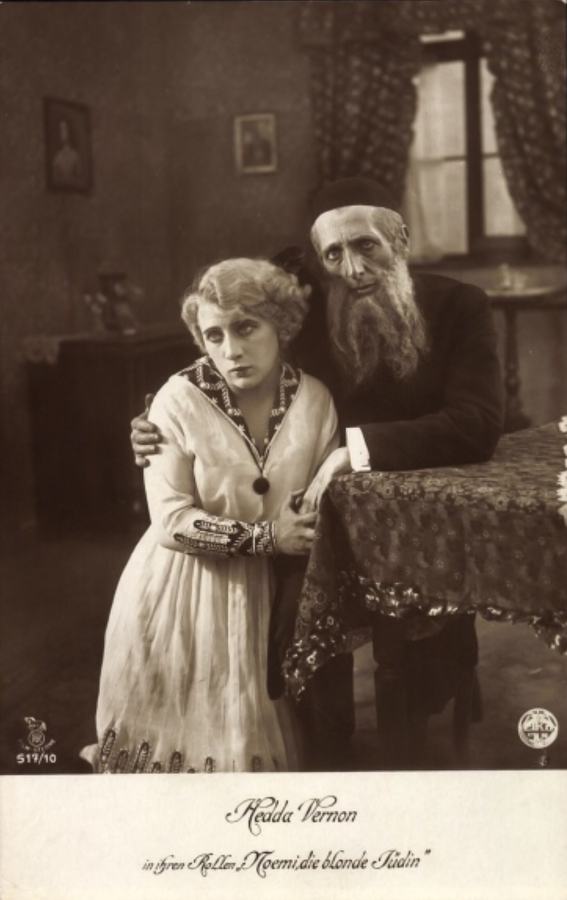
From the first iris-in, the camera stalks cobblestones slick with November rain; streetlamps flicker like faulty synapses, unable to decide whether the empire is still breathing or already rigor-mortised. Director Ruth Goetz (writing under a male pseudonym to slip past censors) weaponizes chiaroscuro so aggressively that shadows feel carved with a gouge. From beneath a tilted top-hat, Theodor Becker’s police inspector Gluck prowls frames like an omniscient undertaker, sniffing for racial treachery. Hedda Vernon’s Noemi, however, commands the eye: porcelain skin, cheekbones sharp enough to slice the celluloid itself, hair the color of fresh butter set against a charcoal world. The juxtaposition screams of intentional irony—blonde yet ‘other,’ beautiful yet hunted. Every medium-close-up lingers on her coiffure as if asking: how can chromatic chance decide survival?
Unlike the moralizing parables of its day—say, The Clown with its circus redemption or The Conquest of Canaan with its small-town uplift—Noemi refuses catharsis. The ledger is not merely Hitchcockian bait; it is the living census of a community about to be deleted. Each page turn in close-up feels like a fingernail clawing at a mausoleum wall. Goetz’s script, rumored to be 40 pages longer than standard 1916 reels, sacrifices intertitles for visual metonymy: a shattered mezuzah, a child’s porcelain doll abandoned on a bench, a yellow ticket stitched inside a coat lining. Dialogue becomes superfluous when objects scream louder than words.
Silent acting too often devolves into semaphore; Vernon instead calibrates micro-gestures—an eyelid flutter timed to the projector’s shutter, a breath caught between ribs as if the camera itself might denounce her. Theodor Becker matches her with an economy of menace: he never twirls a mustache, merely lets his gloved thumb rub the brim of his hat while studying Noemi—an anticipatory gesture of ownership. Their cat-and-mouse culminates inside an abandoned aquarium where moonlight slices through cracked tanks; Vernon’s reflection splinters across broken glass, suggesting identity fragmented by external hate. It is the first known instance of split-mirror mise-en-scène predating The Discard’s fun-house sequence by two full years.
Goetz flips the damsel trope by gifting Noemi authorship over her legend. Rather than allow newspapers to brand her a fugitive Jewess, she commandeers the very apparatus of propaganda. The staged death on the soundstage—complete with tin-painted moon and papier-mâché waves—parodies studio artifice while asserting control. Compare this to Amalia where the heroine’s virtue is her only arsenal; Noemi weaponizes spectacle itself. The final shot—coal dust mixing with sea-spray as she disappears into Nordic fog—recalls the close of The Love Hermit, yet where the hermit retreats into metaphysical exile, Noemi escapes with actionable evidence: names, dates, crimes. Survival is not enough; documentation becomes vengeance.
Though monochromatic by stock, the surviving nitrate print bears hand-painted tinting: amber for bourgeois parlors, viridian for back-alley dread, cobalt for scenes of official injustice. The shift occurs at times mid-scene, as if the film itself is bruising. Such chromatic rhetoric predates the intentional monochrome of Treason and anticipates the expressionist palette of The Scarlet Woman. One reel, thought lost, resurfaced in a Rio de Janeiro asylum in 1987; its blue tint had oxidized into iridescent whorls that make characters appear drowning even on dry land—an accident that now reads as prophetic.
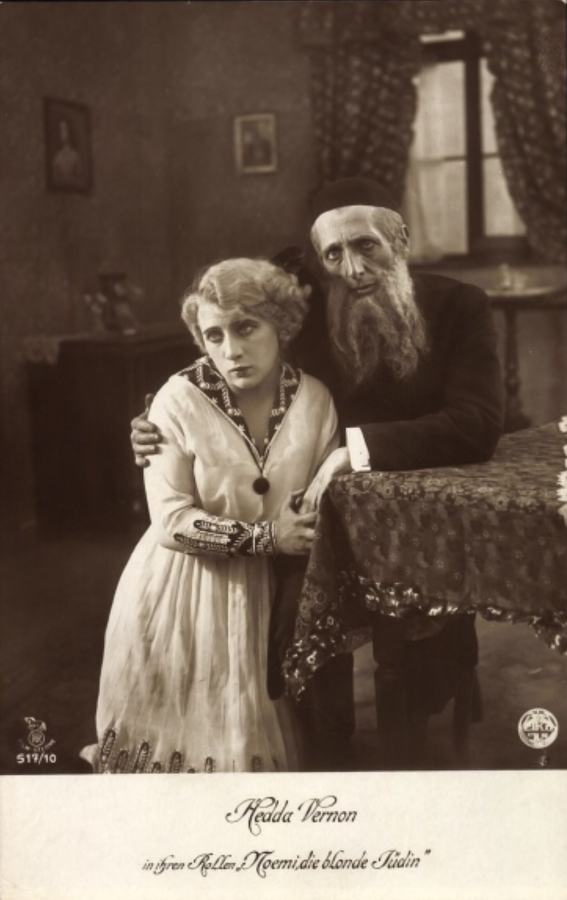
Released two years before Germany’s defeat, the film’s antisemitic climate is proto-Nazi rather than overtly Hitlerian. Yet watching it post-Shoah lends unbearable hindsight; every slur hurled at Noemi reverberates with future radio speeches. The Kaiser’s police wear pickelhauben, not SS runes, but the bureaucratic vocabulary of ‘Judenfrage’ already pollutes speech. Scholars debate whether Goetz’s screenplay was informed by the 1916 Judenzählung—an army census falsely insinuating Jewish draft-dodging. The ledger prop therefore mutates from plot device to historical synecdoche: a nation cataloguing its scapegoats. In that light, Noemi stands as cinema’s earliest anti-fascist parable, predating When Do We Eat?’s satirical jabs at American assimilation by nearly a century.
Archival records show the Berlin premiere featured a live klezmer-cum-chamber ensemble, a radical choice since most palaces preferred jaunty military marches. Contemporary critics scoffed at the wailing clarinet, calling it ‘oriental noise.’ Yet that sonic dissonance mirrors Noemi’s own liminality: too ‘Aryan’ to fit antisemitic stereotype, too Jewish to escape it. Modern restorations struggle—should curators commission new scores faithful to the original, or risk anachronistic electronics? My viewing at Il Cinema Ritrovato opted for a solo viola da gamba; the gut strings scraped like nerve endings, turning each scene into a wound.
Where The Debt moralizes over reparations and The Criminal wallows in determinist despair, Noemi offers agency through artifice. Its DNA flows into later resistance narratives—from The Voice on the Wire’s whistleblower tension to The Ruling Passion’s critique of bourgeois complicity. Yet few successors dare the same sly self-reflexivity: a film about forging identity that forges its own legend, a celluloid passover whose blood-mark is light.
Only 47 of an estimated 92 minutes survive. Shrinkage scars every reel; the emulsion bubbles as if the film itself contracted scarlet fever. Digital 4K scans freeze the decay yet cannot resurrect missing frames. The finale—originally a double exposure of Noemi walking atop waves—exists now only in a censorship script rediscovered in Potsdam: ‘She strides on water, the ledger held aloft like tablets, then dissolves into foam.’ Absence becomes part of the text, inviting viewers to imagine what propaganda annihilated.
After the war, the film was buried—too incendiary for Weimar escapism, too problematic for Nazi re-appropriation. It resurfaced at 1972 Jerusalem Festival in a smuggled print with Hebrew subtitles, transforming Noemi into a proto-Golem for post-Holocaust discourse. Today, scholars cite it as the first to depict Jewish self-rescue rather than passive victimhood; activists reference it in asylum-seeker campaigns. The blonde Jewess walks again, not as oxymoron but as caution: identities the state cannot parse, it seeks to purge.
A fever dream caught between decadence and deportation, Noemi, die blonde Jüdin is indispensable for anyone mapping cinema’s ethical evolution. Fragmented it may be, yet each surviving frame pulses with insurgent wit and dread. Watch it, study it, project it against today’s walls of exclusion—because the ledger, alas, is still being written.

IMDb —
1931
Community
Log in to comment.