DbcultAccessing Vault...
6.5/10
Senior Film Conservator
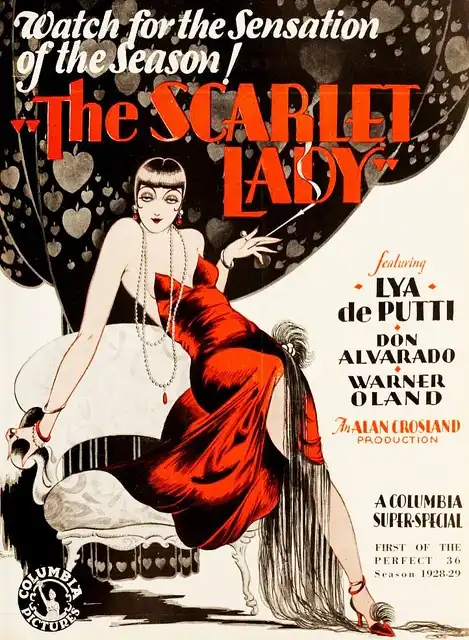
A definitive 6.5/10 rating for a film that redefined the boundaries of cult cinema. The Scarlet Lady remains a cornerstone of transgressive art.
For modern viewers, The Scarlet Lady is a challenging watch, primarily recommended for dedicated silent film enthusiasts and those specifically interested in the career of Lya De Putti. If you approach silent cinema with an appreciation for its unique language and historical context, there are moments of genuine visual flair and a compelling central performance. However, general audiences seeking brisk pacing or a truly original narrative will likely find its melodramatic conventions and deliberate rhythm difficult to engage with. It’s a film that demands patience, offering its rewards to those willing to meet it on its own terms, but it won't convert skeptics.
The unquestionable anchor of The Scarlet Lady is Lya De Putti as Sonya. She carries the film, imbuing a character who could easily have been a stock 'fallen woman' with a tangible sense of inner conflict and resilience. De Putti’s expressiveness is her greatest asset here. We see it in the subtle shifts of her gaze, particularly in the scenes where Sonya first attempts to integrate into respectable society; there's a constant, almost imperceptible tension in her posture, a fear of exposure hidden just beneath the surface of polite smiles. Her performance is physical, too, with moments like her hand trembling as she accepts a formal invitation, or the way she clutches a scarf to her chest when confronted by her past. It’s a compelling masterclass in silent screen acting, keeping us invested even when the narrative itself leans heavily into familiar melodrama.
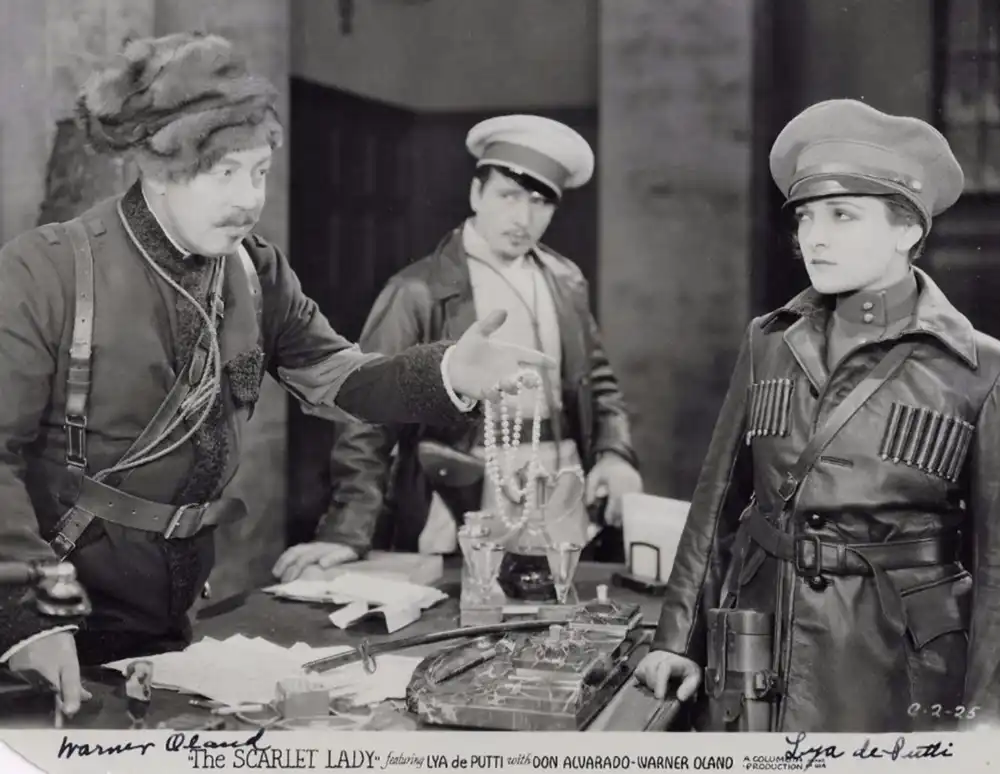
Warner Oland, as the menacing figure from Sonya's past, plays a more one-dimensional role, but he does so with effective villainy. His presence often feels less like a character and more like an impending doom, a shadow that follows Sonya. He excels in the moments of subtle menace, a smirk here, a slow, deliberate movement there, rather than overt theatrics. The supporting cast, including Don Alvarado as Sonya's earnest love interest, generally fulfills their roles adequately but rarely rise above the material. Alvarado projects a suitable earnestness, but his character’s naiveté borders on caricature at times, making him less a fully realized person and more a plot device for Sonya’s redemption arc.
One of the film's most significant hurdles for a contemporary audience is its pacing. The Scarlet Lady unfolds at a very deliberate, often slow, tempo. There are stretches, particularly in the middle act, where reaction shots linger for what feels like an eternity, and the narrative momentum grinds to a near halt. A specific instance comes to mind: a sequence where Sonya is contemplating her predicament, staring out a rain-streaked window. While the shot is visually striking, the extended hold on her pensive face, followed by an equally long shot of the empty room, feels more like an editorial choice to pad runtime than a necessary beat for emotional resonance. It’s a common trait of the era, but here it often tests patience.
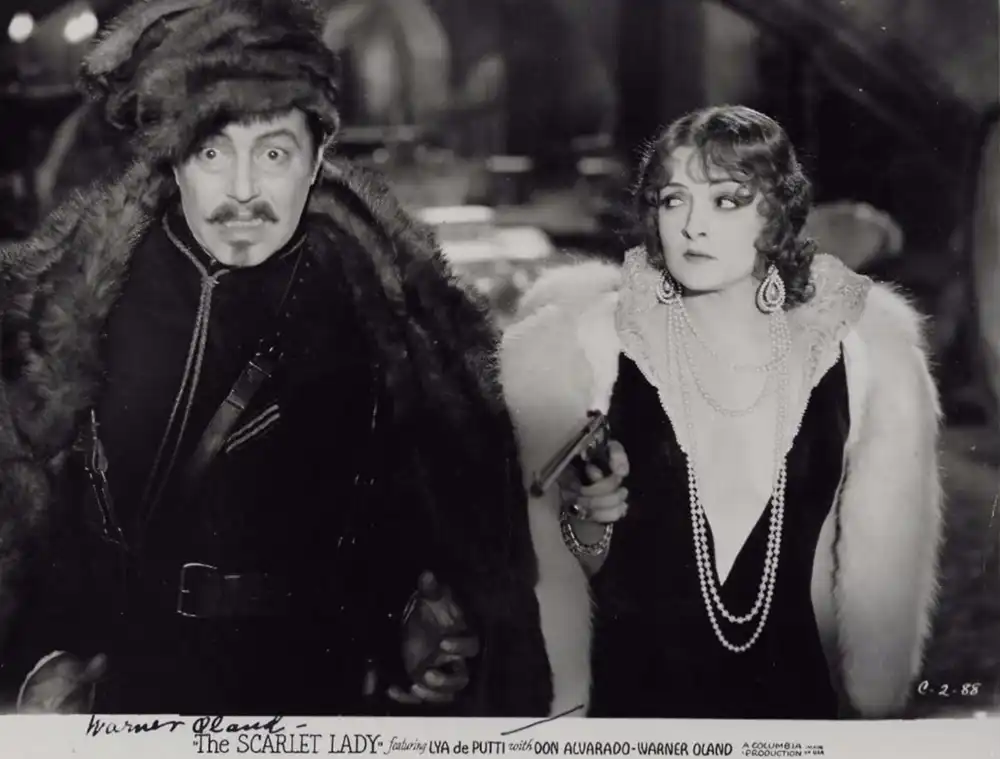
The film’s tone, however, is remarkably consistent, maintaining a pervasive sense of impending tragedy and societal judgment. Even in moments of fleeting happiness for Sonya, there’s an underlying current of anxiety, a feeling that her past is always just around the corner, ready to snatch it away.
The intertitles, while functional, occasionally over-explain emotions that De Putti's performance has already conveyed with far more nuance. This redundancy can pull you out of the visual storytelling, a common issue in silent films but particularly noticeable when an actor is as expressive as De Putti.
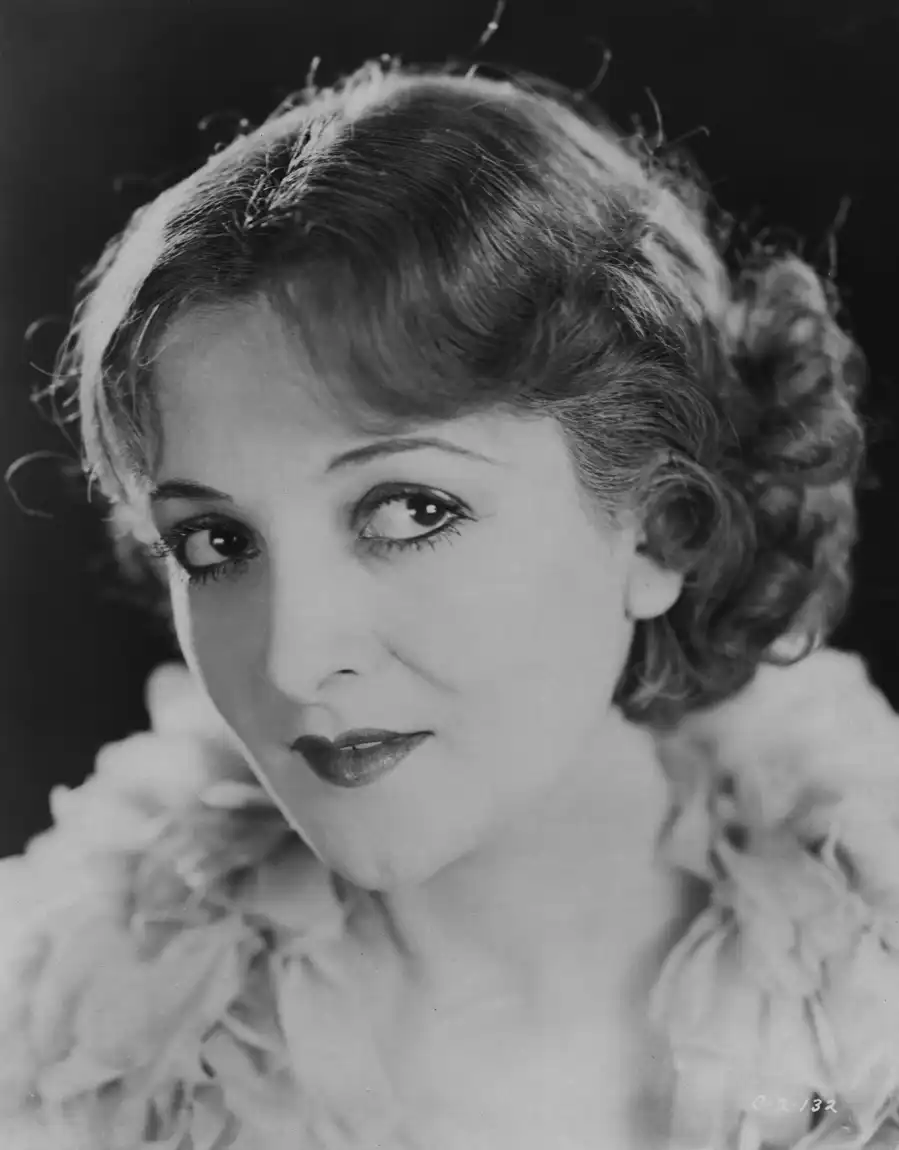
Visually, The Scarlet Lady offers moments of genuine artistry. The cinematography frequently uses stark contrasts between light and shadow to underscore Sonya’s emotional state and her societal isolation. There’s a memorable sequence set in a dimly lit ballroom where Sonya, despite being surrounded by people, is framed in such a way that she appears utterly alone, her face illuminated while the figures around her are swallowed by soft focus and gloom. This visual choice powerfully conveys her inner world without a single intertitle.
The costume design for Lya De Putti’s character is also notable, reflecting her journey and internal conflict. In her initial scenes, as the 'scarlet lady,' her attire is bold and somewhat revealing, signaling her defiance. As she attempts to reform, her dresses become more modest, yet still retain a touch of elegance that sets her apart, hinting at a past she can't entirely shed. One particular detail that sticks out is a delicate, almost fragile lace collar she wears in a key confrontation scene, contrasting sharply with the harsh words exchanged, a small visual counterpoint to the emotional brutality.
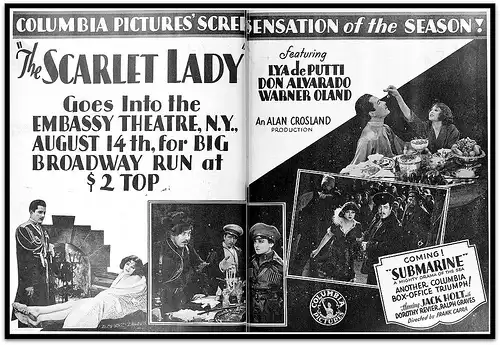
The set pieces, while not lavish, are effectively utilized. The cramped, shadowed interiors of the blackmailer's lair stand in stark opposition to the more airy, if equally constrained, parlors of the respectable gentry, visually reinforcing the two worlds Sonya attempts to navigate.
The Scarlet Lady is a film that showcases Lya De Putti's considerable talent, offering a compelling central performance that manages to elevate often conventional material. Its visual craft is evident, particularly in its use of light and shadow to reflect Sonya’s inner turmoil and societal ostracization. However, its deliberate pacing and adherence to a well-worn narrative arc will make it a difficult recommendation for anyone beyond committed silent film aficionados or those specifically studying the era's acting styles.
It's not a lost masterpiece that demands rediscovery by a wide audience, but for those with a pre-existing appreciation for silent cinema, it offers a solid, if flawed, example of a genre staple. If you're looking to delve deeper into the expressive power of silent film acting, especially from a performer as captivating as De Putti, it's worth seeking out. Otherwise, there are more accessible and dynamic silent films that might serve as a better entry point, such as The Right to Love or even some of the more experimental works of the era.
IMDb 6.3
1933
Community
Log in to comment.