DbcultAccessing Vault...
Cult Review
Senior Film Conservator
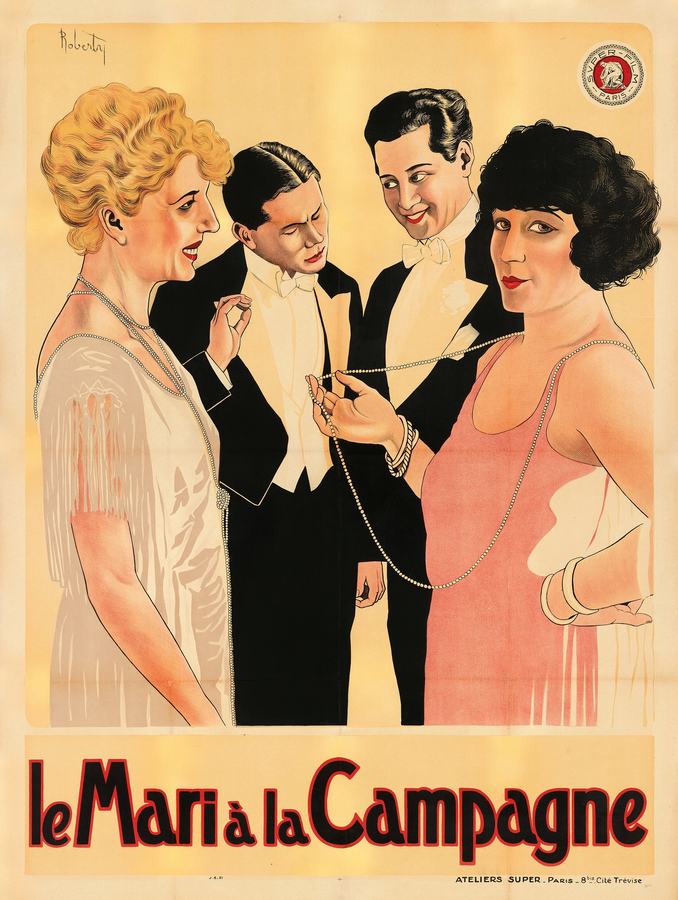
A sun-bleached fable of marital fatigue, Il marito in campagna detonates the myth of bucolic bliss with the precision of a surgeon cracking a joke mid-incision.
Picture the opening iris shot: a Roman apartment so crammed with baroque bric-a-brac that even the shadows look crowded. Giuseppe Brignone—chin wobbling like an undecided soufflé—plays the husband whose only rebellion against modernity is the timid purchase of a second-class train ticket. Once the locomotive huffs beyond the city’s last graffiti-scarred aqueduct, the film’s tint shifts from soot-grey to honey-amber, as though Italy itself were blushing at the husband’s naïveté.
The countryside, however, greets him with the subtlety of a carnival barker.
Liliana Ardea’s wife arrives like a minor thunderstorm in silk, her parasol twirling with the menace of a matador’s cape. Every frame she occupies vibrates on the edge of a dirty joke that never quite arrives—silent cinema’s flirtation with the unsayable. Her flirtations are less affairs than improvisational theatre performed for an audience of goats and gossiping grandmothers. Yet the camera, hungry for ambiguity, lingers on her eyes until they betray a flicker of genuine bewilderment: does she seduce because she desires, or because the script of rural life demands a vamp?
Director-camera choreography worthy of Lubitsch turns a crumbling stable into a proscenium arch.
Note the sequence where husband and foreman duel with pitchforks of hay instead of rapiers; intertitles need not spell out the phallic joke when the men’s shadows already cross swords across the barn wall. Compare this to the urbane sparring in Neighbors (1920)—both films understand that domestic war is waged with whatever prop lies closest.
Mercedes Brignone, as the priest’s morbidly curious housekeeper, steals entire reels by simply lifting her eyebrow at the speed of a tectonic plate. Watch her in the background of the grape-stomping scene: while others cavort, she tallies sins like an accountant of the soul, her ledger invisible yet omnipresent. Silent-era cinema rarely granted older women such sly agency without turning them into witches; here she is merely Italy’s unpaid auditor.
The film’s erotic pulse beats beneath petticoats and propriety.
When Ardea’s wife slips behind a cypress to read the smuggled love note, the shot is framed so that the tree’s bark resembles a Rorschach blot of two bodies entwined. Censorship boards of 1921, fixated on exposed ankles, missed the subliminal symposium of imagery that invites the viewer to supply the moan the soundtrack cannot carry. One thinks of The Evil Women Do (1923), yet where that later film luxuriates in noir shadows, Il marito chooses the harsh noon sun, making guilt indistinguishable from sweat.
Giuseppe Brignone’s physical comedy deserves a scholarly monograph. His torso, shaped like a question mark, seems forever bracing for an answer that never arrives. In one exquisite gag he attempts to mount a horse, misses, and slides backwards into a trough; the splash is timed so perfectly that the water appears to reject him like a skeptical baptism. Buster Keaton’s stoic grace and Langdon’s baby-faced bewilderment rolled into one Italian everyman—yet Brignone adds a Roman flourish: his hands flutter as though conducting invisible orchestras of anxiety.
The finale is a masterclass in unresolved chord progressions.
Rather than confront the adulterous quartet in a cathartic showdown, the husband simply packs his trunk—too small, it bursts like a gutted fish—and boards the dawn train. The camera stays on the platform as the locomotive steams away, leaving the wife framed between two track-side poppies that sway like pendulums counting down some unspecified penance. No iris out, no moralizing title card. The silence that follows feels louder than any slamming door.
Restoration enthusiasts will swoon over the tinting schema: amber for daylight folly, cyan for twilight suspicion, rose for the fleeting moments when tenderness almost eclipses satire. The print currently circulating on the festival circuit derives from a 2018 Bologna lab resurrection; scratches remain, but like wrinkles on a seasoned flirt they only enhance character. The orchestral score—composed for premiere screenings by the trio MusicaMorra—leans on mandolin ostinatos that mock the husband’s pretensions while secretly rooting for him.
Comparative contextualization only sharpens the film’s edge.
Set it beside Old Heidelberg (1923) and you witness opposite poles of pastoral temptation: one film mourns love sacrificed on the altar of duty, the other giggles at duty trampled in the vineyard of lust. Pair it with Let’s Elope (1923) to trace how elopement fantasies mutate when the lovers are already inconveniently married.
Contemporary viewers marinated in irony will still squirm at moments where the film’s gender politics age like raw fish in summer. Yet the camera’s empathy is democratic: it lampoons male fragility with the same gusto it reserves for feminine wiles. The husband’s final shrug is less patriarchal victory than existential surrender—an acknowledgment that the contract of marriage, like any antique chair, wobbles the moment you sit on it.
Scholars of Italian silent cinema often overlook this title, distracted by epics of Rome’s imperial past or the urban grit of futurist melodrama.
But Il marito in campagna distills the nation’s comic DNA: the tension between Catholic guilt and pagan appetite, between the myth of the bella figura and the reality of rumpled bedsheets. It anticipates the neorealist urge to drag cameras into actual fields, yet refuses to sanctify peasants as noble savages. These rustics are as petty, vindictive, and hilariously human as any metropolitan socialite.
For the cine-curious, seek out the rare 35 mm screening where the projector’s mechanical heartbeat syncs with the on-screen cicadas; for the streamer, a serviceable 2K transfer lurks on niche platforms, though compression flattens the amber glow into supermarket honey. Whichever version you unearth, watch it twice: first for the plot, second for the negative space where marriage’s unspoken clauses fester like mold on prosciutto.
Verdict: A brittle confection that cuts the tongue while melting—silent-era satire at its most exquisitely unforgiving.

IMDb 8
1933
Community
Log in to comment.