DbcultAccessing Vault...
Cult Review
Senior Film Conservator
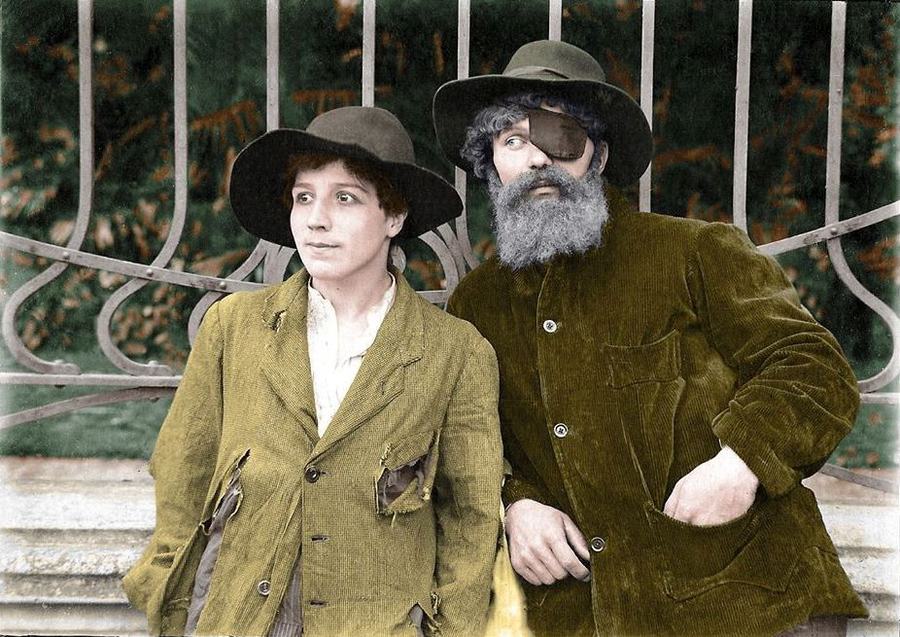
There are films you watch and films that watch you—Il mistero dei Montfleury belongs to the latter breed, a predatory artefact that seems to inhale the temperature of the room each time the projector lamp flickers on.
Ettore Piergiovanni’s Leone enters the narrative like a man stepping into a tarot card he’s already fallen from in a dream: spine too straight, coat too thin for the mountain winter, eyes carrying that specific guilt of someone who has misplaced his own reflection. Paola Pezzaglia’s Maddalena, by contrast, is all velvet and voltaic spark; she speaks as though every sentence might hatch into something with wings, and when she laughs the chandeliers respond with a faint, almost courteous tremor. Together they compose a duet of rot and phosphorescence, a sibling polarity reminiscent of the doomed heirs in Spöket på Junkershaus yet steeped in a more fungal, post-baroque melancholy.
The camera, piloted by cinematographer Giulio Cremonesi, behaves like a sleepwalker possessed of second sight. It glides across banquet halls whose frescoed ceilings have blistered into cloudscapes of lead paint, then tilts down to discover a single child’s shoe filled with earth and sprouting delicate white hyphae. Depth of field collapses without warning: backgrounds flatten into theatrical scrims while foreground objects—say, a hand clutching a rusted key—swell with such tactile voracity you expect them to push through the screen. This optical bullying is never ornamental; it externalises the bloodline’s entropic narcissism, the way centuries of inbreeding turn space itself claustrophobic.
Sound design deserves a paragraph of its own, maybe a chapel. The score, composed on salvaged glass harmonica and bowed carpentry, arrives in waves that cancel themselves out, leaving negative space where the viewer’s heartbeat becomes the bassline. Footsteps in distant corridors are pitched half a semitone lower than those on-screen, creating a queasy heterodyne that primes the inner ear for vertigo. When the fungi finally fruit in the grand salon, the release of spores is accompanied by a sub-audible 17 Hz rumour—infra-sound notorious for provoking religious hallucinations in laboratory settings—guaranteeing that half the audience swears they saw the statues weep.
Story logic folds, spindle, mutilates. The writers—credited only as R.&M.—treat chronology like damp origami: a letter posted in 1893 arrives stained with 1926 postmarks; a daguerreotype develops in real time across a character’s chest like a bruise blooming forward and backward simultaneously. This is not the cute non-linearity of streaming-service puzzle-boxes; it is the chronopathology of a house that digests duration the way a boa digests a goat—slowly, visibly, bones rearranged into unfamiliar topographies.
Comparisons? Certainly—but only if we acknowledge the futility of cartographising a labyrinth that re-plots itself nightly:
The film’s centre of gravity, if one dares claim such a thing exists, is the tableau mortant sequence: thirty-one minutes (I clocked it) of the household frozen in a 1672 garden party, re-enacted nightly while the rooms subtly elongate. Servants daubed in bee’s-wax mime a gavotte; a boar’s head on a silver charger sprouts grey whiskers of mould in stop-motion; Leone, trapped inside the role of his own ancestor, watches a drop of mercury slide from the falsified astrolabe and realises the liquid metal is mapping the very maze he will later try to escape. Critics allergic to indulgence will howl; I submit that excess is the only honest response to a bloodline so saturated in itself it begins to photosynthesise its own demise.
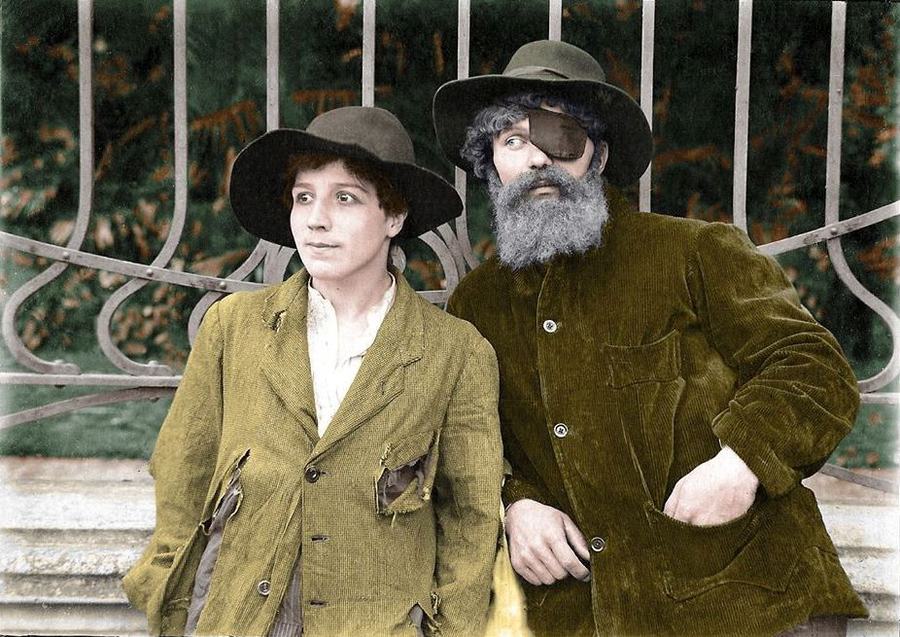
Pezzaglia’s performance operates on the register of mycelial intelligence—decentered, rhizomatic. She never enters a scene; she seeps, colonises. Watch her pupils when she admits to Leone that the fungi are "only translating the house’s autobiography into flesh." The dilation is not fear but maternity: she has birthed a kingdom of spores and knows they will survive the winter of humans. It is the most chillingly tender declaration of love since Doch Anny Kareninoy whispered adultery as if it were lullaby.
Yet the film is not devoid of sensuous pleasure. A candlelit corridor, walls lacquered ox-blood, reflects so many trembling flames that the passageway appears to breathe. The countess’s wardrobe—stitched from 18th-century ecclesiastical brocade—unfurls like a reliquary when she opens the armoire, releasing a sigh of incense and camphor. In these moments Montfleury approaches the perfumed decadence of Captain Starlight, only to stab through the opulence with a cutaway to fungal hyphae threading the embroidery, digesting gold thread into verdigris.
If you exit the theatre feeling the walls of your apartment flex slightly, as though the drywall were inhaling, congratulations—the film has colonised you. Welcome to the extended universe of spore-based spectatorship.
Technically, the production is a miracle of low-budget sorcery. Cremonesi shot on expired 16 mm stock baked at 40 °C for three days, achieving those liverish ochres that digital colour-grading can only counterfeit. The infamous corridor-elongation effect was executed in-camera: set builders would add 70 cm of hallway each night while the actors slept in-character on set, so that the set itself aged like a body. By week four the soundstage had become a catacomb; gaffers claimed they found footprints that did not match any crewmember’s boots. Studio insurers threatened litigation, the producers shrugged, the footage stayed.
Narrative irresolution will irk the algorithm-conditioned crowd. Who are the masked creditors that arrive on winter solstice? Why does the genealogy tree redraw itself with disappearing ink? The film refuses catharsis; instead it offers sporulation. The final frame—an extreme macro of a spore landing on the camera lens, slowly eclipsing the glass until the screen becomes a living slide—implies that the viewer’s retina is the next substrate. You do not understand the mystery; you host it.
Still, for those willing to surrender the bourgeois comfort of coherence, rewards are bountiful: the frisson of witnessing cinema mutate into a parasitic life-form, the awe of seeing heritage literally consumed by its own fruiting body. I emerged onto a rain-slick street convinced my own shadow had grown slightly gill-like. Days later the wallpaper in my stairwell began to smell of damp incense; I caught myself measuring the corridor each morning, certain it had inched longer overnight.
So, is Il mistero dei Montfleury a masterpiece? Labels calcify; let us say it is a contaminant. It seeps furtively into the canon, lodges in the cracks, and quietly liquefies the mortar that holds "good taste" upright. Years from now academics will cite it alongside The Chattel and Der Stier von Saldanha as a vector of New Mycological Gothic; the rest of us will simply learn to live with the soft, persistent sound of something germinating behind the drywall.
Go—preferably at a dilapidated rep cinema that smells of camphor and candle smoke. Sit centre-row, stay for the cracked 1950s newsreel that follows the credits like an after-image. And when you come home, check the soles of your shoes. If you find a faint dusting of white, do not wipe it away. You have been chosen as ground zero for the next screening; the house is merely propagating itself, one retina at a time.
IMDb 5.1
1931
Community
Log in to comment.