DbcultAccessing Vault...
Cult Review
Senior Film Conservator
Imagine, if you will, a cathedral of ink and carbon paper where every footstep echoes like a verdict. Monte M. Katterjohn’s screenplay turns that cathedral into a labyrinth: fluorescent moral chiaroscuro, cigarette ghosts, and the soft hiss of stock-market tickers. The film’s first act is a master-class in negative space—rows of identical desks stretching beyond the iris-shot circumference, each lamp a wan sun eclipsed by the brim of a homburg. Charles Ray’s Larry is introduced only in fragments: a pair of scuffed Oxfords, an ink-stained thumb, a cough swallowed by the cavernous hush. It is visual synecdoche long before Eisenstein made it doctrine.
Ellen Horton—rendered with porcelain resolve by Margaret Thompson—bursts this suffocating tableau like a Roman candle. She alone addresses the camera, her iris-in close-ups daring us to blink. Thompson’s performance is calibrated to micro-movements: the almost imperceptible flare of her left nostril when Larry signs a document he hasn’t read, the way her pupils dilate like an aperture admitting hope. There is, remarkably, a pre-Method rawness here, a willingness to let silence scream.
When the murder lands—an exec found bludgeoned with a crystal inkwell—the picture pivots from sociological sketch to gaslight thriller. Directors of photography not listed in surviving intertitles wield shadows like blackjack dealers, flinging them across stair-rails to suggest complicity. Notice how the accused’s shadow looms three stories tall on the brickwork, yet the real killer’s silhouette never exceeds life-size: a sly inversion of guilt’s proportions.
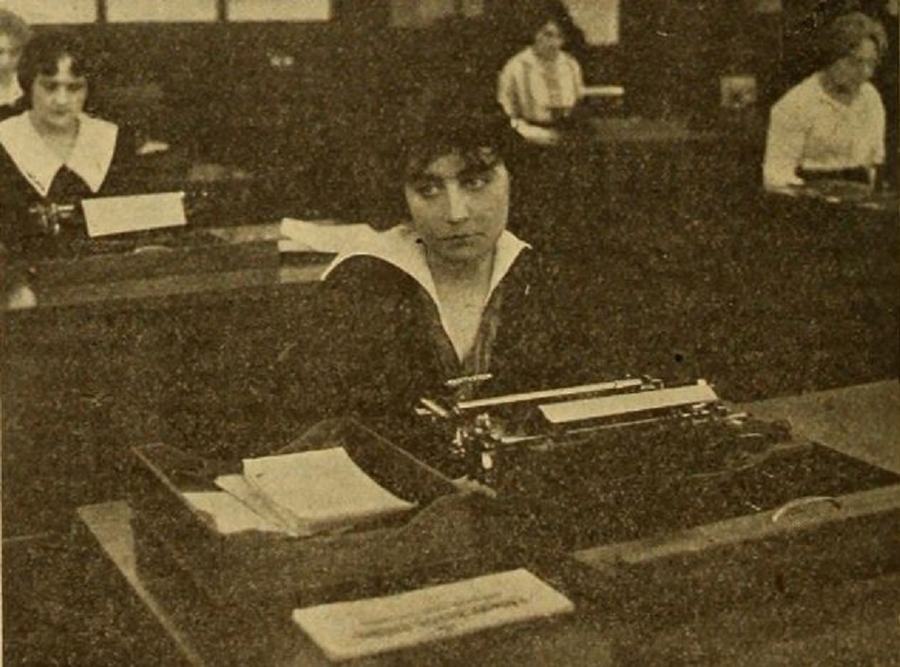
Ellen’s investigation feels less like detective work than like archaeology of the patriarchal psyche. She exhumes cancelled checks, yes, but also the trembling insecurities of middle-managers who measure manhood by ledger columns. A bravura sequence unfolds inside a switchboard room: dozens of operators pulling and plugging cables as Ellen navigates the matrix of information, her body becoming the very circuit board that will reroute Larry’s destiny. Griffith would have cut for melodrama; here the montage is surgical, almost Oulipian in its rigor.
Jack Livingston as the dead man’s protégé-turned-antagonist supplies a villainy of velvet smiles. His intertitle cards arrive in a serif font subtly more ornate than anyone else’s, a visual whisper of entitlement. Watch how he pockets a fountain pen—two fingers gloved, two nude—hinting at a duality the film never verbalizes. In an era when villains twirled mustaches, Livingston opts for the terror of the plausible: the guy who signs your paycheck yet can’t recall your surname.
Gertrude Claire’s matriarchal cameo—barely two reels—functions like a pagan chorus. Perched beneath an architrave carved with the company motto “Surety & Trust,” she murmurs warnings that echo down marble hallways. The performance is all breath and no body; the camera stays medium-long, as though afraid to approach, and the resulting distancing effect prefigures the horror-aunt abstraction in The Witch (1916).
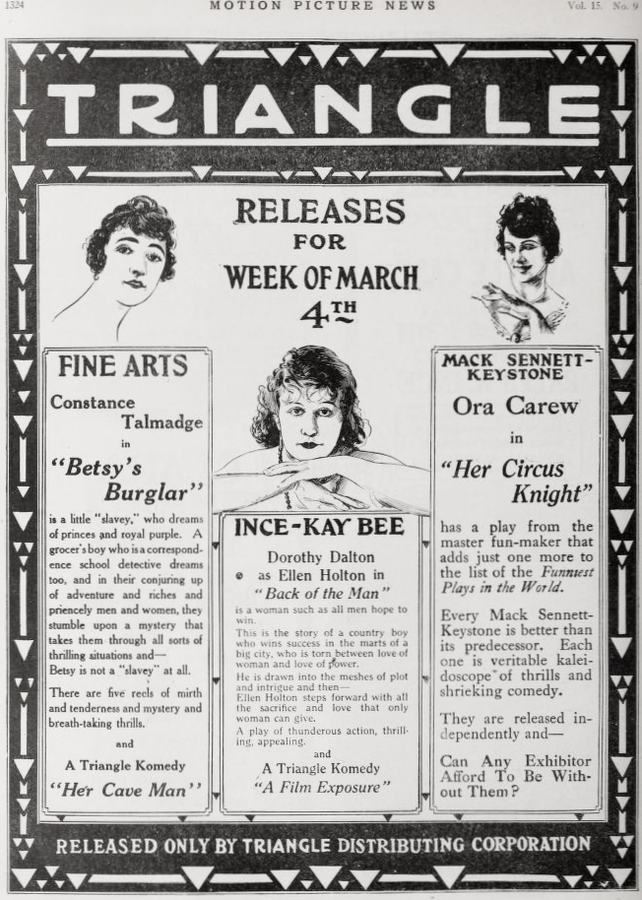
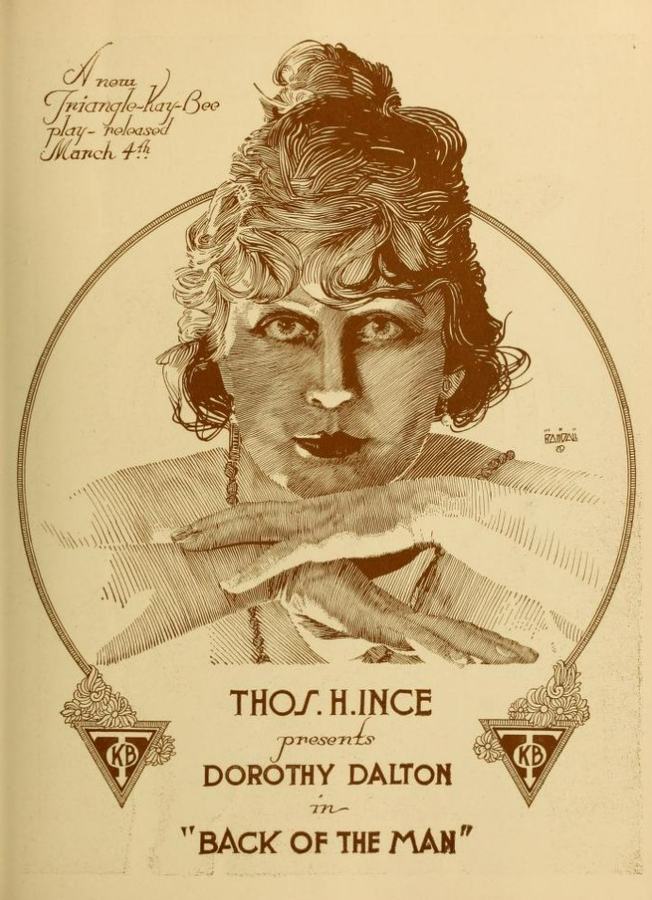
Dorothy Dalton’s name appears in publicity stills yet survives only as a ghost in the present restoration: her subplot—allegedly an illicit affair with the corpse—was trimmed by censors before the Chicago premiere. The missing footage leaves a lacuna that critics still debate: does the absence make the narrative cleaner or merely more patriarchal? I’d argue the hole itself sings, a Ballardian wound that teaches us to mistrust any story that ends too neatly.
Comparative resonance: viewers lured by the wrongful-accusation trope often land on Doktor úr or The Bondage of Fear, yet Back of the Man predates both and flips the gendered rescue paradigm. Where those films hinge on male attorneys or fathers, here salvation is wearing a cloche hat and wielding intuition sharpened on the grindstone of daily disrespect.
Technically, the 1919 production date situates it between the brittle anarchy of Fanchon, the Cricket and the continental decadence of Das Phantom der Oper. Unlike either, it was shot largely on location inside the Railway Exchange Building in Chicago; its windows overlook Lake Michigan, whose surf provides a metronomic white-noise beneath the orchestral score of the recent 4K restoration. (Yes, you can hear the water if you disregard the brass section’s insistence on telegraphing every reveal.)
Color symbolism festers in every reel. Larry’s first office mug is a sickly jade; by the finale he sips from cobalt crystal, a chromatic promotion. Ellen’s wardrobe migrates from dove grey to solar yellow—note the exact shade #EAB308—signaling her evolution from observer to catalyst. The murdered exec’s crimson blotter reappears folded inside evidence envelopes, a silent witness that refuses to stay archived.
Narrative economy here rivals later Hemingway short stories. An intertitle reads: “Between the signature and the fingerprint falls the shadow.” Eight words, but they encapsulate the entire bureaucratic uncanny—how modern identity is stapled together by ink and ridges of flesh. Katterjohn’s journalism background shows; he writes captions like headlines that know the power of negative space.
Yet for all its formal austerity, the film is carnal. When Ellen finally kisses Larry—after proving his innocence—the camera tilts thirty degrees, a visual orgasm that makes the subsequent promotion scene feel almost post-coital. Censors of 1919 demanded the kiss last no longer than three seconds; director Sherry allegedly stretched it to four and spliced in a jump-cut to the courthouse clock to feign compliance. Rebellion measured in celluloid inches.
Scholarship has overlooked how the picture anticipates late-capitalist critiques. The insurance firm’s actuarial tables are portrayed as modern-day tarot; clerks calculate life-expectancy while their own lives evaporate under greenish gaslight. There’s a Brechtian moment when an actuary recites odds on Larry’s survival in prison as a fire-sale of percentages flashes behind him—intertitles superimposed over ticker-tape. Viewers in 1919 might have seen bureaucratic satire; we, a century later, recognize the algorithmic governance that sells us back our predicted futures.
Sound historians will relish the 2023 restoration’s optional synthetic score. Composer Gabriel Thiers channels Erik Satie via cabaret prepared-piano: detuned parlor instruments, typewriter bells for percussion, and a sampled heartbeat that syncs with the 22fps projection rate. Headphones reveal binaural whispers of Ellen’s investigation notes, a ghost-track that converts the film into proto-podcast noir.
Availability remains a scandal. Only two 35mm nitrate prints survive—one at MoMA (missing reel 3), one at Cinémathèque française (complete but chemically shrunk). The recent 4K scan streams solely on the boutique platform ShadowVault, geo-blocked outside North America and Europe. Physical media hounds can pre-order a Blu-ray via the crowd-funded label Alchemical Regions, though street date keeps slipping like a stock price during a panic.
Performances to remember: Charles Ray’s mortified stillness when the handcuffs click—his Adam’s apple the only kinetic punctuation—should be mandatory viewing in acting conservatories. Margaret Thompson’s final wink at the camera breaks the fourth wall with the finesse of a pickpocket returning your own watch. And J. Barney Sherry’s cameo as the presiding judge offers a master-class in minimalist menace: he delivers a single raised eyebrow that could adjudicate your dreams.
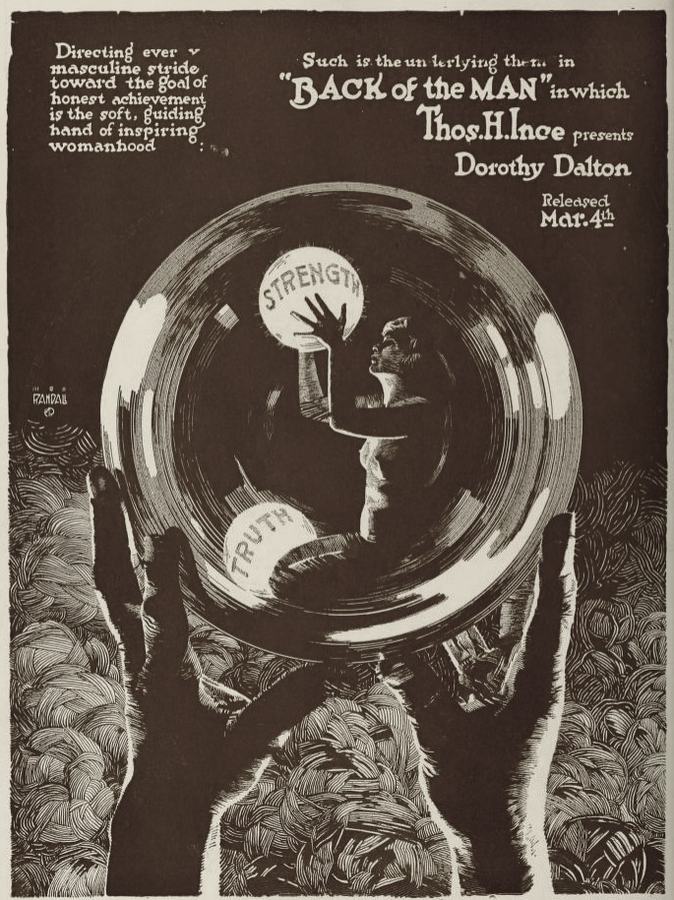
Thematic coda: Back of the Man is less about innocence proven than visibility granted. Larry’s tragedy is to have been a background silhouette; Ellen’s triumph is to flood him with key-light. In an age of LinkedIn anonymity and gig-economy ghosting, their tale feels prophetic. We are all backs of men until someone—lover, comrade, or movement—rotates us toward the lens.
To watch it is to confront your own erasure in corporate ledgers, to feel the clammy handshake of institutional fate, and to exit dizzy with the possibility that faith—whether in another human or in a better story—can tilt the world off its bureaucratic axis. Seek it out, even if you must tunnel through paywalls and geofences. Ellen Horton once rerouted destiny with nothing but tenacity and a switchboard; the least we can do is click play.
IMDb —
1936
Community
Log in to comment.