DbcultAccessing Vault...
Cult Review
Senior Film Conservator
The camera opens on a close-up of a letter—thick cream stock, bruised-purple ink—being slit open by a man whose moustache is waxed to rapier points. In that single shot, director David Howard announces the film’s obsession: surfaces that lie, and the carnage when they collapse.
Beatrice Van’s screenplay, adapted from Elizabeth Mahoney’s Saturday Evening Post novelette, refuses the moral finger-wag common to 1920 melodramas. Instead it luxuriates in the ethical swamp Janet wades into, ankle-deep in chandelier light and deceit. The result feels closer to a Lubitsch social comedy than to the dime-store moralizing of Selfish Yates.
The mansion—half mausoleum, half confection—functions as both set piece and moral weather vane. Cinematographer Fred Smith shoots it like a cathedral of capital: low Dutch angles that make the Corinthian capitals loom, then sudden iris-ins on Janet’s gloved hand skimming balustrades as though testing a lover’s spine. Every cut glass doorknob becomes a silent judge.
“Property is the only honest character in the picture,” Janet quips in an intertitle, her mouth smiling but her eyes already tallying the cost.
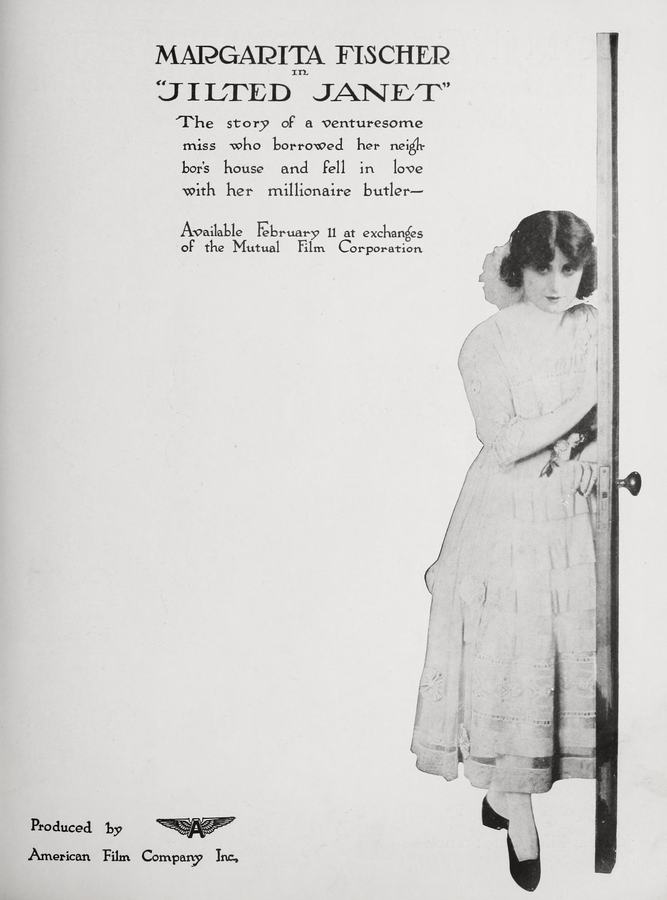
Margarita Fischer plays Janet with a tremor of self-disgust beneath the triumph. Watch the moment Ernest—Edward Peil Sr. at his most oleaginous—leans in to kiss her beside the marble nymph: Fischer’s pupils blow wide, not with desire but with the vertigo of almost believing her own con. Peil, meanwhile, modulates Ernest’s smarm into something almost tragic; his downfall isn’t poverty but the realization that wealth can’t purchase the spine he never grew.
As Suzette, Jeanne Robbins is tasked with the thankless role of “the richer girl,” yet she threads the character with porcelain cracks: a fidget of the pearl choker, a blink too long when Janet calls the house “mine.” Even the caretakers—Jack Mower and Golda Madden—register as more than comic relief; their complicity is priced by the Depression that hasn’t yet arrived but already haunts the corners of the frame.
Howard repeatedly fractures spatial continuity to mirror Janet’s splintering identity. In one audacious sequence, a tracking shot follows Janet up the grand staircase, then the film cuts to a reverse angle revealing Ernest watching her from below—except the geometry of the banister no longer matches. The house itself has become unreliable, a Caligari cabinet before Umirayushchiy lebed or The Zone of Death toyed with expressionism.
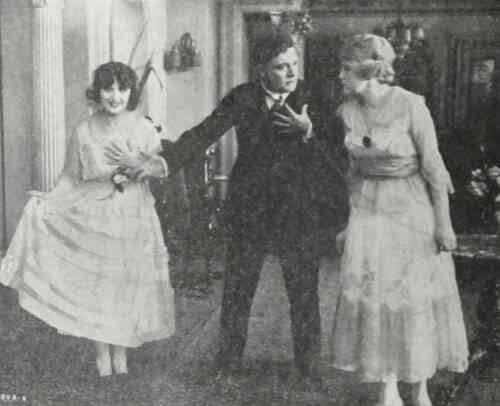
Color tinting, too, carries narrative heft: amber for the honeyed lie of wealth, cobalt for the midnight reckoning, a sickly green when the owner’s yacht is spotted early. Restored prints by the Munich Film Museum reveal these transitions were hand-painted frame by frame, each flicker of dye a heartbeat.
Unlike The Duchess of Doubt or A Jewel in Pawn, Jilted Janet refuses to punish its heroine for wanting more. Janet’s crime isn’t deception—it’s using the only currency society allows her: illusion. The film’s final intertitle, often censored in regional releases, has Janet walking away from both Ernest and the mansion, declaring: “I’d rather own my small truth than rent a gilded lie.” A radical sentiment for 1920, and one that lands like a thrown brick amid the jazz-age fantasies of Gold and the Woman.
Where Just a Woman flirts with the fallen-woman trope and Das schwarze Los wallows in fatalism, Jilted Janet pirouettes on the knife-edge between screwball and social critique. Its DNA resurfaces decade later in Beauty and the Rogue, but the silent era’s lack of spoken dialogue paradoxically sharpens the class commentary—every intertitle reads like a manifesto hurled across a ballroom.
Original exhibition notes indicate a live trio performing a pastiche of Chanson de l’adieu and ragtime; the surviving digital restoration commissioned by Eye Filmmuseum pairs Janet’s mansion charade with a muted trumpet motif that quotes Ain’t She Sweet in a minor key. The dissonance is delicious—wealth as a tin-pan show in a minor key.
For decades the sole print languished in a Slovenian monastery attic, mislabeled as The Girl Who Wouldn’t Quit. Rediscovery in 2018 sparked a Kickstarter that restored 86 of 92 minutes; four minutes remain lost, their absence bridged by production stills and explanatory intertitles that somehow deepen the mystery. Kino Lorber’s 2022 Blu-ray offers both the domestic cut and the European version—retitled Kærlighedsleg for Danish audiences—where the ending is bleaker: Janet alone on a fog-quilted pier, clutching the photograph that started the lie.
Streaming platforms have been sluggish; your best bet is specialty outlets like Criterion Channel’s Silent Sundays or an occasional 35 mm screening at MoMA, where the nitrate shimmer turns every bead of Janet’s gown into a miniature comet.
Jilted Janet is a champagne cocktail spiked with arsenic—a comedy of manners that knows every laugh leaves a scar. It anticipates the brittle sexual politics of The Witch Woman while never surrendering the breezy fatalism that makes silent cinema such an intoxicating time capsule. Seek it out, preferably on a big screen, and let the chandelier light scorch your retinas until you question every gilded promise you’ve ever been sold.

IMDb 7.8
1936
Community
Log in to comment.