DbcultAccessing Vault...
Cult Review
Senior Film Conservator
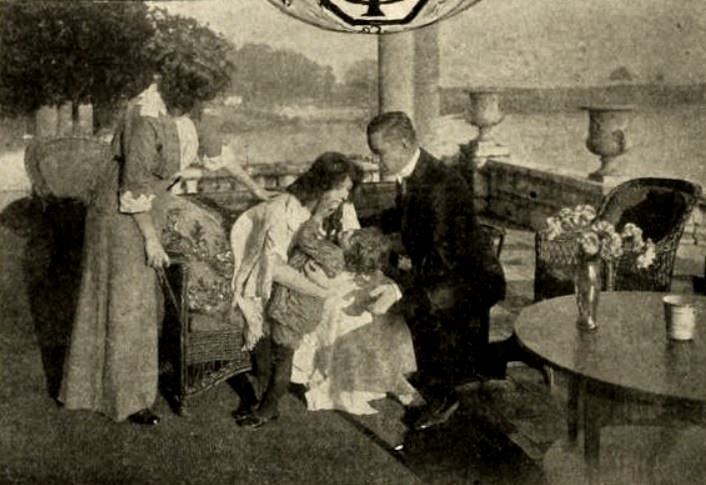
From the flickering shadows of early cinema emerges Frou Frou, a cinematic adaptation of the enduring French stage play that delves into the tumultuous landscape of human emotions, duty, and desire. This silent film, though decades removed from its theatrical origins, captures the essence of a narrative that remains startlingly relevant in its exploration of a woman's struggle against societal expectations and her own capricious heart. The story, a veritable crucible of domestic drama, meticulously charts the unraveling of a family unit, not through malice, but through a cascade of misjudgments, unacknowledged longings, and the devastating ripple effects of self-indulgence. It’s a compelling piece that invites us to ponder the true cost of freedom when weighed against the bonds of responsibility.
At its core, Frou Frou presents us with a protagonist whose very name, evocative of rustling silk and frivolous charm, belies the profound tragedy that awaits her. Frou Frou is not inherently malicious, but rather a creature of impulse, unsuited for the mundane demands of matrimony and motherhood. Her initial portrayal is one of radiant indifference, a woman for whom domesticity is a stifling cage rather than a comforting haven. This characterization, deftly handled through the expressive acting prevalent in the silent era, immediately establishes a poignant tension. We witness her vibrant spirit chafing against the quiet devotion of her husband, Henri De Sartorys, and the innocent affection of her young son, Georges. It’s a testament to the film's nuanced storytelling that we can simultaneously empathize with her yearning for a life unburdened by routine, even as we lament her palpable neglect.
The catalyst for Frou Frou's ultimate downfall appears in the charismatic form of Comte Paul De Valreas. Paul is not merely a seducer; he is a mirror reflecting Frou Frou’s own unarticulated desires for excitement and escape. His proposition – to free her from domestic duties by bringing her somber sister, Louise, into the household – seems, on the surface, an act of thoughtful liberation. Yet, it is this very act of 'freedom' that paradoxically tightens the noose around Frou Frou's happiness. The film masterfully illustrates how good intentions, when coupled with a fundamental misunderstanding of human nature and emotional complexities, can pave the road to ruin. This pivotal decision sets in motion a chain of events that highlights the fragility of familial bonds and the insidious nature of emotional neglect.
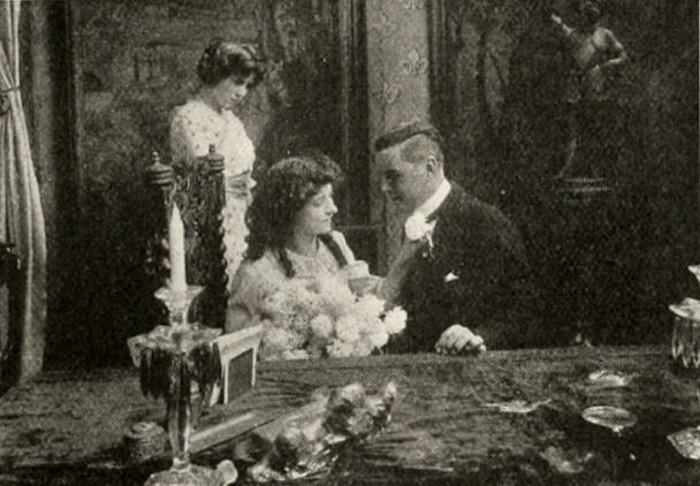
Louise, the quiet, unassuming sister, becomes a crucial, albeit unwitting, agent of fate. Her secret love for Henri, a silent devotion nurtured in the shadows, transforms her into an almost saintly figure within the Sartorys home. As Frou Frou recedes into a world of carefree pleasure with Paul, Louise steps seamlessly into the void she leaves behind. She assumes direction of the household with a natural grace and dedication that Frou Frou conspicuously lacks, innocently captivating Henri and Georges in the process. This shift is not presented as a deliberate usurpation on Louise's part, but rather as an organic consequence of Frou Frou's abdication of responsibility. The film avoids painting Louise as a villain, instead portraying her as a woman whose quiet virtues inadvertently expose her sister's glaring deficiencies. This complex portrayal of sisterly rivalry and devotion elevates the drama beyond simple melodrama, hinting at the intricate psychological undercurrents at play. One might draw a parallel to the intricate social dynamics explored in films like One of Our Girls, where female relationships are often tested by external pressures and internal desires.
The film’s dramatic tension escalates as Frou Frou, sensing her diminishing relevance within her own home, experiences a bitter awakening. Her initial indignation, directed squarely at Louise, quickly morphs into a desperate act of rebellion: eloping with Paul to the romantic canals of Venice. This act of defiance, while born of wounded pride and burgeoning passion, seals her tragic fate. Henri, a man whose quiet stoicism masks a deep sense of honor, cannot let such a transgression pass unpunished. His pursuit to Venice and the subsequent duel with Paul are rendered with a stark intensity, emphasizing the destructive power of a society bound by codes of honor and the raw pain of betrayal. The silent medium, through exaggerated gestures and potent close-ups, conveys the profound emotional weight of this confrontation, making the fatal outcome feel both inevitable and deeply sorrowful. The consequences of unchecked passion and societal expectations for women in such situations resonate strongly with themes present in films like Should a Woman Divorce?, though with a far more tragic conclusion for the central figure here.
The final act of Frou Frou is a somber descent into consequence and a poignant, if belated, attempt at redemption. Alone and gravely ill in Venice, Frou Frou’s vibrant spirit is extinguished, replaced by a profound sense of regret. It is Louise, the woman she so bitterly denounced, who finds her on her deathbed, demonstrating a compassion that transcends their past conflict. Louise’s act of summoning Henri and Georges to Frou Frou's side is a powerful moment of reconciliation, orchestrated by the one person who silently suffered through Frou Frou’s self-destructive path. The dying Frou Frou's blessing upon her estranged family is a heart-wrenching tableau, a final, desperate attempt to mend the irreparable damage she wrought. It is a moment that speaks volumes about the enduring power of forgiveness and the tragic irony of finding peace only at the precipice of oblivion. The emotional weight of this scene rivals the dramatic intensity found in narratives of grand historical tragedy, such as those evoked by Herod, albeit on a more intimate, domestic scale.
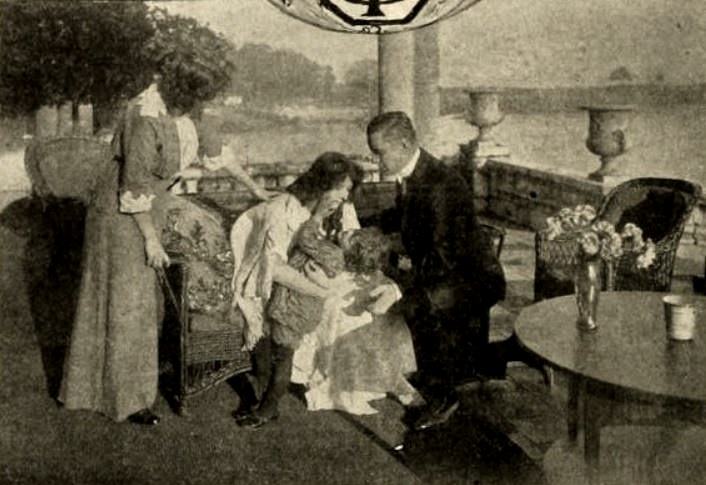
The performances, typical of the silent era, rely heavily on exaggerated facial expressions and grandiose gestures, yet within this stylistic framework, the actors convey a surprising depth of emotion. Helen Badgley, in the titular role, embodies Frou Frou's mercurial nature with a captivating blend of charm and petulance, making her eventual decline all the more impactful. James Cruze as Henri portrays a man of quiet dignity and simmering pain, his stoicism eventually cracking under the weight of betrayal. Maude Fealy's portrayal of Louise is particularly noteworthy; she imbues the character with a gentle strength and an understated sorrow that makes her a compelling counterpoint to Frou Frou’s flamboyant impulsiveness. The nuanced interplay between these characters, even without spoken dialogue, creates a rich tapestry of human experience.
Visually, the film, like many productions of its time, likely utilized established theatrical staging conventions, translating them to the cinematic frame. While specific details of the cinematography are scarce from this distance, the narrative structure itself suggests a reliance on clear, deliberate staging to convey the shifting power dynamics and emotional states. The setting of Venice for the climax and resolution adds a layer of romantic tragedy, the city’s inherent beauty contrasting starkly with the personal devastation unfolding within its labyrinthine streets. This careful choice of setting amplifies the emotional resonance, a technique that filmmakers have continued to employ to great effect, much like the evocative landscapes found in The English Lake District, though serving a dramatically different purpose here.
What makes Frou Frou resonate even today is its unflinching look at the complexities of female agency and societal expectations. Frou Frou's desire for freedom, while understandable, is ultimately depicted as a destructive force due to her inability to balance it with responsibility. The film implicitly asks questions that remain pertinent: What is a woman’s place? Can a woman truly find fulfillment outside the traditional roles prescribed by society without facing severe consequences? While the answers presented are steeped in the morality of its time, the questions themselves remain open to contemporary interpretation. It’s a narrative that forces us to confront the uncomfortable truth that personal desires, when pursued without consideration for others, can lead to widespread suffering. The themes of duty versus desire, and the societal pressures placed on individuals, particularly women, are timeless, echoing in various forms across cinematic history, from the more direct social commentary of Only a Factory Girl to the intricate personal dilemmas in The Conspiracy.
The writers, Augustin Daly, Ludovic Halévy, Henri Meilhac, and Lloyd Lonergan, crafted a narrative that, despite its melodramatic flourishes, possesses a psychological realism that transcends its era. They understood the intricate dance between individual will and external pressures, between love and resentment, and the devastating impact of miscommunication. The story’s enduring appeal lies in its exploration of universal human flaws: vanity, jealousy, longing, and the profound regret that often follows rash decisions. It serves as a powerful reminder that the most profound tragedies often unfold within the seemingly mundane confines of domestic life, fueled by the very emotions that bind us. This enduring quality of character-driven drama, where personal failings lead to monumental consequences, is a hallmark of truly impactful storytelling, akin to the timeless appeal of narratives that explore the human condition in works like The Life and Works of Verdi, which delve into the passionate lives of their subjects.
In conclusion, Frou Frou is far more than a historical curiosity; it is a compelling, emotionally charged drama that speaks to the perennial struggles of the human heart. It’s a powerful examination of how the pursuit of personal freedom, when untethered from responsibility, can lead to devastating consequences, and how forgiveness, even in the face of profound betrayal, can offer a glimmer of peace. The film's legacy lies not just in its pioneering efforts in early cinema, but in its ability to tell a story that, despite its period setting, remains remarkably resonant, prompting audiences to reflect on the delicate balance between self-fulfillment and the duties we owe to those we love. It’s a testament to the power of silent film to convey profound emotional truths, proving that the language of the heart needs no words to be understood across generations.
IMDb 5.3
1932
Community
Log in to comment.