DbcultAccessing Vault...
6.1/10
Senior Film Conservator
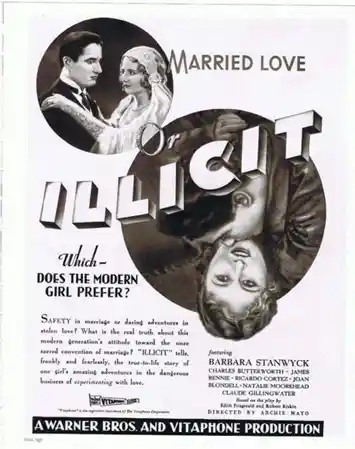
A definitive 6.1/10 rating for a film that redefined the boundaries of cult cinema. Illicit remains a cornerstone of transgressive art.
Okay, so Illicit from 1931. Is it worth watching? Absolutely, if you’re into classic film, especially the pre-Code era. If you like seeing society wrestle with ideas that still feel fresh today, then yeah, give it a go. But if you're expecting a fast-paced, action-packed drama, you'll probably hate it. This one is for folks who appreciate sharp dialogue and a good look at social history.
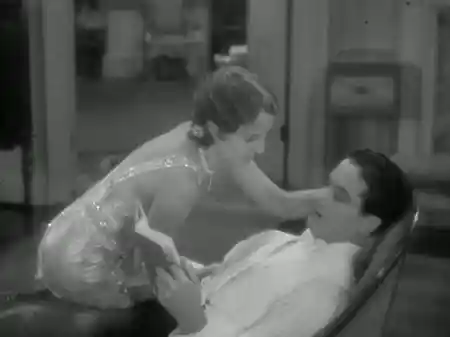
The whole setup here is wild for 1931. Barbara Stanwyck plays Anne Brooks, a woman who just doesn't see the point of marriage. She loves Dick, her partner, but she figures living together, being honest, is enough. No piece of paper, no ceremony, no rings. Just… them. It’s a pretty radical idea for back then, and honestly, even now, some people still clutch their pearls. 💅
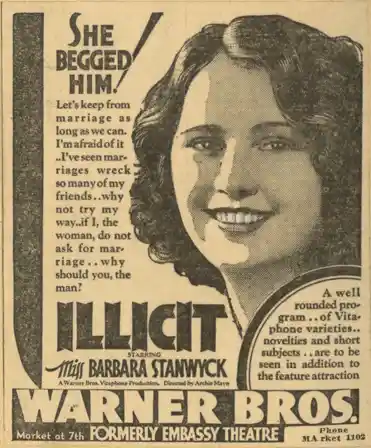
Stanwyck, even this early in her career, just gets it. She plays Anne with this wonderful mix of conviction and, later, a kind of weary frustration. You can see her trying to hold onto her ideals, even as the world around her keeps pushing back. There’s a scene where she’s trying to explain her views to Dick’s very traditional mother, and the silence in the room is just *heavy*. You feel the weight of societal judgment right there.
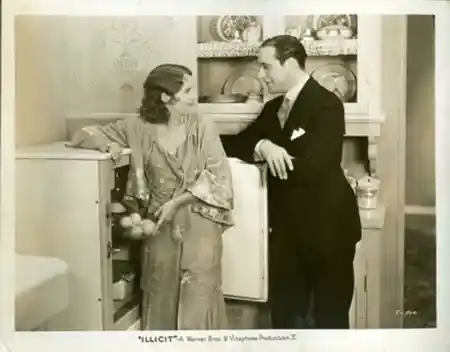
Her arguments, penned by folks like Robert Riskin, are surprisingly articulate. She talks about how marriage can kill romance, how it makes people take each other for granted. And you think, "Wow, they were saying this 90 years ago!" But then you also see how hard it is for her to actually *live* those beliefs when everyone else, even Dick sometimes, just doesn't get it. It’s a tough tightrope walk.
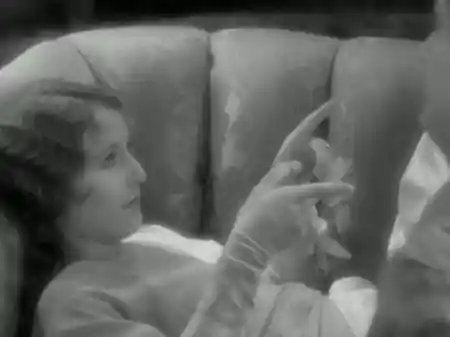
The film isn't just about Anne and Dick, though. You’ve got Joan Blondell, playing Margie, Anne’s best friend. Margie is this wonderfully cynical, practical character. She's married, not exactly happily, and she keeps giving Anne these knowing looks, like "honey, you have no idea what you're up against." Her dialogue often cuts through the more dramatic moments with a bit of a sardonic wit. She’s often the voice of experience, a bit jaded but always there for Anne. Applause, another film from around this time, also had some great female friendship bits, though in a very different context.
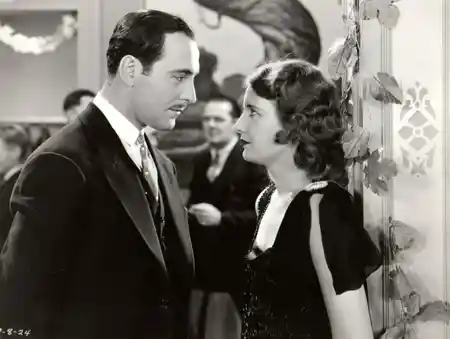
There's this one party scene, early on. Anne and Dick are just minding their business, enjoying themselves, and you can practically *feel* the whispers. People are talking about them, judging them. One woman actually says something like, "They're living in sin!" It’s so blunt. The camera doesn't need to do much; the dialogue and the way everyone stares just hammers it home. It's a subtle kind of pressure, but it's constant.
Dick, played by James Rennie, is a bit… softer. He believes in Anne’s ideas at first, but you can see him wearing down. He wants to be happy, sure, but he also wants things to be *easy*. He doesn't have Anne's backbone when it comes to facing down the whole world. And that's where the conflict really starts to grind.
The movie takes a turn, naturally. When things get complicated, and jealousy starts to creep in, Anne's big ideas about freedom get tested. It's easy to be philosophical when everything's smooth sailing. But when things get messy, the old rules, the old securities, suddenly start to look a little tempting. I thought about this, watching it, how much easier it is for folks to critique institutions until those institutions offer some kind of perceived safety.
There's a moment, not too long into the film, where Anne and Dick have a fight, and he just walks out, goes to a club. And there’s Ricardo Cortez, playing the smooth, dangerous other man. He's exactly the kind of character you'd expect to see in a pre-Code flick — all charm and trouble. His presence just throws a wrench into everything, making Anne's carefully constructed world feel very fragile.
The ending… well, it’s 1931. And the Hays Code, though not fully enforced yet, was certainly looming. So you can kind of guess where it has to go. It feels a little like the film itself gets tired of being radical. It almost sighs, gives up. You can almost feel the movie trying to convince you this moment matters, that this is what Anne *really* wanted all along. But it doesn't quite land. It feels like a concession.
Still, for what it is, Illicit holds up as a snapshot. A glimpse into a time when people were really grappling with what marriage meant, what freedom meant, and how much society dictates our personal lives. Stanwyck makes it sing, even when the plot has to give in to the era's expectations. Her performance alone makes it worth the watch. 🎬
IMDb 4.9
1931
Community
Log in to comment.