DbcultAccessing Vault...
Cult Review
Senior Film Conservator
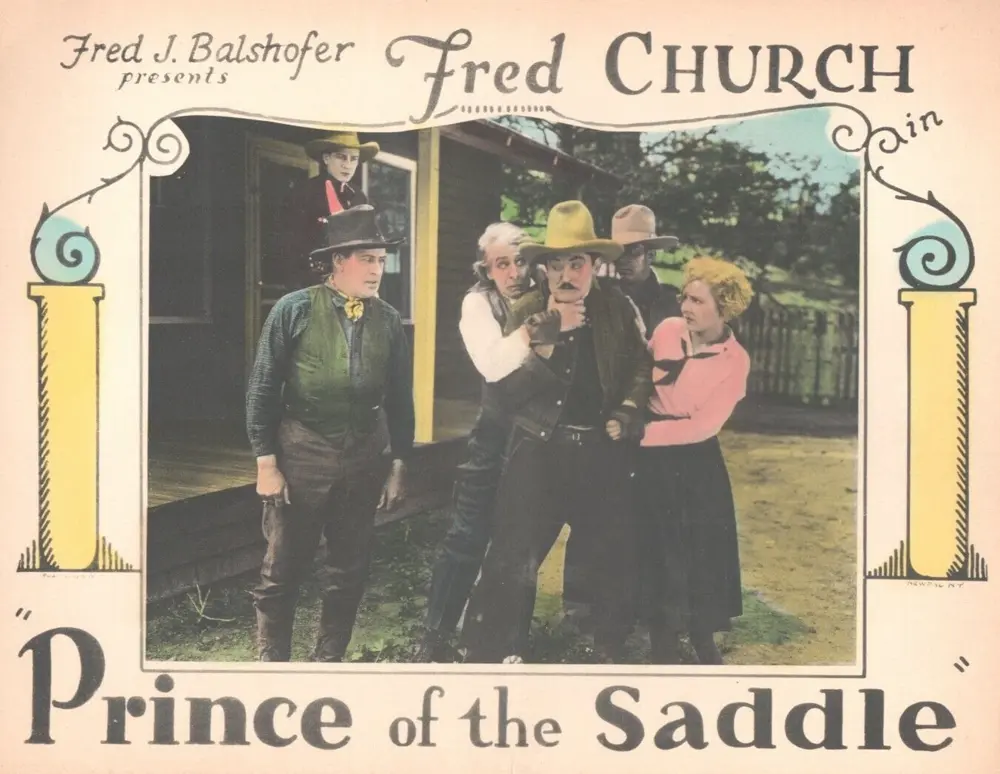
Is 'Prince of the Saddle' a film worth watching today? Short answer: yes, but with significant, perhaps even daunting, caveats. This early silent Western serves as a fascinating historical artifact, a foundational piece for silent film enthusiasts, and an essential study for Western genre historians, offering a crucial glimpse into the nascent conventions of a cinematic staple. However, for the casual modern viewer, accustomed to intricate narratives, sophisticated sound design, and rapid pacing, it will likely prove a challenging, if not occasionally frustrating, experience.
This is a film explicitly for those who appreciate the raw, unadulterated origins of cinema, for scholars of the American West on screen, and for anyone curious about the evolution of film language. It is emphatically NOT for viewers seeking contemporary entertainment value, complex character studies, or a passive viewing experience.
To truly engage with 'Prince of the Saddle,' one must approach it not merely as a piece of entertainment, but as a living document of cinematic history. Released in an era when film was still finding its voice, this picture embodies the pioneering spirit of early moviemaking, particularly within the burgeoning Western genre. It’s a snapshot of a time when narrative was conveyed through exaggerated gesture, stark visual cues, and the evocative power of the landscape itself.
The film's plot, while straightforward by today's standards, was likely designed to resonate deeply with audiences of the time, who were still grappling with the mythos of the American frontier. The struggle between the virtuous 'Prince' and the villainous cattle barons, the defense of a rancher's daughter, the high-stakes pursuit across dusty plains – these were not just stories; they were reflections of a national identity still being forged.
It’s a stark reminder that even the simplest tales can hold profound cultural weight when viewed through the correct historical prism. The film doesn't just tell a story; it tells us *how* stories were told a century ago.
This film works because of its raw, unpretentious energy and its historical significance as an early Western. William Barrymore, while adhering to the dramatic conventions of silent acting, possesses a compelling screen presence that anchors the narrative, even when the plot itself feels thin.
This film fails because its simplistic narrative, reliance on broad physical acting, and the inherent limitations of silent film (lack of dialogue, often rudimentary editing) make it largely inaccessible to a modern audience without a specific interest in film history.
You should watch it if you are a student of early cinema, a dedicated Western aficionado, or someone genuinely curious about the foundational elements from which all subsequent film developed. It’s a masterclass in visual communication, even if that communication feels alien today.
The acting in 'Prince of the Saddle' is, predictably, a product of its time. William Barrymore, as the titular 'Prince,' embodies the archetypal silent Western hero. His performance is a masterclass in physical storytelling, relying heavily on grand gestures, expressive facial contortions, and a robust, almost balletic, physicality to convey emotion and intent. There’s a particular scene, early in the film, where Barrymore confronts a group of rustlers; his squared shoulders and slow, deliberate hand movements speak volumes without a single intertitle. It’s a stark contrast to the subtle naturalism prized in contemporary acting, yet it possesses an undeniable power.
Pauline Curley, in her role, navigates the delicate balance of damsel-in-distress and spirited frontier woman with a similar reliance on visual cues. Her wide-eyed fear, her defiant chin lifts, and her frantic hand-wringing are all meticulously choreographed to ensure the audience understands her plight and her resilience. While some modern viewers might find it melodramatic, it was the language of emotion for millions. Her performance, especially during a tense standoff where she shields a younger sibling, showcases a surprising depth that transcends mere caricature.
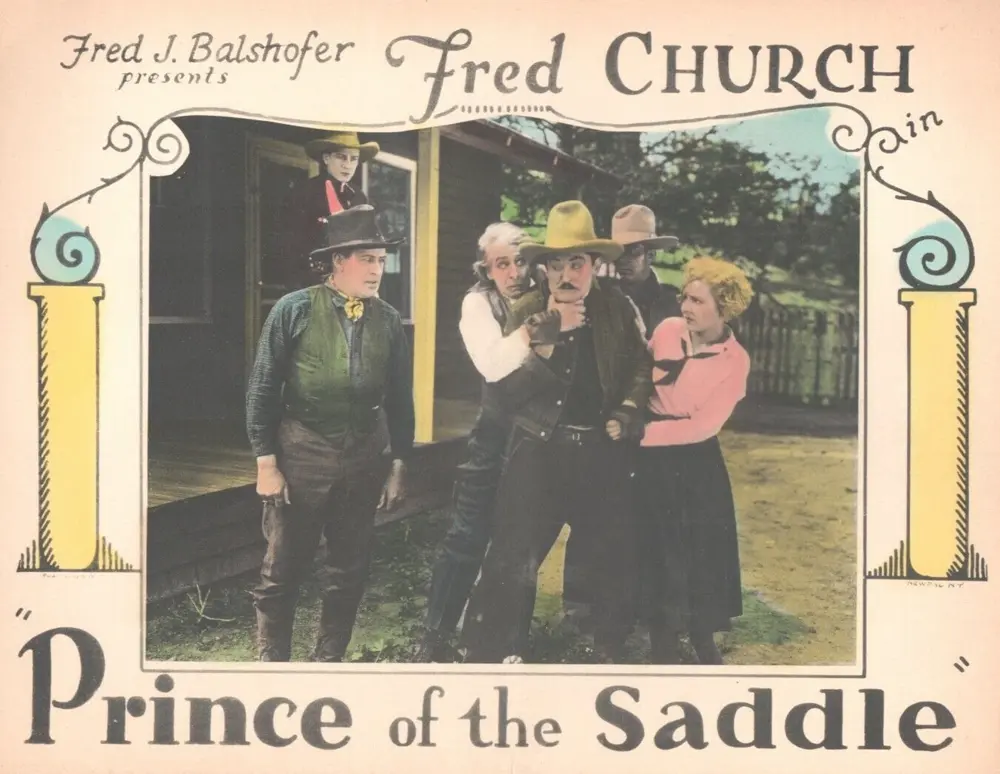
Fred Church, often relegated to supporting roles in these early Westerns, brings a gruff authenticity to his character, whether he's playing a loyal ranch hand or a menacing outlaw. His scowls are impactful, his movements precise. These actors weren't just performing; they were translating an entire world of dialogue and nuance into a purely visual medium. Their commitment to this unique form of expression is, in itself, a testament to their craft, even if it feels jarring to a modern sensibility.
The true triumph of 'Prince of the Saddle' lies in its visual storytelling, a necessity for a medium devoid of synchronized sound. The cinematography, while perhaps lacking the sophisticated tracking shots or dynamic close-ups of later eras, effectively utilizes the vast, untamed landscapes of the American West. Wide shots capture the sheer scale of the environment, dwarfing the human figures and emphasizing their struggle against nature and each other. There’s a breathtaking sequence involving a cattle stampede, where the camera, though largely static, perfectly frames the chaos, conveying urgency through composition alone.
The direction relies heavily on establishing shots and clear sightlines, ensuring that even without dialogue, the audience can follow the spatial relationships between characters and objects. Director's choice to use simple, direct cuts rather than elaborate transitions keeps the narrative momentum, even if it feels abrupt at times. The use of natural light, the stark contrasts between sun-drenched plains and shadowed canyons, adds an authentic, almost documentary-like feel to the proceedings. It’s a raw aesthetic, unburdened by the artificiality that would creep into later studio productions.
Consider the way a simple shot of a distant rider on the horizon immediately establishes a sense of anticipation or dread. This isn't just good filmmaking; it's fundamental visual grammar, honed in films like this. The director understands the power of the frame, even if the tools were primitive.
The pacing of 'Prince of the Saddle' can be a contentious point for contemporary audiences. Silent films often exhibited a rhythm that feels both agonizingly slow and unexpectedly brisk by modern standards. Long takes establish scenes, allowing the audience to absorb the visual information, but then action sequences, particularly the horseback chases, unfold with a breakneck speed that can be genuinely thrilling. There’s a chase scene where the editing cuts between the 'Prince' and his pursuers with a surprisingly rapid cadence, creating a palpable sense of urgency.
The tone is undeniably heroic and adventurous, steeped in the romanticized ideals of the frontier. There are moments of genuine melodrama, particularly surrounding Curley’s character, but these are balanced by the stoic resolve of Barrymore’s hero and the palpable tension of conflict. Intertitles, used sparingly but effectively, provide crucial exposition or dialogue, guiding the audience through the narrative beats. They act as a silent narrator, setting the emotional temperature for each scene.
It works. But it’s flawed. The shifts in pacing can feel uneven, and the reliance on intertitles can break immersion for those not accustomed to the format. Yet, within its own context, the film maintains a consistent and engaging rhythm that would have captivated its original viewers.
For the right audience, absolutely. This film is a crucial piece of cinema history. It offers an unparalleled look at early Western genre conventions.
It showcases the raw talent of silent film actors. It demonstrates how visual storytelling evolved without sound. Historians and film students will find immense value here.
However, for a general audience, it will be a test of patience. Expect a slower pace and exaggerated performances. It demands an open mind and an appreciation for foundational art.
One unconventional observation about 'Prince of the Saddle' is its raw authenticity. Unlike later, more polished Westerns that often felt like studio-bound productions, this film, with its slightly rough edges and direct approach, feels genuinely connected to the rugged landscapes it depicts. There's an unvarnished quality to the cinematography and performances that, for me, makes it more compelling than many of its more technically advanced successors. It’s less about grand spectacle and more about visceral action, a stark contrast to the manufactured heroism seen in films like The Ropin' Fool, which often prioritized stunts over substance.
My strong, debatable opinion is that the lack of dialogue forces a deeper engagement with the visual language of the film, revealing a sophistication in its non-verbal communication that talkies often lost. Modern films, in their reliance on expositional dialogue, often underestimate the audience’s ability to interpret visual cues. 'Prince of the Saddle' reminds us of the power of pure imagery.
However, a glaring flaw is its sheer inaccessibility for the uninitiated. The conventions of silent film are so far removed from contemporary viewing habits that many will simply not be able to connect with it. It’s not just the absence of sound; it’s the entire aesthetic, the exaggerated performances, the reliance on intertitles, and the often-simplistic character motivations that can feel alienating. It requires a significant mental adjustment, and many viewers simply aren't willing to make it.
This film, despite its historical weight, struggles to transcend its era. Its primary value is academic, not necessarily entertaining in a modern sense. It’s a foundational text, not a casual watch.
'Prince of the Saddle' is not a film to be judged by contemporary metrics of entertainment. It is, instead, a fascinating window into a bygone era of filmmaking, a testament to the ingenuity required to tell stories without dialogue, and a foundational piece of the Western genre. Its value lies not in its ability to thrill a modern audience indiscriminately, but in its capacity to educate, to demonstrate, and to connect us with the very origins of cinematic art.
For those willing to adjust their expectations and immerse themselves in its unique language, there is much to appreciate: the raw power of Barrymore’s performance, the sweeping vistas, and the sheer pioneering spirit that permeates every frame. It’s a demanding watch, yes, but a rewarding one for the right viewer. Approach it as an archaeological dig into cinema’s past, and you will unearth treasures. Approach it expecting a modern blockbuster, and you will find only dust.
It's a film that demands respect for its place in history, even if it struggles to capture the hearts of a new generation. Its legacy is secure, but its appeal is niche. Ultimately, 'Prince of the Saddle' is more than just a movie; it's a conversation piece, a historical document, and a foundational stone in the sprawling edifice of American cinema.
IMDb 5.7
1935
Community
Log in to comment.