DbcultAccessing Vault...
Cult Review
Senior Film Conservator
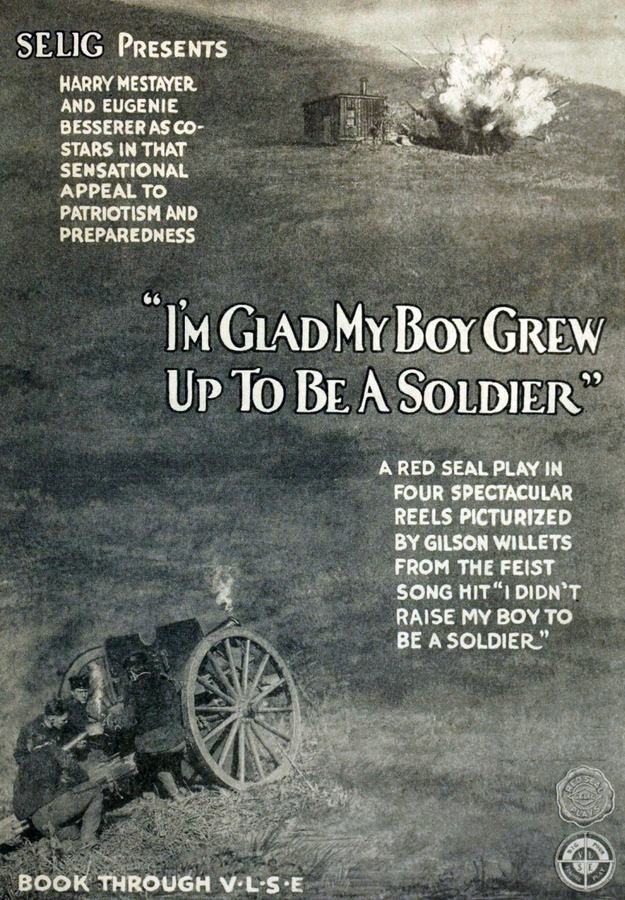
In the annals of early cinema, few titles resonate with such a potent blend of patriotic fervor and profound sorrow as I'm Glad My Boy Grew Up to Be a Soldier. This silent film, a product of an era perpetually grappling with global unrest, offers a stark, unflinching look at the human cost of war, not just as a singular event, but as a devastating, generational cycle. From its very title, the film challenges the viewer, inviting contemplation on the true nature of sacrifice and the often-eulogized concept of duty. It's a narrative that transcends mere plot points, delving into the emotional maelstrom experienced by those left behind, and the often-unspoken burdens carried by those who answer the call to arms.
The film opens on a canvas of domestic bliss, painting a serene portrait of James Warrington, a successful architect, whose life is enriched by a loving wife and a spirited young son, Jerry. Their home, a sanctuary of contentment, epitomizes the American dream of the early 20th century. This tranquil scene, however, is merely the calm before the storm. The abrupt arrival of a newspaper, emblazoned with the stark headlines of war, serves as the initial tremor, signaling the imminent collapse of their peaceful existence. James's instinct to shield his family from this harsh reality—hiding the paper from his wife—is a poignant, universal gesture of paternal protection, yet ultimately futile against the tide of national events.
The subsequent encounter between James and his business partner, Frank Archer, introduces the concept of duty with a forceful clarity. Archer, already resolved to enlist, presents James with a moral imperative, a call to arms that challenges his personal desires against the broader demands of country. James's hesitation, understandable given his deep affection for his wife and young son, quickly yields to a conviction of national service. This internal struggle, silently conveyed through the actors' expressions and gestures, is a powerful testament to the era's pervasive sense of patriotism. Both men, leaving behind their respective families—James his wife and Jerry, Archer his daughter Mercy—embody the perceived nobility of sacrifice. The scene of Mrs. Warrington's tear-dimmed eyes as the regiment marches away is a heart-wrenching visual, capturing the profound sorrow and helplessness of those who remain on the home front.
Time, an indifferent arbiter, passes. The initial fervor of enlistment gives way to the grinding reality of combat. Letters, once a lifeline from the front, cease, leaving a void of anxious uncertainty. Then, a figure returns from the crucible of war: Frank Archer, now tragically disfigured, having lost an arm. His return, a bittersweet reunion with his overjoyed daughter Mercy, stands as a stark visual reminder of war's devastating physical toll. Yet, Archer's homecoming carries an even heavier burden. He calls upon Mrs. Warrington, and in a scene of quiet devastation, delivers the news of her husband James's heroic death. This moment, played out with understated intensity, emphasizes the profound, life-altering impact of such news, particularly for Eugenie Besserer, whose portrayal of Mrs. Warrington's grief must have been a masterclass in silent pathos.
The film, even in its early cinematic form, understands the nuanced interplay of individual suffering within a larger national tragedy. Archer, a survivor, becomes the bearer of ultimate sorrow, a living testament to the sacrifices made. His shared experience with James, culminating in the delivery of the news to Mrs. Warrington, binds these characters in a shared, tragic fate. The headlines proclaiming peace, which follow this devastating revelation, feel almost cruelly ironic, a stark contrast to the personal peace that has been irrevocably shattered within the Warrington home.
Seventeen years unfurl, a period of fragile peace allowing the wounds of the past to scab over, though never fully heal. During this interlude, a new generation comes of age. Jerry Warrington, now a strapping young man, and Mercy Archer, blossoming into a beautiful young woman, find their childhood affection deepen into a tender romance. Their burgeoning love story, a beacon of hope and continuity, represents the enduring human spirit's capacity for joy and connection even in the lingering shadow of past trauma. This segment of the film offers a brief, idyllic reprieve, a chance for the audience to witness the potential for happiness that war so cruelly snuffs out. It emphasizes the natural progression of life, the cycles of love and growth that strive to assert themselves even after profound loss.
Yet, history, it seems, is condemned to repeat itself. The morning newspaper once again intrudes upon the Warrington home, its headlines screaming of renewed conflict, of invaders landing upon the nation's shores. For Mrs. Warrington, this news is not just a national crisis, but a deeply personal horror, an agonizing echo of the past. Her desperate attempt to hide the paper from Jerry, just as her husband had once tried to shield her, is a poignant, almost visceral reaction born of profound maternal fear. She understands the insidious allure of duty, having already lost a husband to its call.
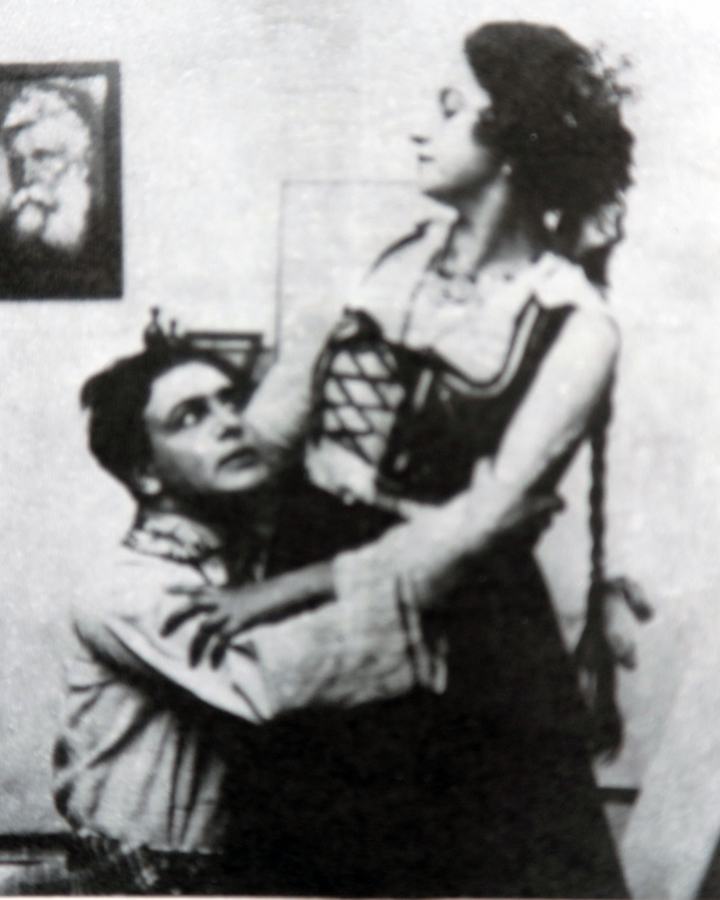
But Jerry, confronted by ubiquitous bulletin boards declaring the need for volunteers, mirrors his father's unwavering sense of obligation. His declaration to Archer, "It is my duty to enlist," reverberates with the same conviction that sent James to the front lines decades earlier. The scene where Jerry confronts his mother with his decision is rife with emotional tension. Her anguished plea, spoken before her husband's portrait – "I lost him in war. I cannot lose you, too, my boy. Promise not to enlist" – encapsulates the film's central tragedy: the recurring sacrifice of sons for causes that seem to demand an endless toll. Jerry's determination, however, is unshaken, illustrating the powerful, almost inescapable grip of perceived duty and patriotism on the young male psyche. This mirroring of narrative arcs across generations is one of the film's most powerful and devastating thematic elements, highlighting the cyclical nature of conflict and sacrifice.
As the new war takes its inevitable toll, the roles shift and deepen. Mercy Archer, embodying a different form of wartime heroism, volunteers as a Red Cross Nurse, venturing to the front lines. Her decision reflects the evolving role of women in conflict, moving beyond passive waiting to active participation in alleviating suffering. Meanwhile, back home, Mrs. Warrington retreats into the solace of memory, ascending to the attic to fondle Jerry's childhood toys. This act, a tender communion with the past, speaks volumes about her profound grief and her desperate clinging to the innocence that war has so relentlessly threatened to erase. It’s a powerful visual metaphor for a mother’s enduring love and sorrow, a silent scream against the injustice of a world that demands so much from its children.
The film’s climax echoes its earlier tragedy with an almost unbearable precision. Mercy Archer returns, just as her father did seventeen years prior, to deliver news that shatters Mrs. Warrington’s world once more. The details of Jerry’s fate are left to the imagination, but the implication is clear, and the impact is devastating. Mrs. Warrington, gazing grief-stricken into the fireplace, becomes a tableau of profound, unutterable sorrow, oblivious even to Mercy’s comforting embrace. This scene is a powerful, almost unbearable depiction of cyclical grief, where the past is not merely recalled but relived with agonizing intensity. The film does not shy away from the raw, enduring pain of loss, presenting a mother’s sorrow as a timeless, universal lament.
I'm Glad My Boy Grew Up to Be a Soldier is far more than a simple war drama; it is a profound meditation on the cyclical nature of human conflict and its devastating impact on successive generations. The film masterfully employs parallelism, drawing explicit connections between James and Jerry Warrington, and between Frank and Mercy Archer, to underscore its central theme. The initial title, seemingly a celebration of military service, gradually reveals itself as a poignant, perhaps even ironic, commentary on the societal pressures that compel individuals to sacrifice their lives and the profound grief that ensues. Is the film truly 'glad' for this outcome, or is it subtly critiquing the very notion of glorifying such sacrifice?
The tension between individual happiness and national duty forms the narrative's emotional core. Both Warrington men, driven by an inherent sense of obligation, choose the path of duty, despite the evident anguish it causes their loved ones. This choice, presented as both noble and tragic, forces the audience to confront uncomfortable questions about patriotism, sacrifice, and the true cost of war. The women, Mrs. Warrington and Mercy, embody resilience and enduring love, but also the profound, often silent, suffering borne by those who remain. Mrs. Warrington's journey from a happily married woman to a doubly bereaved mother is a harrowing portrayal of grief’s relentless grip. The film, through its narrative choices and character developments, avoids simplistic answers, instead inviting viewers to grapple with the complex, often contradictory emotions inherent in wartime.
As a silent film, I'm Glad My Boy Grew Up to Be a Soldier relies entirely on visual storytelling, the power of performance, and the strategic use of intertitles to convey its complex narrative and deep emotional resonance. The cast, including Harry De Vere, Harry Mestayer, Anna Luther, Guy Oliver, and particularly Eugenie Besserer as Mrs. Warrington, must have possessed an extraordinary ability to communicate nuanced emotions through facial expressions, body language, and gestures. The absence of spoken dialogue elevates the visual language, transforming every glance, every movement, into a significant narrative beat. The director's staging and framing would have been crucial in guiding the audience's emotional response, creating impactful tableaux that speak volumes without uttering a single word.
The film’s culminating vision—a great battleship firing a broadside, dissolving into a threshing harvesting machine at work—is a potent piece of symbolism. This visual metaphor, suggesting a transition from the destructive force of war to the productive labor of peace and industry, offers a glimmer of hope amidst the profound sorrow. It’s a classic cinematic device, used to convey a desired future or a philosophical statement. Whether this vision is interpreted as a genuine promise of enduring peace or a bittersweet, almost mocking, dream in the face of relentless human conflict, remains open to the viewer’s interpretation. The power of silent cinema to evoke such complex ideas through purely visual means is brilliantly showcased here.
In its unflinching depiction of war's enduring legacy across generations, I'm Glad My Boy Grew Up to Be a Soldier finds thematic kinship with epic narratives like Leo Tolstoy's War and Peace, albeit on a different scale and medium. Both works explore the profound impact of large-scale conflict on individual lives and families, charting the ebb and flow of peace and war, and the sacrifices demanded by each. While the Russian epic spans decades and countless characters, this silent film distills the essence of that experience into the intimate saga of two families, making its message no less potent or universal. It stands as a significant piece of early American cinema, not only for its technical execution in the silent era but for its bold thematic exploration of a subject that remains tragically relevant.
The film's exploration of duty, sacrifice, and the cyclical nature of conflict also places it within a broader tradition of social commentary in cinema. It subtly challenges the simplistic glorification of war, instead focusing on the human cost. While not as overtly political as some later films, its emotional weight serves as a powerful, if quiet, indictment of the forces that compel such repeated tragedy. Its enduring message about the devastating impact of war, particularly on families, resonates across the decades, making it a compelling watch even today.
Ultimately, I'm Glad My Boy Grew Up to Be a Soldier is a haunting and deeply moving cinematic experience. It is a testament to the power of silent film to convey profound emotional truths without the aid of spoken dialogue. Through its compelling narrative of recurring sacrifice and enduring grief, it forces viewers to confront the stark realities of war, not as an abstract political event, but as a deeply personal tragedy that reverberates across generations. Its title, initially a declaration, ultimately becomes a question, echoing in the mind long after the final frames fade: Can we ever truly be glad for such a cost? The film's legacy lies in its ability to provoke such vital, timeless introspection.
Community
Log in to comment.