DbcultAccessing Vault...
Cult Review
Senior Film Conservator
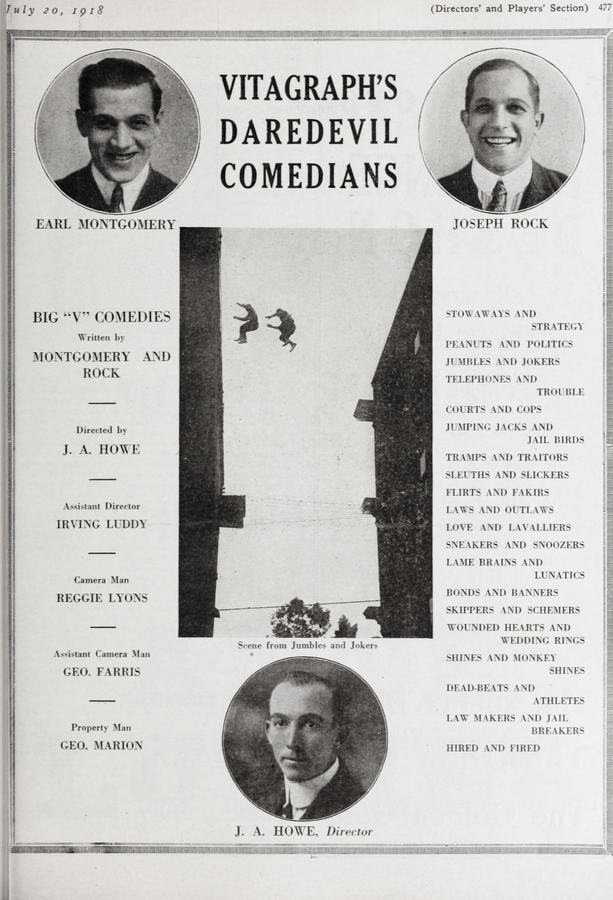
In the grand tapestry of early cinema, where the silent screen often served as a vibrant canvas for burgeoning narratives and experimental storytelling, "Telephones and Troubles" emerges as a particularly intriguing piece. Penned by the collaborative genius of Joe Rock and Earl Montgomery, who also grace the screen with their distinctive performances, this film is far more than a mere relic of a bygone era; it is a fascinating snapshot of societal anxieties and aspirations at the dawn of the modern communication age. It’s a work that, even today, resonates with an uncanny prescience regarding the double-edged sword of technological advancement and the perennial human struggle with miscommunication. Viewing it now, one can't help but marvel at how its creators harnessed the then-novelty of the telephone to spin a tale of comedic chaos and heartfelt despair, a testament to the enduring power of narrative ingenuity.
At its core, "Telephones and Troubles" introduces us to Archibald Putter, a character imbued with an almost Quixotic earnestness by Earl Montgomery. Putter is not just an inventor; he is a dreamer, a man whose mind hums with the promise of tomorrow. His latest brainchild, the 'Tele-Visualizer,' represents a leap of faith into uncharted technological territory – an audacious concept for visual communication that, in the film's playful anachronism, foreshadows the video calls we take for granted today. Putter's ambition is noble: to present his invention to the formidable and famously reclusive industrialist, Mr. Gideon Grumbles, whose investment would validate his life's work and secure his future. Montgomery's portrayal of Putter is a masterclass in understated physical comedy and expressive mime, conveying a spectrum of emotions from hopeful anticipation to utter bewilderment, often through subtle shifts in posture or the eloquent arch of an eyebrow. His wide-eyed innocence makes him an ideal foil for the film's antagonist, setting the stage for the ensuing pandemonium.
Enter Reginald 'Reggie' Racket, brought to life with a sly, almost impish malevolence by Joe Rock. Racket is the antithesis of Putter – a cunning opportunist, a digital trickster before the digital age, who perceives the telephone not as a tool for connection but as an instrument of manipulation. He masterfully exploits the rudimentary infrastructure of the burgeoning telephone network, intercepting calls, impersonating voices, and weaving a meticulous web of deceit designed to derail Putter's aspirations and pilfer his groundbreaking invention. Rock’s performance is a delightful contrast to Montgomery's, exuding a playful menace that keeps the audience both wary and amused. His schemes are not merely mischievous; they are intricately plotted, demonstrating a keen understanding of human gullibility and the nascent trust placed in this new communication device. The film brilliantly illustrates how easily information, and indeed identity, could be distorted or fabricated through the wires, transforming a simple phone call into a potential minefield of misunderstanding.
The narrative escalates as Racket's telephonic trickery begins to unravel Putter's life on multiple fronts. Not only is his crucial meeting with Mr. Grumbles jeopardized by misdirected messages and fabricated appointments, but his burgeoning romance with the charming Eleanor Vance also falls victim to Racket's meddling. Misunderstandings proliferate, leading to comedic mishaps and moments of genuine pathos as Putter struggles to comprehend the sudden downturn in his fortunes. The film excels at depicting the sheer frustration of being caught in a labyrinth of miscommunication, a feeling that remains universally relatable even in our hyper-connected world. The 'troubles' in the title are not merely external obstacles; they are the internal turmoil wrought by a relentless assault on Putter's integrity and his very sense of reality.
Earl Montgomery, as Archibald Putter, delivers a performance that anchors the film with a palpable sense of human vulnerability. His comedic timing is impeccable, often relying on exaggerated facial expressions and a graceful clumsiness that endears him to the audience. We feel his mounting exasperation, his innocent bewilderment, and his desperate attempts to right the wrongs inflicted upon him. Montgomery’s Putter is not a caricature but a relatable everyman, a figure whose dreams are repeatedly dashed by forces beyond his immediate control. His physical comedy, though broad at times, never descends into mere slapstick; it is always in service of the character's emotional journey. This nuanced approach allows the audience to invest deeply in Putter's plight, making his eventual triumph (or lack thereof, depending on the film's specific resolution) all the more impactful.
Joe Rock, conversely, revels in the role of Reginald Racket, crafting a villain who is both charmingly wicked and utterly effective. Rock’s Racket is not a mustache-twirling caricature; he possesses a mischievous glint in his eye and a confident swagger that suggests he genuinely enjoys the chaos he sows. His movements are precise, his gestures deliberate, reflecting the calculating nature of his character. The dynamic between Montgomery's earnestness and Rock's playful villainy is the engine that drives the film's comedic momentum. Their scenes together, whether directly confronting each other or inadvertently interacting through the telephone lines, crackle with an undeniable energy. The writers, Rock and Montgomery themselves, clearly understood the power of contrasting personalities, using their own on-screen chemistry to elevate the narrative beyond simple gags. In a way, their partnership here is reminiscent of the contrasting yet complementary styles seen in films like The Gilded Youth, where the interplay between opposing characters fuels both humor and dramatic tension.
The true brilliance of "Telephones and Troubles" lies in its astute exploration of nascent technology as a source of both promise and peril. The telephone, a marvel of its age, is presented not merely as a plot device but as a character in itself – a fickle, easily manipulated entity that can connect distant lovers or propagate devastating lies. The film taps into a universal human experience: the anxiety surrounding new inventions and their unforeseen consequences. In an era where communication was rapidly evolving, the notion that one's voice could be mimicked, or one's message distorted, must have struck a powerful chord with contemporary audiences. This thematic depth elevates the film beyond a simple comedy, offering a commentary on trust, identity, and the fragile nature of mediated interaction.
The theme of miscommunication, of course, is paramount. Putter's entire ordeal stems from the inability to convey accurate information or verify the identity of his interlocutors. This echoes narrative structures found in more dramatic works like The Duplicity of Hargraves, where mistaken identities and hidden agendas drive the plot, albeit with a comedic rather than purely dramatic intent here. The film serves as a cautionary tale, albeit a humorous one, about the importance of clarity and directness, particularly when relying on indirect means of communication. It suggests that while technology promises to bridge distances, it can also create new chasms of misunderstanding, a sentiment that feels remarkably current in our age of digital echo chambers and online anonymity.
From a technical standpoint, "Telephones and Troubles" showcases the evolving language of silent film. The direction, likely a collaborative effort given Rock and Montgomery's dual roles, demonstrates a keen understanding of visual storytelling. Intertitles are used judiciously, providing necessary exposition without interrupting the flow of the action. The pacing is brisk, keeping the audience engaged through a series of escalating complications and frantic chases. The use of close-ups to capture Montgomery's expressive face, particularly during moments of confusion or despair, is highly effective, drawing the viewer deeper into Putter's emotional state. The set designs, though perhaps modest by today's standards, effectively convey the bustling energy of a burgeoning metropolis and the cozy confines of Putter's inventor's workshop, creating a believable backdrop for the unfolding drama.
The physical gags are meticulously choreographed, from Putter's frantic dashes across town to his bewildered interactions with faulty telephone equipment. These sequences are not merely for laughs; they serve to advance the plot and underscore the frustrations of dealing with an unreliable system. The film’s climax, typically involving a madcap pursuit or a dramatic confrontation, is orchestrated with a kinetic energy that was characteristic of many silent comedies. The absence of synchronized sound, of course, means that much of the film's impact would have relied on the live musical accompaniment, which would have underscored the comedic moments with jaunty tunes and heightened the dramatic tension with more suspenseful scores. This reliance on live music allowed for a dynamic viewing experience, with each screening potentially offering a slightly different emotional texture.
When considering "Telephones and Troubles" within the broader landscape of early cinema, one can draw parallels to other films that grappled with the impact of technology or the complexities of human interaction. While not a direct comparison in genre, the earnestness of Putter's ambition and the challenges he faces might evoke a distant echo of the struggles seen in The Light That Failed, albeit through a comedic lens rather than a tragic one. Both narratives explore the vulnerability of creative endeavors and the external forces that can undermine them. Similarly, the film's focus on romantic misunderstandings, catalyzed by external interference, shares a thematic thread with the classic trials and tribulations of love found in stories like Jane Eyre, though the execution here is decidedly lighthearted and farcical.
The film also stands as a fascinating precursor to later works that would explore the darker side of communication technology, or even its comedic potential for chaos. The notion of a device meant for connection becoming a source of alienation or deception is a theme that has permeated cinema for decades. "Telephones and Troubles", in its unassuming way, lays some of the groundwork for these future explorations, demonstrating that even in its infancy, cinema was capable of both entertaining and subtly critiquing the rapidly changing world around it. It captures a moment when society was still grappling with the implications of instantaneous, albeit sometimes unreliable, communication. This makes it a valuable artifact not just for film historians but for anyone interested in the social history of technology.
In conclusion, "Telephones and Troubles" is a delightful and surprisingly insightful piece of early filmmaking. It's a testament to the collaborative talents of Joe Rock and Earl Montgomery, both as writers and performers, who crafted a narrative that is both uproariously funny and subtly profound. The film's enduring charm lies in its universal themes: the pursuit of innovation, the pitfalls of miscommunication, and the timeless struggle between good intentions and mischievous interference. It reminds us that even with the most advanced tools at our disposal, human nature – with all its flaws and foibles – remains the ultimate variable in the equation of communication. This silent gem, with its intricate plot, memorable performances, and surprisingly relevant social commentary, continues to connect with audiences, proving that some troubles, and some triumphs, are truly timeless.

IMDb —
1920
Community
Log in to comment.