DbcultAccessing Vault...
6.5/10
Senior Film Conservator
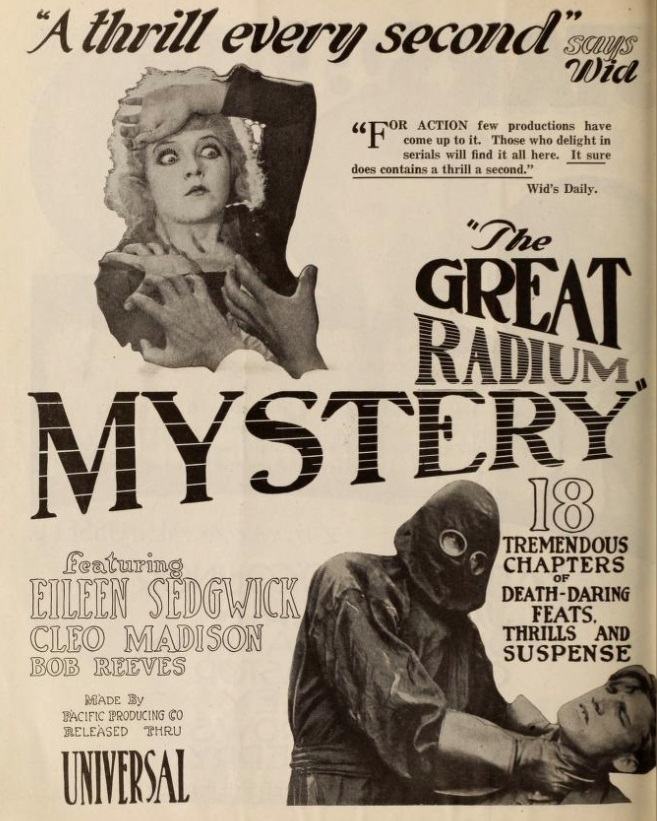
A definitive 6.5/10 rating for a film that redefined the boundaries of cult cinema. The Great Radium Mystery remains a cornerstone of transgressive art.
Stepping back into the nascent days of cinema, when flickering images and orchestral scores wove narratives without uttered dialogue, one occasionally stumbles upon a feature that, despite its age, retains an astonishing capacity to thrill. Such is the case with Frederick Bennett’s 1919 serial, The Great Radium Mystery. This isn't merely a historical artifact; it's a pulsating relic of early genre filmmaking, a testament to the boundless imagination that characterized the silent era. With a plot that sounds almost laughably audacious by today's standards – criminals absconding with a radium-powered tank from a brilliant but perhaps naive inventor, prompting a relentless chase led by his spirited heiress and a diligent government agent – the film delivers precisely the kind of escapist spectacle it promises.
The very premise of a 'radium-powered tank' situates The Great Radium Mystery firmly within the burgeoning realm of science fiction, a genre still finding its footing in literature, let alone on the silver screen. In an era when the mysteries of atomic energy were only beginning to unravel in the scientific community, the film’s writers, including Bennett himself, dared to project its potential into the realm of fantastical weaponry. This foresight, while perhaps scientifically rudimentary, imbues the narrative with a delightful sense of speculative wonder, making it a fascinating precursor to countless sci-fi thrillers that would follow. It’s this audacious conceptualization that immediately distinguishes it from more grounded dramas of the period, such as The Lie or The Bitter Truth, which wrestled with human morality rather than technological marvels.
At the heart of this kinetic adventure is Eileen Sedgwick, portraying the inventor's heiress with a dynamism that was both refreshing and necessary for the serial format. Sedgwick was a known quantity for her athletic prowess and daring stunts, a reputation she fully leveraged here. Her character isn't a demure damsel in distress; far from it. She is a woman of agency, courage, and considerable physical capability, actively participating in the pursuit and often outsmarting her male counterparts, both villainous and heroic. This portrayal aligns her with a lineage of strong female characters emerging in early cinema, though perhaps with a more overt action bent than even the more socially conscious roles seen in films like Your Girl and Mine: A Woman Suffrage Play, where female strength was depicted through advocacy rather than daring aerial escapes. Sedgwick's performance anchors the serial, providing a compelling human element amidst the mechanical mayhem.
Opposite her, Ed Brady and Cleo Madison embody the villainous elements with a theatricality typical of the era, yet effective in conveying their sinister intentions. Brady, often cast as heavies, brings a palpable menace to his role as the primary antagonist, a figure driven by greed and a thirst for power. Madison, while perhaps not given the same physical demands as Sedgwick, plays a cunning accomplice, demonstrating that villainy in the silent era was not solely a male domain. Their schemes, while sometimes convoluted, serve as excellent catalysts for the relentless action sequences that define the serial. The supporting cast, including Bob Kortman, Gordon McGregor, and Jefferson Osborne, fill out the world with a mix of bumbling henchmen, concerned citizens, and steadfast allies, each contributing to the serial's rich tapestry of characters.
The narrative structure of The Great Radium Mystery, as a serial, dictates a particular rhythm: each episode concludes with a cliffhanger, a seemingly insurmountable predicament from which our heroes must escape in the subsequent installment. This episodic tension is masterfully handled by Bennett and his team, ensuring that audiences were consistently drawn back to the picture house week after week. The 'radium-powered tank' itself isn't merely a MacGuffin; its unique properties and the potential for its misuse drive much of the plot. The criminals' desire for it is not just about theft, but about wielding a weapon of unprecedented destructive force, a concept that would resonate deeply with anxieties of the post-World War I era, even if the technology was purely fictional. This elevates the stakes beyond a simple chase, imbuing it with a geopolitical urgency that feels surprisingly modern.
Visually, the film capitalizes on practical effects and location shooting, which, for its time, were remarkably ambitious. The chases across various terrains, the intricate set pieces involving the tank, and the numerous close calls for our protagonists all contribute to a sense of genuine peril. While special effects were rudimentary, the ingenuity in staging these sequences is commendable. The film doesn't shy away from depicting the destructive power of the tank, even if through suggestive rather than explicit means. This visual storytelling is crucial in a silent film, and The Great Radium Mystery largely succeeds in conveying scale and impact through its cinematography and editing. Compared to the more contained narratives of films like Painted Lips, which focused on intimate character drama, The Great Radium Mystery embraces a sprawling, action-packed canvas.
Frederick Bennett’s direction ensures a brisk pace, a vital component for maintaining audience engagement over multiple episodes. He understands the mechanics of suspense, deploying quick cuts and dynamic camera angles to heighten the tension during chase sequences and confrontations. The government agent, played with a stoic determination by Bob Reeves, provides a counterpoint to Sedgwick’s more impulsive heiress, embodying the methodical pursuit of justice. Their partnership, though often unspoken, forms the backbone of the heroic effort. The interplay between these two distinct personalities, one driven by personal connection and the other by duty, adds a subtle layer of character depth to what could otherwise be a straightforward action piece. It’s a dynamic that would become a trope in countless adventure narratives, but here it feels fresh and compelling.
The film’s exploration of technology as both a tool for progress and a potential instrument of destruction is a recurring theme in early speculative fiction, and The Great Radium Mystery handles it with a certain prescience. The very concept of radium, a then-mysterious element, being harnessed for a weapon speaks to both the scientific optimism and underlying fear of the unknown that characterized the early 20th century. This thematic undercurrent provides a depth beyond the surface-level thrills, inviting viewers to ponder the ethical implications of scientific advancement. It’s a far cry from the social commentary often found in films like The New York Peacock, which critiqued societal norms, but equally potent in its own genre context.
One cannot discuss silent serials without acknowledging their cultural impact. They were the weekly spectacles that drew crowds, fostering a communal viewing experience filled with gasps, cheers, and eager anticipation. The Great Radium Mystery is a prime example of this phenomenon, a serial designed to entertain and enthral. Its enduring appeal lies not just in its historical significance but in its sheer entertainment value. Even today, stripped of its original episodic context and often viewed in fragmented forms, the core narrative drive and the charismatic performances shine through. The film’s influence can be subtly traced through later adventure serials and even into the superhero genre, where brilliant inventors and world-threatening devices are commonplace.
Comparing it to international counterparts, one might consider the Russian silent crime serials like Zelyonyy pauk (The Green Spider) or Stolichnyi iad (Metropolitan Poison), which also revelled in intricate plots of espionage and criminal masterminds. While the cultural contexts and stylistic nuances differed, the universal appeal of a thrilling chase and a looming threat was clearly a global cinematic language. The Great Radium Mystery stands proudly among these early international thrillers, demonstrating the universal appetite for stories of heroes against impossible odds, even if those odds involved a glowing, weaponized tank.
The legacy of The Great Radium Mystery is perhaps not as widely celebrated as some of its contemporaries, but its contribution to the nascent genres of science fiction and action-adventure is undeniable. It showcased the potential of cinema to transport audiences to worlds of speculative technology and high-stakes espionage. Eileen Sedgwick’s performance, in particular, deserves renewed appreciation for its pioneering spirit, establishing a template for the active, capable female protagonist long before such roles became common. The film is a vibrant reminder that even in its earliest forms, cinema was capable of crafting complex, thrilling narratives that engaged with contemporary scientific fascination and societal anxieties.
In retrospect, what truly elevates The Great Radium Mystery beyond a mere curiosity is its unwavering commitment to its fantastical premise. It asks its audience to suspend disbelief and dive headfirst into a world where a glowing tank can be the ultimate weapon, and heroines can outrun criminals across rooftops and through treacherous landscapes. It's a film that, despite its technical limitations by modern standards, delivers on its promise of adventure and suspense with an earnestness that is deeply charming. Frederick Bennett, along with his dedicated cast and crew, crafted a serial that, while a product of its time, speaks to timeless desires for heroism, justice, and the thrilling unknown. For aficionados of silent cinema and early genre exploration, this is an essential viewing, a vibrant piece of cinematic history that still manages to spark the imagination.
The meticulous planning behind the stunts, the dramatic intertitles, and the raw energy of the performances all coalesce into a compelling experience. It's easy to overlook the nuances of silent film acting, but Sedgwick, Brady, and Madison, in particular, convey a remarkable range of emotions and intentions without a single spoken word. Their physical acting, exaggerated yet precise, is a masterclass in conveying narrative through pure movement and facial expression. This demands a different kind of engagement from the viewer, an active participation in deciphering the visual cues, which adds another layer to the appreciation of the film. It's not just a story being told; it's a performance being experienced. The enduring appeal of such a narrative, driven by a race against time to recover a devastating weapon, transcends its technological anachronisms. It taps into universal fears of misuse of power and the innate human desire for justice.
Ultimately, The Great Radium Mystery is more than just a historical footnote. It's a vibrant, exhilarating ride through the imaginations of early filmmakers, a testament to their ambition and ingenuity. It serves as a potent reminder of cinema's power to create worlds, to craft heroes and villains, and to ignite the collective imagination, long before the advent of sound or sophisticated visual effects. Its daring premise, coupled with committed performances and effective direction, ensures its place as a significant, albeit often overlooked, entry in the annals of early cinematic adventure. For anyone seeking to understand the roots of genre filmmaking, or simply to enjoy a rollicking good chase story from a bygone era, this 'mystery' is well worth unraveling, its brilliance still radiating after all these years.
IMDb —
1919
Community
Log in to comment.