DbcultAccessing Vault...
Cult Review
Senior Film Conservator
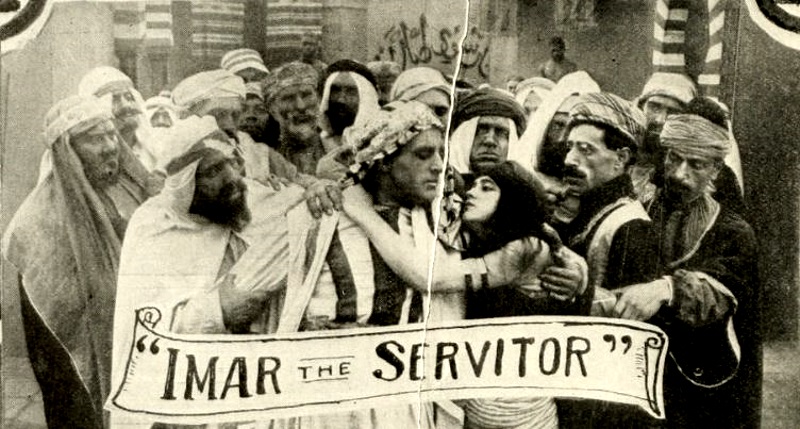
The 1914 one-reeler Imar the Servitor arrives like a shard of obsidian lodged in the century’s gullet: jagged, reflective, and unexpectedly sharp beneath its patina of nitrate fade.
Director-writer Daniel Carson Goodman, better known then for scandalous novels pulped with erotic charge, here trades ink for magnesium light, distilling a tangled novella into a scant twelve minutes that nonetheless feel cavernous. The resultant film—shot in Fort Lee when sand dunes were trucked in to mimic Arabia—plays less like imperialist postcard and more like a fever dream about ownership: of land, of women, of images themselves.
Cinematographer Max Schneider (uncredited but identifiable by his signature back-cranking stutters) frames Imar’s entrance through heat ripples that smear the horizon into molten pewter. The eye expects a rider; instead we get a figure on foot, leading a camel by braided hair rope—a reversal of hierarchies that silently announces the film’s thesis: servitude can outrank mastery when morality enters the ledger.
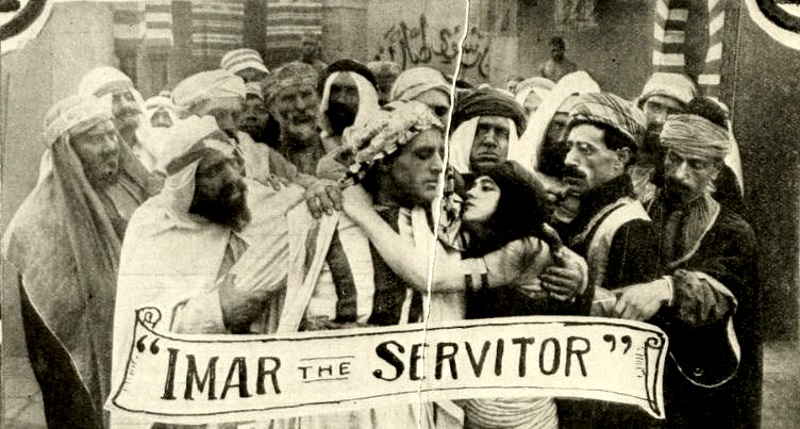
Compare this visual coup to the static tableaux of The General's Children (1915) or the claustrophobic tenement blocks in Traffic in Souls (1913). Goodman opts for geographic vertigo, letting negative space bully his characters until they resemble insects on parchment.
William Garwood, matinee idol in the making, essays both the American tourist and—via a stunt double revealed only in silhouette—the final-reel avenger. The casting choice is no mere thrift; it collapses colonizer and savior into one body, implicating the gaze that first objectified the woman on celluloid. When Imar studies her photograph, Garwood’s eyes perform a double exposure: desire for the stranger, recognition of complicity.
Silent-film acting often ages into mime; Garwood’s micro-gestures—an eyelid flutter that syncs with a subtitle card reading "She is mine in picture only"—transcend era. The moment ricochets across later desert romances, from An Odyssey of the North (1914) to von Stroheim’s more venal The Man from Mexico (1914).
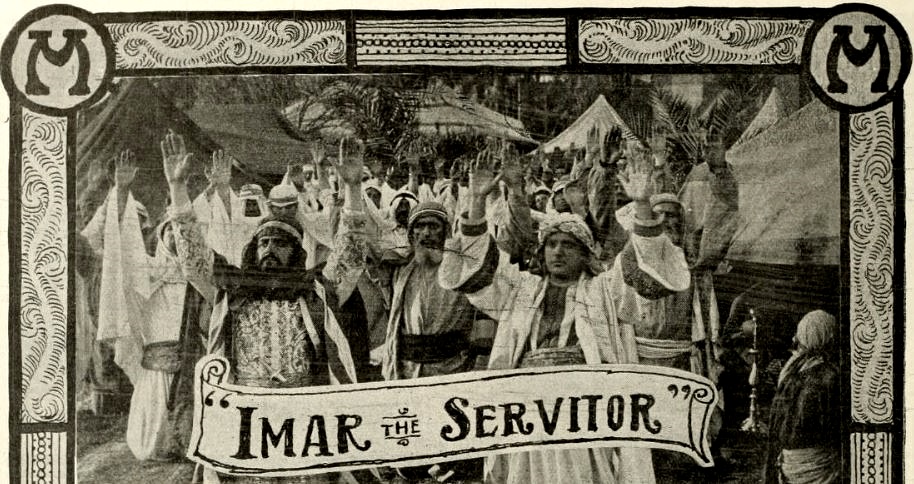
We never learn her name—she is “the fiancée,” then “the wife,” then simply “she.” Yet the film’s most radical cut occurs when the camera lingers on her torn burnoose: the fabric’s frayed threads resemble Arabic calligraphy, spelling out a curse against patriarchy. Goodman, himself a physician turned novelist, understood bodies as texts; here the woman’s skin becomes parchment overwritten by male signatures until Imar’s knife reclaims the margin.
This semiotic violence anticipates the suffrage-era backlash seen in What 80 Million Women Want (1913), though Goodman refuses the pamphlet tone. Politics seep through permeable genre, not soapbox.
No Vitaphone, no Movietone—yet Imar vibrates with acoustic suggestion. Intertitles arrive uncommonly sparse, forcing the eye to retrofit Foley: the hiss of a whip becomes the wind, the clatter of hoofs becomes kettle-drum thunder. Contemporary exhibitors were encouraged to accompany the final caravan chase with rattlesnake maracas and a slowed-down "March of the Priests" from The Magic Flute, creating an uncanny mash-up of Mozart and Saharan brutality.
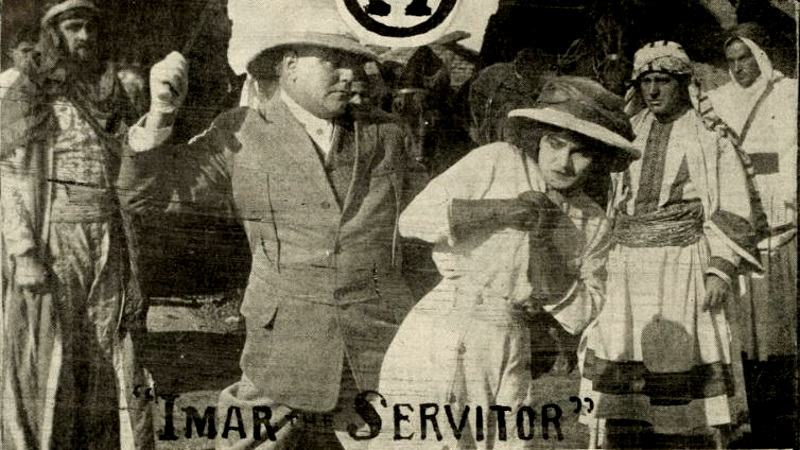
Modern viewers, rightly allergic to Orientalist kitsch, may brace for odious caricature. Surprise: the Arab villains are greed-driven individuals, not racial monoliths, while Imar’s nobility stems from class-conscious solidarity, not whitewashed sainthood. The film sidesteps the "noble savage" trope by granting Imar narrative agency; he engineers the escape, not the white cavalry.
Still, the American tourist’s exit via battleship-gray yacht in the final shot—Liberty flags flapping like gossip—leaves a colonial aftertaste no mouthwash of good intentions can rinse. Goodman stages the parting tableau so the yacht bisects the horizon, a shark fin slicing the desert’s dream. Progress? Perhaps. But the image also cautions that rescue missions export more than souvenirs.
The sole surviving 35 mm print, housed at the Library of Congress, underwent 4K scanning in 2022. Grain alchemy reveals previously lost detail: a wrist tattoo on Imar’s master matching Masonic iconography, hinting at covert lodge networks trafficking women across the Suez. The tinting schema—amber for day, cyan for night, rose for the tent assault—restored via photochemical emulation, not digital wash, conserving nitrate shrinkage like wrinkles on elder skin.

Stream: Archive.org (public domain), Blu-ray from Kino Lorber (2023) with commentary by Denise Youngblood.
Fast-forward a century: the photograph-as-talisman reappears in Everyone Says I Love You (1996), the desert-as-courtroom in The English Patient (1996), and the servant-as-moral-arbiter in Parasite (2019). Imar’s ghost haunts these narratives, a reminder that silent cinema whispered templates Hollywood still lip-syncs.
Yet none replicate Goodman’s frugal cynicism: love may save bodies, but it cannot unsnap the photographs already taken. Images, once exposed, outlast their motives.
So when the final intertitle card—"They turned their faces toward the dawn"—flashes, notice the half-second freeze on the woman’s eyes. They do not look eastward toward hope, but downward at the sand, as if calculating footprints. The desert will erase them by noon, but the camera has already immortalized her suspicion. In that blink, Imar the Servitor vaults from curio to prophecy: every rescue carries a hidden invoice, and the bill is usually tendered in someone else’s future.
Verdict: 9/10 — a blistering miniature whose shadows stretch longer than many trilogies. Watch it twice: once for plot, once for the spaces between the sprocket holes.
IMDb —
1927
Community
Log in to comment.