DbcultAccessing Vault...
Cult Review
Senior Film Conservator
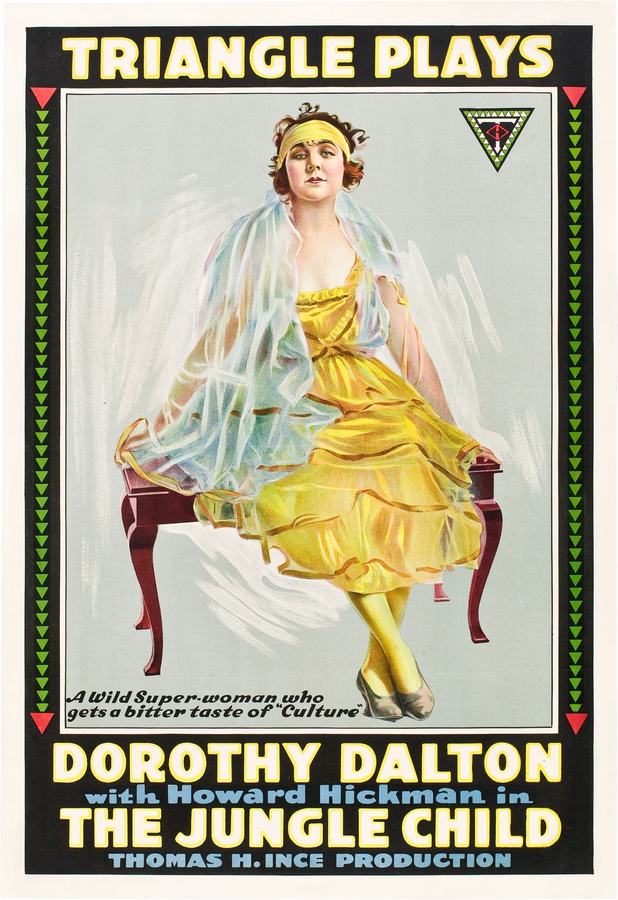
In the nascent years of cinematic storytelling, when the silver screen was still finding its voice, certain films dared to explore the raw, untamed corners of the human spirit. Monte M. Katterjohn's screenplay for The Jungle Child, brought to life in 1915, stands as a compelling, albeit often overlooked, testament to this adventurous period. It’s a narrative that plunges headfirst into the profound schism between civilization and primal instinct, a captivating saga of betrayal, transformation, and ultimately, a visceral reclamation of self. This isn't merely a tale of a 'wild woman'; it's a potent commentary on the corrupting influence of avarice and the enduring power of an unyielding spirit, embodied with striking intensity by the luminous Dorothy Dalton.
Imagine a child, bereft of all familial anchors, cast adrift in the boundless, teeming green labyrinth of the Amazon. This is the harrowing crucible from which Ollante emerges. Her parents, swallowed by the jungle's indifferent maw, leave her to the care of Brazilian indigenous tribes. Here, amidst the rustling leaves, the calls of exotic birds, and the ancient wisdom of her adoptive people, Ollante is not merely raised; she is forged. Her existence is a testament to the raw, unadulterated essence of survival, where every rustle in the undergrowth, every shift in the wind, is a lesson in resilience. She learns the language of the wild, her senses sharpened, her body hardened by the demands of a life unburdened by societal artifice. Dorothy Dalton, in this pivotal role, must have conveyed a profound physicality, an almost animalistic grace that speaks volumes without a single intertitle. This upbringing imbues her with an uncommon strength and an indomitable courage, qualities that will later clash spectacularly with the perfidy of the so-called 'civilized' world. Her character stands as a powerful symbol of nature's inherent purity and self-sufficiency, a stark contrast to the decadence she is destined to encounter.
The tranquility of Ollante's existence is irrevocably shattered by the arrival of Ridgeway Webb, an explorer lost in the wilderness, a trespasser from a world of calculated avarice. Ollante, driven by her innate compassion and strength, rescues him, unaware that this act of kindness will set in motion her tragic descent into deceit. Webb, portrayed by Howard Hickman, is not merely lost; he is morally adrift. Upon discovering papers left by Ollante's parents – documents revealing her substantial inheritance – a predatory glint enters his eyes. The jungle, which to Ollante is home, becomes to Webb a hunting ground for fortune. His subsequent courtship of Ollante is a meticulously orchestrated charade, a performance of affection designed to ensnare her wealth. He preys upon her innocence, her lack of exposure to the Machiavellian machinations of the urban elite. This segment of the film is a chilling exploration of exploitation, where the vulnerable are seen not as individuals, but as commodities. It highlights the stark contrast between the straightforward honesty of the natural world and the insidious duplicity that often lurks beneath the polished veneer of society. Webb’s character serves as a potent antagonist, embodying the very corruption that Ollante’s upbringing has shielded her from.
Having successfully woven his web of deceit, Ridgeway marries Ollante and whisks her away from the vibrant, breathing jungle to the stark, glittering artifice of New York City. This transition is perhaps the film's most visually and thematically striking element. How did early silent cinema convey such a profound culture shock? One can imagine the stark contrasts: the wide, open spaces of the Amazon replaced by claustrophobic skyscrapers, the earthy tones of native garb supplanted by restrictive, elaborate high society fashions, the harmonious sounds of nature drowned out by the cacophony of urban life. Ollante, the free spirit of the jungle, becomes a bewildered spectacle, an exotic curiosity in a world she neither understands nor belongs to. Her inherent authenticity clashes jarringly with the superficiality and pretense that define New York's elite. This narrative thread resonates with other films of the era that explored societal dislocation, though perhaps with less dramatic results. For instance, while The Regeneration depicted the harsh realities of urban life and attempts at moral uplift, The Jungle Child takes a more critical stance, portraying the 'civilized' world as inherently corrupting. Ollante's journey into this gilded cage is not an assimilation but a slow, agonizing suffocation of her true self, a forced domestication that ultimately proves untenable. The film, through its visual storytelling, must have emphasized the profound alienation she experiences, highlighting her discomfort in a world that values appearance over substance, wealth over integrity.
The climactic turning point arrives at a society party, a scene that Ridgeway, in his moral decay, transforms into a drunken orgy of self-congratulation and excess. It is here, amidst the swirling chaos of champagne and empty chatter, that the thin veil of his affection is ripped away. Intoxicated by his perceived triumph and the intoxicating atmosphere, Webb boasts openly of his cunning, of how he 'caught a millionaire for a wife.' For Ollante, who has, despite her reservations, allowed herself to fall in love and trust, this revelation is not merely a disappointment; it is a seismic shock that shatters her world. The betrayal is absolute, exposing the calculated cruelty beneath Webb's charming exterior. Her innocence, already frayed by the superficiality of her new environment, is utterly destroyed. This scene is pivotal, marking the complete disillusionment of Ollante and the catalyst for her profound transformation. It's a moment of stark clarity, where the 'civilized' world reveals its true, ugly face, proving itself more savage in its deceit than any creature of the jungle. The emotional impact, conveyed through Dalton's likely masterful expressions and gestures, would have been devastating, transforming a bewildered outsider into a woman on the precipice of primal vengeance. The film brilliantly uses this societal spectacle as the backdrop for a deeply personal tragedy, underscoring the hollowness of the elite’s existence.
What follows is a moment of breathtaking, almost mythic, transformation. The sophisticated gown, the symbol of her enforced assimilation, is cast aside with fierce repudiation. In its place, Ollante dons her jungle costume – a potent symbol of her true self, her untamed spirit, and her connection to the wild. This act of disrobing and re-robing is not merely a costume change; it is a profound declaration of identity, a shedding of the imposed persona and a reclaiming of her primal essence. With the fury of a wronged goddess, and the precision of a jungle predator, she confronts Ridgeway. The act of strangulation is brutal, unforgiving, and deeply symbolic. It is not just the murder of a man; it is the strangulation of the corrupting influence he represents, the silencing of the deceit that sought to diminish her. This act of vengeance is a powerful, almost cathartic, release, distinguishing The Jungle Child from more conventional melodramas. While films like Gladiola might have explored themes of wronged innocence, Ollante's response transcends mere victimhood. Her justice is swift, primal, and unapologetically fierce. It resonates with the raw, uncompromising moral code of the jungle, where treachery is met with immediate, decisive consequence. This final, shocking act elevates the film beyond a simple drama, cementing its place as a compelling exploration of human nature pushed to its absolute limits. One might even draw parallels to the tragic, yet defiant, end of Beatrice Cenci, though Ollante's agency in her own retribution feels even more direct and self-determined. The film champions a kind of elemental justice, where the artificial constructs of law and society pale in comparison to the innate demand for balance and truth.
The success of a character as complex and transformative as Ollante rests almost entirely on the shoulders of its lead actor, and in The Jungle Child, that burden was carried by the formidable Dorothy Dalton. In an era before spoken dialogue, the actor's craft was a delicate dance of exaggerated gesture, nuanced facial expression, and profound physicality. Dalton's portrayal of Ollante must have been a masterclass in silent film acting. She had to convey the wild, uninhibited grace of a jungle dweller, the bewilderment and burgeoning affection of a woman falling in love for the first time, the crushing pain of betrayal, and finally, the fierce, unyielding resolve of a primal avenger. This arc demands an extraordinary range, moving from wide-eyed innocence to focused, deadly intent. Her ability to transition from the 'civilized' woman to the 'jungle child' in that pivotal scene must have been electrifying, a testament to her command of the medium. Howard Hickman, as the unscrupulous Ridgeway Webb, would have needed to project a convincing blend of charm and insidious ambition, making his eventual unmasking all the more potent. The supporting cast, including Leo Willis, Elsa Lorimer, Gertrude Claire, Dorcas Matthews, and Frederick Vroom, would have contributed to the vibrant tapestry of both jungle and society scenes, creating a rich backdrop against which Dalton's central performance could truly shine. Dalton's work here, much like the compelling performances in other early narratives such as Officer 666 or the dramatic intensity of Christus, would have cemented her reputation as an actress capable of conveying profound emotional depth and physical prowess without uttering a single word.
The Jungle Child is far more than a simple adventure story; it is a profound meditation on several enduring themes. At its core lies the classic dichotomy of nature versus nurture, or perhaps more accurately, nature's inherent purity versus civilization's pervasive corruption. Ollante, as the titular 'jungle child,' embodies the unblemished strength and honesty of the natural world. Her instincts are true, her actions direct. In stark contrast, Ridgeway Webb represents the duplicity, greed, and moral decay that can fester within the confines of 'civilized' society. The film critiques the very notion of progress, suggesting that for all its technological advancements and sophisticated manners, urban life can strip humanity of its most fundamental virtues. The juxtaposition of the Amazonian wilderness with the opulent, yet ultimately hollow, ballrooms of New York serves as a powerful visual metaphor for this thematic struggle. The film implicitly asks: which is the true 'jungle'? The one teeming with wild animals and clear dangers, or the one disguised by silks and chandeliers, where predators wear tailored suits and wield cunning words? This exploration of societal hypocrisy finds echoes in other films that questioned the established order, though perhaps with less overt violence, such as the social commentary often found in works like Hoodman Blind or the complex moral dilemmas presented in The Cloister and the Hearth. Ultimately, the film champions a return to elemental truth, suggesting that genuine strength and moral clarity often reside outside the constructs of conventional society.
Monte M. Katterjohn's writing for The Jungle Child is indicative of the ambitious storytelling prevalent in the early silent era. This was a time when filmmakers were pushing the boundaries of narrative, exploring genres from historical epics like Chûshingura and For Napoleon and France to intense dramas and social commentaries. The film's unique blend of adventure, romance, and psychological drama would have captivated audiences. The exotic setting, the dramatic rescue, the Cinderella-like transformation, and the shocking climax all contribute to a narrative that is both thrilling and thought-provoking. While specific details about its direction and cinematography are scarce without access to the film itself, one can infer the visual grandeur necessary to depict both the lush Amazon and the glittering New York high society. The use of natural landscapes, a burgeoning trend in early cinema, would have been crucial in establishing Ollante's connection to her environment. The intricate set designs and costumes for the New York scenes would have further emphasized the cultural chasm. This film, like many from its period, offers a fascinating glimpse into the nascent artistic and commercial impulses of an industry still defining itself, showcasing a willingness to tackle complex moral questions within an entertaining framework. It stands as a testament to the ingenuity of early filmmakers in conveying profound stories through visual means alone.
Even a century later, the core narrative of The Jungle Child retains a potent resonance. The themes of innocence exploited, the clash of cultures, and the ultimate triumph of an individual's innate spirit against systemic corruption are timeless. Ollante's journey from a creature of instinct to a woman who reclaims her agency through a devastating act of defiance speaks to a universal desire for justice and authenticity. It challenges the viewer to question the true meaning of 'civilization' and to recognize the inherent strength that often lies dormant within us, waiting for the right catalyst to ignite. This film, though a product of its time, offers a surprisingly modern perspective on empowerment and retribution, particularly for a female protagonist. It serves as a stark reminder of the compelling narratives that emerged from the silent era, proving that even without words, cinema possessed an unparalleled capacity to stir the soul and provoke profound thought. Its legacy lies not just in its dramatic plot, but in its audacious assertion that the wild heart, when pushed to its limits, will always find a way to beat free.
IMDb 6.3
1930
Community
Log in to comment.