DbcultAccessing Vault...
Cult Review
Senior Film Conservator
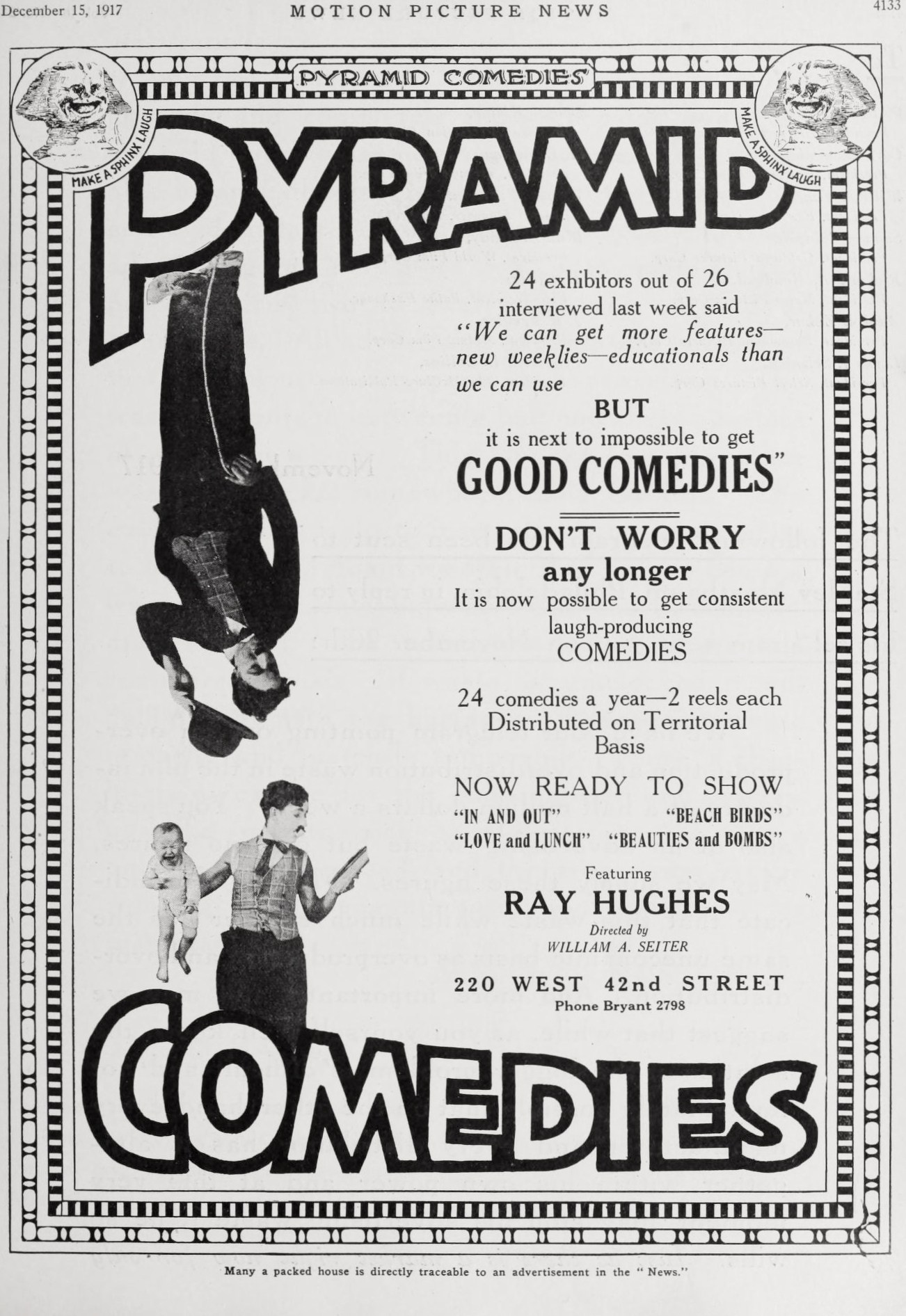
To witness 'In and Out' is to observe the very scaffolding of cinematic language being erected in real-time. In an era dominated by the burgeoning industrialization of the moving image, this Ray Hughes vehicle emerges not merely as a relic of a bygone slapstick tradition, but as a sophisticated meditation on the permeability of social and physical boundaries. The film, stripped of the sonic crutches of modern media, relies on a visceral, choreographic intensity that demands a heightened state of spectatorship. Unlike the more somber, atmospheric depths found in The Pit, which sought to capture the crushing weight of economic forces, 'In and Out' operates with a buoyancy that belies its underlying critique of societal rigidity.
Ray Hughes occupies the screen with a singular magnetism, his movements a blend of vaudevillian precision and an almost avant-garde spontaneity. In the pantheon of early silent stars, Hughes often finds himself overshadowed by the giants of the era, yet his work here suggests a nuance of character that predates the more celebrated archetypes of the 1920s. His performance in 'In and Out' is a study in kinetic frustration. Every gesture, every frantic glance toward the periphery of the frame, speaks to a character who is fundamentally at odds with his environment. This is not the melodramatic posturing one might encounter in The Promise, but rather a grounded, gritty engagement with the physical world.
The title itself, 'In and Out', serves as a dual signifier for the film’s structural rhythm and its thematic core. The narrative is built upon a series of thresholds—doorways, windows, and gates—that act as both obstacles and opportunities. This recursive movement creates a sense of existential looping, a theme that would later be explored with much darker undertones in The Vampires: Satanas. However, where 'Satanas' finds terror in the shadows, 'In and Out' finds a frantic, almost nihilistic humor. The protagonist’s inability to remain on either side of a boundary for long reflects a wider cultural anxiety regarding social mobility and the precariousness of one's position in the modern world.
When we contextualize 'In and Out' within the broader landscape of 1914 cinema, its unique energy becomes even more apparent. While The Children in the House focused on the domestic interior as a site of moral instruction, 'In and Out' treats the domestic space as a labyrinth of potential catastrophe. The film shares a certain jurisprudential skepticism with A Case at Law, though it swaps the courtroom's gravity for the street's unpredictability. There is a raw, unpolished quality to the cinematography here that stands in stark contrast to the more deliberate, almost painterly compositions of Zakovannaya filmoi. Yet, it is precisely this lack of artifice that gives the film its enduring power.
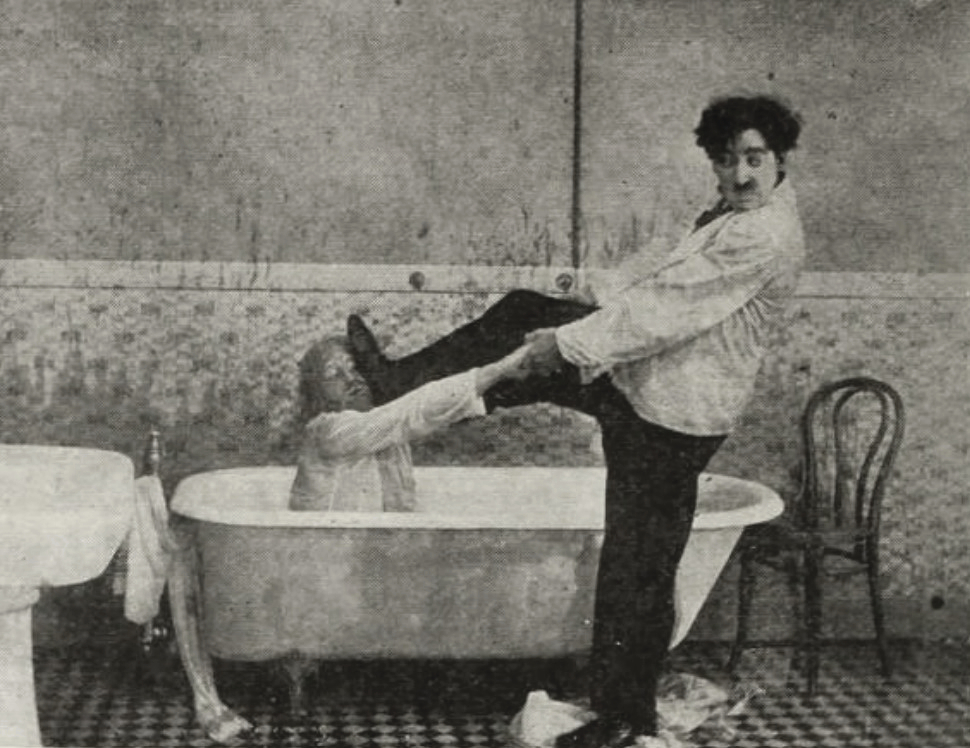
The lighting in 'In and Out' deserves significant scholarly attention. Eschewing the flat, high-key lighting prevalent in many comedies of the period, the film utilizes naturalistic shadows to demarcate the 'in' from the 'out'. This chiaroscuro effect creates a visual tension that mirrors the protagonist's internal state. In scenes where Hughes is 'in'—whether that be in a literal room or a figurative social trap—the lighting feels heavy, almost oppressive. Conversely, the 'out' sequences are characterized by a blown-out, overexposed brightness that suggests a freedom that is both exhilarating and terrifying. This visual dichotomy is handled with a sophistication that rivals the thematic depth of Under Handicap.
To understand 'In and Out', one must understand the year 1914. It was a year of profound global shifts, a time when the old world was crumbling and the new was being forged in the fires of conflict. The film’s obsession with boundaries and transitions can be read as a subconscious reflection of these geopolitical tensions. While films like Meg o' the Mountains sought refuge in pastoral nostalgia, 'In and Out' embraces the chaos of the urban present. Ray Hughes, with his frantic energy and indomitable spirit, becomes the quintessential modern man—perpetually moving, perpetually striving, and perpetually caught in the gears of a world he cannot fully comprehend.
The legacy of 'In and Out' is not found in grand spectacles or sweeping epics, but in the small, quiet moments of human resilience that it captures. It is a film that rewards the patient viewer, offering a wealth of detail in its background action and a surprising amount of psychological depth in its central performance. In the grand tapestry of early cinema, it is a vital thread, connecting the primitive experiments of the past with the sophisticated narratives of the future. It stands alongside works like Im Zeichen der Schuld as a testament to the power of the medium to explore the complexities of guilt, identity, and the human drive for liberation.
In the final analysis, 'In and Out' is a triumph of narrative economy. It achieves more in its brief runtime than many modern features do in three hours. The film’s ability to blend physical comedy with social commentary is a feat of creative alchemy that remains impressive over a century later. Whether one views it as a simple entertainment or a complex allegory, there is no denying the raw power of Ray Hughes’ presence or the innovative spirit of the production. It is a film that demands to be seen, not as a museum piece, but as a living, breathing work of art that continues to speak to our contemporary anxieties about belonging, exclusion, and the endless cycle of the 'in' and the 'out'. It is as relevant today as the day it first flickered onto a silver screen, reminding us that the human struggle for agency is a timeless and universal pursuit.
The film's exploration of social mobility is particularly poignant when compared to the more rigid class structures depicted in The Hindu Nemesis. While that film looks outward at the 'exotic' other, 'In and Out' looks inward at the domestic self, finding the same level of mystery and conflict within the familiar streets of the American city. It is this groundedness, this commitment to the everyday, that sets it apart from the more fantastical offerings of the era, such as Herod. Ultimately, 'In and Out' is a film about the beauty of the mundane and the heroism found in the simple act of trying to find one's place in the world.
IMDb 6.4
1933
Community
Log in to comment.