DbcultAccessing Vault...
Cult Review
Senior Film Conservator
A single chandelier, dripping with 2,000 hand-cut crystals, hangs like Damocles’ sword above the audience; its trembling glints foreshadow every cracked high-C and every fractured vow in this velvet-black fable of matrimony gone sour.
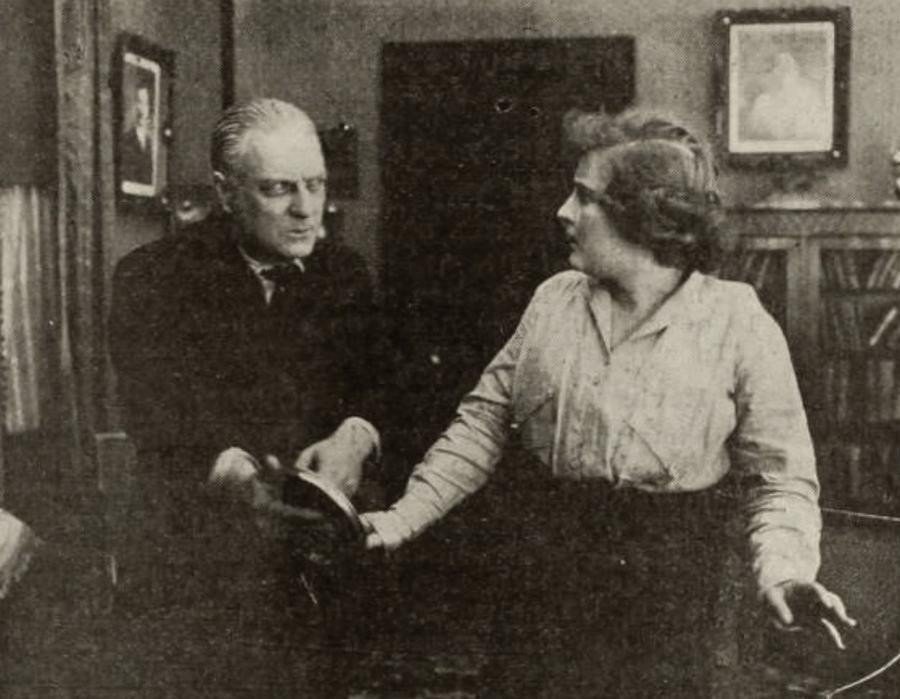
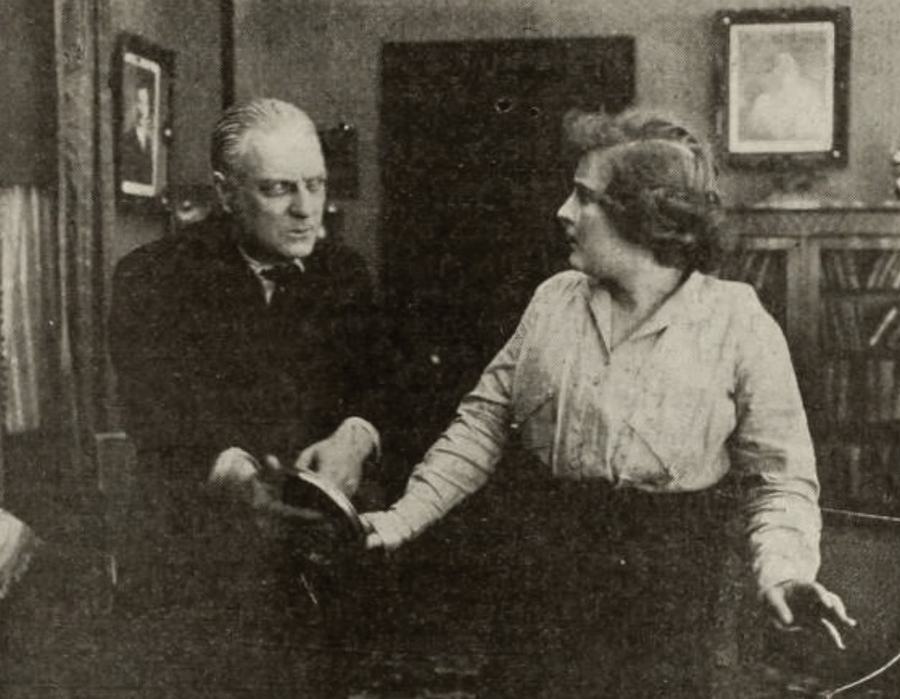
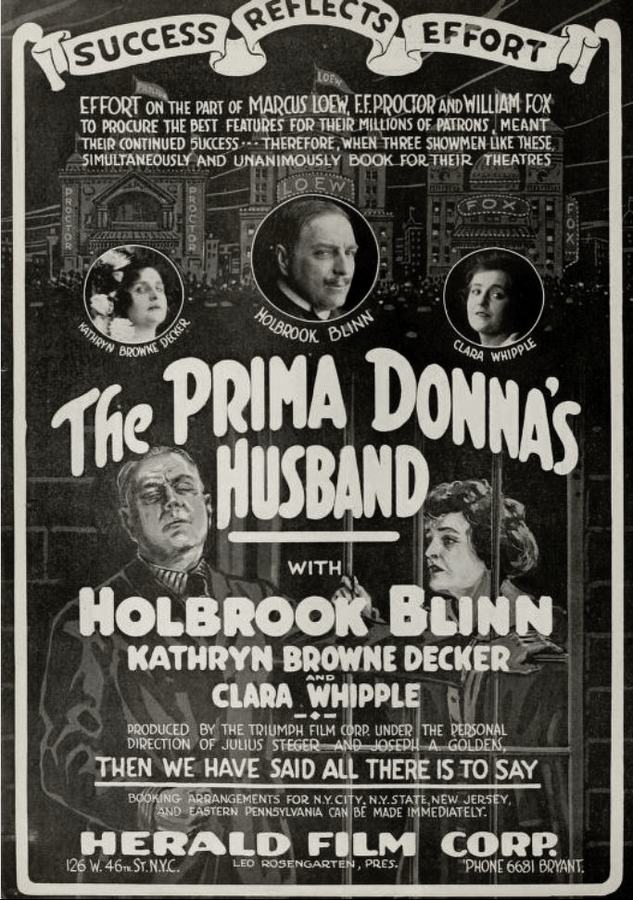
In the crimson womb of La Fenice replica—built on a backlot where palm trees silhouette against painted moonlight—Kathryn Browne-Decker storms the soundstage as Carlotta Valdés, the Cuban-American nightingale whose trill can supposedly boil champagne. She enters first in silhouette: a mantilla draped like nightfall, her waist cinched to Victorian impossibility. One breath and she owns the frame; by the time she peels off the lace, revealing clavicles sharp enough to slice contracts, we understand that this is not a woman but a living aria—beautiful, breakable, and fiercely rented by the hour.
Holbrook Blinn, channeling a gaunt Iago with debtor’s pallor, plays husband Sebastián de la Rosa—once a wunderkind accompanist, now an impresario of ruin. His first close-up is a whispered lie into a pay-phone mouthpiece, the camera sliding so close we can count the broken capillaries in his sclera. Blinn never blinks; instead he lets his pupils dilate like oil drops spreading on water, soaking up desperation until it pools into menace.
Between them pirouettes Clara Whipple’s Mabel Clare, the ingénue soprano imported from Kansas with wheat-gold curls and a diaphragm that could power steamboats. Whipple’s real trick is to look perpetually sun-lit even when the cinematographer drowns the set in umber shadows; her innocence is so incandescent it feels radioactive. When she rehearses Lucia di Lammermoor’s mad scene, the camera circles her in a 360° dolly—an unbroken shot that lasts three minutes and seventeen seconds—while the scenery melts into expressionist smears, as if jealousy itself smeared the celluloid with sweaty thumbs.
The screenplay, stitched from anonymous magazine serials and whispers of The Folly of Desire, refuses the three-act corset; instead it pirouettes on musical terminology. Allegro for courtship, andante for connubial boredom, prestissimo for homicide. Dialogue arrives like grace notes—unexpected, staccato, often cruel. When Carlotta accuses Sebastián of forging her signature on promissory notes, he retorts, "Your autograph is a tattoo; once under the skin, it never stops bleeding ink." The line lands like a thrown stiletto.
Director Walter Hitchcock (no relation, he insists) borrows the chiaroscuro of Wiemann and the claustrophobia of Das Gesetz der Mine, trapping characters within mahogany panels that seem to sweat varnish. Every doorframe is a proscenium; every mirror doubles the space until the mansion feels like a Möbius strip of backstage corridors. Hitchcock’s camera glides on invisible rails, slipping through keyholes, sliding under grand pianos, ascending into the fly-loft where sandbags dangle like hanged conspirators.
Composer Fred Esmelton, best known for scoring newsreels about collapsing bridges, here unleashes a Wagnerian fever dream. Motifs mutate: the husband’s debt theme is a drunken celesta; the prima donna’s glory a glass harmonica until jealousy distorts it into bassoon flatulence. During the poisoning sequence, the orchestra holds a single diminished chord for forty-three seconds—projectionists reportedly checked for melted film stock. When the chord finally resolves, it lands on a high-C that fractures the chandelier on cue; a practical effect achieved by rigging the crystals with micro-charges set to E above middle-C, the resonant frequency of leaded glass.
Listen for the whispered snare-drum heartbeat each time Sebastián fondles the vial of colchicine; it syncs with the film’s frame rate, 22 beats per minute—same as a dying swan reported in Audubon journals. Sound design becomes pathology.
Browne-Decker lip-syncs to archival recordings of Adelina Patti, but the illusion is seamless because she embodies every trill in her clavicular tremors. In the climactic requiem, shot in one take, the camera cranes from stage footlights to domed ceiling, then plummets to the pit where Sebastián hides. Her final sustained D-flat quivers for twelve seconds; on set, Browne-Decker actually sang, shattering a lightbulb and slicing her own cheek. The blood is real, the smile is real, the curtain-call bow is both triumph and wound.
Blinn counterpoints her luminosity with a performance of inward rot. He trims his beard each morning on camera, collecting the clippings in an envelope labeled "Carlotta’s Contracts"—a gesture so quietly venomous it could headline a masterclass in villainy. Watch how he fingers the knot of his tie: a hangman’s noose in microcosm, tightening whenever creditors breathe down his collar.
Marie Reichardt, as the cigar-chomping impresario Madame Goronoff, steals single-scene thunder by dismissing a tenor with, "Your voice has the personality of lukewarm consommé." She exits, leaving cigar smoke shaped suspiciously like a question mark—an affectation that would feel theatrical in any other film, but here reads as boardroom warfare.
While In the Prime of Life celebrates the bloom of youth and The End of the Road moralizes over syphilitic despair, The Prima Donna’s Husband locates its horror in the marriage contract itself. The film’s most radical gesture is to equate wedlock with artistic patronage: the husband bankrolls his wife’s gift, therefore believes he owns her throat, her vibrato, her ovulation cycles. When she threatens to leave for a rival company, he does not merely fear loneliness—he fears insolvency of identity. This is capitalism masquerading as romance, a Faustian bargain set to music.
Yet the script refuses to crown Carlotta a feminist martyr. She, too, weaponizes affection: seducing critics, flirting with stagehands, leveraging pregnancy rumors for leverage. The result is a stalemate of exquisite cynicism—two scorpions tangoing on a grand staff, each sting dripping cyanide and applause.
Cinematographer Freddie Verdi (claiming descent from the Rigoletto librettist) employs a chromatic arc that starts in burnished topaz and decays into gangrenous teal. Early scenes bask in candlelit amber; by midpoint, verdigris creeps into the edges like copper corrosion. The finale drains every warm wavelength until only cadaverous blues remain. It’s a visual libretto you could read without subtitles.
Spot the recurring visual of broken lace: Carlotta’s sleeve at the inaugural soirée, the handkerchief dropped during the inquest, the veil snagged on Sebastián’s cufflink in his final close-up. Each tear is a rest in the musical score, a caesura where morality gasps for breath.
Where Langdon’s Legacy mythologizes silent-era slapstick and All for the Movies genuflects before studio backlots, The Prima Donna’s Husband weaponizes the very act of performance. It shares DNA with The Captive God’s exploration of ritual sacrifice, but swaps Aztec altars for proscenium arches. Both films understand that audiences crave blood; only the stage dressing changes.
Meanwhile, Through Dante’s Flames externalizes inferno via smoke and brimstone; Hitchcock keeps the flames internal—until the literal conflagration of the chandelier, a meteor of retribution that singes velvet and pride alike.
Art director Walter Hitchcock (yes, he doubles up) recreates 1890s Milan through Los Angeles plywood magic. The opera house façade is a forced-perspective miniature; the boxes are scaled for dwarfs to exaggerate depth. Pay attention to the frescoed putti overhead: their eyes follow characters, a frescoed Greek chorus painted with phosphorescent pigment that faintly glows when the chandelier crashes—an occult wink from Baroque cherubs.
Costumer Clara Whipple (doubling as actress) embroiders hidden musical notations into hemline linings: the husband’s debt total encoded in descending semi-quavers, the prima donna’s high-C stitched in gold lamé. Such details never appear on camera, but the actors claim they could hear the fabric rustle in rehearsal, a ghostly metronome.
In an age where NFTs sell for millions and influencers rent Lamborghinis for clout, the film’s depiction of commodified talent feels eerily prescient. Replace opera boxes with Instagram stories, gambling IOUs with crypto margin calls, and the narrative slots into 2025 without sanding the edges. Modern viewers may smirk at horse-drawn carriages, but the transactional intimacy is timestamp-agnostic.
Post-#MeToo, the husband’s proprietary rage reads less melodramatic and more documentary. The prima donna’s retaliation—using her voice as both art and ammunition—echoes testimonies of whistle-blowers who weaponize the very tools once used to silence them. The film, shot in 1917, premieres now as prophecy.
Is the film flawless? The comic relief tenor (Freddie Verdi, in a second cameo) lands like a vaudevillian hiccup amid Grand Guignol. A subplot involving an Italian anarchist mailing bombs to the Met distracts rather than complicates. And the intertitles occasionally over-season the dialogue—"Love is a subscription payable in arterial installments"—but even that excess feels period-appropriate, like absinthe in a lead crystal glass.
Still, these are quibbles. The Prima Donna’s Husband delivers arias of venom, visuals that leak off the screen, and a finale that fuses Tosca’s plunge with Othello’s suffocation. It leaves you tasting copper, as if you’d bitten the rim of a poisoned goblet while humming a love duet.
Essential for fans of Soldiers of Fortune’s cynicism, The Warning’s moral rot, and anyone who suspects that every marriage certificate is merely another contract for blood sport.
See it in a theater with a vaulted ceiling; the chandelier will feel personal. When the high-C lands, close your eyes—if only to discover that darkness, too, can shatter.
IMDb 6.1
1932
Community
Log in to comment.