DbcultAccessing Vault...
Cult Review
Senior Film Conservator
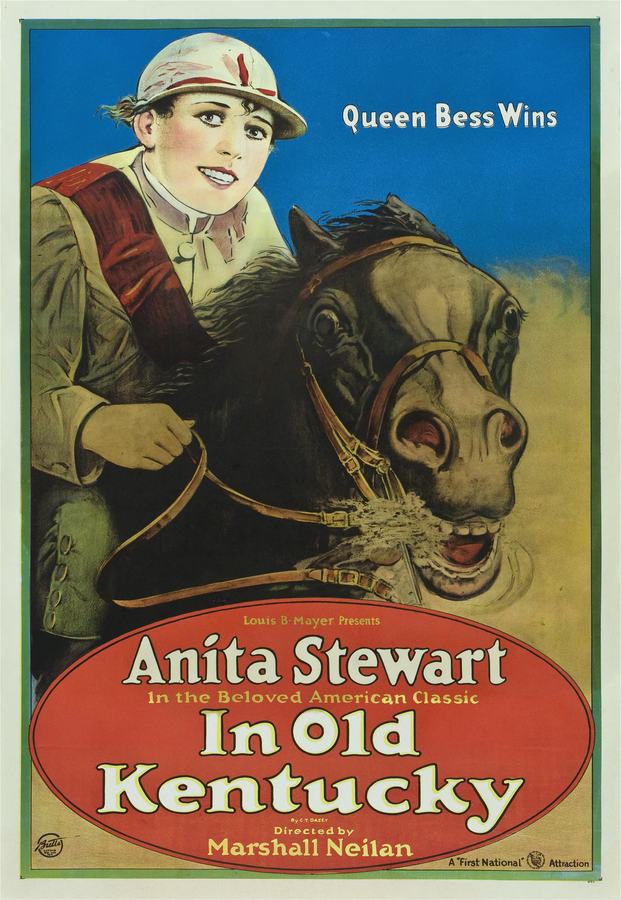
Stepping back into the cinematic landscape of 1919, one encounters 'In Old Kentucky', a film that, even a century later, pulsates with the vibrant energy and dramatic flair characteristic of its era. This isn't just a quaint relic; it's a robust melodrama, a narrative tapestry woven with threads of class divide, rural innocence, urban sophistication, and the timeless pursuit of justice. The film, adapted from Charles T. Dazey's enduring play by Arthur Shirley and Thomas J. Geraghty, plunges us into a world where the rugged beauty of the Blue Ridge Mountains stands in stark contrast to the refined elegance of Kentucky's Blue Grass country, creating a fertile ground for conflict and romance.
At its core, 'In Old Kentucky' is a testament to the power of the human spirit, embodied most vividly in its protagonist, Madge Brierly. Portrayed with a compelling blend of naiveté and fierce determination by Adele Farrington, Madge is an illiterate mountain girl whose ancestral lands, rich with coal deposits, become the target of the nefarious Horace Holten. Holten, a character whose villainy is as transparent as it is relentless, is played by Edward Connelly with an appropriate sneer and calculating gaze that leaves no doubt as to his sinister intentions. His attempts to defraud Madge are the catalyst for the entire narrative, setting in motion a chain of events that will irrevocably alter the lives of everyone involved.
The arrival of Frank Layson, a dashing Blue Grass aristocrat on vacation, injects a crucial element of romance and heroism into Madge's isolated world. Edward Coxen, in the role of Frank, exudes the kind of gentlemanly charm and upright moral fiber that makes his intervention on Madge's behalf entirely believable. Their initial encounter, sparked by Frank's defense of Madge against Holten's scheme, blossoms into a tender affection, a love story bridging the vast chasm between their respective social strata and cultural backgrounds. This trope of cross-class romance was a popular narrative device in silent cinema, often used to explore themes of social mobility and the triumph of love over societal barriers, much like some elements seen in films such as 'Camille', though with a distinctly American, rugged twist.
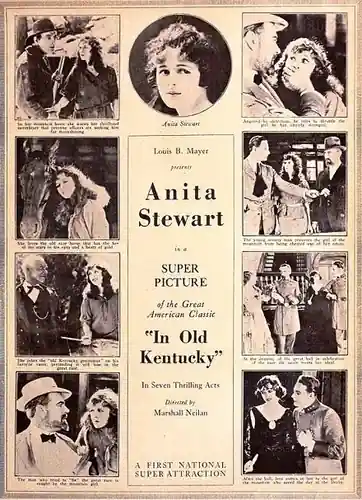
Holten, however, is not one to be easily deterred. His thirst for revenge leads him to manipulate Joe Lorey, a local moonshiner deeply smitten with Madge. Mahlon Hamilton imbues Lorey with a believable blend of fierce possessiveness and naive susceptibility, making his deception by Holten all the more tragic. The false accusation that Frank is a revenue officer, a figure deeply reviled in the moonshining community, propels Lorey into a violent confrontation with Frank. It is in this moment of peril that Madge truly shines, demonstrating a physical courage that belies her seemingly delicate exterior as she rescues Frank from Lorey's misguided attack. This sequence is a prime example of the film's ability to blend high-stakes drama with genuine character development, showcasing Madge's evolution from a vulnerable target to an active agent of her own destiny.
Following the attack, Madge accompanies Frank to his ancestral home, a stark symbol of his privileged world. Here, the film takes a heartwarming turn as Frank undertakes to teach Madge the rudiments of reading and writing. This narrative thread, though seemingly simple, is profoundly significant. It represents Madge's intellectual awakening, her journey from illiteracy to enlightenment, and her assimilation into a world previously closed off to her. It’s a powerful metaphor for self-improvement and the breaking down of barriers, echoing the aspirational narratives prevalent in many films of the era. The silent film medium, with its reliance on visual storytelling and intertitles, often excelled at conveying such transformative journeys, allowing audiences to connect deeply with characters' internal growth.
Yet, tranquility is ever fleeting in the world of melodrama. Holten's malevolence resurfaces with a vengeance, this time targeting Frank's prized racehorse, Queen Bess. The scene where Holten sets fire to the stables is a masterclass in silent film suspense, building tension through dramatic lighting, frantic acting, and the palpable threat to a beloved animal. Once again, it is Madge, not Frank, who rises to the occasion, exhibiting extraordinary bravery and quick thinking to rescue Queen Bess from the inferno. This act not only solidifies her place as a true heroine but also foreshadows her pivotal role in the film's climactic events. Her connection to Queen Bess transcends mere ownership; it becomes a bond of shared destiny, a symbol of the pure spirit that Holten seeks to extinguish.
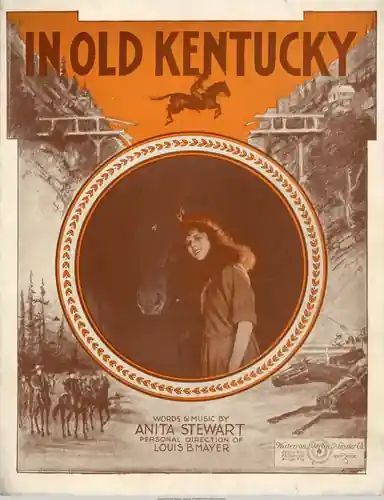
The narrative crescendoes towards the much-anticipated Kentucky race, an event upon which Frank's family has staked nearly its entire fortune. The stakes are incredibly high, and the film effectively conveys the pressure and excitement surrounding this pivotal moment. Holten, ever the insidious manipulator, makes his final, most desperate move by getting Frank's jockey drunk, jeopardizing everything. This act of sabotage sets the stage for Madge's most audacious feat. Discovering the incapacitated jockey, Madge, with a flash of inspiration and unwavering resolve, disguises herself and takes the reins of Queen Bess. This sequence is arguably the film's most iconic, a thrilling spectacle of silent cinema at its best. The cross-dressing heroine, defying expectations and societal norms to achieve a seemingly impossible victory, is a powerful archetype. It evokes a similar spirit of female agency seen in other films of the era, where women often had to break conventions to achieve their goals, though perhaps not always on a racetrack. Consider the strong female characters in films like 'The Microbe' or 'Sonka zolotaya ruchka', who, in their own contexts, demonstrate remarkable ingenuity and courage.
Madge's ride to victory is depicted with a kinetic energy that must have captivated audiences of the time. The close-ups of her determined face, the thundering hooves, the surging crowd – all combine to create a truly exhilarating experience. Her triumph is not just a win for Queen Bess or Frank's family; it's a personal vindication, a testament to her inherent worth and capabilities, regardless of her humble origins or lack of formal education. It’s a moment of pure, unadulterated heroism that elevates the film beyond a simple romance into a tale of self-actualization. The sheer audacity of her act, coupled with its success, is a narrative high point that resonates long after the credits roll.
In the aftermath of her heroic ride, Madge, ever modest and perhaps seeking to avoid the inevitable scrutiny that would follow her revelation, slips away unnoticed. Her journey back to the mountains leads her into another dramatic encounter, this time with the enigmatic Night Riders, a vigilante group pursuing Joe Lorey. This turn introduces a darker, more complex element of mountain justice, a theme explored in various forms in other films dealing with frontier law and order, such as 'Bare-Fisted Gallagher'. Madge, with her newfound eloquence and undeniable moral authority, seizes this opportunity to expose Holten's long history of villainy. She reveals his culpability in her father's death years prior and his recent manipulation of Lorey, painting a complete picture of his depravity.
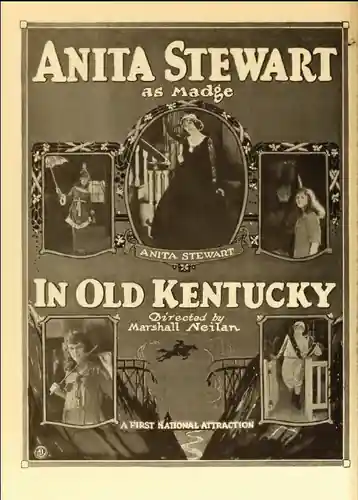
The Night Riders, swayed by Madge's compelling testimony, turn their attention to Holten, chasing him through the rugged mountain terrain. The ensuing pursuit is a thrilling chase sequence, culminating in Holten's dramatic, and perhaps karmic, fall from a mountain to his death. This climactic resolution provides a satisfying sense of poetic justice, bringing an end to the primary antagonist's reign of terror. It’s a stark reminder of the often-harsh realities of frontier justice depicted in cinema, where formal legal processes might be bypassed in favor of direct, albeit brutal, retribution. The demise of Holten is not merely the end of a villain; it is the restoration of balance to the world Madge inhabits, a world that has been relentlessly disturbed by his greed and malice.
The film concludes years later, with a heartwarming and somewhat humorous epilogue. Madge and Frank are now married, their union a symbol of the successful bridging of their disparate worlds. Their children, playing together, mimic the feuds of their parents' past, a charming and poignant touch that suggests the enduring legacy of their story. It's a gentle nod to the idea that while conflicts may be resolved, their echoes can still be heard in the playful interactions of future generations. This final scene provides a sense of closure and contentment, affirming the triumph of love, courage, and integrity over deceit and class prejudice.
The performances in 'In Old Kentucky' are uniformly strong for the era. Adele Farrington, as Madge, carries much of the film's emotional weight, delivering a performance that is both vulnerable and incredibly resilient. Edward Coxen's Frank is the epitome of the silent film hero, noble and steadfast. Edward Connelly’s Holten is a wonderfully hissable villain, providing the necessary antagonism to drive the plot forward. The supporting cast, including Charles Arling, John Currie, Marcia Manon, and Anita Stewart, contribute to the rich tapestry of characters, each playing their part in the intricate drama. The direction, while perhaps not as stylistically groundbreaking as some of its contemporaries, is effective in its storytelling, prioritizing clear narrative progression and strong emotional beats. The use of natural landscapes, particularly the mountains and the racetrack, adds a layer of authenticity and visual grandeur to the production.
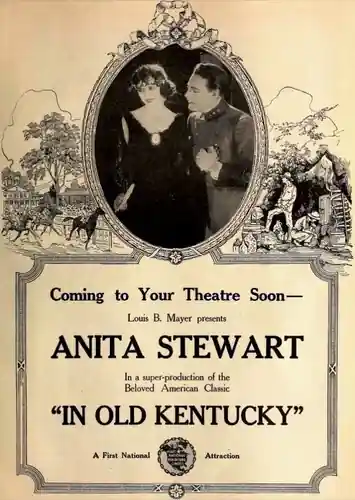
What makes 'In Old Kentucky' resonate even today is its exploration of universal themes. The clash between rural simplicity and aristocratic refinement, the struggle against injustice, the power of education, and the triumph of a determined individual against overwhelming odds are all elements that continue to captivate audiences. It's a classic rags-to-riches, or rather, mountains-to-manor narrative, but one infused with genuine peril and heartfelt emotion. The film's portrayal of female heroism, particularly Madge's physical courage and intellectual awakening, is remarkably progressive for its time, showcasing a woman who is far more than a damsel in distress.
From the initial land fraud, reminiscent of the deceitful schemes in 'A Mexican Mine Fraud; or, The Game That Failed', to the thrilling horse race that forms its centerpiece, 'In Old Kentucky' delivers on all fronts. It's a thrilling adventure, a tender romance, and a compelling drama all rolled into one. The film's enduring appeal lies in its ability to transport viewers to a bygone era, while simultaneously telling a story that feels timeless in its exploration of human nature. It's a testament to the power of early cinema to craft narratives that are both entertaining and deeply resonant.
In conclusion, 'In Old Kentucky' is more than just a historical curiosity; it's a vibrant, engaging piece of cinematic history that deserves to be rediscovered. It stands as a powerful example of how silent films, with their unique blend of visual storytelling, dramatic performances, and compelling narratives, could captivate and move audiences. For anyone interested in the evolution of storytelling on screen, or simply looking for a rich, satisfying melodrama, this film offers an abundance of pleasures. It is a compelling reminder of the artistry and enduring charm of the silent era, a period when the language of cinema was being forged, frame by captivating frame. The contributions of writers Charles T. Dazey, Arthur Shirley, and Thomas J. Geraghty are evident in the well-structured plot and engaging character arcs, proving that strong storytelling is indeed timeless.
IMDb —
1917
Community
Log in to comment.