DbcultAccessing Vault...
6.7/10
Senior Film Conservator
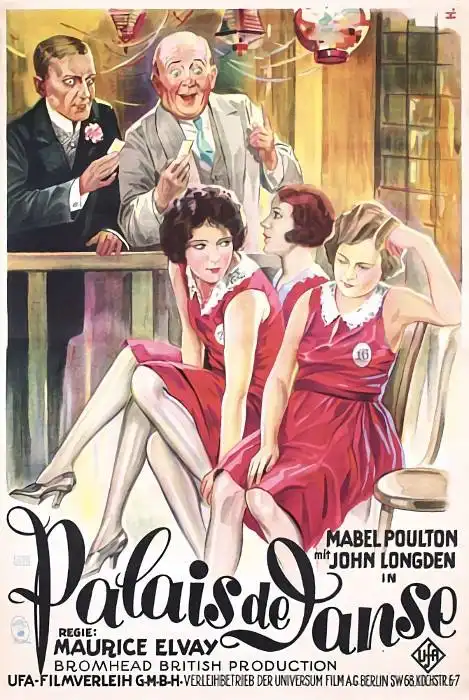
A definitive 6.7/10 rating for a film that redefined the boundaries of cult cinema. Palais de danse remains a cornerstone of transgressive art.
If you have a soft spot for that specific window in the late 1920s where silent films were getting technically ambitious but the stories were still stuck in weird Victorian moral traps, Palais de danse is worth a look. It’s for the person who likes looking at the extras in the background of a frame more than the lead actor’s face. If you can’t stand heavy-handed melodrama or plots that hinge on people being incredibly bad at communicating, you’ll probably hate it within ten minutes.
There’s a frantic energy to these British silents from the late 20s. Everything feels a bit cramped. The dancehall itself—the "Palais"—is supposed to be this den of iniquity and glamour, but in some shots, it looks more like a very crowded school gym decorated with leftover tinsel. You can practically smell the sweat and the cheap tobacco through the screen. It doesn't have the sleekness of something like Rue de la paix; it feels much more lived-in and slightly grimy.
Mabel Poulton is the main reason to watch this. She has these massive, slightly terrified eyes that the camera just refuses to leave. There’s a shot early on where she’s just standing by a pillar, watching the dancers, and she looks genuinely exhausted in a way that feels real, not "acted." It’s a tiny, quiet moment that works better than any of the big dramatic confrontations later on. She has this way of looking small without looking weak, which was her whole brand, I guess.
Then there’s John Longden. He plays the gigolo, Noisy Snapper—which is a ridiculous name for a villain—and he’s doing a lot of heavy lifting with his eyebrows. He’s trying to blackmail a Lady to stop her son from marrying Mabel’s character. The scenes in the high-society drawing rooms are so stiff compared to the dancehall. It’s like the actors in the manor house were told not to move their necks. The contrast is clearly intentional, but it makes the "posh" scenes feel like they’re dragging through mud.
I noticed this one extra in the background of the club scene. A guy in a tuxedo who is clearly just vibrating because he doesn't know how to dance to whatever rhythm they were supposed to be following. He’s in the shot for maybe three seconds, but I couldn't look at anything else. It’s those little cracks in the production—the moments where the illusion of the 1920s nightlife slips—that make these old films feel human to me.
The editing gets weird toward the middle. There’s a sequence where the mother is confronting her son, and the movie cuts to the dancehall, then back to the house, then back to the dancehall, and the pacing just falls apart. It feels like they had too much footage of people doing the Charleston and didn't want to waste it, so they just shoved it in wherever they could find a gap. It kills the tension of the argument completely.
The film reminds me a bit of the atmosphere in Paris Lights, but it’s less polished and more interested in the dirt under the fingernails of the working class.
The blackmail plot is pretty standard stuff. Snapper is a creep, the Lady is desperate, and the son is mostly just a wet blanket who doesn't seem to realize he’s in a movie. There’s a moment where Snapper leans in way too close to the Lady, and you can see the visible discomfort on the actress's face—it’s one of those times where the chemistry (or lack thereof) actually helps the scene feel more threatening.
The ending is a bit of a rush. It’s one of those "everything is fixed because someone said sorry" resolutions that feels completely unearned after seventy minutes of people ruining each other's lives. But by that point, you’re mostly just watching for the costumes anyway. The sequins on Chili Bouchier’s dress probably weighed more than she did, and the way the light hits the fringe during the dance numbers is still pretty mesmerizing.
It’s not a masterpiece. It’s a bit of a mess, honestly. But it’s a specific kind of mess that feels like a real artifact. It’s not trying to be high art; it’s just trying to tell a scandalous story to people who wanted to see a bit of leg and some drama on a Saturday night. Sometimes that's enough.
IMDb 5.5
1930
Community
Log in to comment.