DbcultAccessing Vault...
Cult Review
Senior Film Conservator
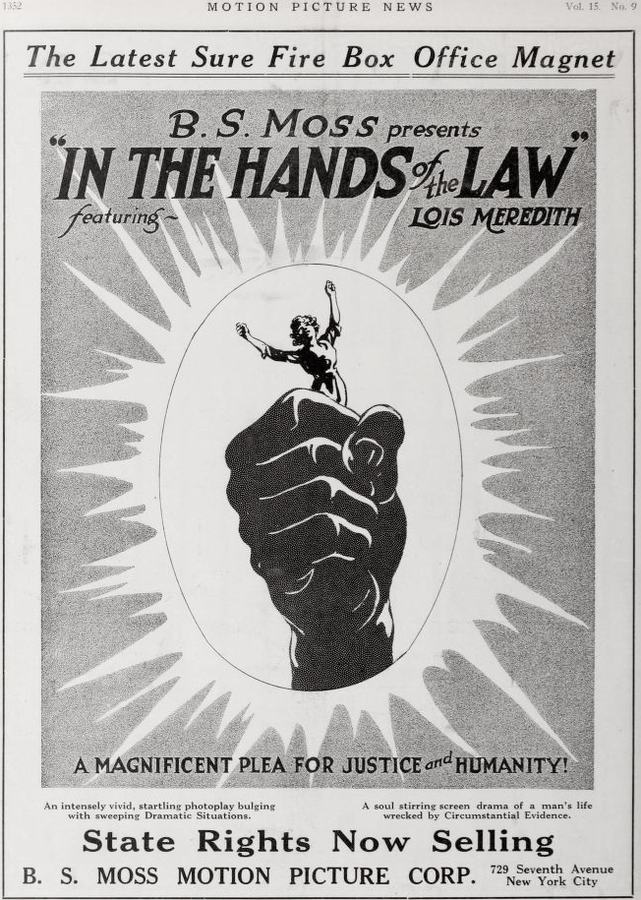
There are films that merely entertain, and then there are those that resonate, leaving an indelible mark on the psyche, forcing a re-evaluation of deeply held beliefs. William O.H. Hurst’s 'In the Hands of the Law' is unequivocally the latter. It’s not just a courtroom drama; it's a searing indictment of a system often more concerned with process than truth, a haunting exploration of human fallibility, and a testament to the enduring power of conviction, even when faced with overwhelming odds. Released in an era grappling with societal shifts and moral ambiguities, this cinematic achievement stands tall as a poignant reflection of its time, yet its themes remain startlingly relevant today.
From its opening frames, the film plunges us headfirst into the murky waters of a legal battle that feels intensely personal, not just for the characters, but for the audience. We are introduced to George Moss, portrayed with a compelling blend of vulnerability and defiance, a man whose life hangs by a thread. Accused of a crime so heinous that public opinion has already condemned him, Moss embodies the quintessential underdog, a figure whose plight immediately elicits both sympathy and a gnawing sense of unease. Is he truly innocent, or is his earnestness merely a masterful facade? The genius of Hurst’s narrative lies in its refusal to offer easy answers, instead weaving a complex tapestry of doubt and suspicion.
The ensemble cast is nothing short of phenomenal, each actor delivering a performance that elevates the material beyond mere melodrama. At the heart of the legal maelstrom is Arthur Morrison as Arthur Morrison, the defense attorney tasked with the unenviable job of saving Moss from the gallows. Morrison's portrayal is a masterclass in nuanced acting. His character is not a flawless hero; he is a man burdened by the weight of previous defeats, his idealism tempered by years of exposure to the cynical underbelly of the legal world. Yet, a spark of unwavering principle still flickers within him, ignited by the sheer injustice he perceives in Moss's case. Morrison’s internal struggle—between professional duty and a deeply personal quest for truth—is palpable, a silent battle waged across his weary face, making his eventual outbursts of conviction all the more potent. His performance is reminiscent of the moral gravitas seen in later legal dramas, foreshadowing the complex ethical landscapes explored in films far down the chronological line.
Opposing him is Eugene Strong as Eugene Strong, the prosecutor whose name alone strikes fear into the hearts of defendants. Strong is not a cartoonish villain; he is a man driven by an unyielding belief in the letter of the law and a relentless ambition. His courtroom presence is magnetic, his arguments meticulously constructed, leaving little room for doubt. Strong embodies the formidable, often unforgiving, machinery of justice, a stark contrast to Morrison’s more empathetic approach. The verbal sparring between these two titans forms the backbone of the film, each exchange crackling with intellectual intensity and emotional stakes. Their dynamic elevates the film from a simple crime story to a profound philosophical debate on the nature of guilt and retribution.
Then there is Lucile Dorrington, whose character, Lucile Dorrington, is perhaps the most enigmatic and pivotal. Her testimony is a double-edged sword, capable of either liberating Moss or sealing his doom. Dorrington navigates this treacherous terrain with an almost ethereal grace, her expressions conveying a multitude of unspoken thoughts and internal conflicts. Her performance is a delicate balance of vulnerability and hidden strength, making her motivations a constant source of suspense. One cannot help but draw parallels to the complex female characters often found in film noir, though 'In the Hands of the Law' predates that genre's heyday. Her presence adds a layer of emotional complexity that prevents the narrative from devolving into a mere procedural; she is the human element that reminds us of the profound personal cost of legal battles.
The supporting cast, too, shines brightly. George Moss as George Moss delivers a heartbreaking portrayal of a man teetering on the precipice of despair, his every gesture conveying the terror of his predicament. Henry King as Henry King, the conflicted police detective, provides a crucial moral compass, his quiet investigation slowly chipping away at the seemingly impenetrable edifice of the prosecution's case. His journey from rigid adherence to procedure to a dawning realization of potential injustice is subtly yet powerfully rendered. Meanwhile, Lorna Volare and Lois Meredith, in their respective roles, flesh out the societal fabric surrounding the trial, representing the varied impacts of the crime and the judicial process on ordinary lives. Their performances, though perhaps less central, are integral to establishing the film's immersive sense of reality.
William O.H. Hurst, as the sole writer, crafts a narrative that is both intricate and emotionally resonant. The screenplay is a masterclass in pacing, meticulously building tension with each new revelation, each cross-examination. It avoids the pitfalls of sensationalism, instead relying on sharp dialogue, well-developed characters, and a relentless pursuit of psychological truth. The plot unfolds with the precision of a finely tuned clock, every scene contributing to the escalating drama. Hurst doesn't just present a story; he constructs an argument, inviting the viewer to become an active participant in the moral calculus of the courtroom.
The film's social commentary is particularly incisive. It scrutinizes the role of media in shaping public perception, depicting how headlines can condemn a man long before a verdict is reached. It also delves into the insidious nature of class prejudice, suggesting that justice, far from being blind, often favors those with power and influence. In this regard, 'In the Hands of the Law' shares thematic DNA with other films that dare to question societal norms, albeit with a unique legal lens. While not directly comparable in genre, the underlying critique of societal structures evokes the unsettling questions posed by films like Vanity or the moral ambiguities explored in The Primrose Path, albeit through a distinctly legal framework. The film posits that the 'hands of the law' can be both a shield and a weapon, depending on whose hands they are in and for what purpose they are wielded.
The tension is expertly maintained throughout, building to a climax that is both inevitable and surprising. The courtroom scenes are particularly gripping, each witness account and lawyer's summation feeling like a crucial piece of a complex puzzle. The film avoids easy resolutions, leaving the audience to ponder the true nature of justice long after the credits roll. This refusal to offer a simplistic 'happily ever after' is one of its greatest strengths, cementing its status as a thought-provoking piece of cinema rather than mere entertainment.
Visually, 'In the Hands of the Law' is a triumph. The cinematography, though perhaps not as overtly experimental as something like Dante's Inferno, is remarkably effective in conveying mood and atmosphere. The stark contrasts of light and shadow in the courtroom, the claustrophobic feeling of the jail cells, and the bustling, indifferent city outside all contribute to the film’s powerful aesthetic. The camera work often mirrors the emotional state of the characters, with tight close-ups emphasizing moments of intense introspection or dramatic revelation. The staging of the trial itself is meticulously crafted, making the viewer feel like a jury member, privy to every whispered aside and every thunderous declaration.
The film’s legacy is undeniable. It set a high bar for legal dramas, influencing countless subsequent productions that sought to explore the intricacies of the justice system. Its nuanced portrayal of characters, its unflinching look at societal biases, and its commitment to intellectual rigor over cheap thrills make it a timeless classic. While it might not possess the fantastical spectacle of a film like Avatar, its power lies in its profound realism and its ability to hold a mirror up to the human condition. It prompts us to consider the ethical responsibilities inherent in judging others and the profound impact of our collective biases.
In an era where many films relied on broad strokes and overt moralizing, 'In the Hands of the Law' dared to delve into shades of gray, presenting a world where heroes are flawed, villains are complex, and justice is an elusive ideal rather than a guaranteed outcome. This intellectual honesty is what makes it such a compelling watch even today. Its influence can be seen in the way later films approached legal narratives, emphasizing psychological depth and socio-political commentary rather than mere plot mechanics. It taught filmmakers that a courtroom could be as dramatic and impactful as any battlefield or high-stakes chase, provided the human element was foregrounded with unwavering conviction.
Comparisons to other films, though often fraught, can sometimes illuminate a film's unique qualities. While 'In the Hands of the Law' stands on its own merits, one might consider how its meticulous unraveling of a criminal case, and the ethical dilemmas it presents, contrasts with the more straightforward narratives of morality in films like The Cheat, which often focused on personal transgressions rather than systemic ones. Or how its portrayal of an individual fighting against a formidable societal force echoes, in a different context, the struggles depicted in A Long, Long Way to Tipperary, which also explored the resilience of the human spirit amidst overwhelming adversity. The film's strength lies in its capacity to provoke introspection, a quality it shares with the best of cinematic art.
In conclusion, 'In the Hands of the Law' is more than just a film; it is an experience, a journey into the heart of a legal system fraught with human imperfections. It’s a powerful, thought-provoking drama that demands attention and rewards it with a richly woven narrative and unforgettable performances. The film’s ability to remain pertinent across decades speaks volumes about its underlying truths regarding justice, power, and the human condition. It doesn't offer easy answers, but rather compels us to ask difficult questions, making it an essential viewing for anyone interested in the intersection of law, ethics, and cinema. It is a testament to the enduring power of storytelling to challenge perceptions and illuminate the often-shadowed corners of society. This film is a true masterpiece, a foundational text in the canon of legal thrillers, and a work that continues to provoke and inspire discussion about what it truly means to be 'in the hands of the law'. Its intricate plot, the profound character arcs, and its unwavering commitment to exploring uncomfortable truths solidify its place as one of the most significant cinematic achievements of its era, a film whose echoes resonate in every subsequent attempt to portray the complex ballet of justice and injustice. It is a film that, much like the scales of justice, demands careful consideration, balancing compelling drama with profound philosophical inquiry, ensuring its place in the pantheon of truly great films for generations to come. The film's brilliance is not merely in its execution but in its lasting impact, forever shaping our understanding of the legal drama as a powerful vehicle for social critique and human drama. Truly, a film that is not just watched, but felt and debated.
IMDb 6.4
1930
Community
Log in to comment.