DbcultAccessing Vault...
Cult Review
Senior Film Conservator
The Genesis of the Industrial Thrill
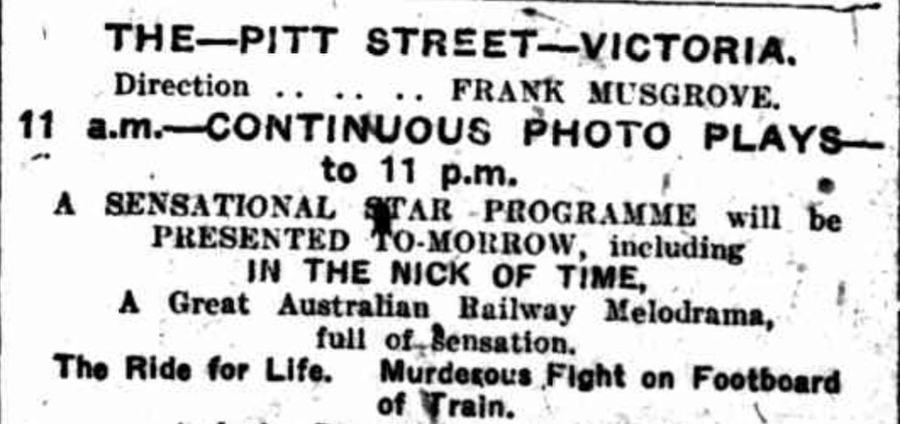
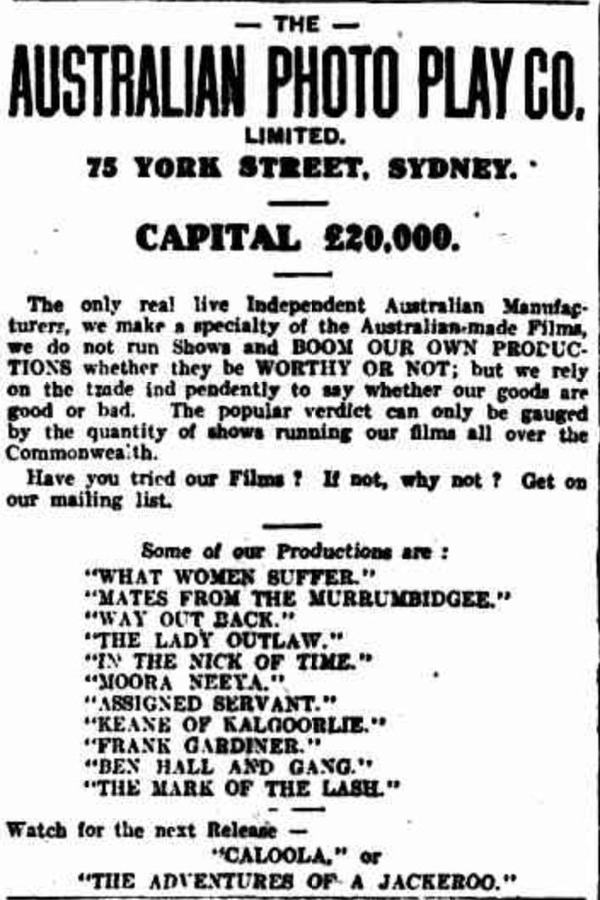
In the nascent years of the twentieth century, the cinema was less an art form and more a daring experiment in the capture of pure, unadulterated motion. In the Nick of Time, directed by the prolific Alfred Rolfe, represents a vital juncture in this evolution. While early actualities focused on the mere arrival of a train at a station, Rolfe understood that the true potential of the medium lay in the drama of transit. This film is not merely a story told on a train; it is a story told by a train. The locomotive, a symbol of inexorable progress and terrifying power, becomes the stage for a 'sensational' drama that would define the Australian film industry's first golden age.
To watch this film today is to witness the birth of the action genre in its most skeletal and honest form. Unlike the more static historical recreations of the time, such as The Life and Passion of Jesus Christ, Rolfe’s work sought to harness the kinetic energy of the modern world. The railway provided a linear, high-stakes environment where every second mattered—a concept that the title itself immortalizes. This was a period when audiences were moving away from the contemplative nature of films like A Procissao da Semana Santa and demanding a more visceral engagement with the screen.
Alfred Rolfe: Architect of the Sensational
Alfred Rolfe was a man deeply embedded in the theatrical traditions of the late Victorian era, yet he possessed a visionary’s grasp of how those traditions could be transmuted into celluloid. In In the Nick of Time, he leverages the 'sensational' style—a marketing term of the era that promised high-octane thrills and moral clarity. Rolfe’s direction is characterized by a surprising lack of artifice. While other directors were still experimenting with the 'trick' photography seen in European imports, Rolfe leaned into the physicality of the Australian landscape and its industrial infrastructure.
His work here can be compared to the pioneering efforts of The Story of the Kelly Gang, which established the template for the Australian 'bushranger' and action films. However, where The Kelly Gang found drama in the rugged isolation of the outback, In the Nick of Time finds it in the iron veins of the colony. Rolfe’s collaboration with actors like the lead in this piece shows a move toward a more grounded, albeit still heightened, performance style. The melodrama is not found in grand gestures, but in the frantic attempt to stay atop a moving vessel. This focus on physical peril would later be echoed in films like At Break-Neck Speed, showing a persistent cultural fascination with the dangers of velocity.
The Footboard Fight: A Masterclass in Early Stuntwork
The centerpiece of the film—and the element that secured its place in the annals of cinematic history—is the fight on the footboard of the train. In an era before green screens, back projection, or sophisticated safety harnesses, this sequence was a feat of genuine bravery and logistical ingenuity. The footboard, a narrow ledge running along the exterior of the carriages, offered a stage that was both terrifyingly narrow and constantly in motion. The combatants are forced to contend not only with each other but with the wind, the vibration of the rails, and the looming threat of the ground rushing by just inches beneath their feet.
This sequence serves as a fascinating counterpoint to the choreographed boxing matches of the time, such as the The Corbett-Fitzsimmons Fight or the Jeffries-Sharkey Contest. While those films were essentially documentaries of sporting events, In the Nick of Time integrates violence into a narrative arc. The fight on the footboard is the externalization of the film’s central conflict, a struggle for dominance that mirrors the chaotic energy of the machine itself. It is a moment of pure cinema—where words are unnecessary, and the image of two bodies entangled against a blurring landscape tells the entire story. The sheer audacity of filming such a scene in 1911 cannot be overstated; it required a level of coordination between the camera operator and the train driver that was revolutionary for its time.
The Railway as a Narrative Engine
In the context of 1911, the railway was the ultimate symbol of connectivity and the erasure of distance. However, in the hands of a dramatist like Rolfe, it becomes a site of intense claustrophobia and inescapable destiny. The train is a closed system; once it leaves the station, the characters are locked into their trajectory. This sense of inevitability is what drives the 'sensational' aspect of the film. We are not just watching a journey; we are watching a countdown. This thematic use of the railway can be contrasted with the more leisurely travelogues of the era, such as Trip Through Ireland or Resa Stockholm-Goteborg genom Gota och Trollhatte kanaler. While those films invited the viewer to gaze upon the world, In the Nick of Time forces the viewer to experience the world’s dangerous momentum.
The film also touches upon the social anxieties of the time. The train was a place where different classes were forced into proximity, and where the anonymity of travel could hide criminal intent. This is a recurring theme in early Australian cinema, often seen in the bushranger epics like Robbery Under Arms or Attack on the Gold Escort. In these films, the disruption of transit—whether by horse or by rail—is the ultimate act of rebellion. In the Nick of Time internalizes this disruption, placing the 'outlaw' behavior within the very mechanism of progress itself.
Visual Language and Technical Prowess
Technically, the film is a marvel of its era. The framing of the footboard fight suggests a sophisticated understanding of the diagonal line. By positioning the camera to capture the receding perspective of the train tracks, Rolfe creates a sense of depth that was often missing from the flat, stage-like compositions of his contemporaries. There is an almost documentary-like quality to the soot-stained faces and the vibrating carriages, a far cry from the stylized sets of films like Faust or the theatricality of Hamlet. Rolfe’s camera is a witness to the grit of the machine age.
Furthermore, the editing—though primitive by modern standards—shows a clear attempt to build tension. The cutting between the interior of the carriage and the exterior struggle on the footboard creates a rhythmic pulse that mirrors the 'chug-chug' of the engine. This is a significant advancement over the single-shot actualities like Birmingham or Saida dos Operarios do Arsenal da Marinha. Rolfe is beginning to play with time itself, stretching the moments of peril to maximize the audience's emotional response. He understands that in the cinema, time is not a constant; it is a tool to be manipulated for dramatic effect.
Conclusion: The Ghost in the Machine
Ultimately, In the Nick of Time is a testament to the enduring power of the 'sensational.' It reminds us that even at the dawn of the medium, filmmakers were already obsessed with the intersection of human fragility and mechanical power. While many films of this era have been lost to the ravages of nitrate decay, the spirit of this railway drama lives on in every action sequence that has followed. It shares a DNA with the high-stakes morality of It Is Never Too Late to Mend and the rugged adventurism of The Life and Adventures of John Vane, the Australian Bushranger.
As a critic, one cannot help but be moved by the sheer audacity of the enterprise. To stand on a moving train in 1911 with a hand-cranked camera required a belief in the importance of the image that borders on the religious. Alfred Rolfe and his crew were not just making a movie; they were defining a new way of seeing the world—a world that was moving faster, hitting harder, and demanding more from its storytellers than ever before. In the Nick of Time is more than a railway drama; it is the moment the train of cinema left the station and never looked back. It remains a staggering achievement of early narrative ambition, a flickering reminder of a time when the screen was a window into a world of terrifying, beautiful, and unceasing motion.
IMDb —
1921
Community
Log in to comment.