DbcultAccessing Vault...
Cult Review
Senior Film Conservator
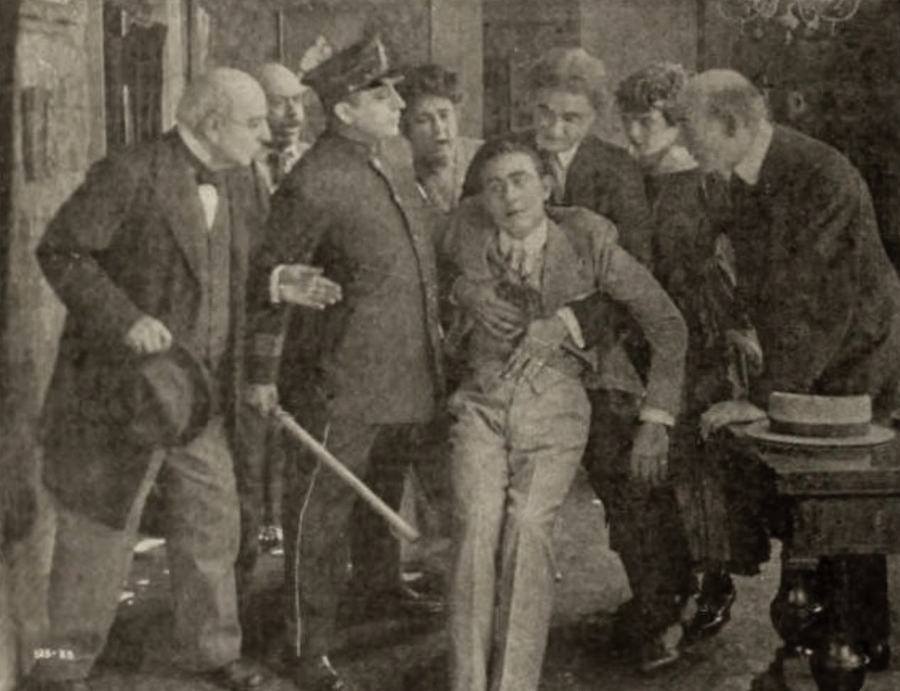
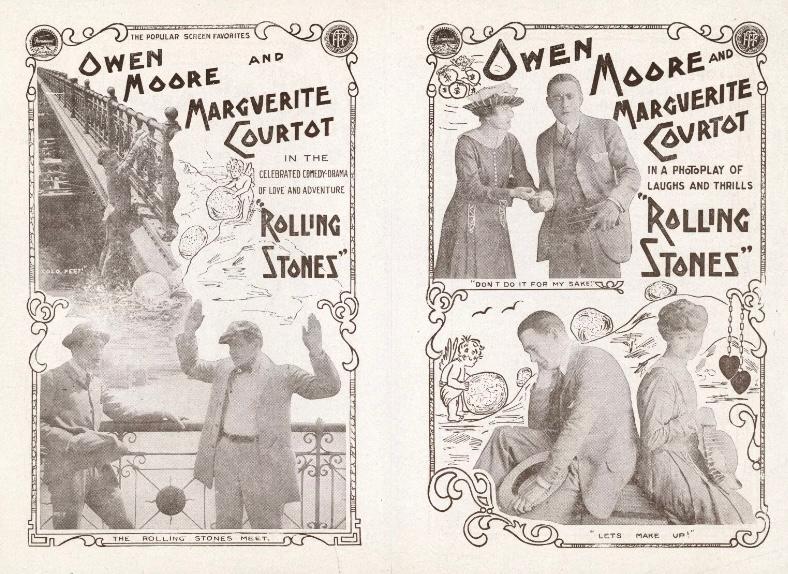
Stepping back into the flickering glow of early cinema, one often encounters works that, despite their potential, have faded into the annals of obscurity. Such is the case with 'Rolling Stones,' a film from an era when narrative storytelling was evolving at a breathtaking pace, shedding the theatrical constraints of its predecessors to embrace a uniquely cinematic language. Though details of its full exhibition history and preservation status remain elusive, the surviving fragments and critical whispers of its time paint a picture of a compelling drama, a tapestry woven with threads of societal pressure, individual yearning, and the relentless pursuit of self-determination. Directed by a keen eye for human emotion and featuring a cast of the period's notable talents, 'Rolling Stones' offers a fascinating glimpse into the moral and romantic quandaries that captivated audiences over a century ago.
The film, penned by the prolific Edgar Selwyn, delves into the life of Mary, a young woman whose existence is suddenly upended by the precipitous decline of her family's fortunes. William J. Butler delivers a nuanced performance as her father, a man burdened by the weight of societal expectations and the desperate need to secure his daughter's future. His portrayal is one of quiet desperation, a patriarch caught between his love for his child and the harsh economic realities of the day. This internal struggle is palpable, lending a layer of tragic realism to the otherwise dramatic proceedings. The film's title, 'Rolling Stones,' immediately evokes imagery of instability, of lives unmoored, and indeed, Mary's journey is precisely that: a path fraught with uncertainty and the constant threat of being swept away by currents beyond her control.
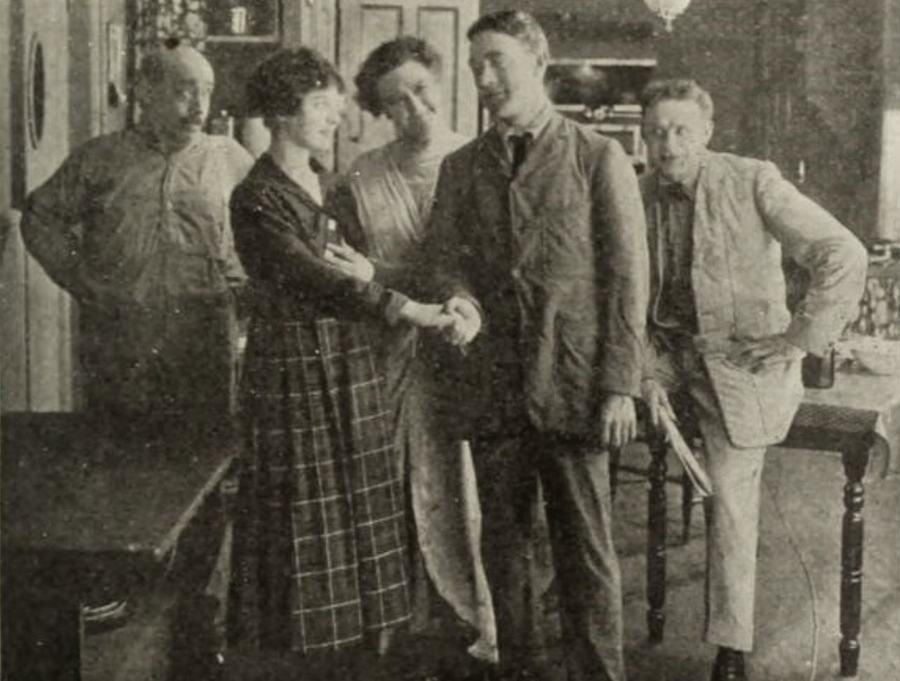
Mary's plight is exacerbated by the machinations of Denman Maley, whose portrayal of a cunning antagonist is subtly menacing, a testament to the era's capacity for character-driven villainy without resorting to overt melodrama. His actions propel Mary towards a loveless union with Alan Hale's character, a man of means whose offer of financial security comes at the steep price of personal happiness. Hale, often typecast in roles of authority or quiet strength, here embodies a different kind of power – that of societal expectation and economic leverage. His presence, while initially a beacon of hope for Mary's family, becomes a symbol of her impending emotional imprisonment. This conflict between pragmatic necessity and emotional fulfillment is a timeless theme, but 'Rolling Stones' renders it with a particular poignancy, reflecting the limited choices often available to women of that period.
The narrative truly ignites with the introduction of Owen Moore, whose charismatic turn as a free-spirited drifter embodies the very essence of the 'rolling stone' motif. Moore's performance is a masterclass in silent film acting, conveying a complex blend of charm, recklessness, and an underlying vulnerability. He represents a stark contrast to Hale's staid respectability, offering Mary a glimpse of a life unburdened by convention, a life lived on one's own terms, however perilous. The chemistry between Moore and Marguerite Courtot, who imbues Mary with a captivating blend of innocence and burgeoning defiance, is undeniable. Their burgeoning romance forms the emotional core of the film, a delicate blossom threatening to wilt under the harsh glare of societal judgment and the ever-present specter of financial ruin. Courtot's expressive eyes and subtle gestures communicate a wealth of unspoken emotion, drawing the audience into Mary's internal maelstrom.
As if Mary's predicament weren't already fraught enough, Ida Fitzhugh enters the fray, portraying a character from Moore's past whose reappearance threatens to shatter Mary's fragile hopes. Fitzhugh's performance adds a layer of complexity to the romantic entanglement, injecting elements of jealousy and past loyalties that deepen the narrative's emotional resonance. Her presence is a masterful stroke by Selwyn, ensuring that the path to true love is anything but smooth, mirroring the unpredictable nature of life itself. Gretchen Hartman also contributes significantly, though her precise role often varies in retrospective accounts; whether as a confidante, a rival, or another cog in Maley's scheme, her presence undoubtedly adds to the dramatic tension, a common characteristic of ensemble-driven dramas of the era. Much like in The Safety Curtain, where external forces constantly threaten personal happiness, 'Rolling Stones' expertly navigates a world where individual desires are often at odds with external pressures.
The film's exploration of class distinctions and the pressures they exert on individual lives is particularly acute. Mary's family's fall from grace is not merely a plot device; it is a commentary on the fragility of social standing and the unforgiving nature of economic hardship. This thematic depth elevates 'Rolling Stones' beyond a mere romantic drama, imbuing it with a social consciousness that resonates even today. The choices Mary faces are not abstract; they are rooted in the very real struggle for survival and dignity. This aspect of the narrative brings to mind other silent films that tackled social realism with striking honesty, such as A Child of the Paris Streets, which similarly depicted the harsh realities faced by the less fortunate.
Edgar Selwyn's screenplay for 'Rolling Stones' is a testament to his understanding of dramatic structure and character development within the nascent cinematic form. He crafts a narrative that builds tension incrementally, allowing the audience to fully invest in Mary's emotional odyssey. The pacing, a crucial element in silent film where intertitles carry much of the exposition, is reportedly well-judged, ensuring that the story flows naturally without feeling rushed or sluggish. The director, whose name often remains obscured in the collective memory of early cinema despite their profound influence, would have been tasked with translating Selwyn's vision into compelling visual storytelling. This would have involved careful framing, evocative use of lighting – a nascent art form in itself – and directing the actors to convey complex emotions through gesture and facial expression, a skill paramount in an era devoid of spoken dialogue.
The visual aesthetic of 'Rolling Stones,' even in its fragmented existence, likely employed the stylistic conventions of the time: perhaps a mix of studio sets for interiors and location shooting for the more expansive scenes involving Moore's character, emphasizing his nomadic lifestyle. One can imagine sweeping vistas contrasting with intimate, emotionally charged close-ups. The cinematography, while perhaps not as overtly experimental as some European contemporaries like Les Vampires, would have been functional yet expressive, guiding the viewer's eye and reinforcing the narrative's emotional beats. The use of natural light, where possible, would have added a layer of authenticity, a common aspiration for filmmakers seeking to ground their dramatic narratives in a tangible reality.
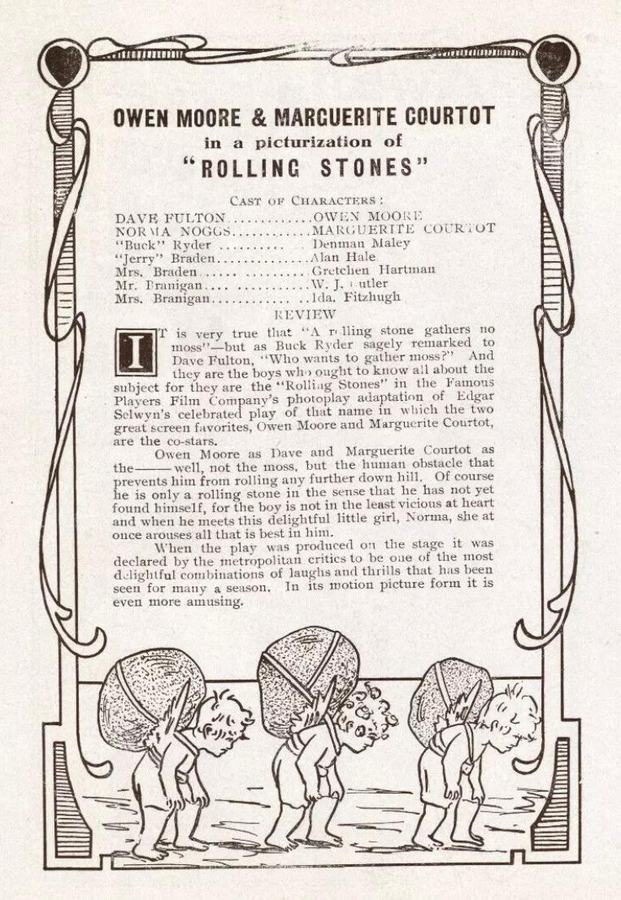
'Rolling Stones' ultimately culminates in a dramatic crucible, where Mary must confront the profound consequences of her choices. The film does not shy away from portraying the difficult decisions faced by its protagonist, nor does it offer simplistic resolutions. Instead, it delves into the ambiguity and complexity of human relationships and the often-unforgiving nature of fate. The resolution, whether it leans towards conventional stability or embraces the uncertain freedom of the 'rolling stone,' would have left audiences with much to ponder, a hallmark of compelling silent drama. This narrative depth, where character choices have significant moral weight, can be seen in other powerful dramas of the period, such as The Betrothed, which explored similar themes of loyalty and difficult decisions.
The performances, particularly by Courtot and Moore, would have been central to the film's impact. Their ability to convey yearning, conflict, joy, and despair without uttering a single word is a testament to the artistry of silent era actors. William J. Butler's gravitas and Alan Hale's stoic presence provide anchors in a swirling narrative, while Ida Fitzhugh's contribution adds necessary tension. Even the roles of Gretchen Hartman and Denman Maley, whether as foils or catalysts, are integral to the intricate dance of motivations and consequences that defines the film. Their collective efforts create a believable, if heightened, world where emotions run high and stakes are existential. The ensemble's synergy is reminiscent of the collaborative spirit often found in early cinematic productions, where every actor, regardless of screen time, contributed to the overall texture of the narrative.
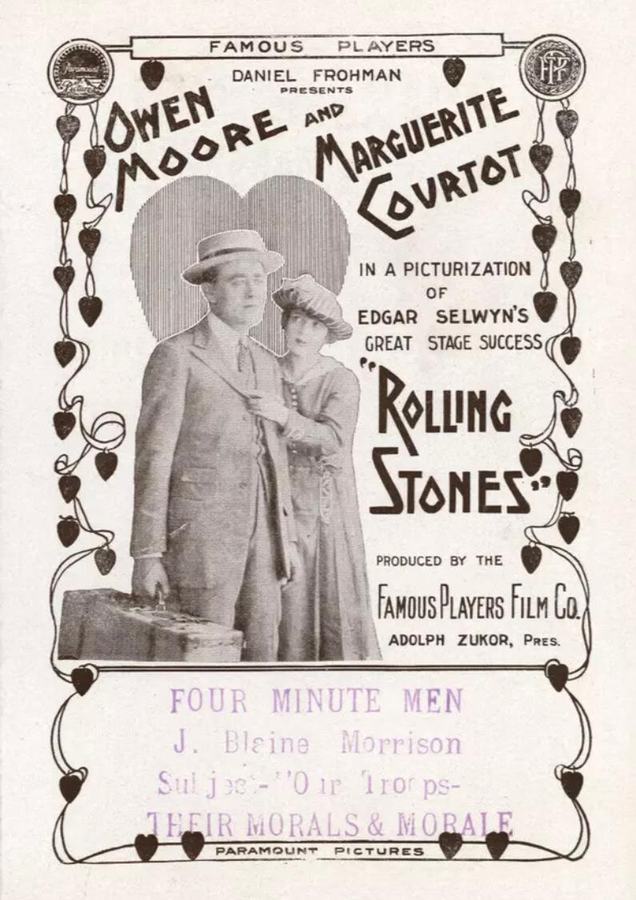
Placing 'Rolling Stones' within the broader context of 1916 cinema reveals it as a film that, while perhaps not breaking entirely new ground stylistically, certainly contributed to the refinement of narrative melodrama. It demonstrates a growing sophistication in character-driven storytelling, moving beyond the simpler morality plays that characterized earlier films. The exploration of individual agency against societal constraints was a popular and resonant theme, finding echoes in films like Her Right to Live, which also centered on a woman's struggle for autonomy. The film's title itself, 'Rolling Stones,' carries a metaphorical weight that transcends its literal interpretation, symbolizing not just physical wandering but also emotional rootlessness and the search for belonging in a tumultuous world. This idea of a character adrift, seeking purpose or stability, is a recurrent motif across cinematic history, from early features to contemporary independent films.
The absence of dialogue in silent films required filmmakers to be exceptionally adept at visual communication. Every gesture, every set design choice, every intertitle, had to convey meaning with precision and emotional impact. 'Rolling Stones' would have relied heavily on these elements to articulate Mary's inner turmoil and the complex relationships she navigates. The use of symbolism, though perhaps subtle, would have been integral to enriching the narrative. For instance, the 'rolling stone' could be represented visually through imagery of roads, trains, or open landscapes contrasting with the enclosed, stifling spaces of domesticity or wealth. This visual language, while primitive by today's standards, was profoundly effective in its time, capable of eliciting powerful emotional responses from audiences who were still captivated by the sheer novelty and immersive power of the moving image. Films like The Half-Breed, while different in genre, similarly leveraged strong visual storytelling to convey complex themes without spoken words.
In conclusion, 'Rolling Stones' stands as a compelling, albeit largely unseen, artifact of early American cinema. Its intricate plot, driven by well-defined characters and universal themes of love, duty, and self-discovery, speaks to the enduring power of storytelling. The performances by its talented cast, guided by Edgar Selwyn's perceptive writing, would have undoubtedly resonated with audiences of its time, offering both escapism and a reflection of their own struggles. While much of its original grandeur may be lost to time, the fragments that remain, and the critical discourse surrounding it, invite us to imagine a vibrant, emotionally rich drama that contributed to the evolving art form of cinema, a poignant reminder of the transient nature of both life and art, much like the very 'rolling stones' it so eloquently portrays. It's a film that, if fully rediscovered, could offer invaluable insights into the social and artistic currents of its era, solidifying its place not just as a historical curiosity, but as a significant piece of cinematic heritage.
IMDb —
1918
Community
Log in to comment.