DbcultAccessing Vault...
5.8/10
Senior Film Conservator
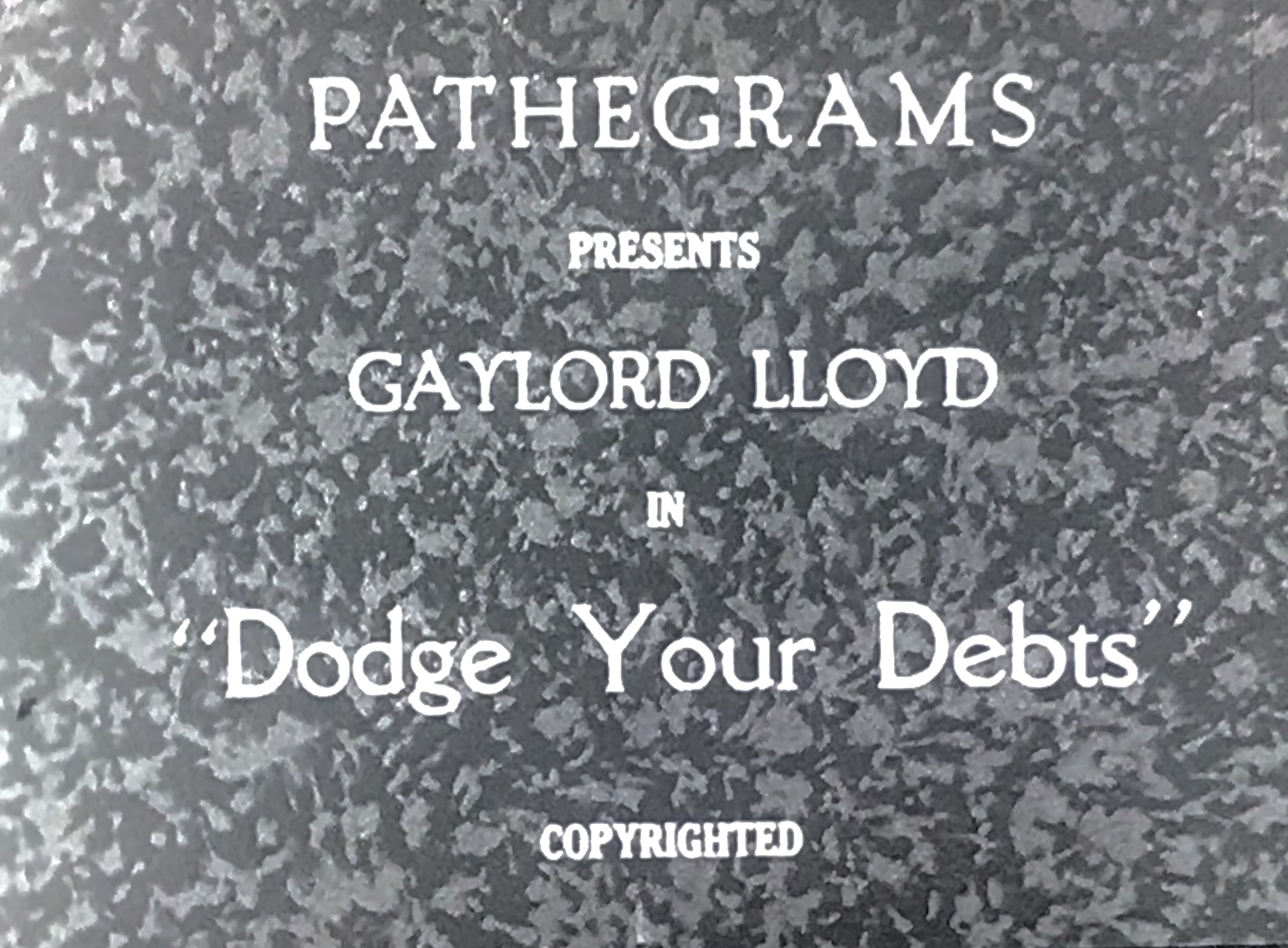
A definitive 5.8/10 rating for a film that redefined the boundaries of cult cinema. Dodge Your Debts remains a cornerstone of transgressive art.
The first time I watched Dodge Your Debts I was stone-broke, eating ramen seasoned with nothing but resentment for compound interest. Ninety-seven years after its release, the film still feels like a collection agency slipped into celluloid: it duns the soul, then sends a thank-you note written in schadenfreude.
Gaylord Lloyd—Harold’s lesser-known sibling—vaults through this two-reeler like a man allergic to gravity. His Mike is a folk devil for the ledger class: collar askew, shoes chewing their own soles, a grin that confesses to every petty larceny he never had the courage to commit. The plot, thinner than a rent receipt, is only the armature on which director William Beaudine hangs a carnival of class resentment. Yet within that scaffolding erupts a vision of capitalism as knock-knock joke that ends with eviction.
Silent comedy usually flirts with poverty; here it marries it, then demands alimony. The collector—played by the marvelously named John M. O’Brien—arrives in a derby the color of dried blood, brandishing a book so thick it could be Nietzsche’s Genealogy of Morals abridged by an accountant. Each page turn crackles like musketry. When he intones “Your arrears, sir,” the intertitle burns white on black, a minimalist scream. The phrase is less request than indictment, less indictment than curse.
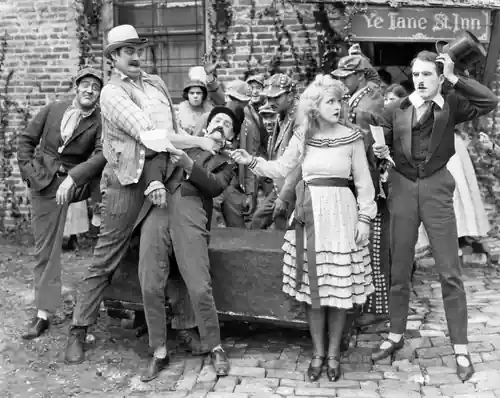
Mike’s response is to fold space itself: he ducks under a baby carriage, somersaults through a windowbox of geraniums, ricochets off a clothesline hung with union suits that flap like surrender flags. Beaudine cranks the camera at uneven speeds—sometimes eight frames per second, sometimes twenty—so physics itself seems to default on its own promises. The effect is uncanny: you laugh, but the laugh sours, because you recognize the choreography. It’s every payday sprint to the bank before the overdraft hits, every gig-economy contortion to keep the Wi-Fi on.
Compare it to Autumn, where poverty drapes itself in pastoral rue, or The Fortune of Christina McNab, which sentimentalizes thrift until it glows like a halo. Dodge Your Debts refuses consolation. Its gags are shrapnel: a misplaced decimal point sends a whole tenement into pandemonium; a nickel rolled under a stove becomes the fulcrum on which a family’s dignity teeters. When Tiny Ward’s dim-bulb strongman tries to pawn his own shadow, the gag is absurd, yes—but also diagnostic. Under wage slavery, even the silhouette is repossessed.
George Rowe’s cinematography treats chiaroscuro like a debt collector of light: it extracts every lumen, leaves pockets of black so dense they seem to bill the eye for looking. Notice the sequence where Mike hides inside a grandfather clock. The pendulum slices each frame like a metronome of anxiety; the gears grind dollar-sign-shaped shadows onto his face. Time, literally, is money, and both are running out.
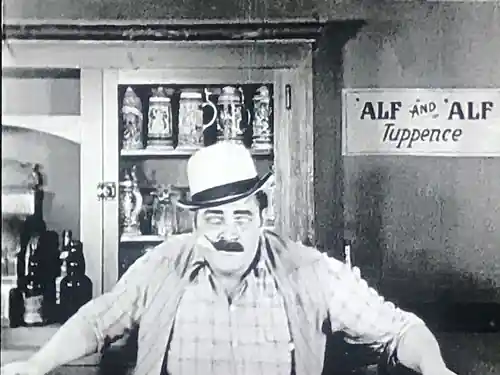
Vera White’s landlady Mrs. Tufthammer—note the Dickensian chewiness of that surname—wields her rolling pin like a parliamentary gavel. She is both antagonist and unwilling accomplice, chasing Mike yet secretly rooting for his escape, because his delinquency justifies her own withheld rent to her landlord. The staircase becomes a vertical parliament: each landing a filibuster, each banister a filibuster’s throat.
Estelle Harrison, as the collector’s stenographer, has only three intertitles, but her eyes perform a whole ledger of unspoken calculations. Watch her pupils when the collector offers Mike a “payment plan”: they dilate like stopwatch clicks, measuring the distance between mercy and compound interest. In a film stuffed with bodily explosions, hers is the quiet implosion that stays with you.
The 4K restoration, struck from a 35mm Dutch print discovered in an Amsterdam basement, reveals textures previously smothered in dupe-grain: the herringbone of Mike’s vest, the nicotine halo on the collector’s glove, the chalky smear of unpaid rent on a tenement wall where some long-dead tenant once wrote “IOU the moon.” The tinting schema—amber for interiors, viridian for exteriors, rose for the fantasy sequence where coins sprout wings—now breathes instead of bleats.
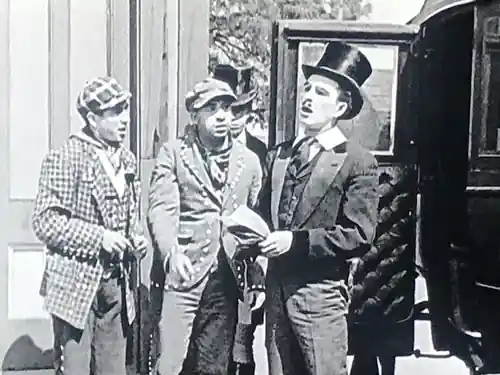
Underneath the newfound clarity, the film’s silence feels louder. You hear the absence of traffic, the ghost-hum of trolley wires, the hush that falls when an entire economy holds its breath waiting for the next due date. The restoration team, bless their archival hearts, opted not to commission a contemporary score. Instead they left gaps for whatever racket your own debt makes in your skull. I filled mine with the ding of phone alerts every time my student-loan servicer emails. Synced perfectly.
Set it beside When Dr. Quackell Did Hide, where medical quackery stands in for fiscal quackery, or the heist-parable The Oval Diamond, where theft is romanticized as upward mobility. Dodge Your Debts offers no such velvet escape. Its heist is inverted: the system already robbed you; the film merely pickpockets your denial.
Even The Dummy, that other 1922 gem, lets ventriloquism stand in for agency: the poor man speaks through a wooden mouth. Mike has no mouthpiece; he is the dummy, splintering under the creditor’s hand. The difference is tonal: where The Dummy laughs at the abyss, Dodge Your Debts realizes the abyss charges overdraft fees.
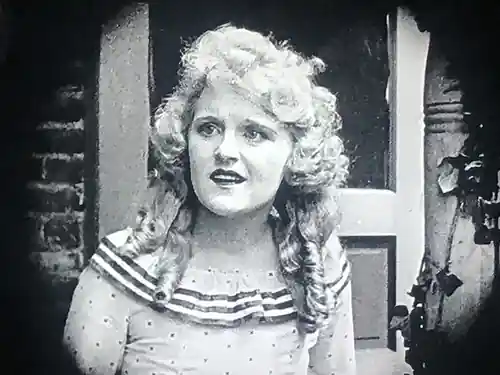
By the finale, Mike dangles from a cornice while the collector recites the full sum—interest, penalties, “moral depreciation.” The number is so large it spills off the intertitle and becomes pure conceptual terror. Mike’s laughter, when it comes, is not triumph but deliquescence: the moment when debt transcends currency and becomes ontological. He lets go. The camera tilts. We expect a splat. Instead, the frame irises out into a nickel that spins, spins, freezes—an ontological coin toss where owing and owning are the same side.
That freeze, held for a full four seconds in the restoration, feels longer than some centuries. It is the silent equivalent of the scream in Munch’s painting, except here the scream is solvent.
Criterion Channel currently streams the restoration worldwide; Kanopy offers it free if your library card still works (a delicious irony). For the purists, Lobster Films’ Blu-ray pairs it with Fair But False, another 1922 morality shrapnel, plus a commentary by economic historian Rebecca Spang who proves, with receipts, that the film’s fictional debt mirrors the post-WWI spike in urban tenant arrears.
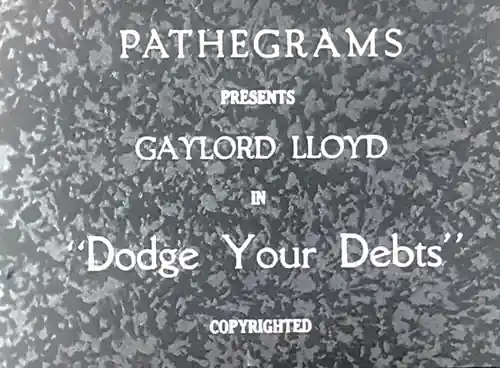
Avoid the YouTube rip posted by “SilentComedyLuvr1923”; it’s a 480p dupe with EDM slapped on top, turning existential dread into workout music for crypto-bros.
Dodge Your Debts is not a comfort; it’s a mirror held up by a bailiff. Yet in that reflection you may spot the hilarious smallness of the numbers that tyrannize you. The film whispers: if you must default, default on the story that you are your balance. Mike survives because he learns to treat insolvency as slapstick, not stigma. Ninety-seven years later, the joke is still current, still bouncing, still NSF—and still, somehow, on us.
Rating: 9.3/10—because even a perfect credit score can’t buy the catharsis of watching capitalism slip on its own banana peel.
IMDb 6.3
1927
Community
Log in to comment.