DbcultAccessing Vault...
5.3/10
Senior Film Conservator
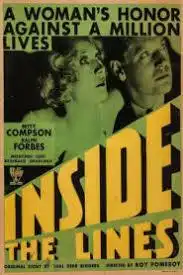
A definitive 5.3/10 rating for a film that redefined the boundaries of cult cinema. Inside the Lines remains a cornerstone of transgressive art.
Alright, so you’re wondering if Inside the Lines, this 1930 World War I spy flick, is worth your time today? 🤔
Look, if you love digging into the early days of sound film, or you’re a real history buff for WWI espionage stories, you might find some charm here. This one’s for the niche crowd, for sure.
But if you’re looking for a fast-paced thriller, or nuanced characters you can really sink your teeth into, you’ll probably find yourself a bit lost. It’s got a very particular kind of energy, you know?
The premise itself is solid enough: German spies, Allied war plans, Gibraltar as the crucial, heavily fortified setting. It sets the stage for what *should* be some intense cat-and-mouse.
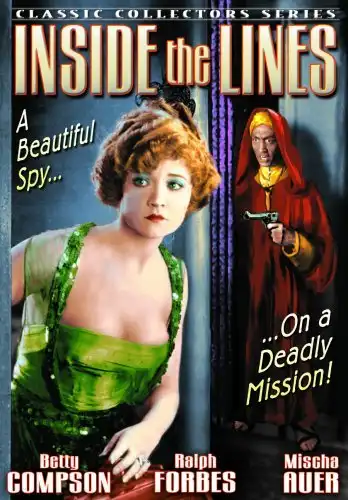
Ralph Forbes plays Captain Woodhouse, our main guy. He's tasked with uncovering the spy ring. He’s got that classic, earnest leading man vibe, very stiff upper lip and all.
The German agents, though. They are *everywhere*. It felt like every other person in Gibraltar was secretly on Berlin’s payroll. It’s a little silly, honestly.
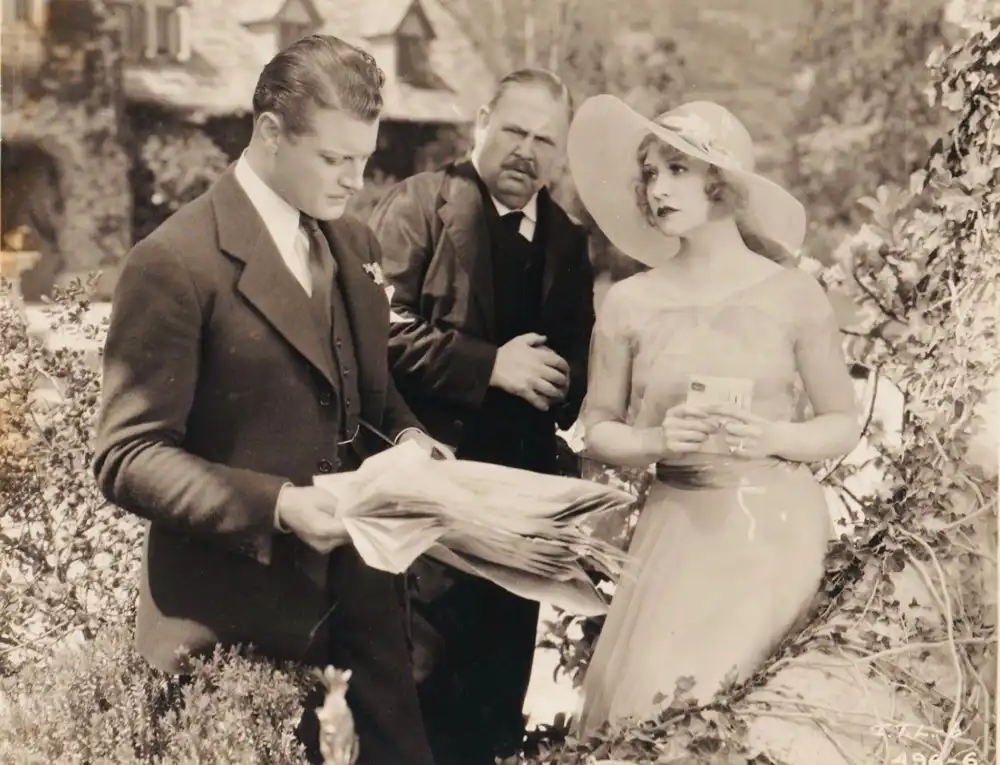
One spy, a German baroness played by Betty Compson, tries to get close to Woodhouse. Her attempts at seduction are so wonderfully over-the-top, almost like a stage play.
She delivers her lines with this grand, sweeping gesture. You can almost see the proscenium arch around her.
The pacing is, well, it’s 1930. Things move at a leisurely stroll. You get these long, unbroken shots of people talking, sometimes just staring.
There’s a scene where someone is just reading a telegram. It goes on for ages, you expect a big reveal, but it’s just… information. No real tension built there.
Eddie Clayton as J.J. Blooch, a British agent, is probably the most interesting performance. He's got a nervous energy that stands out among the generally quite formal acting.
He fidgets and glances around, making him feel a little more *real* than some of the other characters who seem to be constantly posing.
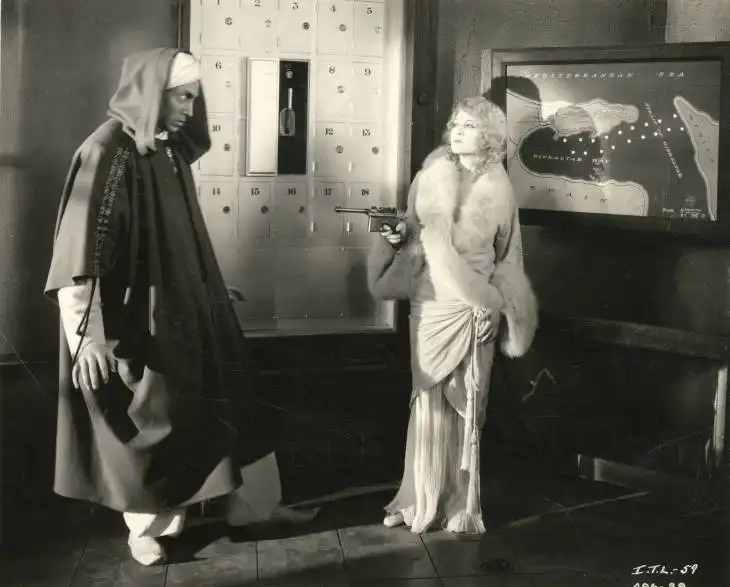
Montagu Love plays the chief German agent, Colonel Streiff. He’s exactly what you’d expect: a stern, mustache-twirling villain. Not a lot of surprises there, but he sells it.
The plot hinges on these hidden plans. They’re called “allied war plans,” but the film doesn't give us much detail about what they actually *are*.
It’s just this nebulous, very important thing everyone wants. This kind of abstract MacGuffin is pretty common for the time.
As an early talkie, the sound is a mixed bag. Sometimes the dialogue feels a bit muffled, other times it’s crystal clear.
You can hear the actors projecting, like they're still trying to fill a theater. It's a charming relic of the era, honestly.
The sets for Gibraltar are clearly studio-bound. You don’t get a real sense of scale or the actual fortress. It’s more like a series of rooms.
One particular shot of the exterior, probably a matte painting, looks quite dramatic though. A nice effort for its day.
There's a moment where a character tries to pass a coded message using a matchbook. It’s one of those classic spy tropes that feels both dated and kinda cool in its simplicity. No fancy tech, just old-fashioned spy craft.
Another thing I noticed was the camera work. It's mostly static, not a lot of dynamic movement.
When the camera *does* move, it feels very deliberate, almost heavy.
Inside the Lines isn’t going to blow anyone away with its storytelling or its technical prowess by today’s standards.
It’s a historical artifact, a snapshot of what passed for exciting cinema in 1930. If that sounds interesting, give it a shot.
Otherwise, there's a lot of other classic films to see that might hold up a little better, like say, The Pilgrim.
IMDb 7
1918
Community
Log in to comment.