DbcultAccessing Vault...
Cult Review
Senior Film Conservator
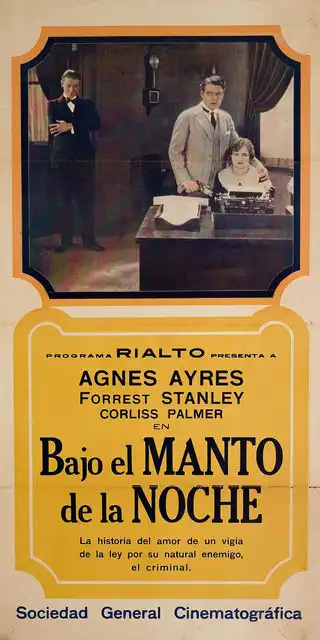
Alright, so we're talking about Into the Night, a silent film from 1928. Is it worth tracking down today? Well, if you're deep into silent cinema, absolutely. It's got some moments. If you're new to the era or just looking for a casual watch, probably not your first pick. You'll likely find it a bit slow, a tad opaque, and maybe a little frustrating if you’re used to everything being spelled out. It's for the patient, the curious, and those who appreciate old-school film making.
The film doesn't exactly hold your hand, which is often a good thing, but here it can be a bit much. The central conceit seems to be this couple, or maybe it’s just one person really, getting tangled up in something shady, then trying to escape. Or maybe they’re just wandering. The plot is less a straight line and more a series of ominous glances and hurried movements through, you guessed it, the night. You're meant to feel the *tension*, I think, more than understand the details.
One thing that really sticks out is how they use shadows. There are these long, creeping shadows that just swallow up characters, especially in the alley scenes. It’s pretty effective. Corliss Palmer, as the main female lead, spends a lot of time looking worried, her eyes wide as she darts from one dark corner to another. Her expressions are often the clearest thing happening on screen.
There’s a scene early on, or maybe it’s mid-way, where a character is trying to sneak through a backyard. The camera holds on this one window for what feels like ages, just waiting. Then a cat jumps onto the sill. Nothing else happens. It’s a strange, almost pointless detail, but it really makes you feel the *waiting*, that slow build-up where every little noise could be danger. Or just a cat. 🐈
Allan Sears plays a rather stern-looking fellow, all jaw and furrowed brow. He’s got this intense stare that he uses a lot, sometimes at the camera, sometimes at literally nothing. It's a classic silent film performance, big and bold, leaving no doubt about his mood. Though sometimes I wasn’t quite sure *which* mood.
The pacing is… deliberate. There are long stretches where not much dialogue (obviously) or even action happens. It’s more about atmosphere. The quick cuts when something finally *does* happen, like a door slamming or someone getting grabbed, feel almost jarring after all the lingering shots. You can tell they really tried to make those moments pop.
And speaking of lingering, there’s this one close-up of a hand clutching a crumpled note. It stays there for so long, you start trying to read the non-existent text on the paper. It’s a very specific choice. Did the editor just like the shot? Or was it meant to convey such importance? It's a bit of a head-scratcher.
The set design is pretty minimal, lots of dark rooms and narrow streets. They really leaned into the 'night' aspect. Sometimes it’s a little *too* dark, honestly. You're squinting, trying to figure out what's happening in the corner of the frame. But then, maybe that's the point, that feeling of not quite seeing everything, of things hiding in plain sight. It certainly adds to the mystery, even if it's an accidental one sometimes.
I found myself wondering about the writers, James Bronis and Joe Traub. Did they have a more fleshed-out story that just got lost in translation to the screen? Or was this vague, impressionistic approach always the goal? It feels very much like a product of its time, experimenting with what cinema could do without words.
You know, for a film with 'night' in the title, it really delivers on the darkness. It’s not just a backdrop; it’s almost a character itself, swallowing up secrets and intentions. It makes you appreciate how much storytelling relies on light and shadow, especially in an era before sound.
The ending, without giving anything away, is one of those that leaves you with more questions than answers. It doesn't wrap things up neatly. And like, that’s fine, sometimes. But here, after all the ambiguity, a little more resolution might have been nice. It feels less like a profound mystery and more like they just… ran out of time. Or maybe ideas. 🤷♀️
So, yeah, Into the Night. It's a mood piece, a historical artifact, and a good exercise in trying to piece together a story from gestures and shadows. Not for everyone, but if you're curious about the deeper cuts of silent cinema, it's certainly *there*.
IMDb 6.1
1923
Community
Log in to comment.