DbcultAccessing Vault...
5.8/10
Senior Film Conservator
A definitive 5.8/10 rating for a film that redefined the boundaries of cult cinema. Alice's Wild West Show remains a cornerstone of transgressive art.
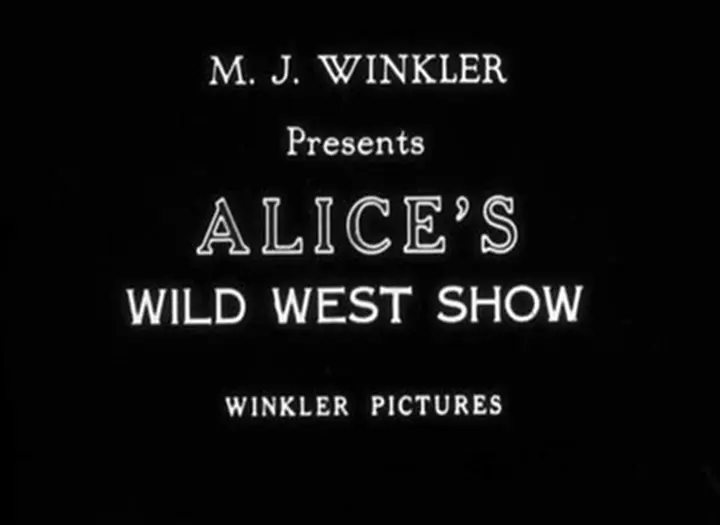
To gaze upon Alice's Wild West Show is to witness the primordial soup of the Disney empire. Released in 1924, this short film represents a pivotal juncture where the raw, unrefined energy of silent-era slapstick collided with the innovative potential of the animated frame. Unlike the later, more polished iterations of the Alice Comedies, this particular installment feels remarkably grounded in the tactile reality of 1920s suburbia, echoing the gritty charm found in Fresh Paint (1922) or the early Hal Roach productions. It is a work that prioritizes the spontaneity of childhood play over the rigid dictates of traditional narrative, yet it never loses sight of the technical ambition that would eventually define its creator.
The film begins not with a flourish of magic, but with the mundane mechanics of a backyard theater. Alice and her troupe of neighborhood children are engaged in the timeless ritual of "putting on a show." There is an inherent honesty in these opening frames; the costumes are makeshift, the sets are precarious, and the acting is delightfully unpolished. This sequence captures a specific American zeitgeist—the post-war fascination with the frontier, filtered through the lens of juvenile mimicry. While contemporary films like The Ne'er-Do-Well (1923) explored the adult complexities of social standing and adventure, Disney’s focus remained steadfastly on the transformative power of the child's perspective.
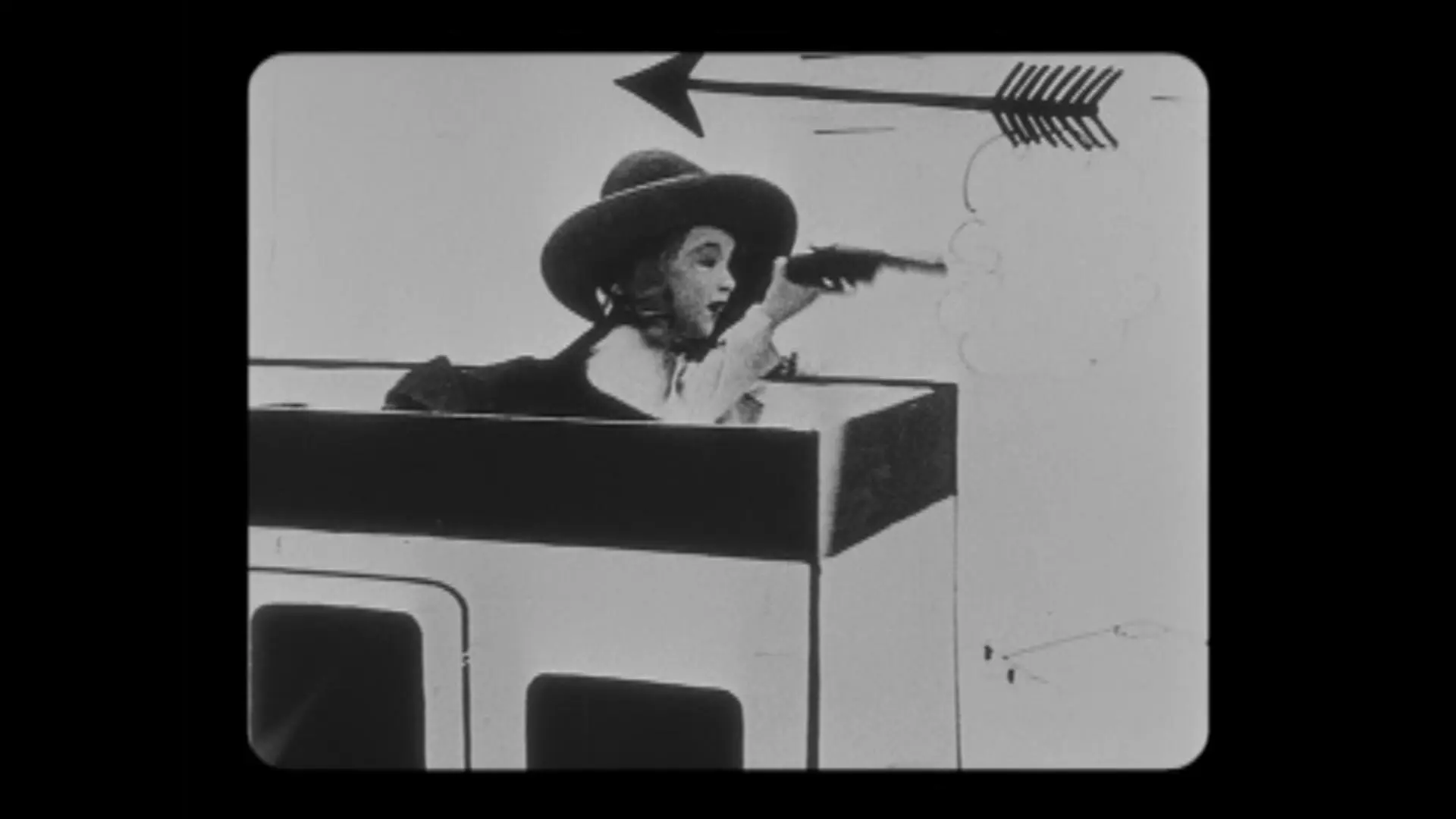
The arrival of Tubby O'Brien and his gang introduces a conflict that is both physical and ideological. Tubby represents the cynical reality that threatens to puncture the bubble of Alice's creative endeavor. This dynamic—the artist versus the interloper—adds a layer of tension that elevates the film beyond mere slapstick. It is a conflict of spaces: the stage versus the street. When Alice’s cast flees in the face of Tubby’s intimidation, we see a vulnerability in Virginia Davis’s performance that is rarely acknowledged in histories of early animation. She is not merely a prop for the cartoons; she is the emotional anchor of the piece.
The true brilliance of Alice's Wild West Show lies in its transition from the live-action proscenium to the animated frontier. This is not a seamless move, nor was it intended to be. The "stories" Alice tells are visual manifestations of her inner bravado. In these animated interludes, we see the early iterations of the visual language that would later dominate the medium. The stagecoach chase is a masterclass in primitive kinetic energy. The way the characters move—bouncing with a weightless, rhythmic quality—presages the "rubber hose" style that would become synonymous with the 1930s.
Comparing these sequences to the dramatic weight of Body and Soul (1920) might seem hyperbolic, yet both films grapple with the concept of internal vs. external reality. In Alice's Wild West Show, the animation is the soul of the film, the place where Alice’s true power resides. When she becomes the sheriff, taking down a safe-stealing villain, the animation provides her with an agency that her live-action counterpart lacks. It is a proto-feminist subtext that often goes overlooked; Alice is not a damsel in distress, but the architect of her own heroism.
The cinematography, though limited by the technology of the era, manages to capture a surprising amount of depth. The use of the "show within a show" format allows Disney to experiment with different layers of artifice. We see the audience’s reactions, the behind-the-scenes chaos, and the final "product" of the animated tales. This multi-layered approach is reminiscent of the complex narrative structures found in international cinema of the time, such as the Hungarian production A Tűz, which also utilized visual metaphors to convey psychological states.
Furthermore, the film’s pacing is remarkably modern. It avoids the languid stretches of exposition found in many 1920s features, such as Bella Donna (1923), opting instead for a brisk, episodic structure. This efficiency is partly born of necessity—short films required a density of action—but it also reflects Walt Disney’s innate understanding of audience engagement. Every frame serves a purpose, whether it is to establish a character’s motivation or to deliver a visual gag.
Technically, the film is a marvel of early rotoscoping and double-exposure techniques. The interaction between Virginia Davis and the animated world, while rudimentary by today's standards, was revolutionary at the time. Unlike Distilled Love, which relied on more traditional comedic tropes, the Alice series pushed the boundaries of what was physically possible on screen. The "inkwell" process, though perfected by the Fleischer brothers, was used by Disney here to create a distinct sense of place. The animated Indians and outlaws aren't just drawings; they are participants in Alice's reality.
One must also consider the historical context of the "Wild West" theme. By 1924, the frontier was closed, and the myth of the West was being codified by Hollywood. Films like The Man Worthwhile or Forbidden Paths often treated the West with a certain solemnity. Disney, however, treats it as a playground. This irreverence is what makes the film so enduring. It doesn't seek to document the West; it seeks to document the *idea* of the West as understood by a child.
In the broader canon of silent film, Alice's Wild West Show occupies a unique niche. It lacks the grandiosity of Pyotr Velikiy or the melodramatic intensity of Bride of Vengeance, yet its influence is arguably more pervasive. It established the template for the hybrid film, a format Disney would return to decades later with *Mary Poppins* and *Who Framed Roger Rabbit*. It also highlights the importance of collaboration; while Walt's name was on the door, the contributions of animators like Ub Iwerks and the charismatic presence of Virginia Davis were essential to its success.
The film’s conclusion, which sees Alice triumphing over both her fictional villains and her real-world antagonists, is a satisfying resolution to the "Our Gang" style conflict. It reinforces the theme that imagination is a weapon against the mundane. While films like Humility or Man and His Soul explored internal moral struggles, Alice's Wild West Show externalizes those struggles through the medium of the cartoon. It is a joyous, chaotic, and profoundly creative work that deserves its place in the annals of cinema history.
For those interested in the evolution of the medium, this short is an essential watch. It contains the DNA of everything that followed—the humor, the technical innovation, and the core belief in the power of storytelling. It stands as a testament to a time when movies were still discovering what they could be, and when a young animator in Kansas City could dream of a world where drawings could come to life and play with real children in the dust of a backyard theater. Even when compared to the sophisticated narratives of Alias Ladyfingers or the artistic purity of Inspiration, Alice holds her own through sheer, unadulterated charm.
Final Thoughts: A kaleidoscopic journey into the dawn of animation, blending the grit of the 1920s with the whimsy of the frontier. A must-see for historians and dreamers alike.
IMDb 6.9
1935
Community
Log in to comment.